 Save to Pinterest
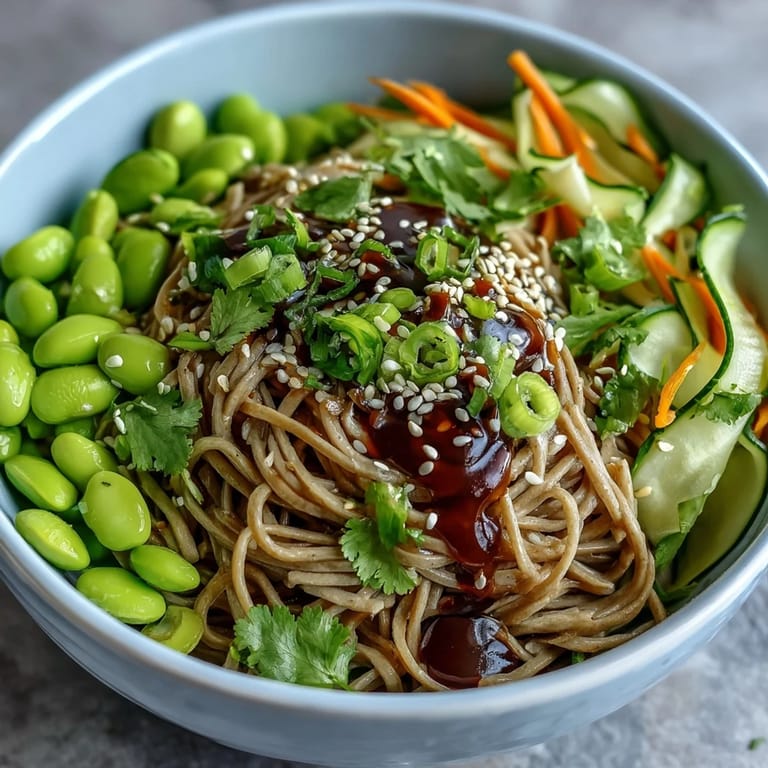
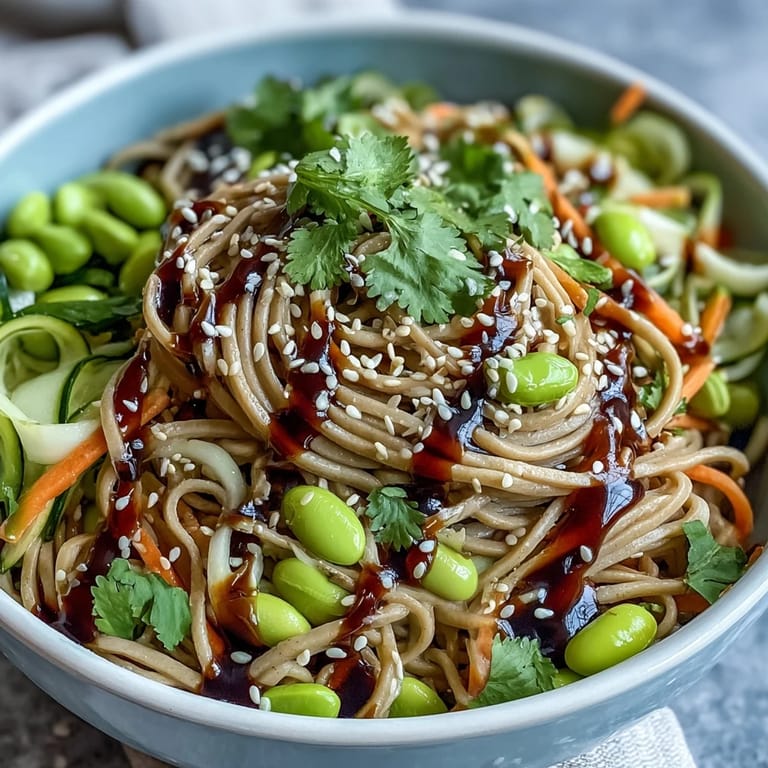
 Bring a touch of Japanese-inspired freshness to your table with this vibrant Soba Noodle Bowl. Featuring earthy buckwheat noodles and a crisp medley of garden vegetables, this dish is both light and satisfying, making it an ideal choice for a nutritious lunch or a breezy dinner.
Save to Pinterest The secret to this bowl lies in the contrast of textures—from the chewy bite of the soba to the snap of julienned carrots and cucumbers. Every component is designed to be refreshing, while the tahini-based dressing adds a layer of rich, umami depth.
Ingredients
Tired of Takeout? 🥡
Get 10 meals you can make faster than delivery arrives. Seriously.
One email. No spam. Unsubscribe anytime.
- Noodles & Vegetables: 250 g dried soba noodles, 1 cup shelled edamame (fresh or frozen), 1 medium cucumber (julienned), 2 medium carrots (peeled and julienned), 2 scallions (thinly sliced), 2 tbsp toasted sesame seeds, 1/4 cup fresh cilantro or mint leaves (optional).
- Sesame Dressing: 3 tbsp soy sauce (or tamari), 2 tbsp rice vinegar, 1 tbsp toasted sesame oil, 1 tbsp tahini or smooth peanut butter, 1 tbsp honey or maple syrup, 1 tsp grated fresh ginger, 1 small garlic clove (minced), 1 tbsp water (to thin).
Instructions
- Step 1
- Cook the soba noodles according to the package instructions. Drain and rinse under cold water to prevent sticking.
- Step 2
- While the noodles cook, blanch the edamame in boiling water for 2–3 minutes, then drain and set aside.
- Step 3
- In a small bowl, whisk together all the sesame dressing ingredients until smooth. Add more water if needed to reach a pourable consistency.
- Step 4
- Prepare the vegetables: julienne the cucumber and carrots, and slice the scallions.
- Step 5
- In a large bowl, toss the cooled soba noodles with half of the sesame dressing.
- Step 6
- Divide the noodles among four bowls. Top each with edamame, cucumber, carrots, and scallions. Drizzle with remaining dressing.
- Step 7
- Garnish with toasted sesame seeds and fresh herbs if desired. Serve immediately.
Zusatztipps für die Zubereitung
To ensure the best texture, do not overcook the soba noodles; they should remain slightly firm. Rinsing them thoroughly under cold water is a crucial step to stop the cooking process and remove the excess starch that causes clumping.
Varianten und Anpassungen
For extra protein, consider adding grilled tofu or a soft-boiled egg on top. You can also vary the vegetables by using snap peas, bell peppers, or radishes for added crunch. To make this dish gluten-free, ensure you use 100% buckwheat noodles and tamari instead of soy sauce.
Serviervorschläge
This bowl is best served immediately to enjoy the freshness of the vegetables. It pairs beautifully with a cup of chilled green tea or a glass of light, crisp riesling to complement the nutty and savory notes of the sesame dressing.
 Save to Pinterest
 Whether you’re enjoying it as a solo lunch or serving it to friends, this Soba Noodle Bowl is a testament to how simple ingredients can create a sophisticated and wholesome meal. Enjoy the clean, bright flavors of this Japanese-inspired classic.
Recipe Questions
- → What makes soba noodles unique?
Soba noodles are made from buckwheat flour, giving them a nutty flavor and firm, chewy texture. They're lower in calories than wheat pasta and contain essential amino acids, making them both delicious and nutritious.
- → Can I make this ahead of time?
Absolutely. The noodles actually absorb more flavor when dressed in advance. Prepare everything up to 24 hours ahead, store components separately, and toss together when ready to serve. Add fresh herbs just before eating.
- → Is this bowl gluten-free?
Traditional soba contains wheat, but 100% buckwheat noodles are naturally gluten-free. Use tamari instead of soy sauce and verify your soba package states 'gluten-free.' The remainder of ingredients are naturally gluten-free.
- → What protein options work well?
Beyond edamame, try grilled teriyaki tofu, shredded rotisserie chicken, seared salmon, or soft-boiled eggs. For a plant-based boost, add roasted chickpeas or cashews. The sesame dressing complements all these options beautifully.
- → How do I prevent noodles from sticking?
Rinse cooked soba thoroughly under cold water until the water runs clear—this removes excess starch. Toss immediately with a small amount of sesame oil or dressing. This prevents clumping and adds flavor.
- → Can I customize the vegetables?
Certainly. Try snap peas, bell peppers, shredded cabbage, radishes, or steamed broccoli. In winter, use roasted sweet potatoes or sautéed mushrooms. The key is maintaining a mix of textures and colors.