 Save to Pinterest
 Last January second, I stood in my kitchen staring at a half-empty pantry and a vague intention to eat better, when my eyes landed on a dusty jar of tahini and a can of black-eyed peas. My grandmother always made her hoppin' john on New Year's Day for luck, but I'd never thought to turn it into something fresh and bright. What started as improvisation—tossing together what felt right—became this salad, and suddenly the Southern tradition I grew up with felt entirely new.
I made this for friends on New Year's Day without warning them what it was, and watching them go back for thirds while debating whether it counted as salad or bowl food became my favorite kind of kitchen victory. One friend asked if I'd bought it somewhere, which sounds like a small compliment until you realize they meant it genuinely.
Ingredients
- Black-eyed peas (1 cup dried or 1 can): These are the soul of the dish—they hold their shape beautifully and have a slightly earthy flavor that grounds everything else. If you have time, soaking and cooking dried ones is worth it for texture, but canned absolutely works without guilt.
- Chickpeas (1 can, 15 oz): They add heft and protein without ever feeling heavy, plus they take on the tahini dressing like they were made for it.
- Long-grain rice (1 cup cooked, cooled): Use whatever you have on hand—white, brown, or even a grain like farro if you're feeling adventurous. The coolness matters more than the type.
- Red bell pepper (1 small, diced): The sweetness and crunch are essential; don't skip it even if you have to swap in yellow or orange.
- Celery (1 small stalk, diced): This gives the salad a quiet structural element that keeps it from feeling mushy.
- Red onion (1/2 small, finely chopped): Raw onion has a bite that wakes up every other flavor in the bowl.
- Cherry tomatoes (1 cup, halved): They burst slightly as you toss, releasing their juice into the dressing—don't use sad hothouse tomatoes if you can help it.
- Green onions (2, sliced): A last-minute brightness that makes people ask what you did to make it taste so alive.
- Fresh parsley (1/4 cup, chopped): It's not decoration here; it's flavor insurance.
- Tahini (1/4 cup): Stir the jar before measuring because the oils separate, and that matters more than you'd think.
- Lemon juice (2 tablespoons): Fresh only—bottled will taste sharp in a way that fights the dressing instead of brightening it.
- Apple cider vinegar (1 tablespoon): It adds a warmth that regular vinegar doesn't quite capture.
- Olive oil (1 tablespoon): A good one, because you taste it here.
- Maple syrup or agave (1 teaspoon): Just enough sweetness to balance the tahini's earthiness and the lemon's acid.
- Garlic (1 clove, minced): Mince it fine so it dissolves into the dressing rather than announcing itself.
- Water (2–3 tablespoons): Add slowly; the dressing should be pourable but not thin.
- Salt and black pepper (1/2 teaspoon and 1/4 teaspoon): Taste as you go because the legumes already carry some salt.
- Smoked paprika (1/4 teaspoon, optional): If you use it, it adds a whisper of something almost mysterious.
Tired of Takeout? 🥡
Get 10 meals you can make faster than delivery arrives. Seriously.
One email. No spam. Unsubscribe anytime.
Instructions
- Prepare the black-eyed peas if starting from dried:
- Rinse them, soak for at least four hours or overnight, then drain and simmer in fresh water for thirty to forty minutes until they're tender but not falling apart. Let them cool completely—warm peas make the salad weep. If you're using canned, just drain and rinse until the water runs clear.
- Build your salad base:
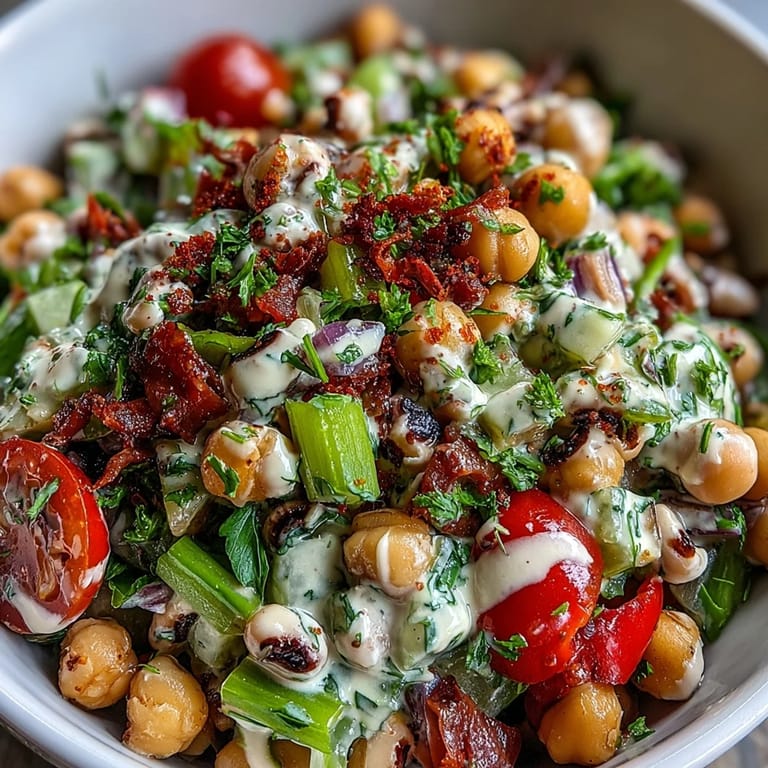
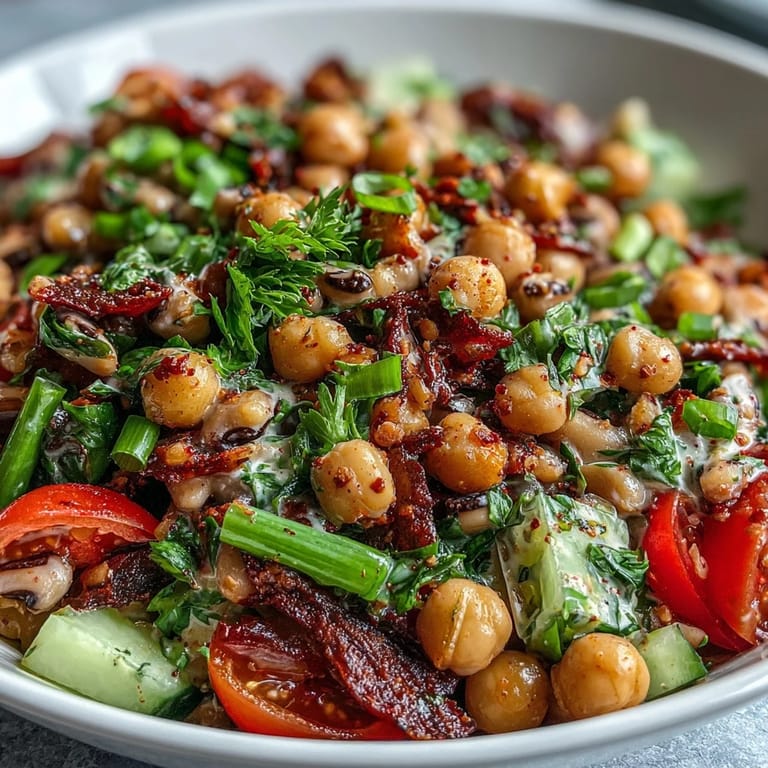
- Combine the cooled black-eyed peas, chickpeas, rice, bell pepper, celery, red onion, cherry tomatoes, green onions, and parsley in a large bowl. Don't toss yet; just let everything sit together for a moment so you can see what you're working with.
- Whisk the tahini dressing:
- In a small bowl, combine tahini, lemon juice, apple cider vinegar, olive oil, maple syrup, and minced garlic, then whisk until smooth. Add water one tablespoon at a time, whisking between each addition, until the dressing is creamy and pourable—you want it to coat a spoon but still flow. Season with salt, pepper, and paprika if using.
- Bring it all together:
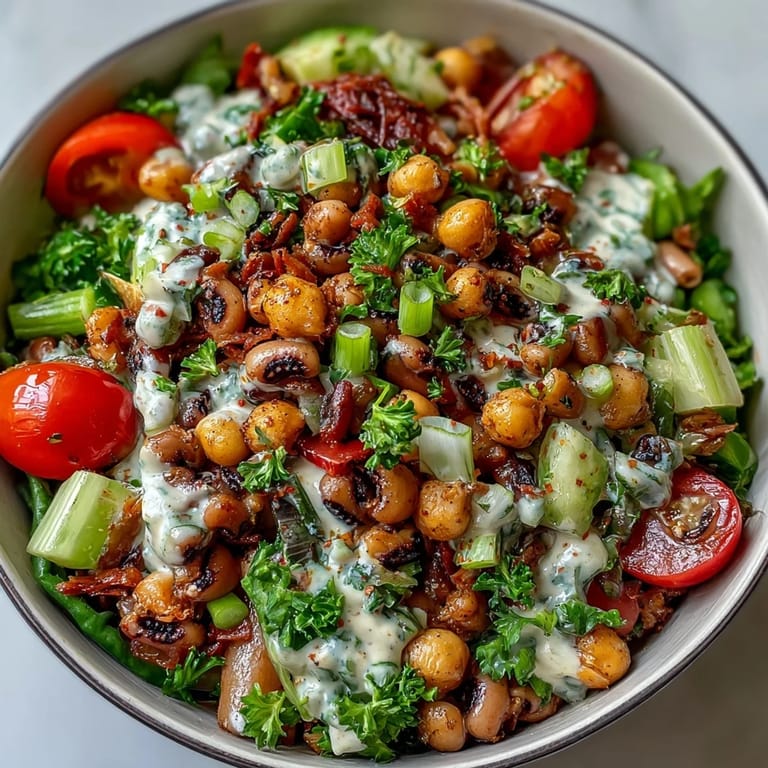
- Pour the dressing over the salad and toss gently with a light hand, being careful not to crush the tomatoes or peas. Taste and adjust seasoning, understanding that it will deepen if you let it sit.
- Rest and serve:
- You can eat it immediately while everything is still distinctly textured, or refrigerate for up to an hour to let the flavors settle into each other. Either way, give it a gentle mix before plating.
 Save to Pinterest
 The real magic happened when my neighbor tasted this and mentioned it reminded her of New Year's dinners at her aunt's house, except lighter. We spent twenty minutes talking about how food can hold tradition while becoming something entirely its own, and I realized that's exactly what this salad does.
Why Cold Matters
Using cooled rice and letting the peas rest at room temperature before combining them changes everything—warm ingredients will make the salad soggy and wilt the fresh vegetables into submission. It's the difference between a pile of ingredients and something that actually feels crisp and intentional in your mouth.
The Tahini Dressing Advantage
Most people think of tahini as a Middle Eastern ingredient, but it works beautifully with Southern flavors, especially when you're building something for luck and renewal. The nuttiness complements black-eyed peas in a way that vinaigrette never quite does, and it carries all the other flavors instead of just coating them.
Make It Your Own
This salad is forgiving in the best way—it invites you to adjust based on what you have and what you're craving. Diced avocado adds richness, fresh kale brings texture and green-ness, jalapeños sharpen everything if you want heat, and a pinch of cayenne in the dressing gives you warmth without visible spice.
- Chop avocado just before serving so it doesn't brown and turn mealy.
- Toast pumpkin or sunflower seeds on top for crunch that doesn't get soggy.
- Swap the rice for farro or quinoa if you want something earthier and more substantial.
 Save to Pinterest
 This is the kind of salad that gets better as it sits, which makes it perfect for actually living your life instead of obsessing over meal prep. Eat it on New Year's Day for tradition, or eat it every Tuesday for no reason at all.
Recipe Questions
- → Why is Hoppin' John considered lucky for New Year's?
Black-eyed peas represent coins and prosperity in Southern folklore. When eaten on New Year's Day, they're believed to bring wealth and good fortune for the coming year. This salad version maintains that tradition while offering a lighter, fresher take.
- → Can I use canned black-eyed peas instead of dried?
Absolutely. Canned black-eyed peas work perfectly and reduce preparation time significantly. Just drain, rinse thoroughly, and add them directly to the salad. You'll need about 1.5 cans to equal 1 cup cooked dried peas.
- → How long does this salad keep in the refrigerator?
This salad stores beautifully for up to 3 days in an airtight container. The flavors actually meld and improve after chilling. The tahini dressing may thicken when cold—simply stir in a splash of water or lemon juice before serving.
- → Is the tahini dressing necessary?
The tahini dressing adds essential creaminess and ties the ingredients together with its nutty, tangy flavor. You could substitute with a vinaigrette, but tahini provides protein and healthy fats that make this salad more satisfying.
- → What can I serve alongside this salad?
This makes a complete meal on its own, but pairs wonderfully with crusty bread, roasted sweet potatoes, or Southern cornbread. For beverages, try crisp white wine like Sauvignon Blanc or sparkling wine for celebration.
- → Can I make this salad nut-free?
The tahini is made from sesame seeds, not nuts, so this salad is naturally nut-free. However, if you have a sesame allergy, substitute with sunflower seed butter or a Greek yogurt-based dressing for similar creaminess.