 Save to Pinterest
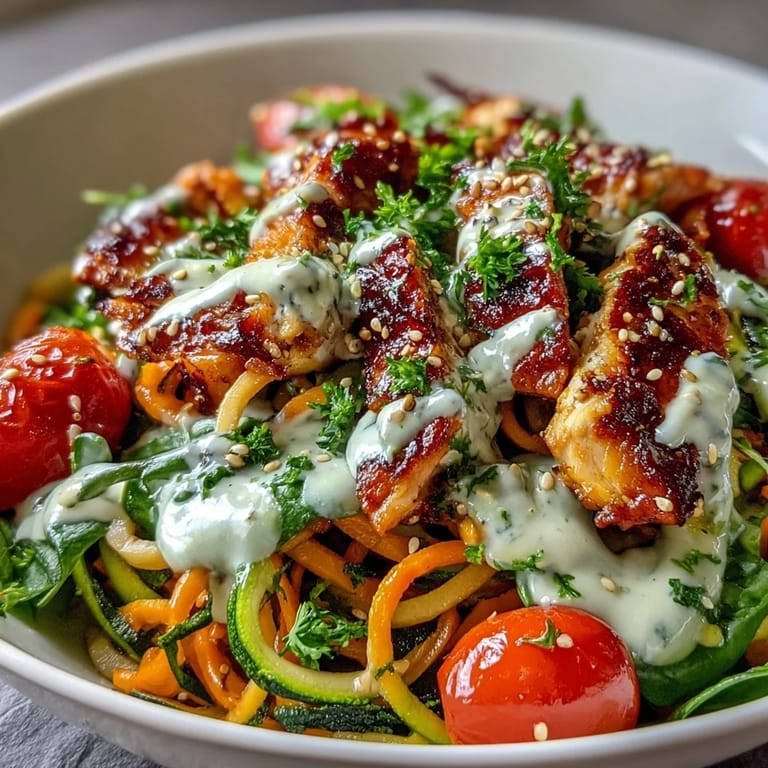
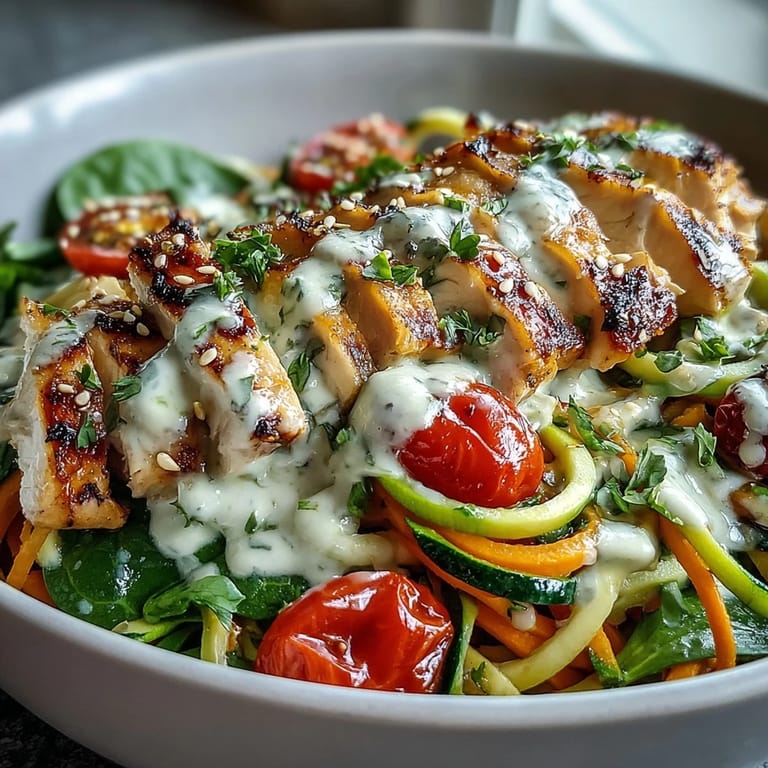
 One afternoon, I stood in my kitchen staring at a spiralizer I'd bought on impulse, wondering if I'd just wasted money on another gadget destined for the back of a drawer. Then I spiralized my first zucchini, watched those delicate green ribbons tumble into the bowl, and suddenly understood the appeal. That evening, I threw together this bowl without any real plan—just vegetables, some leftover chicken, and a tahini sauce I drizzled on top—and somehow it tasted like the most intentional meal I'd made in weeks.
I made this for my partner on a Tuesday when we were both exhausted, and the simplicity of just tossing everything into a bowl and eating felt almost revolutionary. No complicated plating, no cleanup nightmare—just two bowls of bright, fresh food that made us both feel immediately better. That's when I realized this recipe wasn't really about the spiralizer at all; it was about the relief of eating something that feels both nourishing and completely effortless.
Ingredients
- Medium zucchini, spiralized: This is your base, and spiralizing creates a texture that's almost noodle-like when you want it tender, or pleasantly crisp if you prefer it raw—the spiralizer does the heavy lifting so you don't spend twenty minutes with a knife.
- Medium sweet potato, spiralized: The natural sweetness balances the earthiness of the greens and adds a subtle caramel note that keeps the bowl interesting without any added sugar.
- Cherry tomatoes, halved: They burst slightly as you eat, releasing little pockets of brightness that anchor the whole dish.
- Baby spinach: Wilts gently against the warm noodles if you've sautéed them, or stays crisp if you keep everything raw—either way, it's a quiet nutritional workhorse.
- Small carrot, spiralized or julienned: Totally optional, but I add it when I want the bowl to feel more colorful and substantial.
- Grilled chicken breast or firm tofu, 200 g: The protein that actually satisfies; grilled chicken brings smokiness, while tofu absorbs whatever sauce it touches and becomes quietly delicious.
- Tahini: This is the soul of the sauce—creamy, nutty, and somehow works with nearly every vegetable you could throw at it.
- Lemon juice: Cuts through the tahini's richness and brightens everything it touches.
- Olive oil: Keeps the sauce silky and adds the kind of depth that makes people ask what your secret ingredient is.
- Garlic clove, minced: A single clove is enough to wake up the sauce without overpowering it.
- Maple syrup or honey: Just enough sweetness to balance the lemon and garlic, creating a sauce that's complex rather than one-note.
- Water: The secret to getting the sauce to the perfect drizzling consistency—start with less and add more as needed.
- Fresh parsley or cilantro: The garnish that transforms the bowl from simply healthy to genuinely craveable.
- Toasted sesame seeds: They add texture and a whisper of nuttiness that catches people by surprise.
Tired of Takeout? 🥡
Get 10 meals you can make faster than delivery arrives. Seriously.
One email. No spam. Unsubscribe anytime.
Instructions
- Prepare your noodles:
- Spiralize the zucchini and sweet potato, keeping them separate if you're sautéing. If you like your noodles with a little softness, warm them gently in a skillet with a drizzle of olive oil for 2–3 minutes until they just begin to release their water and turn tender—but don't overcrowd the pan or they'll steam rather than sauté.
- Whisk the sauce:
- Combine tahini, lemon juice, olive oil, minced garlic, and maple syrup in a bowl and whisk until it starts to thicken. Slowly add water a tablespoon at a time until the sauce reaches a drizzle-able consistency—thick enough to coat but thin enough to actually flow.
- Build your bowls:
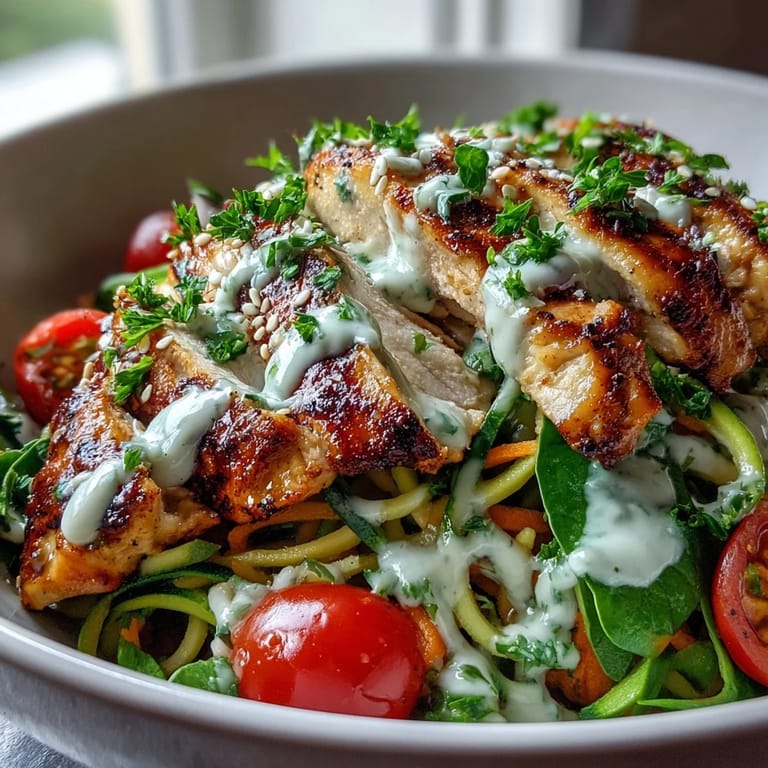
- Divide the spiralized vegetables between two bowls, creating a loose nest that leaves room for the protein to nestle in. Add the cherry tomatoes, spinach, and carrot, then top with your protein.
- Dress and finish:
- Drizzle the tahini sauce generously over the top, then scatter the fresh herbs and sesame seeds across like you're finishing a piece of art rather than just making dinner.
 Save to Pinterest
 I brought this bowl to a potluck once, skeptical about whether people would actually eat spiralized vegetables, and watched three different people ask for the recipe before dessert even came out. That's when I understood that food this simple and honest doesn't need to prove itself—it just quietly becomes the thing people remember from the evening.
Why This Bowl Works as a Weeknight Meal
The magic here is that everything moves at the same pace. The vegetables take about 3 minutes if you're sautéing them, the sauce whips together in 2 minutes, and assembly is barely a minute—there's no waiting for pasta water to boil or chicken to rest. It's the kind of meal that respects your time while still delivering real flavor and satisfaction.
Playing with Variations
The foundation of this bowl is so forgiving that you can build it differently every time you make it. Some nights I use beets instead of sweet potato for an entirely different color and earthiness, other times I spiral cucumber for something lighter and more refreshing. The sauce stays exactly the same, which is actually the point—once you have a really good sauce formula, suddenly you have infinite bowls at your fingertips.
Small Moves That Make a Real Difference
The toasted sesame seeds might seem like an afterthought, but they're the difference between a bowl that tastes good and one that feels complete. Likewise, if you're using store-bought rotisserie chicken, warm it gently instead of using it cold—it brings the whole dish together rather than sitting separately. These aren't complicated techniques; they're just small choices that show you care.
- Toast your sesame seeds in a dry pan for about a minute to unlock their flavor rather than using them straight from the jar.
- If you have fresh herbs available, use them even if it's just parsley—the freshness is non-negotiable.
- Make the sauce a few minutes before you plan to eat so the flavors have time to settle into each other rather than tasting sharp and new.
 Save to Pinterest
 This bowl taught me that the most satisfying meals aren't always the ones with the longest recipe lists; sometimes they're just the ones that respect what you're putting into them. Make this enough times and you'll stop following the steps and start cooking it by feel, which is when it truly becomes yours.
Recipe Questions
- → Do I need to cook the spiralized vegetables?
You can enjoy them raw for extra crunch or quickly sauté for 2-3 minutes to soften. Both methods work beautifully depending on your texture preference.
- → Can I make this ahead of time?
Yes, prepare components separately and store in the refrigerator. Keep the sauce in a separate container and toss just before serving to maintain freshness.
- → What protein alternatives work well?
Beyond chicken and tofu, try shrimp, chickpeas, hard-boiled eggs, or edamame. Each pairs nicely with the tahini dressing.
- → How do I prevent spiralized vegetables from getting soggy?
Pat them dry with paper towels after spiralizing, and dress immediately before serving. Avoid pre-mixing with sauce if storing for later.
- → Can I substitute the tahini sauce?
Absolutely. Try peanut butter, almond butter, or even avocado blended with lemon and herbs for a creamy, dairy-free alternative.
- → What vegetables spiralize best?
Zucchini, sweet potato, carrots, beets, and cucumber hold their shape well. Softer vegetables like tomatoes are better added whole or halved.