 Save to Pinterest
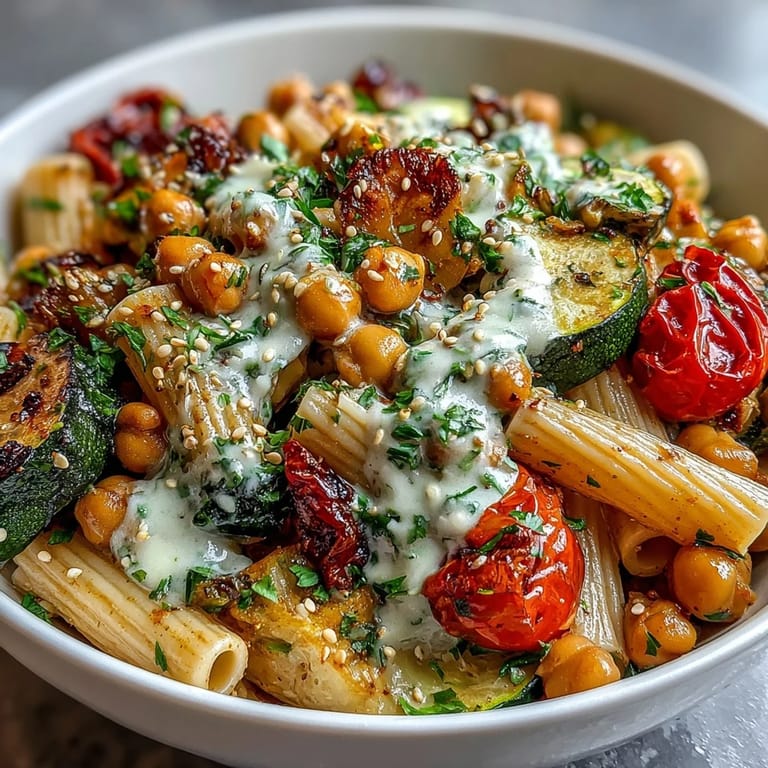
 There's something about chickpea pasta that caught me off guard the first time I tried it—the nuttiness, the way it holds sauce differently than regular wheat. I was skeptical, honestly, standing in the grocery aisle comparing boxes, but a friend raved about how satisfying it felt, how her energy didn't crash midafternoon. Now I make this bowl on nights when I want something that feels indulgent but leaves me feeling genuinely nourished, not heavy.
I served this to my partner last Tuesday after they'd had a particularly draining day, and watching them take that first bite—then immediately go back for more—reminded me why I bother cooking at all. The bowl came together faster than expected, and something about the warm pasta with cool roasted vegetables and that creamy sauce felt like comfort food but the kind that doesn't make you sleepy afterward.
Ingredients
- Chickpea pasta (340 g): This is your protein anchor—it has double the fiber of regular pasta and actually keeps you satisfied, which I learned matters more than I thought.
- Zucchini (1 medium, diced): Roasting transforms this from watery and bland to almost sweet; the moisture releases and concentrates the flavor.
- Red bell pepper (1, chopped): The natural sugars caramelize beautifully in the oven, adding depth that balances the tahini's earthiness.
- Red onion (1 small, sliced): It mellows considerably when roasted, losing that harsh bite and becoming almost candy-like.
- Cherry tomatoes (1 cup, halved): These burst slightly during roasting, creating little flavor pockets throughout the bowl.
- Olive oil (2 tablespoons): The medium that makes everything golden; don't skip this or your vegetables will steam instead of roast.
- Dried oregano (1 teaspoon): Mediterranean warmth without fussing with fresh herbs, though you can swap that in if you have it.
- Smoked paprika (1/2 teaspoon): This ingredient changed my entire roasted vegetable game—it adds complexity that tastes like you did more work than you actually did.
- Tahini (60 g): The backbone of your sauce; make sure it's fresh because old tahini tastes slightly rancid and will sabotage everything.
- Lemon juice (2 tablespoons): This brightens and cuts through the tahini's richness so the bowl doesn't feel heavy.
- Maple syrup or agave (1 tablespoon): Just enough sweetness to balance the lemon and smooth out any sharp edges.
- Warm water (2 tablespoons, more as needed): Controls the sauce consistency; add slowly because it's easier to thin than thicken.
- Garlic clove (1, minced): A single clove is enough—garlic in raw sauce can overpower quickly.
- Fresh parsley (2 tablespoons, chopped): Not just decoration; it adds a peppery brightness that wakes up the whole bowl.
- Toasted sesame seeds (1 tablespoon, optional): These add crunch and a subtle nuttiness that makes people ask what that flavor is.
Tired of Takeout? 🥡
Get 10 meals you can make faster than delivery arrives. Seriously.
One email. No spam. Unsubscribe anytime.
Instructions
- Get your oven hot and ready:
- Preheat to 220°C (425°F) and line a baking sheet with parchment paper so cleanup later feels less like punishment.
- Prep and season your vegetables:
- In a large bowl, toss your diced zucchini, chopped bell pepper, sliced red onion, and halved cherry tomatoes with olive oil, oregano, smoked paprika, salt, and pepper until everything's evenly coated. This is where the flavor foundation gets built—don't rush the tossing.
- Spread them out to roast:
- Arrange vegetables in a single layer on your prepared baking sheet, leaving space between pieces so they roast rather than steam. Pop them into the oven for 20–25 minutes, stirring halfway through, until the edges are caramelized and the vegetables have softened.
- Cook your pasta simultaneously:
- While vegetables are roasting, bring a large pot of salted water to a boil and cook the chickpea pasta according to package instructions—it tends to cook faster than you'd expect. Drain it and set it aside, don't rinse it.
- Whisk your tahini sauce into silkiness:
- In a small bowl, combine tahini, lemon juice, maple syrup, warm water, minced garlic, and salt, whisking until smooth and pourable. If it seizes up or gets thick, add water a tablespoon at a time until it reaches a drizzle consistency.
- Bring everything together:
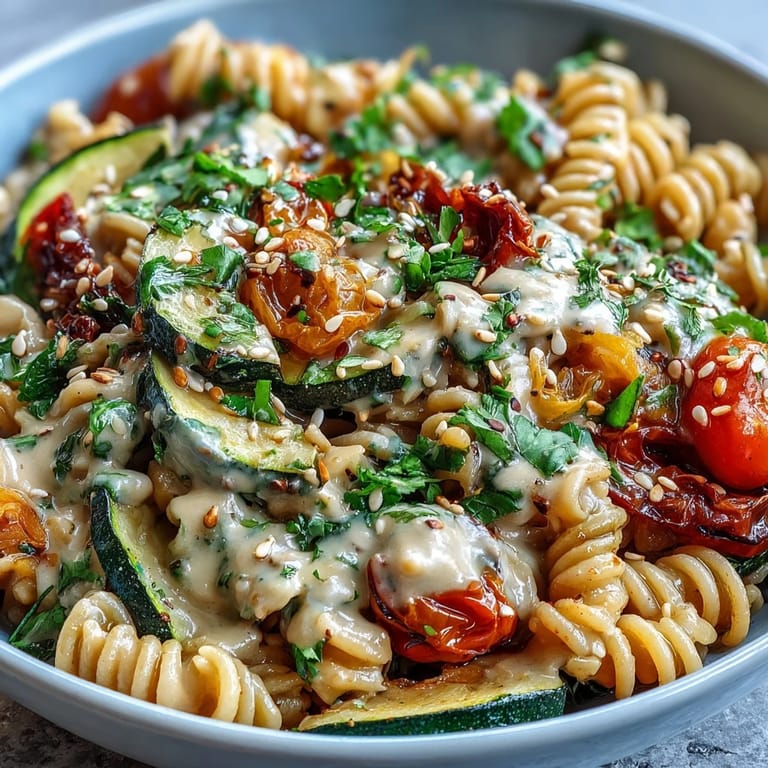
- In a large mixing bowl, combine the cooked pasta and warm roasted vegetables, then drizzle the tahini sauce over everything and toss gently until evenly coated. The warmth of the pasta helps the sauce flow through the whole bowl.
- Plate and finish:
- Divide between serving bowls and garnish with chopped fresh parsley and a sprinkle of toasted sesame seeds if you're using them.
 Save to Pinterest
 What keeps me coming back to this bowl is how it transforms depending on my mood and what's in my vegetable drawer. Last week I added some charred broccoli because I had it on hand, and it became something entirely new but just as good. It's the kind of dish that teaches you flexibility without requiring a completely different recipe.
Seasonal Swaps That Actually Work
Summer calls for this exact combination, but autumn opens up different possibilities entirely. I've roasted cubed eggplant in place of zucchini during September and October, and it soaks up the spices in a richer way. Winter mornings sometimes mean I'll substitute diced carrots and butternut squash, which take maybe five extra minutes of roasting but develop this caramelized sweetness that plays beautifully against the tahini's earthiness.
Protein Additions That Keep It Interesting
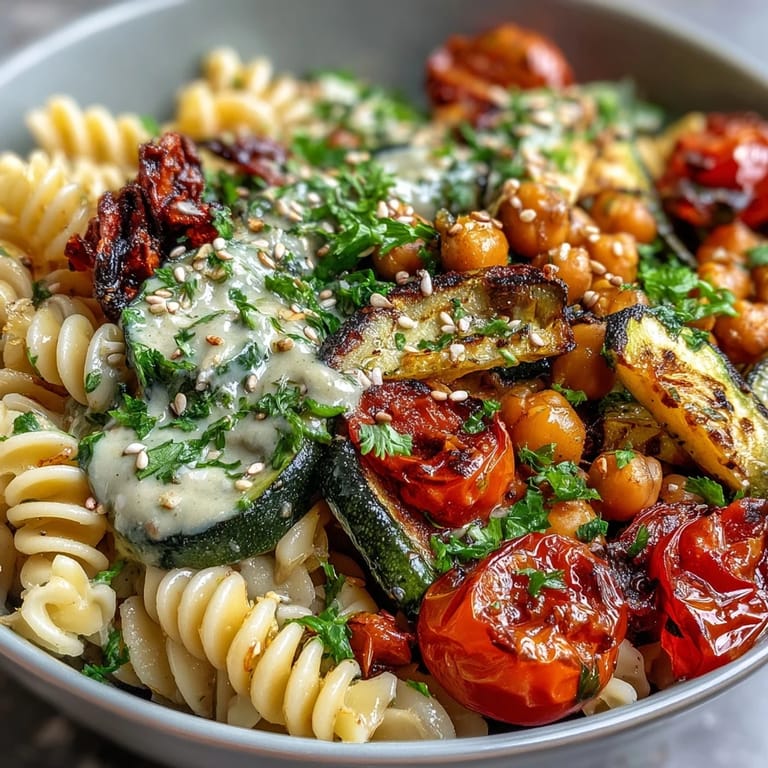
The chickpea pasta already brings substantial protein, but some nights I want more substance or I'm cooking for someone with higher caloric needs. A handful of cooked chickpeas stirred in adds grounding heartiness, while grilled tofu cubes—if you season them properly—contribute a different textural interest without altering the flavor profile significantly.
How to Make This Your Own
This bowl works best when you stop thinking of it as a fixed recipe and start thinking of it as a framework. The tahini sauce works with almost any vegetable; the pasta is interchangeable if you prefer lentil or regular varieties; even the herbs can shift based on what you have. The core principle—warm seasoned carbs, roasted vegetables, creamy sauce, fresh finish—that's what matters.
- Taste your tahini sauce while you're making it and adjust the seasoning before mixing everything together, because it's hard to fix imbalances after the fact.
- If you're meal-prepping, store the sauce separately from the other components so nothing gets soggy overnight.
- This tastes incredible with a squeeze of fresh lemon juice right before eating, so always keep a lemon nearby.
 Save to Pinterest
 This is the kind of meal I make when I need to feel like I'm taking care of myself without the fussiness of complicated cooking. It arrives at the table warm or room temperature, feeds multiple people without complaint, and lingers in the best way—not heavy, not forgettable.
Recipe Questions
- → Is chickpea pasta gluten-free?
Most chickpea pasta brands are naturally gluten-free since they're made from chickpea flour rather than wheat. However, always check the packaging to confirm, as some facilities process gluten-containing ingredients and cross-contamination is possible.
- → Can I make this bowl ahead of time?
Yes, this bowl meal preps beautifully. Store the roasted vegetables, cooked pasta, and tahini sauce separately in airtight containers in the refrigerator for up to 4 days. Reheat the vegetables and pasta gently, then toss with sauce before serving.
- → What vegetables work best in this dish?
Zucchini, bell peppers, red onions, and cherry tomatoes are classic choices that roast beautifully. You can also use eggplant, broccoli, cauliflower, carrots, or Brussels sprouts. Aim for vegetables that cook at similar rates to ensure even roasting.
- → How can I add more protein to this bowl?
Increase the protein content by adding cooked chickpeas, grilled tofu cubes, or roasted chickpeas on top. Hemp seeds, pumpkin seeds, or a dollop of Greek yogurt (if not vegan) also boost protein while complementing the tahini flavors.
- → What's the best way to store leftover tahini sauce?
Keep leftover tahini sauce in an airtight container in the refrigerator for up to one week. The sauce may thicken when chilled—simply whisk in a small amount of warm water to reach the desired consistency before using again.
- → Can I freeze this dish?
While roasted vegetables and chickpea pasta can be frozen separately, the texture may become slightly softer upon thawing. For best results, freeze components without the tahini sauce and add fresh sauce after reheating. Use within 3 months for optimal quality.