 Save to Pinterest
 Wild rice has a way of showing up in your kitchen at the exact moment you need something substantial but not heavy. I found myself standing in front of my pantry on a quiet autumn evening, holding a box of it, suddenly remembering how my neighbor had mentioned the nutty depth it brings to simple dishes. That single conversation sparked an afternoon of experimentation, and what emerged was this pilaf—earthy mushrooms meeting those chewy, tender grains in a way that felt both comforting and sophisticated.
I served this to friends last winter when snow was just beginning to stick to the windows, and something about the way the steam rose from the serving dish while we talked made the whole moment feel like home. One guest actually paused mid-conversation and asked what made it taste so complete—which is exactly the kind of quiet compliment that makes you want to cook it again and again.
Ingredients
- Wild rice: Rinsing it first removes dust and helps it cook more evenly; the grains will have a delightful chew rather than mushiness.
- Vegetable broth and water: The combination gives the rice flavor without overwhelming it—use low-sodium so you control the final salt level.
- Olive oil: Medium heat is your friend here; too hot and it smokes, too cool and the vegetables won't develop that slight golden edge.
- Yellow onion, garlic, celery, and carrot: This aromatic base is traditional for good reason—it builds flavor as these vegetables soften together.
- Cremini or button mushrooms: Slice them evenly so they cook at the same rate, and don't crowd the pan; give them space to release their moisture and caramelize slightly.
- Fresh thyme and bay leaf: Fresh thyme is worth seeking out here because its delicate flavor complements mushrooms in a way dried thyme struggles to match.
- Salt and black pepper: Taste as you go—wild rice absorbs seasoning differently than other grains, so patience with tasting prevents oversalting.
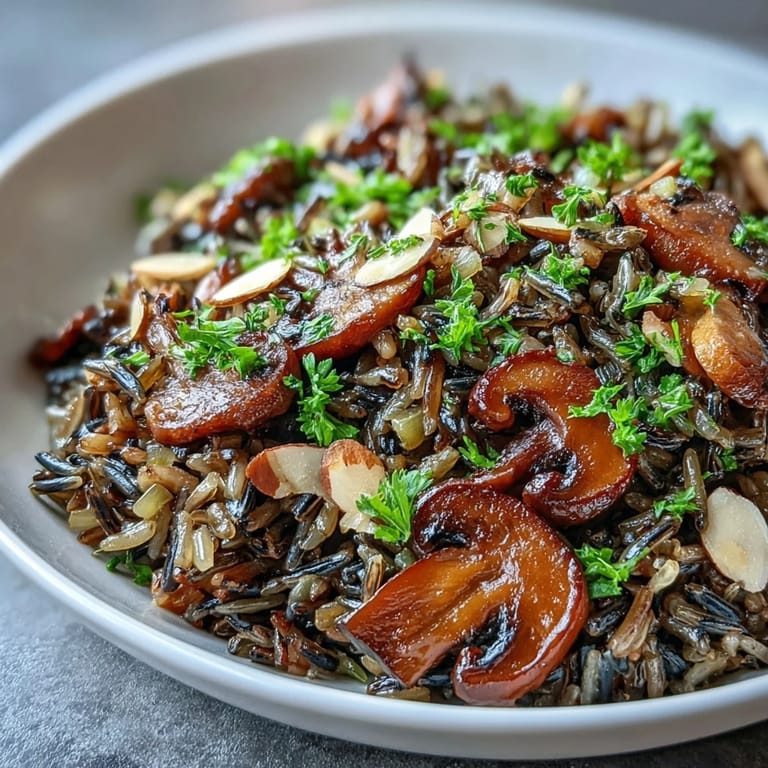
- Fresh parsley and toasted almonds: Parsley brightens the earthiness at the end; almonds add a textural contrast that feels like intentional flourish rather than accident.
Tired of Takeout? 🥡
Get 10 meals you can make faster than delivery arrives. Seriously.
One email. No spam. Unsubscribe anytime.
Instructions
- Start the wild rice:
- Bring the rinsed rice, broth, and water to a boil in your medium saucepan, then reduce the heat immediately and cover it. You'll hear gentle bubbles under the lid—that's exactly right. Let it simmer untouched for 40 to 45 minutes until the rice is tender and the liquid is mostly absorbed.
- Sauté the aromatics:
- While the rice cooks, heat olive oil in your large skillet over medium heat and add the onion, celery, and carrot. Stir them every minute or so for about 5 to 6 minutes until they're soft and the onion becomes translucent—you're building a flavor foundation here.
- Add garlic and mushrooms:
- Once the aromatics are ready, add minced garlic and watch it become fragrant after just 30 seconds. Add your sliced mushrooms and let them cook for 6 to 8 minutes, stirring occasionally—don't rush this part, as the mushrooms need time to release their moisture and turn golden.
- Season and finish cooking:
- Stir in thyme, bay leaf, salt, and pepper, letting everything warm together for about a minute. Remove the bay leaf before folding in your cooked wild rice with a gentle hand, being careful not to break the grains.
- Taste and adjust:
- This is crucial—taste your pilaf now and adjust salt and pepper as needed because wild rice can vary in how much seasoning it needs. Every batch is slightly different, so trust your palate.
- Serve with care:
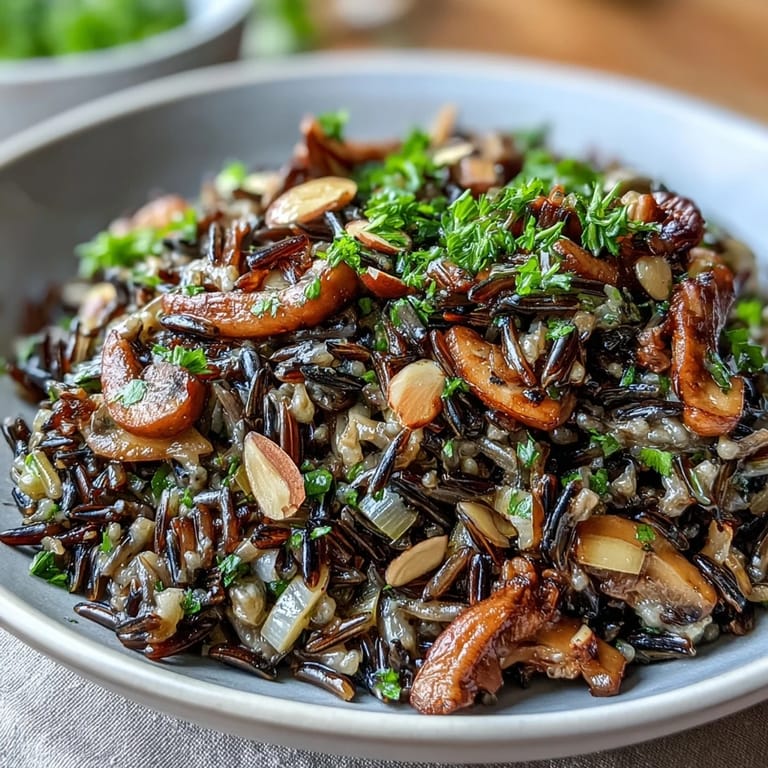
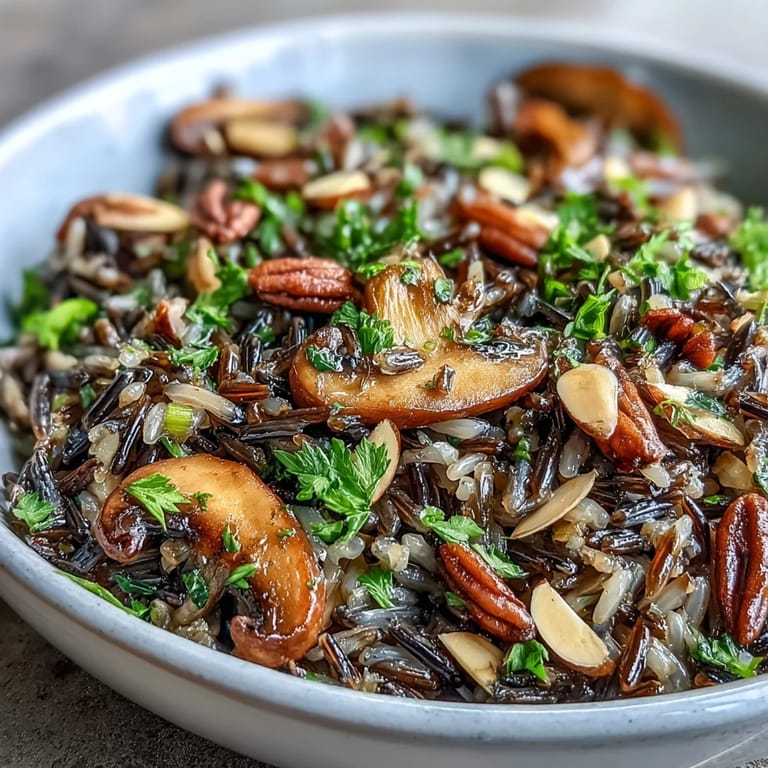
- Transfer to a serving dish and scatter fresh parsley and toasted almonds across the top. The warmth will release the parsley's brightness, bringing everything into balance.
 Save to Pinterest
 There's a moment when you fold the finished wild rice into those earthy mushrooms where you realize this humble pilaf has become something greater than the sum of its parts. That's when cooking stops being a task and becomes a small gift you're giving yourself or someone else.
The Quiet Power of Wild Rice
Wild rice isn't flashy, but it carries itself with an understated confidence that reminds me why simplicity in cooking matters so much. It doesn't need much—just time, good liquid, and respect for its natural rhythm. I learned to stop trying to hurry it along and instead use those 40 minutes to prepare everything else, turning what could feel like waiting into productive, meditative work.
Mushroom Magic
Mushrooms teach you something important about cooking if you pay attention: moisture isn't the enemy when you're willing to cook long enough for it to evaporate. That's when the real flavor emerges, golden and concentrated. I used to crowd the pan thinking I was being efficient, but those moments of overcrowding taught me that a little space makes all the difference.
Making It Your Own
This pilaf becomes different things in different seasons and moments, which is part of why I keep coming back to it. In autumn, those almonds feel essential; in spring, I've added fresh peas instead. The structure stays the same, but the spirit adapts. Sometimes I stir in a splash of dry white wine when the mushrooms are halfway cooked—the alcohol burns off and leaves just a whisper of complexity that makes people lean in closer to ask what you did differently.
- Try stirring in a quarter cup of white wine when the mushrooms are golden for subtle depth without making the dish taste boozy.
- Fresh sage works beautifully instead of thyme if that's what you have on hand or growing in your garden.
- Toast your almonds yourself if possible—the smell alone reminds you why you love cooking.
 Save to Pinterest
 This pilaf sits comfortably on your table as a side dish or stands alone as a quiet, satisfying dinner, which means it fits easily into the kind of cooking that real life demands. Make it once and you'll find yourself reaching for it again whenever you need something that feels both nourishing and genuine.
Recipe Questions
- → Do I need to rinse wild rice before cooking?
Yes, rinsing wild rice removes any debris and helps achieve the perfect texture. Simply place the rice in a fine-mesh sieve and rinse under cold water before adding it to the broth.
- → Can I make this pilaf ahead of time?
Absolutely. You can prepare the entire pilaf up to 2 days in advance. Reheat gently on the stovetop with a splash of broth or water to restore moisture, or warm it in the microwave.
- → What other mushrooms work in this dish?
While cremini or button mushrooms are standard, you can use shiitake for a meatier texture, porcini for intense earthy flavor, or a mix of wild mushrooms for variety. Dried porcini reconstituted in the broth add wonderful depth.
- → Is wild rice gluten-free?
True wild rice is naturally gluten-free, making this pilaf safe for those with celiac disease or gluten sensitivity. Just ensure your vegetable broth is certified gluten-free, as some brands contain barley-based flavorings.
- → Can I use other rice varieties?
You can substitute half the wild rice with brown rice for a different texture and faster cooking time, though the flavor profile will change slightly. Avoid using white rice as it cooks too quickly and lacks the nutty character that makes this dish special.