 Save to Pinterest
 Last Tuesday, I stood in my kitchen watching my roommate devour a Buddha bowl from the café downstairs, and it hit me—I could make something just as vibrant at home, without the price tag or the plastic container. That afternoon, I roasted vegetables until they caramelized, fluffy quinoa steamed on the stove, and by dinner, I'd assembled the most satisfying meal I'd had in weeks. The kind where every bite has a different texture, where creamy tahini coats warm grains, and somehow it feels both indulgent and completely nourishing. This recipe became my answer to those moments when I want something that looks as good as it tastes.
I made this for a friend who'd just decided to go plant-based, and I watched her eyes light up when she realized she wasn't eating rabbit food—she was eating something abundant and delicious. She asked for the recipe three times during that meal alone, and now she texts me photos of her variations. That's when I knew this bowl wasn't just nutritious; it was the kind of food that changes how people think about eating well.
Ingredients
- Quinoa (1 cup): Rinse it thoroughly under cold water before cooking—this removes the bitter coating and makes the grains fluffier and more tender.
- Water (2 cups): Use filtered water if your tap water is heavily chlorinated, as it can affect the subtle nutty flavor of quinoa.
- Salt (1/2 tsp for quinoa, plus to taste): Salt the cooking water generously; it seasons the grains from the inside out.
- Sweet potato (1 medium, peeled and cubed): Cut pieces roughly the same size so they roast evenly; smaller chunks get crispier edges, which I prefer.
- Red bell pepper (1, diced): The sweetness mellows when roasted, and it adds natural color to your bowl.
- Zucchini (1 small, sliced): Slice it on the thicker side—thin slices tend to dry out in the oven.
- Broccoli florets (1 cup): Toss with a little extra oil if you like them crispy and caramelized on the edges.
- Olive oil (2 tbsp for roasting): Don't skimp here; proper coating ensures vegetables brown instead of steam.
- Smoked paprika (1/2 tsp): This gives a subtle depth that makes people ask what the secret ingredient is.
- Black pepper: Grind fresh pepper right over the vegetables before roasting for better flavor.
- Chickpeas (1 can, 15 oz): Pat them completely dry after rinsing; damp chickpeas won't crisp as nicely if you decide to roast them instead.
- Tahini (1/3 cup): Use raw tahini, not the sweetened kind—the nutty earthiness matters here.
- Lemon juice (2 tbsp): Fresh lemon only; bottled changes the brightness of the dressing.
- Water for dressing (2 tbsp, plus more): Start with less and add gradually until you reach a consistency that drizzles smoothly.
- Maple syrup or agave (1 tbsp): A touch of sweetness balances the tahini's earthiness and the lemon's acid.
- Garlic (1 small clove, minced): Mince it fine and let it sit in the lemon juice for a minute before mixing into the dressing—this mellows its harshness slightly.
- Avocado (1, sliced): Add this only right before serving or it will brown.
- Pumpkin seeds (2 tbsp): They add crunch and a subtle earthiness that complements everything else.
- Fresh parsley or cilantro (2 tbsp, chopped): Either works; cilantro is sharper, parsley is milder—choose based on your mood.
Tired of Takeout? 🥡
Get 10 meals you can make faster than delivery arrives. Seriously.
One email. No spam. Unsubscribe anytime.
Instructions
- Heat your oven and prep the vegetables:
- Set the oven to 425°F (220°C) and line a large baking sheet with parchment paper if you have it—makes cleanup easier and prevents sticking. While it preheats, peel and cube your sweet potato into bite-sized pieces, then dice the bell pepper, slice the zucchini, and break the broccoli into florets, making sure pieces are similar sizes so they roast evenly.
- Season and roast:
- Scatter all the vegetables on your baking sheet, drizzle generously with olive oil, and sprinkle with smoked paprika, salt, and pepper. Toss everything together with your hands so each piece gets coated—this is where the magic starts. Pop it in the oven and set a timer for 12 minutes; at the halfway point, give everything a stir so it browns evenly on all sides, then let it finish roasting until the edges are caramelized and the sweet potato is fork-tender, about 8–13 minutes more.
- Start the quinoa while vegetables roast:
- Rinse your quinoa under cold running water in a fine-mesh strainer for about a minute—you'll feel the grains getting slippery, which means the coating is off. In a saucepan, combine the rinsed quinoa, 2 cups of water, and 1/2 teaspoon of salt, then bring it to a boil over medium-high heat. Once it's boiling, reduce the heat to low, cover with a lid, and let it simmer quietly for 15 minutes—don't peek, don't stir. When the time's up, remove it from heat and keep it covered for 5 minutes, then fluff it gently with a fork so the grains separate.
- Whisk together the tahini dressing:
- In a medium bowl, combine 1/3 cup tahini, 2 tablespoons of fresh lemon juice, 1 tablespoon of water, 1 tablespoon of maple syrup, and your minced garlic clove with a pinch of salt. Whisk vigorously until it's smooth and creamy—it might look grainy at first, but keep going; the lemon juice will help emulsify it. If it's too thick, add water a teaspoon at a time until you get a consistency that drizzles easily but still coats the back of a spoon.
- Bring it all together:
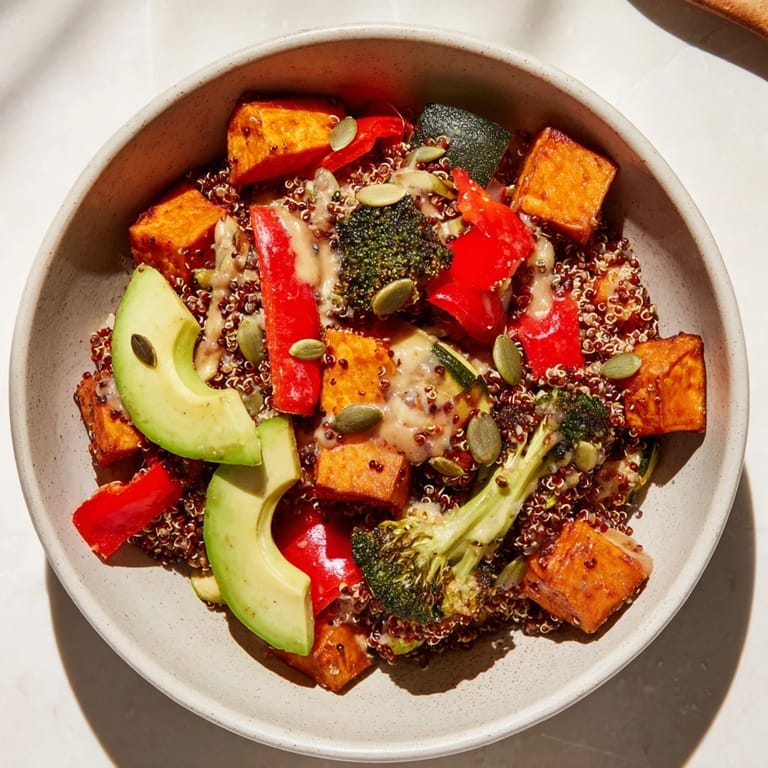
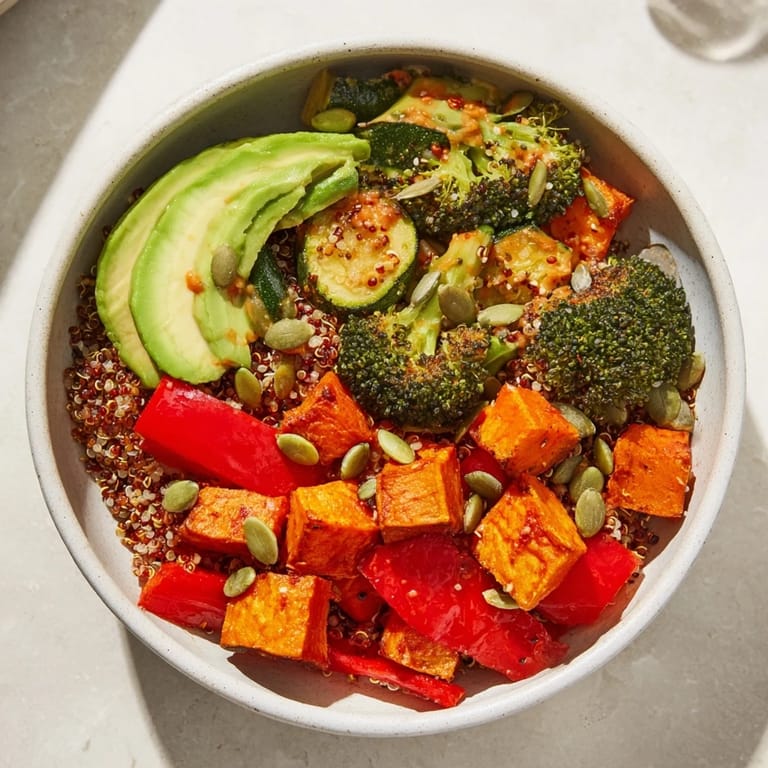
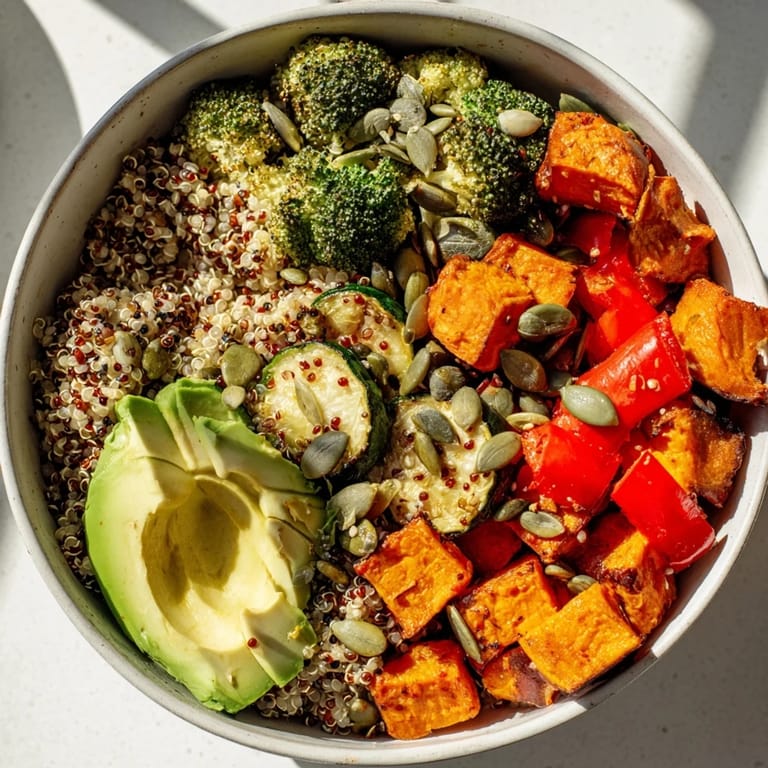
- Divide the fluffy quinoa among four bowls, creating a base layer. Arrange the warm roasted vegetables on top, scatter the drained chickpeas over everything, and drizzle generously with tahini dressing. Top with avocado slices if you have them, sprinkle with pumpkin seeds and fresh herbs, and serve while the vegetables are still warm so the dressing gets slightly silky against the heat.
 Save to Pinterest
 There's something almost meditative about assembly—layering warm grains, arranging vegetables like you're creating edible art, watching the creamy dressing pool into the crevices. My sister once said eating this bowl felt like taking care of herself, and I realized that's exactly what good food should feel like.
Why Roasting Changes Everything
Raw vegetables are fine, but roasting them transforms them into something completely different—caramelization happens, natural sugars concentrate, and suddenly you have depth of flavor instead of just nutrition on a plate. The sweet potato becomes almost creamy inside with crispy edges, the bell pepper sweetens and softens, and even the broccoli gets a slightly charred, irresistible crispness. This is why this bowl doesn't feel like health food; it tastes like actual indulgence.
The Tahini Dressing Secret
The dressing is where people always ask questions because it doesn't taste like tahini at all—it tastes bright, creamy, and completely craveable. The lemon juice is crucial because it cuts through the richness and actually helps emulsify everything into silky smoothness. I've made this dressing wrong before by being impatient with the whisking, and it stays grainy and disappointing, but when you give it attention and actually whisk it thoroughly, it becomes something you want to put on literally everything.
Make It Your Own
This bowl is really a template more than a rigid recipe—I've made it with roasted cauliflower, carrots, Brussels sprouts, and honestly any vegetable that caramelizes beautifully. Sometimes I swap the chickpeas for white beans or lentils depending on what I have, and I've made the dressing with tahini substitutes when someone had an allergy. The formula is what matters: warm grain, roasted vegetables, protein, creamy dressing, and fresh toppings for brightness.
- Try adding roasted chickpeas for extra crunch if you want them crispy instead of soft.
- The dressing works on salads, roasted vegetables, or even as a dip for raw vegetables and flatbread.
- Make extra dressing and keep it in the fridge for up to five days—it's perfect on leftovers.
 Save to Pinterest
 This bowl has become my go-to when I want to feel nourished without overthinking dinner. It's one of those recipes that proves eating well doesn't require sacrifice—it just requires paying attention to how flavors and textures actually work together.
Recipe Questions
- → Can I prepare this bowl in advance?
Yes, you can cook the quinoa and roast the vegetables ahead of time and store them separately in the refrigerator for up to 3 days. Assemble just before serving, or store the dressing separately and drizzle when ready to eat.
- → What vegetables work best for roasting?
Sweet potato, bell pepper, zucchini, and broccoli work wonderfully, but feel free to substitute with carrots, cauliflower, Brussels sprouts, or eggplant based on your preferences and what's in season.
- → How do I make the tahini dressing creamy?
Whisk tahini with lemon juice, water, and maple syrup until smooth. If it's too thick, gradually add more water one tablespoon at a time until you reach a pourable consistency that coats the back of a spoon.
- → Can I substitute the chickpeas?
Absolutely. Black beans, lentils, white beans, or tofu are excellent alternatives that provide similar protein content and pair well with the other bowl components.
- → Is this suitable for meal prep?
Yes, this bowl is ideal for meal prep. Store the quinoa, roasted vegetables, and dressing in separate containers for up to 3 days. Keep toppings like avocado and fresh herbs separate and add just before eating.
- → What beverages pair well with this meal?
Crisp white wines like Sauvignon Blanc complement the fresh, light flavors beautifully. For non-alcoholic options, try homemade iced tea, fresh lemonade, or a green juice.