 Save to Pinterest
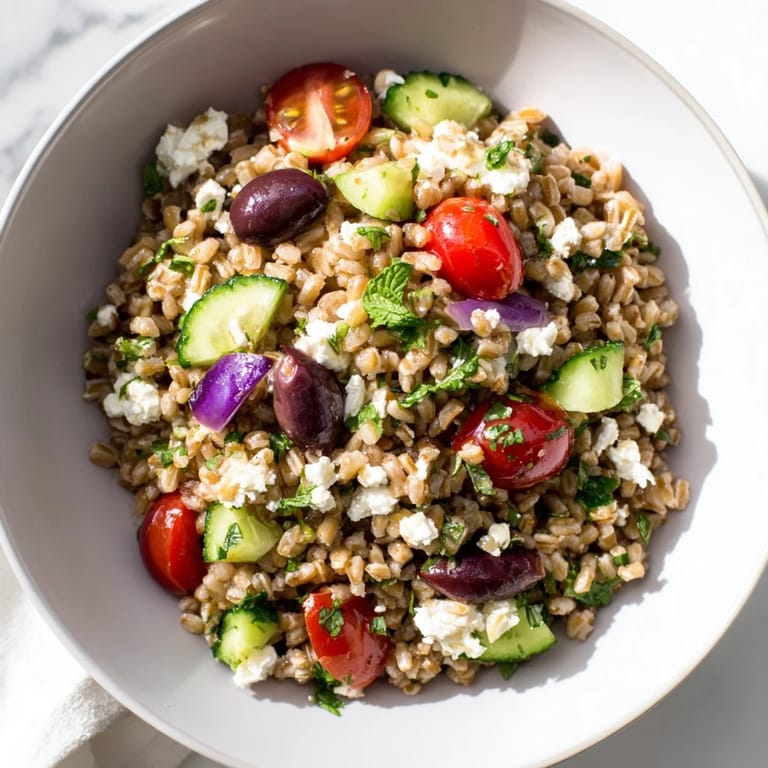
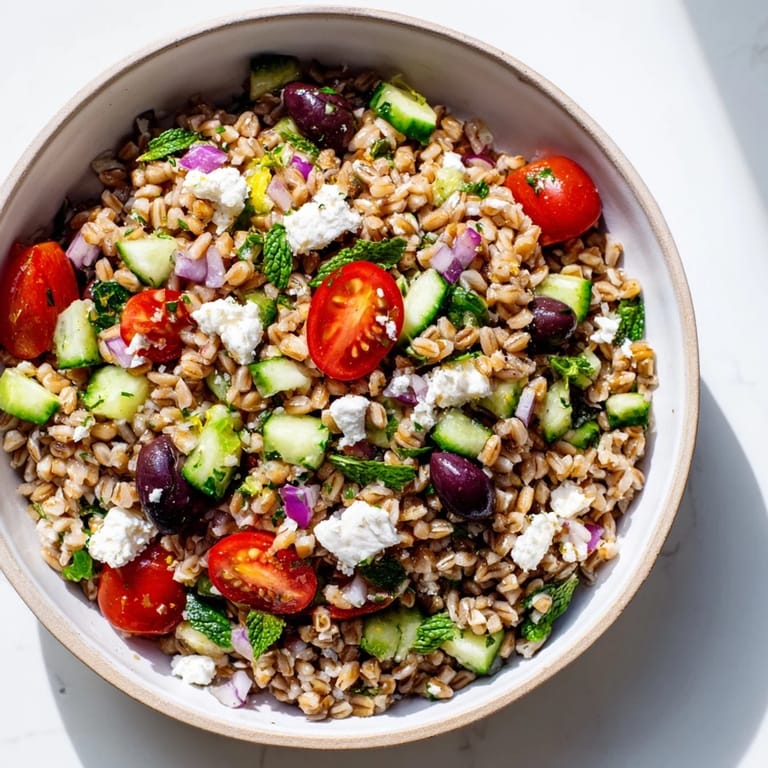
 There's something about tossing together a Mediterranean salad on a warm afternoon that instantly transports you somewhere coastal and carefree. I discovered farro salad during a lazy Sunday market visit when the vendor at the grain stand kept raving about how it stays chewy no matter how long it sits, making it perfect for meal prep or last-minute entertaining. The first time I made it, I was genuinely surprised how the nutty farro soaked up the lemon-oregano dressing while the briny olives and creamy feta created this unexpected harmony that felt both simple and somehow sophisticated.
I made this for a potluck at my neighbor's house during a particularly hectic week, and honestly, I almost brought store-bought hummus instead. I'm so glad I didn't—watching people go back for thirds and asking for the recipe felt like a small win in an otherwise chaotic month. One friend even said it was the kind of salad that makes you feel healthier just eating it, which made me laugh because it's really just delicious ingredients doing their thing.
Ingredients
- Farro (1 cup uncooked): This ancient grain has a satisfying chewy texture and nutty flavor that holds up beautifully in a cold salad; rinsing it first removes excess starch and helps it cook more evenly.
- Water (3 cups) and salt (1/2 teaspoon for cooking): The ratio ensures your farro cooks through without becoming gummy, and salting the cooking water seasons it from within.
- Cherry tomatoes (1 cup, halved): Fresh, juicy tomatoes are essential here; if they're mealy, your whole salad loses that bright burst of flavor that ties everything together.
- Cucumber (1 cup, diced): English cucumbers work better than watery standard ones because they add crispness without turning soggy after a day of dressing.
- Red onion (1/4 cup, finely chopped): The sharpness mellows slightly as it sits, creating depth that punches through all the other flavors beautifully.
- Fresh parsley and mint (1/4 cup and 2 tablespoons): Parsley is the backbone here; mint is optional but worth it if you have it because it adds a cool, unexpected note.
- Kalamata olives (1/3 cup, pitted and sliced): These briny, meaty olives are non-negotiable; cheaper olives will make the salad taste flat and one-dimensional.
- Feta cheese (1/2 cup, crumbled): Crumbly feta melts slightly into the warm farro and creates pockets of salty richness throughout.
- Extra-virgin olive oil (3 tablespoons): Use something you'd actually taste on its own; it's the backbone of your dressing and makes all the difference.
- Fresh lemon juice (2 tablespoons): Bottled lemon juice just doesn't have the brightness here, so squeeze a fresh lemon if you possibly can.
- Dried oregano (1 teaspoon), garlic (1 minced clove), salt, and black pepper: Together these build a dressing that tastes like a sunny Mediterranean breeze.
Tired of Takeout? 🥡
Get 10 meals you can make faster than delivery arrives. Seriously.
One email. No spam. Unsubscribe anytime.
Instructions
- Rinse and cook the farro:
- Run the farro under cold water in a fine-mesh strainer, swirling it around with your fingers to wash away any dust or debris. Combine it in a saucepan with 3 cups of water and 1/2 teaspoon salt, bring to a boil, then immediately drop the heat to low, cover, and let it simmer gently for 20 to 25 minutes—you want it tender but still with a slight bite, not mushy.
- Cool your farro properly:
- Drain the farro in that same strainer (if there's excess water clinging to it, that's actually fine) and spread it on a plate or shallow bowl to cool faster. This prevents the residual heat from making it gummy and lets you handle it without burning your fingers.
- Assemble your salad base:
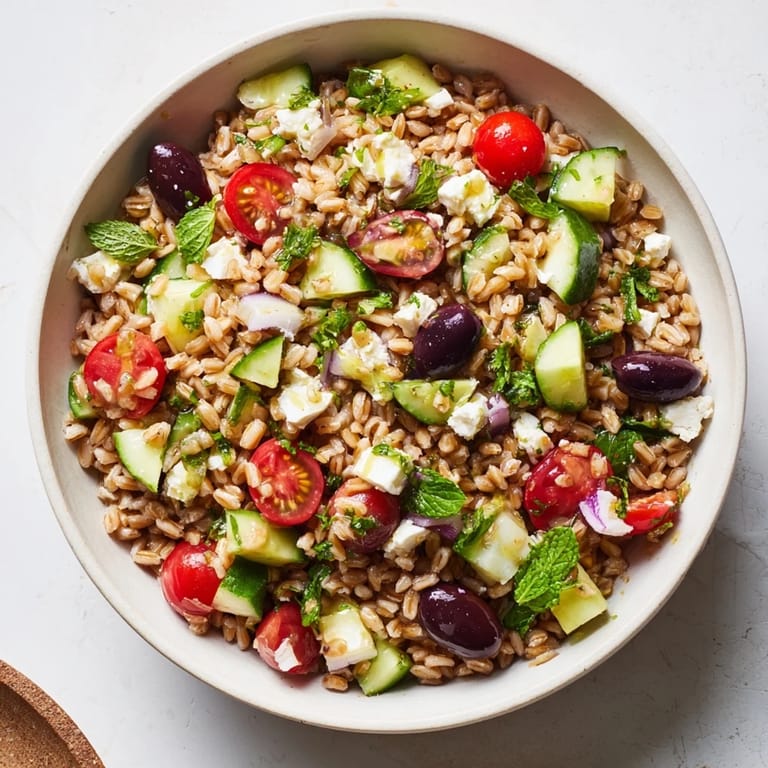
- In your largest bowl, combine the cooled farro with the halved cherry tomatoes, diced cucumber, finely chopped red onion, fresh parsley, mint if you're using it, sliced olives, and crumbled feta. Give it a gentle toss just to distribute everything evenly.
- Whisk your dressing together:
- In a small bowl, whisk the olive oil, fresh lemon juice, dried oregano, minced garlic, salt, and pepper until it comes together into a cohesive dressing. The garlic should be finely minced so it distributes throughout rather than sitting in chunks.
- Bring it all together:
- Pour the dressing over your salad and toss gently but thoroughly to coat everything without breaking up the feta or crushing the vegetables. Taste it now—this is your moment to adjust the lemon, salt, or oregano if something feels off.
- Chill and let flavors meld:
- Cover your salad and refrigerate for at least 15 minutes before serving, though honestly, a few hours or even overnight makes this better as the farro continues absorbing all that lemony dressing. The flavors deepen and round out beautifully.
 Save to Pinterest
 What struck me most about this salad was how my skeptical teenager actually asked for the leftovers to bring to school, which in parenting terms is basically a five-star review. It became the dish I reach for when I want to feel like I'm eating something bright and intentional without spending hours in the kitchen.
Why This Salad Works Year-Round
In summer, when tomatoes and cucumbers are at their peak, this salad practically sings—the vegetables are so flavorful they need almost nothing. In winter, when fresh produce is less exciting, the farro and olives become the stars, and the lemon dressing brightens everything up just when you need it most. Spring is perfect for loading up on fresh herbs if you're growing them, and fall works beautifully with slightly firmer tomatoes that hold their shape better.
Make It Your Own
One of the best parts about this recipe is that it genuinely encourages improvisation without falling apart. I've added roasted red peppers when I had them, tossed in some artichoke hearts when the tomatoes looked disappointing, and even stirred in some diced cooked chicken when I wanted more protein. The farro and dressing are sturdy enough to hold whatever you throw at them, which means you're never locked into one version.
Serving Suggestions and Storage
This salad is wonderfully versatile—serve it as a standalone light lunch, bring it to a picnic where it'll survive the car ride without wilting, or plate it alongside grilled fish or chicken for a more substantial meal. It keeps beautifully in the refrigerator for up to three days, though the cucumber will gradually soften (which I actually don't mind, but if you prefer it crisp, add fresh cucumber just before serving). If you're making this ahead, store the dressing separately and toss it in a few hours before eating to keep everything at its freshest.
- Pairs beautifully with a crisp Sauvignon Blanc or chilled rosé if you're in the mood for wine.
- For a vegan version, simply omit the feta or swap in a crumbly vegan cheese alternative.
- Double the recipe easily for a crowd—the dressing proportions scale up perfectly.
 Save to Pinterest
 This salad has become my go-to answer when someone asks me to bring something to an event, and it's because it somehow feels both effortless and impressive. It's the kind of dish that makes you look like you've got everything figured out in the kitchen, even on the days when you absolutely don't.
Recipe Questions
- → Can I prepare this salad ahead of time?
Yes, this salad actually improves when made ahead. Prepare all components and store the dressing separately. Combine and dress the salad 15-30 minutes before serving, or toss with dressing and refrigerate for up to 4 hours. This allows flavors to meld beautifully.
- → What can I substitute for feta cheese?
For a vegan version, use vegan cheese or omit entirely. Goat cheese, ricotta salata, or fresh mozzarella also work well. These alternatives maintain the creamy, tangy element while offering different flavor profiles.
- → How do I cook farro properly?
Rinse farro under cold water first. Combine with water in a 1:3 ratio and bring to a boil. Reduce heat, cover, and simmer for 20-25 minutes until tender but still chewy. Drain excess water and cool before using. Farro should maintain a pleasant, slightly nutty texture.
- → Can I make this salad with different vegetables?
Absolutely. Bell peppers, artichoke hearts, zucchini, or roasted eggplant all work wonderfully. Keep the ratio of grains to vegetables roughly balanced. Fresh herbs like basil or dill can substitute for parsley or mint depending on preference.
- → What dressing changes would you recommend?
Substitute balsamic vinegar for lemon juice for deeper notes, or use red wine vinegar for tanginess. Increase oregano or add fresh basil for variation. Dijon mustard adds complexity. Always adjust lemon juice or vinegar to taste for proper acidity balance.
- → Does this salad contain gluten?
Farro is a wheat product containing gluten. For a gluten-free version, substitute with quinoa, wild rice, or brown rice in equal amounts, adjusting cooking time accordingly. Always verify ingredient labels for potential cross-contamination in shared facilities.