 Save to Pinterest
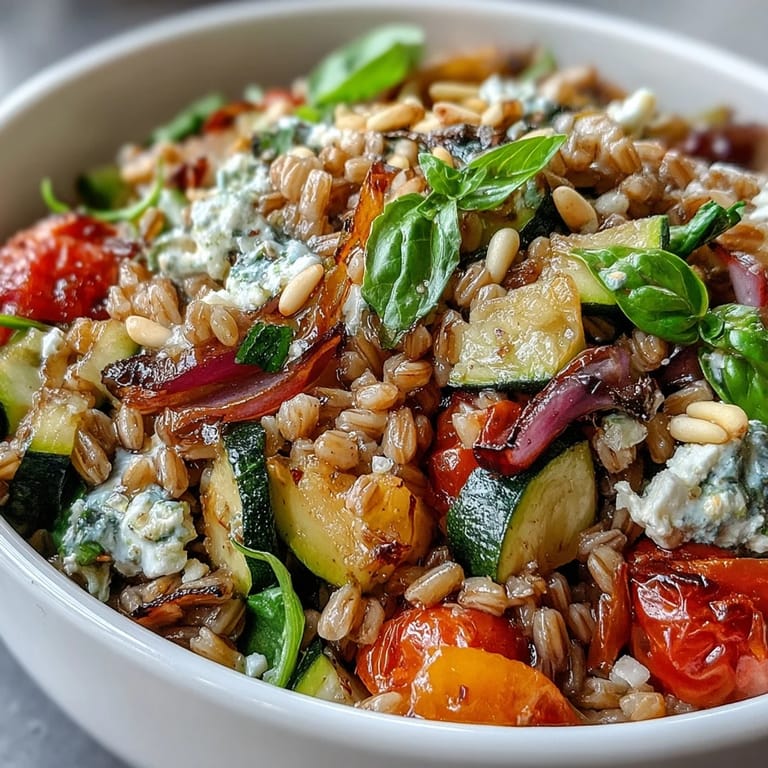
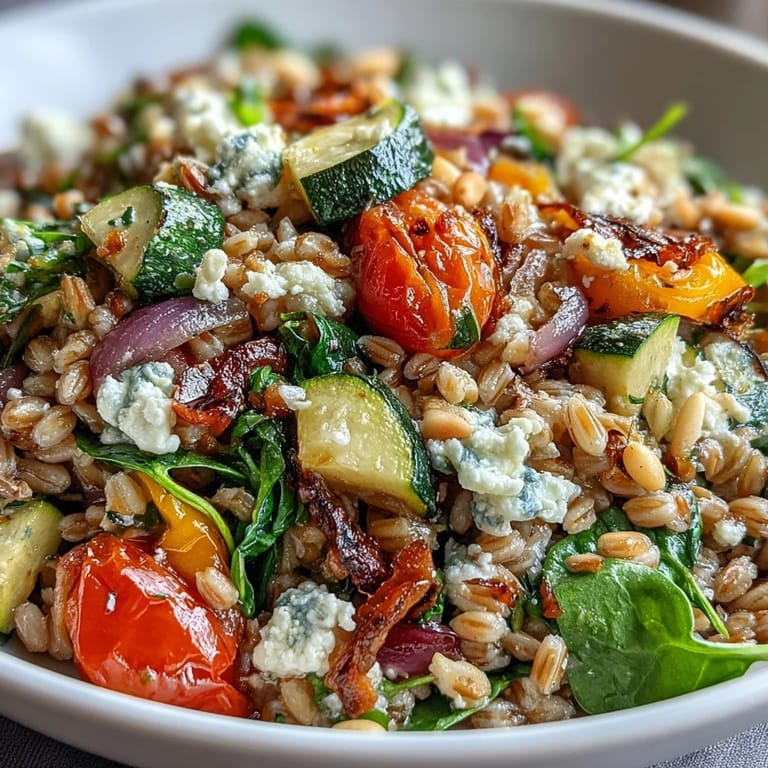
 There's something about the way farro pasta catches the light when you toss it with bright Mediterranean vegetables that makes you feel like you're cooking in someone's sun-drenched kitchen, not your own. I discovered this bowl during a stretch of wanting something hearty but not heavy, something that felt celebratory without requiring hours at the stove. The nutty warmth of farro paired with the snap of fresh peppers became my answer to those evenings when I needed to feed myself well but didn't want to overthink it.
I made this for a friend who'd just moved into a new place, and we sat on her kitchen counter eating it straight from the bowl, talking about fresh starts and how a simple meal could feel like an occasion. She asked for the recipe before we'd even finished, which tells you something about how it lands.
Ingredients
- Farro pasta: This grain has a delicate, slightly chewy texture and a subtle nuttiness that makes ordinary pasta feel special; if you can't find it, whole farro works beautifully and just takes a few minutes longer to cook.
- Zucchini: Dice it into small, uniform pieces so it softens evenly without turning mushy, and don't skip the sauté step where you'll actually taste it caramelize slightly.
- Red and yellow bell peppers: The color contrast isn't just pretty; each color brings its own flavor note, with red being slightly sweeter and yellow more mellow.
- Cherry tomatoes: Halving them releases their juices into the bowl, creating a natural sauce that coats the pasta beautifully.
- Baby spinach: Add it at the very end so it wilts gently from the residual heat rather than cooking down to nothing.
- Red onion: Slicing it thin and sautéing it mellows the sharp bite while keeping that crisp texture that makes each bite interesting.
- Garlic: Two cloves minced fine enough that they almost disappear into the oil, infusing everything without overwhelming.
- Extra virgin olive oil: Use good oil here because it's not hiding in a complex sauce; it's doing the heavy lifting in the dressing, so let it shine.
- Lemon juice: Fresh squeezed makes a real difference, brightening everything without the metallic notes of bottled juice.
- Dried oregano: This Mediterranean staple ties the whole bowl together with a subtle herbaceous warmth.
- Feta cheese: Crumbled feta adds salty, tangy notes that cut through the richness and make each component taste more like itself.
- Pine nuts: Toasting them yourself intensifies their buttery depth far more than using them raw or pre-toasted.
Tired of Takeout? 🥡
Get 10 meals you can make faster than delivery arrives. Seriously.
One email. No spam. Unsubscribe anytime.
Instructions
- Get your water boiling:
- Fill a large pot generously with salted water and let it come to a rolling boil; the salt seasons the pasta from the inside out. While you're waiting, this is the perfect moment to prep all your vegetables so nothing feels rushed.
- Cook the farro pasta:
- Follow the package instructions closely, testing a strand a minute or two before the suggested time so you catch it at that perfect al dente moment when it still has a slight resistance. Drain it well and set it aside, but don't rinse it; that starch helps everything cling together later.
- Build your flavor base:
- Heat olive oil in a large skillet over medium heat, then add your sliced red onion and minced garlic. You'll know it's ready when the kitchen fills with that unmistakable aroma and the onion starts to turn translucent, about two minutes.
- Add the hearty vegetables:
- Toss in the zucchini, both bell peppers, and cherry tomatoes, stirring occasionally so everything catches some heat. Watch for that moment when the vegetables soften just enough to be tender but still hold their shape and color, usually around six to eight minutes.
- Wilt the spinach:
- Stir in the baby spinach and cook for just a minute or two until it's soft and bright green. Remove the skillet from heat immediately so the spinach doesn't continue cooking and lose its vibrant color.
- Whisk your dressing:
- In a small bowl, combine the remaining olive oil, fresh lemon juice, dried oregano, sea salt, and black pepper, whisking until the dressing is emulsified and looks slightly creamy. Taste it straight from the whisk; this is your chance to adjust the seasoning before everything comes together.
- Bring it all together:
- Transfer the cooked farro pasta to a large bowl, add the sautéed vegetables, and pour the dressing over everything. Toss gently but thoroughly so every strand of pasta and piece of vegetable gets coated in that golden dressing.
- Plate and garnish:
- Divide the bowl among four serving dishes, then top each with crumbled feta cheese, fresh chopped parsley, and toasted pine nuts if you're using them. Serve it warm while the pasta still holds some heat, or let it cool to room temperature where the flavors actually deepen and settle into each other.
 Save to Pinterest
 There was an afternoon when I made this for myself after a particularly long week, and something about the ritual of chopping vegetables and whisking the dressing felt like exactly what I needed. The meal that came together wasn't fancy, but it was nourishing in a way that went beyond calories and nutrients.
Why Farro Matters
Farro is one of those ancient grains that feels modern because it's so much more interesting than regular pasta, with a texture that's almost creamy when cooked properly and a subtle earthiness that makes vegetables taste more like themselves. It's not precious or difficult; it just asks you to pay attention to cooking time and taste as you go. Once you've worked with farro, you start seeing it everywhere and wondering why more people don't cook with it.
Making It Your Own
This bowl is genuinely one of the most flexible recipes you can make, shifting easily based on what's available or what you're craving. The structure stays the same, but everything inside can change with the seasons and your preferences. Think of it as a template rather than a strict instruction, where the principles matter more than hitting exact ingredients.
Serving and Storage Ideas
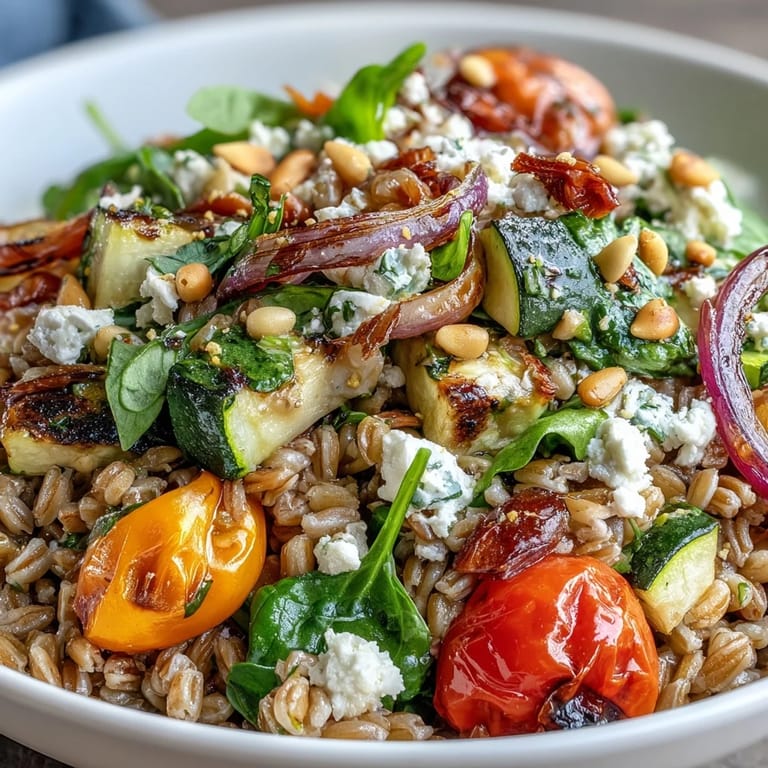
This dish is wonderful served warm straight from the bowl, but it's equally delicious the next day when you eat it cold or at room temperature as a salad. The flavors actually deepen overnight as the dressing continues to coat everything, so don't hesitate to make it ahead if you're planning meals for the week. A few thoughts before you go: leftovers keep for three or four days in an airtight container, though the spinach will darken slightly. Add feta and pine nuts fresh when serving rather than mixing them in, so they don't get soggy. If you're taking this somewhere, pack the dressing separately and toss just before eating.
- Serve warm right after cooking or chill for a refreshing cold salad the next day.
- Add grilled chicken, roasted chickpeas, or white beans if you want extra protein beyond the feta.
- Swap vegetables based on what's fresh and in season where you are.
 Save to Pinterest
 This farro pasta bowl has become one of those recipes I return to again and again, not because it's complicated or impressive, but because it's deeply satisfying and never feels like a compromise. It's the kind of meal that reminds you why cooking for yourself matters.
Recipe Questions
- → What is farro pasta?
Farro pasta is made from farro, an ancient wheat variety with a nutty flavor and chewy texture. It's higher in fiber and protein than regular pasta, offering more nutritional value while maintaining a satisfying bite when cooked al dente.
- → Can I use regular farro instead of pasta shapes?
Absolutely. Whole farro grains work beautifully in this dish. Simply cook the farro according to package instructions for 20-25 minutes until tender, then proceed with the same vegetable preparation and dressing.
- → How long does this bowl keep in the refrigerator?
This farro pasta bowl stores well for 3-4 days in an airtight container. The flavors actually develop and meld overnight. Enjoy it cold straight from the refrigerator or gently warmed with a splash of olive oil.
- → What vegetables can I substitute?
Eggplant, artichoke hearts, roasted red peppers, or fresh cucumbers work wonderfully. In summer, try adding fresh basil or mint. In winter, roasted root vegetables like butternut squash provide hearty substance.
- → Is this suitable for meal prep?
Yes, this dish is excellent for meal prep. The grains and vegetables hold their texture well throughout the week. Store the dressing separately if you prefer to toss it just before serving for maximum freshness.
- → Can I make this vegan?
Simply omit the feta cheese or replace it with a plant-based feta alternative. The remaining ingredients are naturally vegan, and the dish remains just as satisfying and flavorful without dairy.