 Save to Pinterest
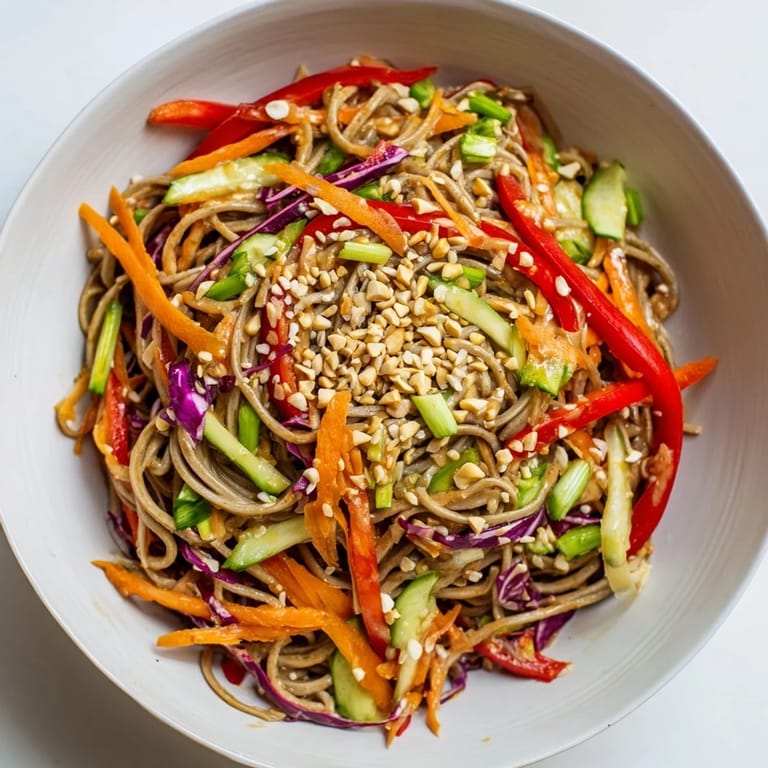
 One sweltering afternoon, I had a friend coming over and absolutely nothing in my fridge felt appealing—just some wilting vegetables and a box of soba noodles I'd been meaning to use. Rather than ordering takeout, I tossed everything together with a quick sesame-ginger dressing I threw together on instinct, and when my friend took that first bite, they literally closed their eyes. That bowl of cold noodles became the thing they asked me to make every summer after that, and it's stayed on my regular rotation ever since.
I remember making this for a potluck in July when the kitchen was already hot enough without turning the oven on, and everyone kept coming back for seconds even though they'd brought their own dishes. What surprised me was how the flavors got even better the next day after everything had marinated together overnight—those noodles soaked up the dressing like they were drinking it in, and the vegetables stayed crisp.
Ingredients
- Soba or rice noodles (250g): Soba has this delicate, slightly nutty flavor that pairs perfectly with the sesame dressing, but rice noodles work just as well and are easier to find; the key is rinsing them thoroughly after cooking so they don't clump.
- Carrot, julienned: The sweetness balances the savory dressing and its crunch stays perfect even if you make this ahead of time.
- Red bell pepper, thinly sliced: Raw pepper adds brightness and color that makes people genuinely excited to eat a salad.
- Cucumber, seeded and julienned: Seeding removes the excess water so your salad doesn't get soggy and dilute the dressing.
- Spring onions, finely sliced: These give you a sharp bite that cuts through the richness of the sesame oil beautifully.
- Red cabbage, thinly shredded: It's more flavorful than regular cabbage and adds a gorgeous color that doesn't fade.
- Fresh cilantro, chopped: Don't skip this—it's what makes this taste authentically Asian and adds a freshness that pulls everything together.
- Soy sauce (3 tbsp): Use a good quality soy sauce; the difference is noticeable, and if you have gluten issues, tamari is a perfect swap.
- Rice vinegar (2 tbsp): It's milder than regular vinegar and lets the other flavors shine without being sharp or aggressive.
- Toasted sesame oil (2 tbsp): This is non-negotiable—regular sesame oil tastes completely different, and you need the toasted version for that deep, nutty flavor.
- Honey or maple syrup (1 tbsp): A touch of sweetness balances the salty soy and sour vinegar, making the whole thing feel harmonious.
- Fresh ginger, finely grated (1 tbsp): Ginger is what makes this dressing feel alive and slightly warming, and freshly grated tastes infinitely better than powdered.
- Garlic clove, minced (1): Don't be tempted to skip it or use jarred; fresh garlic adds a brightness that matters.
- Sriracha or chili sauce (1 tsp, optional): I like a gentle heat, but leave this out if you prefer mild, or add more if you love spice.
- Toasted sesame seeds (1 tbsp): These go into the dressing itself and add texture plus that signature sesame nuttiness.
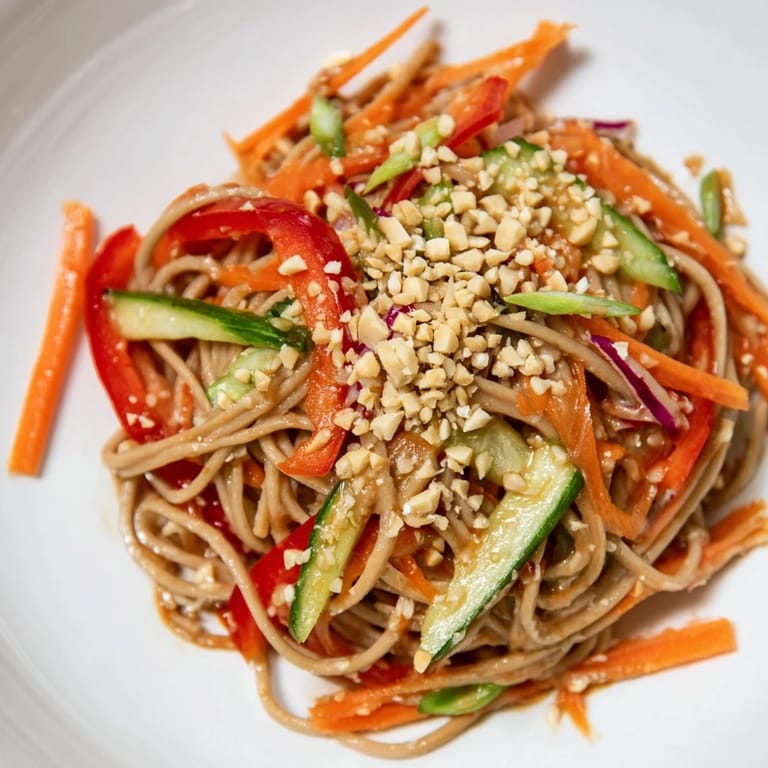
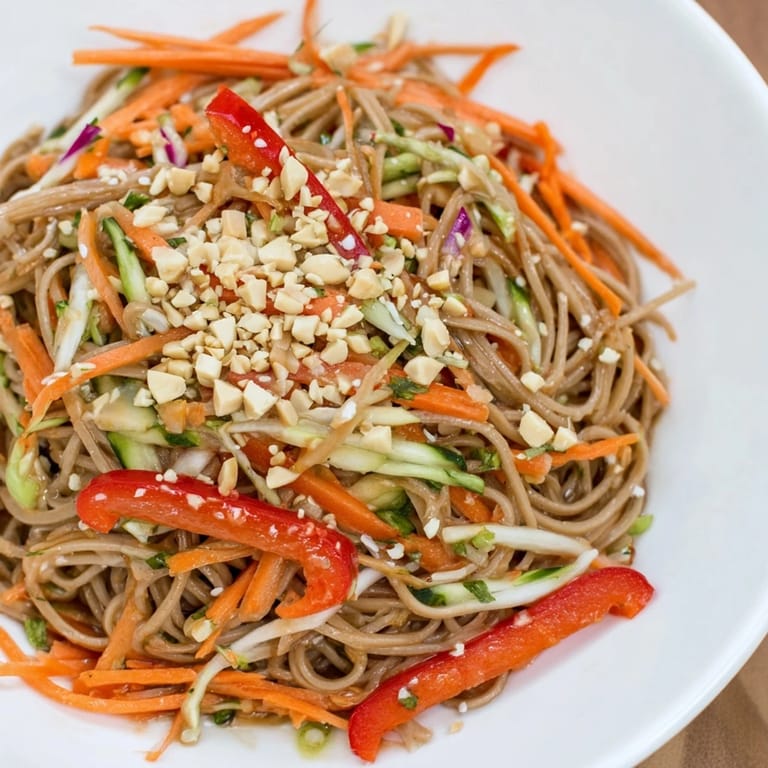
- Roasted peanuts or cashews, roughly chopped (2 tbsp): The final crunch is essential—it prevents the whole thing from feeling limp and gives you something to sink your teeth into.
- Additional sesame seeds for garnish (1 tbsp): A final sprinkle makes it look intentional and tastes delicious.
Tired of Takeout? 🥡
Get 10 meals you can make faster than delivery arrives. Seriously.
One email. No spam. Unsubscribe anytime.
Instructions
- Boil the noodles until tender:
- Bring a large pot of water to a boil and cook your soba or rice noodles according to package instructions—usually around 4 to 5 minutes for soba. The moment they're done, drain them immediately and rinse under cold running water while stirring gently with your fingers to stop them cooking and remove that starchy film that makes them stick together.
- Prep your vegetables with intention:
- Slice and julienne everything into roughly similar sizes so they cook evenly in flavor and texture. This doesn't need to be fancy or perfect—just make sure each piece is small enough to eat easily with noodles and won't fight you when you twirl them up on your fork.
- Whisk the dressing until creamy:
- In a small bowl, combine the soy sauce, rice vinegar, sesame oil, honey, fresh ginger, garlic, and Sriracha if you're using it. Whisk everything together until it's smooth and emulsified; you'll notice it looks slightly creamy rather than completely separated. Add the sesame seeds last and just stir them in gently.
- Toss noodles and vegetables together:
- In a large bowl, combine your completely cooled noodles, all the prepped vegetables, and cilantro, then pour the dressing over everything. Use salad tongs or two forks and toss aggressively—this is not a delicate operation; you want every strand of noodle to get coated in that gorgeous dressing, and the vegetables to distribute evenly throughout.
- Plate and finish with toppings:
- Divide the salad among serving bowls and immediately sprinkle each one with roasted nuts and extra sesame seeds while the salad still has a bit of warmth, which somehow makes the nuts taste better. Serve right away if you like everything warm, or chill for up to an hour if you prefer it completely cold.
 Save to Pinterest
 There's something honest about serving cold noodles on a hot evening—it feels like you're giving people permission to slow down and actually enjoy their meal instead of just eating. I've watched this dish bring people together at backyard dinners and keep them satisfied during workday lunches, and that kind of versatility is rarer than you'd think.
Make-Ahead and Storage
You can prep the noodles, vegetables, and dressing separately up to 8 hours ahead, which means you're literally just tossing everything together at the last minute. Store the dressing in a jar and give it a good shake before using, and keep vegetables in the fridge in separate containers so nothing gets soggy or wilted. The dressed salad is best eaten within a few hours, but it actually keeps for a day and tastes even better as everything mingles together.
Flavor Variations and Substitutions
This recipe is genuinely flexible, which is part of why it's become my go-to warm-weather solution. You can swap the vegetables for whatever looks fresh at the market—shredded zucchini, snap peas, mushrooms, or even thinly sliced radishes all work beautifully. For protein, grilled chicken strips, quick-cooked shrimp, or crumbled tofu absorb the dressing wonderfully and make it a complete main dish rather than a side.
Serving and Pairing Ideas
Serve this as a light main course or alongside grilled proteins and rice for a fuller meal, and it pairs surprisingly well with cold white wine, iced tea, or even sparkling water with cucumber and mint. I've also brought this to picnics where it stayed fresh and flavorful without needing to be reheated, and it travels beautifully in mason jars if you're eating on the go.
- Layer the noodles and vegetables separately in jars for transport, then shake it all together right before eating to avoid sogginess.
- Add a handful of raw or roasted cashews instead of peanuts if you want something sweeter and creamier feeling.
- Don't be shy with the cilantro garnish—it's the finishing detail that makes this taste restaurant-quality.
 Save to Pinterest
 This cold noodle salad has become the recipe I turn to when I want something that tastes impressive but doesn't require anyone to spend all day in a hot kitchen. It's proof that simple ingredients, when treated with a little intention, can become something genuinely memorable.
Recipe Questions
- → What type of noodles work best for this salad?
Soba and rice noodles both work well, offering a chewy texture that holds the dressing nicely. Choose gluten-free rice noodles if needed.
- → How can I prepare the dressing to enhance flavors?
Whisk soy sauce, rice vinegar, toasted sesame oil, honey, grated ginger, garlic, and optional chili sauce thoroughly to blend bold, tangy, and sweet notes.
- → Can I make this salad ahead of time?
Yes, chilling the salad for an hour allows the noodles and vegetables to absorb the dressing, intensifying the flavors before serving.
- → What are good protein additions?
Cooked shrimp, grilled chicken, or tofu are excellent for adding protein and complementing the fresh, Asian-inspired flavors.
- → Are there any nut-free alternatives for the toppings?
Replace roasted peanuts or cashews with crunchy seeds such as pumpkin or sunflower seeds to keep the texture without allergens.