 Save to Pinterest
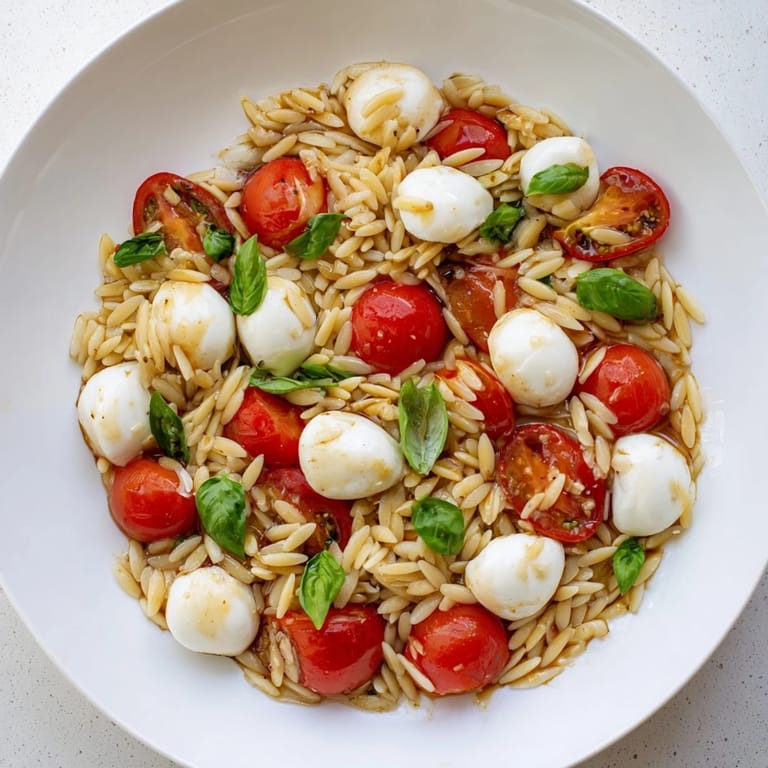
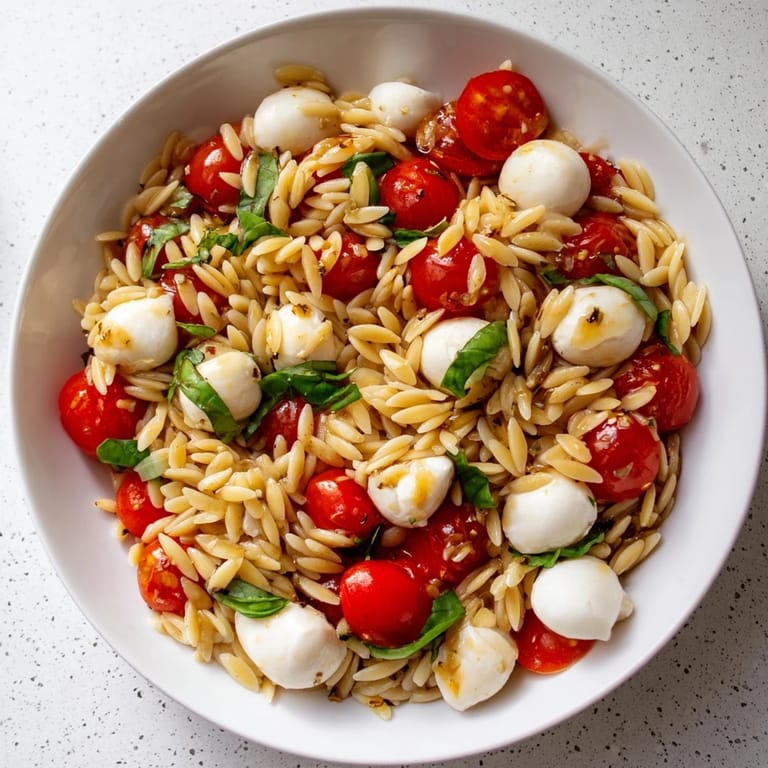
 There's something about summer that makes you crave simplicity, and this Caprese Orzo Salad arrived on my kitchen counter on one of those humid afternoons when the farmer's market felt like the only place to be. I picked up a handful of cherry tomatoes still warm from the sun, some creamy fresh mozzarella, and a bunch of basil that perfumed my entire bag. That night, instead of cooking something elaborate, I boiled orzo and threw it together with the vegetables and a quick dressing, and it became the kind of dish that made everyone at the table pause and ask for the recipe. It's become my go-to when I need something that tastes like summer but doesn't require fussing.
I served this at a small gathering last July when friends dropped by unannounced, and I realized I had most of the ingredients already in my kitchen. While everyone was settling in on the back patio, I got the water boiling and assembled the salad in maybe twenty minutes, and it became the dish people actually finished instead of just picking at. One friend asked if I'd ordered it from somewhere, which felt like the highest compliment a home cook can get.
Ingredients
- Orzo pasta, 1 cup (180 g): This grain-shaped pasta holds the dressing beautifully and cools quickly, unlike longer noodles that clump together.
- Cherry tomatoes, 1 cup (150 g), halved: Choose ones that still have some give when you squeeze them gently, as they'll release their juice into the dressing and stay tender.
- Fresh mozzarella balls, 1 cup (125 g), halved: Buy these as close to serving time as possible and keep them cool, because they're best when they're still slightly warm and delicate.
- Fresh basil leaves, 1/4 cup (10 g), sliced: Tear the leaves by hand rather than chopping them with a knife, which bruises them and makes them turn dark within an hour.
- Extra-virgin olive oil, 3 tbsp: This is where you don't skimp, because it's the backbone of the dressing and the best oil will make everything taste brighter.
- Balsamic vinegar, 2 tbsp: Use the real stuff from Italy if you can find it, as cheap vinegar tastes sharp and hollow instead of rich and complex.
- Dijon mustard, 1 tsp: This acts as an emulsifier and adds a gentle tang that brings all the flavors together.
- Garlic clove, 1 small, minced: One clove is plenty because the flavor intensifies as it sits in the acidic dressing.
- Salt and black pepper, 1/4 tsp each: Season lightly here and taste at the end, since the mozzarella and tomatoes will add their own salt.
Tired of Takeout? 🥡
Get 10 meals you can make faster than delivery arrives. Seriously.
One email. No spam. Unsubscribe anytime.
Instructions
- Get your water boiling:
- Fill a large pot about three-quarters full with water and bring it to a rolling boil, then add enough salt that it tastes like the sea. This is your only chance to season the pasta itself, so don't rush this step.
- Cook the orzo:
- Stir the orzo in immediately so it doesn't stick to the bottom, then let it cook until it's tender but still has a slight firmness when you bite it, which should take about 8 to 10 minutes. Drain it in a colander and rinse it under cold running water, stirring it gently with your fingers so it cools evenly and doesn't clump together.
- Combine your vegetables:
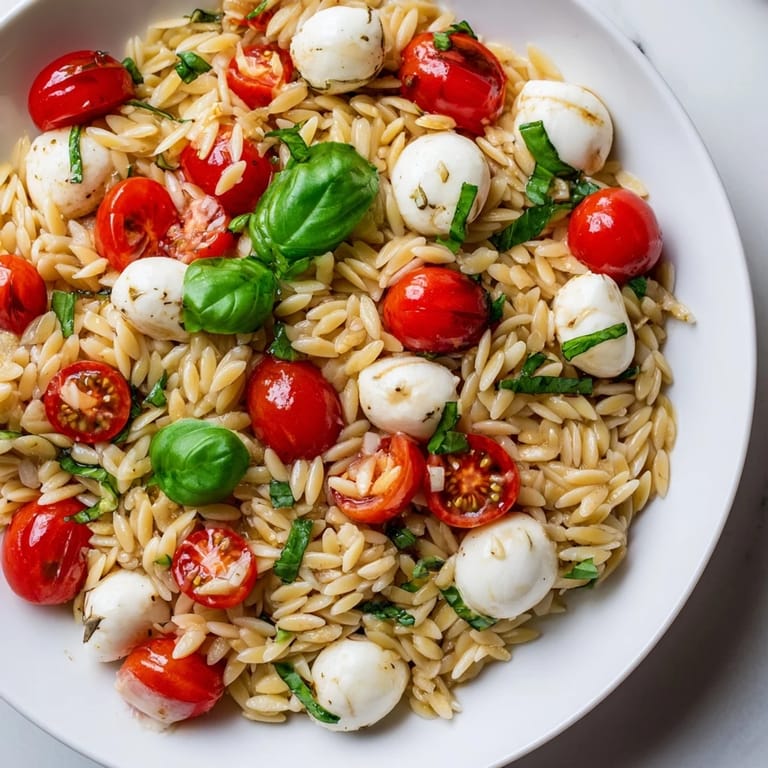
- In a large mixing bowl, add your cooled orzo along with the halved tomatoes, mozzarella, and basil, handling everything gently so the cheese doesn't break apart. This is the moment where your kitchen will smell amazing, so pause and breathe it in.
- Make your dressing:
- In a small bowl or jar, whisk together the olive oil, balsamic vinegar, mustard, minced garlic, salt, and pepper until it looks smooth and slightly thickened. If you're using a jar with a lid, you can shake it instead, which takes about a minute and feels less like work.
- Bring it all together:
- Pour the dressing over the salad and toss everything gently, using two spoons to turn it over itself rather than stirring aggressively so the mozzarella stays in whole pieces. Taste a bite and adjust the seasoning, adding more salt or pepper if it needs it.
- Serve or rest:
- You can eat this right away while the pasta still has warmth and the basil is at its brightest, or cover it and refrigerate it for 30 minutes while the flavors get to know each other. Either way, it's ready whenever you are.
 Save to Pinterest
 This dish reminds me that the best meals don't require complicated techniques or obscure ingredients, just fresh things put together with intention. It's the kind of salad that proves you don't need to spend hours in the kitchen to feed people something they'll actually remember.
Building Flavor Without Fussing
The magic here is in the dressing, which is simple enough that you might think it can't possibly matter, but it absolutely does. The mustard acts like a bridge, bringing the acidity of the vinegar and the richness of the oil into harmony rather than letting them stay separated and competing. If you make this dressing and taste it alone, it might seem sharp or oily, but once it hits the warm pasta and mingles with the tomato juice, everything rounds out and becomes something more complex than the sum of its parts. This is why you resist the urge to add a bunch of other ingredients and just let these few flavors do their job.
When to Make This and Why
Summer is the obvious answer, but this salad also works beautifully in late spring when tomatoes start appearing at the market and you're tired of cooked foods. I've made it in early fall too, when the weather cools down but the tomatoes are still at their peak and the basil hasn't yet given up. It's light enough to serve as a side dish at a barbecue, but substantial enough to eat as a standalone lunch with a hunk of good bread and maybe a glass of chilled white wine. The beauty of this recipe is that it adapts to whatever season is telling you it wants tomatoes.
Variations and Add-Ons to Consider
Once you've made this basic version a few times, you'll start seeing ways to shift it around depending on what's in your kitchen or what you're craving. A handful of peppery arugula folded in at the last minute adds a green note and a bit of bite that changes the whole personality of the dish. Toasted pine nuts scattered on top add richness and a soft crunch that makes people think you fussed more than you did. Sometimes I add a splash of red wine vinegar instead of all balsamic for a brighter, sharper edge, or I'll toss in some fresh ricotta torn into chunks for extra creaminess, or even a few anchovy fillets minced into the dressing if I'm feeling bold.
- Add arugula for peppery brightness or toasted pine nuts for subtle crunch and richness.
- Try a drizzle of thick balsamic glaze over the top just before serving for a touch of sweetness and a more elegant look.
- Pair it with crisp white wines like Pinot Grigio or Vermentino to echo the fresh, light flavors of the dish.
 Save to Pinterest
 This is one of those recipes that reminds you why cooking at home matters, and why fresh ingredients gathered with care taste different from anything you could order. Make it when you want to feel good about dinner without feeling like you've worked hard for it.
Recipe Questions
- → What is the best way to cook orzo for this salad?
Boil orzo in salted water until al dente, about 8-10 minutes. Drain and rinse with cold water to stop cooking and cool the pasta.
- → Can fresh mozzarella be substituted?
Yes, diced fresh mozzarella can be used instead of mozzarella balls for a smoother texture.
- → How can I enhance the dressing flavor?
Adding a small amount of minced garlic and Dijon mustard helps create a rich, tangy balsamic vinaigrette that complements the salad well.
- → Is it better served chilled or at room temperature?
For enhanced flavor, chill the salad for about 30 minutes, but it can also be enjoyed immediately at room temperature.
- → What ingredients add crunch or variety to the salad?
Adding toasted pine nuts or fresh arugula introduces pleasing texture and additional flavor contrasts.