 Save to Pinterest
 My neighbor brought this to a block party last summer, and I watched the entire bowl disappear in under ten minutes. The combination of tangy buffalo chicken with cool ranch dressing over pasta seemed odd at first, but one bite changed my mind completely. I asked for the recipe on the spot, scribbled it on a napkin, and made it three times that month. Now it's my go-to whenever someone says bring a dish that travels well. It's become the recipe I'm known for in my circle, which still surprises me.
I made this for a family reunion where half the cousins don't eat anything adventurous, and even the pickiest ones came back for seconds. My aunt, who usually brings her famous potato salad, asked if I'd be willing to make this one a tradition instead. That felt like a huge compliment coming from her. The kids loved it because it tasted like buffalo wings but was easier to eat, and the adults appreciated that it wasn't heavy or boring. It's rare to find something that works across generations like that.
Ingredients
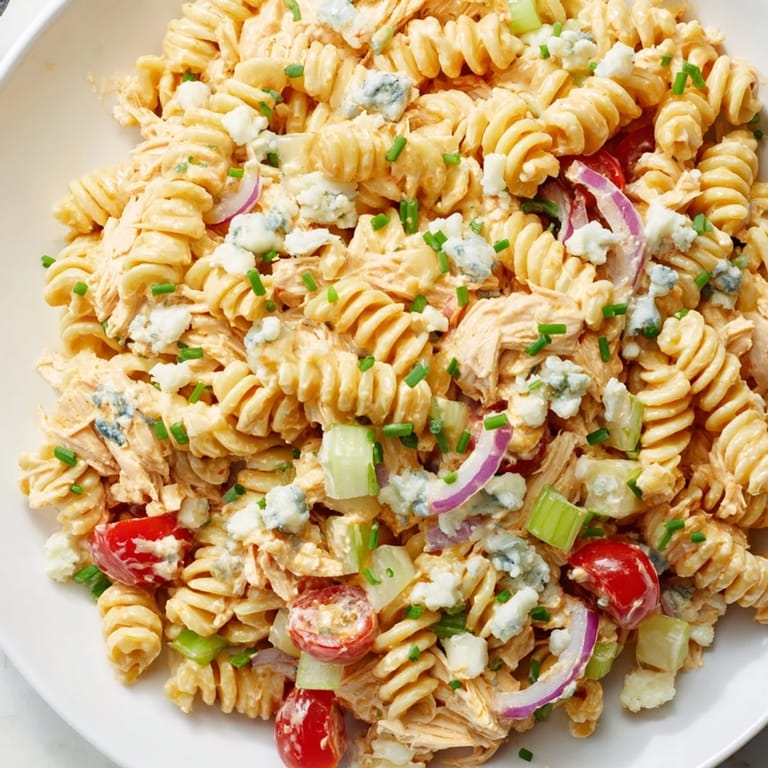
- Rotini or penne pasta: These shapes grab onto the dressing and hold bits of chicken and vegetables in every forkful, which is why I avoid using smooth noodles here.
- Cooked chicken breast: Rotisserie chicken saves time and adds extra flavor, especially if you use the slightly seasoned meat from the breast and thigh.
- Buffalo wing sauce: The key to authentic flavor, and I've learned that Frank's RedHot works best because it has the right vinegar tang without being too thick.
- Celery: This adds the classic buffalo wing crunch and a fresh, slightly bitter note that balances the richness of the dressing.
- Red bell pepper: Sweet and colorful, it brightens the bowl and adds a crisp snap that contrasts with the softer pasta.
- Red onion: Finely chopped so it doesn't overpower, but adds a sharp bite that cuts through the creamy ranch beautifully.
- Cherry tomatoes: Juicy little bursts of acidity that keep the salad from feeling too heavy or one-note.
- Ranch dressing: The cooling element that makes buffalo chicken approachable, and I always use a quality brand or homemade for the best result.
- Sour cream: Thickens the dressing and adds a slight tang that complements the buffalo sauce without competing with it.
- Lemon juice: Just a tablespoon wakes up all the flavors and keeps the dressing from tasting flat or too rich.
- Blue cheese: Optional but highly recommended if you love that classic buffalo wing pairing, and it adds a salty, funky punch.
- Fresh chives or parsley: A handful of green at the end makes it look vibrant and adds a subtle herbal freshness.
Tired of Takeout? 🥡
Get 10 meals you can make faster than delivery arrives. Seriously.
One email. No spam. Unsubscribe anytime.
Instructions
- Cook the pasta:
- Boil the rotini in well-salted water until it has a slight bite, then drain and rinse under cold water to stop the cooking and cool it down quickly. This prevents mushy pasta and keeps the salad from becoming warm and wilted.
- Coat the chicken:
- Toss your cooked chicken with buffalo sauce in a medium bowl, making sure every piece is evenly covered. The sauce should cling to the chicken without pooling at the bottom.
- Combine the base:
- In a large bowl, mix the cooled pasta with the buffalo chicken, celery, bell pepper, red onion, and cherry tomatoes. Toss gently so the vegetables distribute evenly without bruising the tomatoes.
- Prepare the dressing:
- Whisk together ranch dressing, sour cream, and lemon juice until smooth and pourable. Taste it and adjust with a pinch of salt or extra lemon if needed.
- Dress the salad:
- Pour the dressing over the pasta mixture and fold everything together gently until every piece is lightly coated. Avoid over-mixing or the pasta can break apart.
- Chill and meld:
- Cover the bowl and refrigerate for at least 30 minutes, which allows the flavors to blend and the pasta to soak up some of the dressing. This step transforms it from good to great.
- Garnish and serve:
- Right before serving, sprinkle crumbled blue cheese and fresh herbs over the top. Serve it cold, straight from the fridge.
 Save to Pinterest
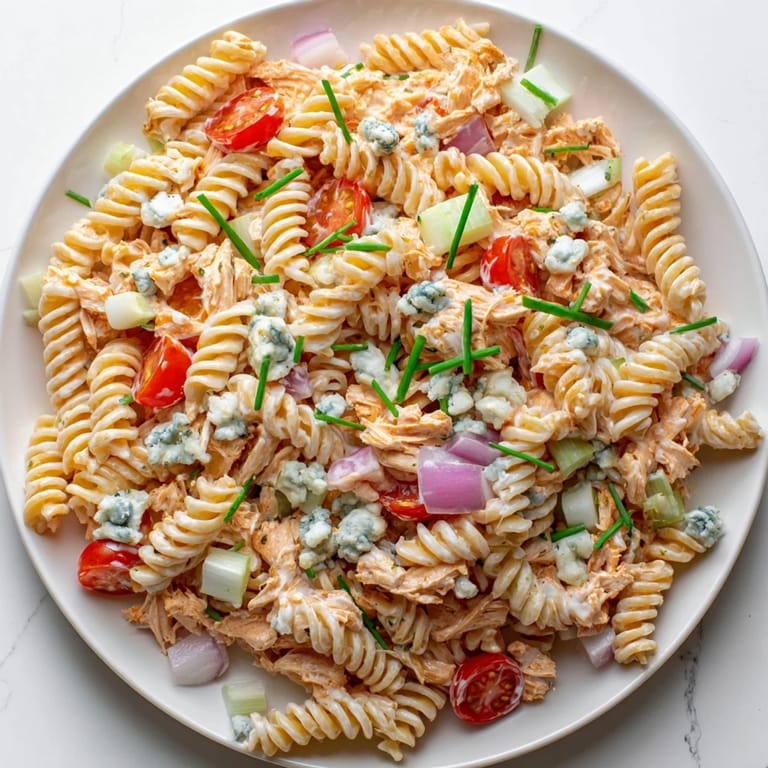
 The first time I brought this to a potluck, someone asked if I'd made it from scratch or bought it from a deli. That question made me realize how restaurant-quality it looks and tastes, even though it's just a simple assembly of ingredients. A coworker who claimed she hated anything spicy ended up taking home the leftovers, and she texted me the next day asking for the recipe. It's moments like that when you know a dish has something special. It's not fancy, but it feels like it is, and that's the kind of recipe I treasure.
Choosing Your Chicken
I've made this with freshly poached chicken breasts, rotisserie chicken, and even leftover grilled chicken from the night before. Rotisserie is my favorite because it's already seasoned and juicy, and it shreds beautifully without any extra work. If you poach your own, add a bay leaf and some peppercorns to the water for subtle flavor. Grilled chicken works too, but make sure it's not too charred or it can taste smoky and clash with the buffalo sauce. Whatever you choose, let the chicken cool before tossing it with the sauce so it doesn't steam and turn soggy.
Adjusting the Heat Level
Buffalo sauce varies wildly in heat depending on the brand, so I always taste it before adding the full amount. If you're serving kids or people who don't love spice, start with a quarter cup and add more gradually. For those who want extra heat, a dash of cayenne or a drizzle of hot sauce in the dressing amps it up without making the chicken unbearably fiery. I've also stirred in a spoonful of sriracha for a different kind of kick, which adds sweetness along with heat. The ranch and sour cream are there to temper the spice, so don't skip them if you're going bold.
Make-Ahead and Storage Tips
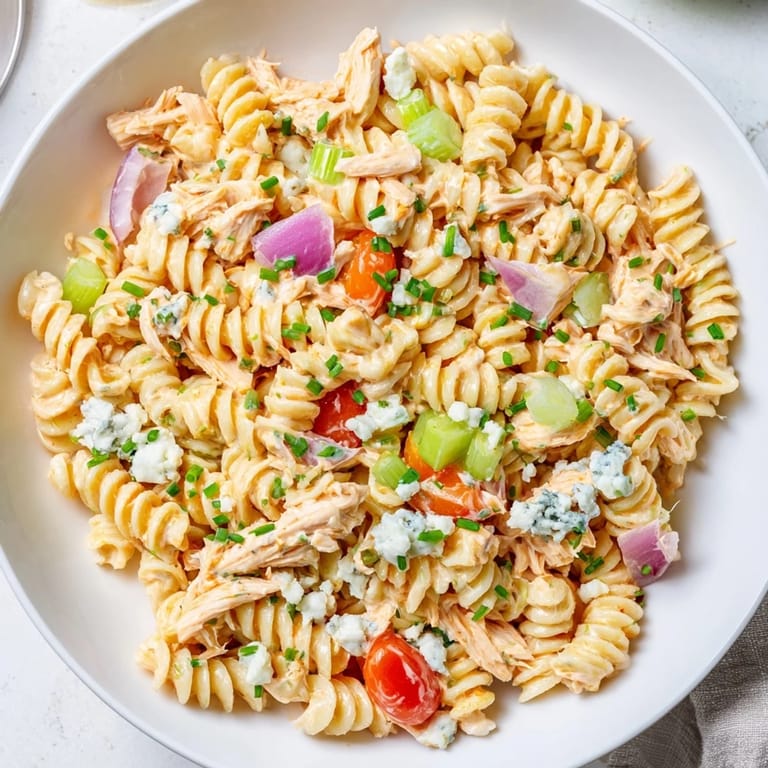
This salad is one of those rare dishes that improves after a night in the fridge, so I often make it the evening before a gathering. The pasta absorbs the dressing, the flavors meld together, and everything tastes more cohesive. Store it in an airtight container and give it a gentle toss before serving, adding a splash of ranch if it looks dry. Leftovers last about two days, but the vegetables start to soften after that and the pasta can get a little mushy.
- Add the blue cheese and herbs right before serving so they stay fresh and don't get soggy.
- If making it a day ahead, reserve a few tablespoons of dressing to toss in just before serving for extra creaminess.
- Keep it cold during outdoor events by nesting the serving bowl in a larger bowl filled with ice.
 Save to Pinterest
 This dish reminds me that the best recipes are the ones people ask you to bring again and again. It's simple, satisfying, and never fails to start a conversation at the table.
Recipe Questions
- → Can I make this ahead of time?
Yes, this salad is ideal for advance preparation. Assemble it up to 2 days ahead and refrigerate. The flavors actually improve as they meld together. Add garnishes just before serving for best presentation.
- → What type of pasta works best?
Rotini or penne pasta are ideal because their shapes trap the dressing and ingredients. Cook until al dente and rinse with cold water to prevent sticking and maintain the right texture.
- → How can I adjust the heat level?
For more spice, increase the buffalo sauce or add cayenne pepper to taste. For milder heat, use less buffalo sauce and increase ranch dressing proportionally. Start with small adjustments and taste as you go.
- → What are good substitution options?
Rotisserie chicken saves prep time. Greek yogurt replaces sour cream for a lighter version. Try different colored bell peppers for variety. Crispy bacon and cucumbers make excellent additions.
- → How long does this keep?
Properly stored in an airtight container, this salad lasts up to 2 days in the refrigerator. The pasta will continue absorbing dressing, intensifying flavors. Refresh with additional ranch if it seems dry on the second day.
- → Is this suitable for dietary restrictions?
This contains dairy and wheat. For dairy-free versions, use plant-based ranch and sour cream alternatives. For gluten-free diets, substitute with gluten-free pasta. Always verify specific ingredient labels for allergens.