 Save to Pinterest
 The first time I made Imam Bayildi, I was standing in a cramped Istanbul kitchen with my host's grandmother, watching her hands move through the filling with the kind of muscle memory that only comes from decades of practice. She didn't measure anything—just poured olive oil, tossed in onions, and somehow knew exactly when to stop. Years later, I recreated that moment in my own kitchen, and it hit me: this dish isn't actually complicated, it just feels like you're doing something special because the eggplants transform so completely, becoming tender vessels for this bright, fragrant tomato filling.
I remember serving this to a dinner party and watching someone take that first bite, then pause mid-conversation as the warm olive oil and soft eggplant hit their tongue. The table went quiet for a moment—not because anything was wrong, but because everyone was tasting something they weren't expecting: comfort, elegance, and simplicity all at once. That's the magic of Imam Bayildi—it looks fancier than it is, which means you get to feel like a better cook than you actually are.
Ingredients
- 4 medium eggplants (about 250 g each): Look for ones that feel heavy for their size and have unblemished skin; smaller eggplants tend to be less watery and bitter than massive ones.
- 3 medium onions, thinly sliced: The onions will practically melt into the filling, so take your time slicing them evenly so they cook at the same pace.
- 4 ripe tomatoes, peeled and diced: If you can't find ripe tomatoes, good-quality canned tomatoes work beautifully; the key is flavor, not freshness status.
- 4 garlic cloves, minced: Don't mince them too far ahead or they'll turn bitter and acrid sitting in your prep bowl.
- 2 green bell peppers, seeded and finely chopped: The green pepper adds a subtle bite and textural interest that rounds out the sweetness of the tomato.
- 1 bunch flat-leaf parsley, chopped: Fresh parsley stirred in at the end keeps the filling bright and prevents it from tasting one-note.
- 120 ml (½ cup) extra virgin olive oil: This is not the time to use budget olive oil; the quality matters because the oil is as much of a star as the eggplant itself.
- 120 ml (½ cup) water: The water keeps everything steaming gently in the oven and prevents the bottom from scorching.
- Juice of ½ lemon: The lemon brightens everything and cuts through the richness in a way that feels almost invisible but completely necessary.
- 1 tsp sugar: A tiny bit of sugar balances the acidity of the tomatoes and lets their natural flavor shine through instead of tasting sharp.
- 1½ tsp sea salt, plus more to taste: Salt early and salt often; it's the foundation of flavor in this dish.
- ½ tsp ground black pepper: Freshly ground pepper tastes noticeably better than pre-ground, especially in a dish this simple.
- 1 tsp paprika (optional): If you use it, reach for the good Hungarian or Spanish paprika; it adds a subtle warmth and color.
Tired of Takeout? 🥡
Get 10 meals you can make faster than delivery arrives. Seriously.
One email. No spam. Unsubscribe anytime.
Instructions
- Prep your oven:
- Heat your oven to 180°C (350°F) so it's ready when you need it. This gentle temperature means the eggplants soften without splitting apart or browning too much.
- Score the eggplants:
- Wash each eggplant and use a vegetable peeler to stripe it lengthwise, leaving unpeeled stripes in between for visual appeal. Lay each one flat and carefully cut a deep slit along the length, stopping just before you reach the ends so the eggplant stays in one piece.
- Draw out the bitterness:
- Sprinkle salt inside and on the cut surfaces, then let them sit for 20 minutes; this breaks down the cell structure and draws out moisture and bitterness. Rinse them under cool water and pat completely dry with paper towels so they brown evenly when you fry them.
- Build your filling base:
- Heat half the olive oil in a large skillet over medium heat and add your sliced onions. Let them cook gently for 8 minutes, stirring occasionally, until they're completely softened and starting to turn translucent at the edges.
- Deepen the flavor:
- Stir in the minced garlic and chopped bell peppers, cooking for 3 minutes just until fragrant. Don't rush this step or let anything brown; you want sweetness and aroma, not char.
- Simmer the tomatoes:
- Add your diced tomatoes, sugar, salt, pepper, and paprika, then let the whole mixture bubble gently for about 10 minutes. You'll know it's ready when it looks thick and jammy and the tomato pieces have mostly broken down. Remove from heat and stir in the fresh parsley, which will brighten everything immediately.
- Brown the eggplants:
- In a clean skillet, heat the remaining olive oil over medium-high heat. Working carefully, place each eggplant in the hot oil and let it fry for about 2 minutes per side, gently rolling it so all surfaces turn golden and the flesh softens. This takes about 8 minutes total and gives you that tender texture and subtle caramelization that tastes so much better than raw eggplant.
- Stuff with care:
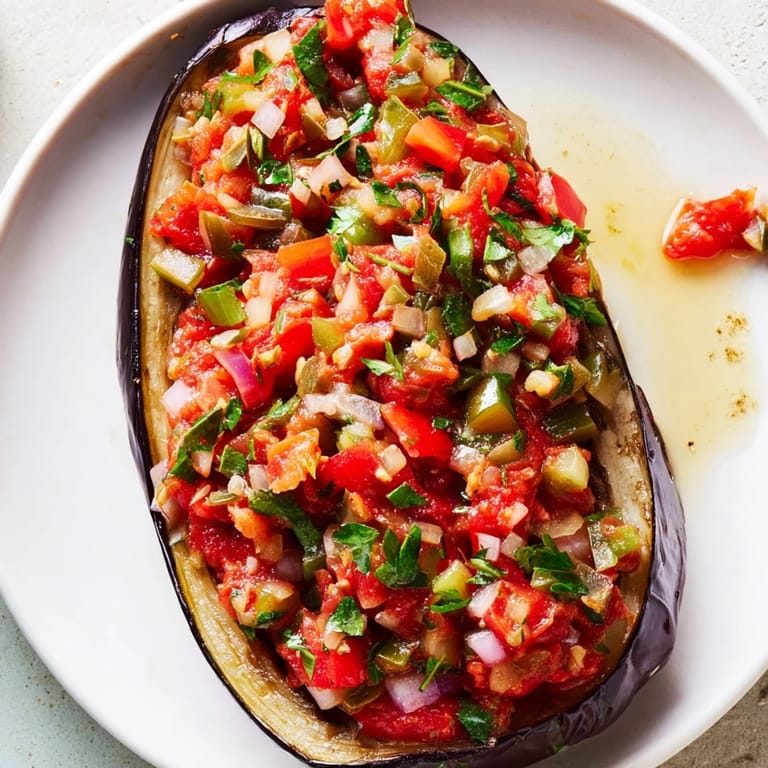
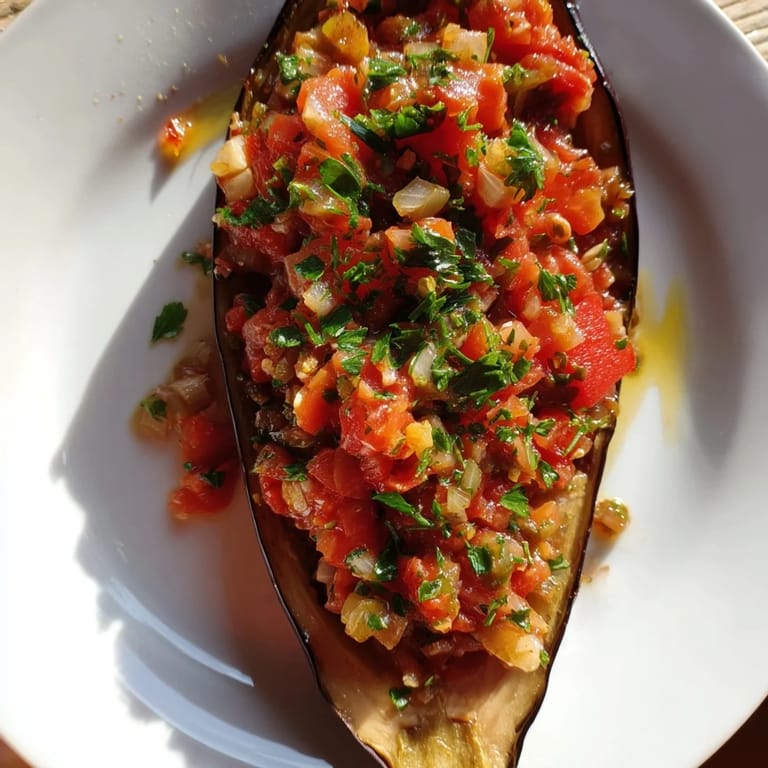
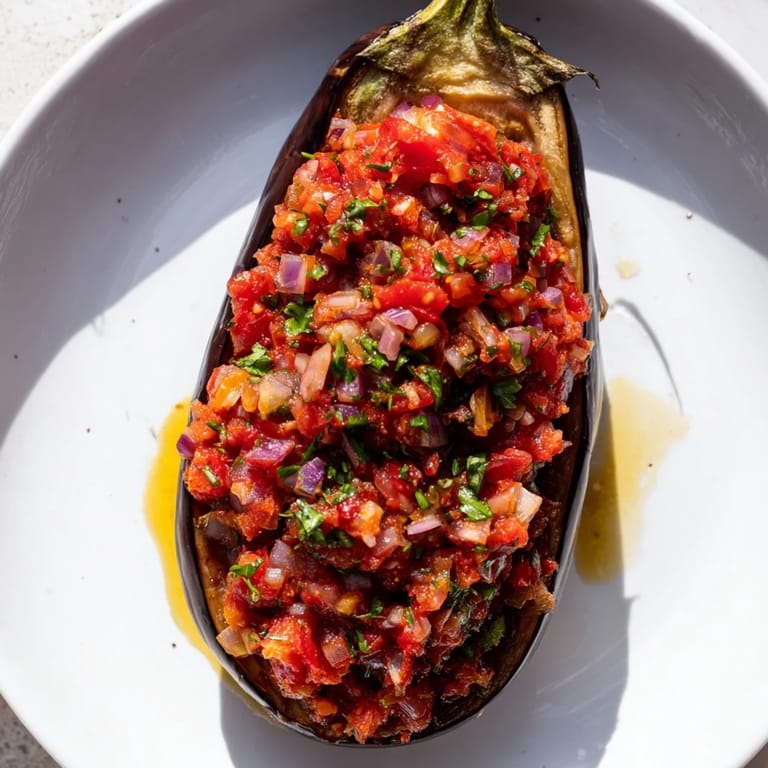
- Transfer the eggplants to a baking dish and carefully open up each slit, cradling the eggplant with your other hand so it doesn't tear. Spoon the tomato filling generously inside, letting a bit overflow onto the baking dish.
- Add the braising liquid:
- Drizzle everything with lemon juice and pour the water around (not over) the eggplants. The water creates steam that keeps everything moist while baking.
- Bake covered:
- Cover the dish tightly with aluminum foil and slide it into your preheated oven for 35 minutes. The eggplant continues softening and the filling melts into the flesh underneath.
- Finish uncovered:
- Remove the foil and bake for another 10 to 15 minutes, until the eggplants are completely tender when poked with a fork and the filling is bubbling at the edges. The uncovered time lets any excess moisture evaporate and the filling gets a slightly caramelized top.
- Cool before serving:
- Let the dish rest at room temperature for at least 30 minutes before serving. This is traditional and also practical—the flavors settle and everything tastes even better.
 Save to Pinterest
 One afternoon while testing this recipe for the third time, my neighbor stopped by and the smell of olive oil and stewed tomatoes was so strong it had traveled through the walls. She tasted a spoonful and immediately asked for the recipe, then admitted she'd been intimidated by eggplant for years. Watching her realize it wasn't scary—just delicious—reminded me why I love this dish: it's a gateway into better cooking, a moment where something that sounds fancy turns out to be totally approachable.
The Story Behind Imam Bayildi
The name translates to "the imam fainted," supposedly because an imam (Islamic teacher) swooned over how delicious this dish was, though honestly, I think anyone who eats it understands the impulse. It's traditionally a Levantine and Turkish preparation, served in mezze spreads, as a side to grilled meats, or as a light main course entirely on its own. The beauty of it is that it tastes like you've spent hours in the kitchen when really you've just been patient and methodical.
When to Serve It and What to Pair It With
This dish works perfectly as part of a mezze spread alongside hummus, dolma, and crusty bread, or it can be the star of a simple dinner with rice and a crisp salad. I often serve it warm or at room temperature with a dollop of thick Greek yogurt on the side, which cools things down and adds tang. It's equally comfortable on a summer table or a winter spread; the olive oil keeps it rich in any season, and somehow it always feels appropriate.
Variations and Personal Touches
Once you understand the framework of this dish, it becomes a canvas for your own preferences and discoveries. I've added a pinch of cinnamon or allspice to warm up the filling, which tastes subtly exotic without being obvious about it. A few of my friends add a chopped green chili for heat, and honestly, it works beautifully. Some versions include a layer of béchamel sauce, though that feels less traditional to me. The key is keeping the fundamentals solid—good eggplant, good olive oil, good tomatoes—and trusting that everything else will follow.
- A pinch of cinnamon or allspice transforms the filling with a warm, almost Moroccan note that sneaks up on you.
- If you love heat, dice a green chili and fold it into the filling for gentle spice that builds as you eat.
- Save this dish for when you have good tomatoes and good olive oil; those two ingredients make or break the final result.
 Save to Pinterest
 Every time I make Imam Bayildi, I think about that grandmother in Istanbul and how she showed me that good cooking isn't about complexity—it's about respect for ingredients and willingness to slow down. This dish teaches you that, one tender spoonful at a time.
Recipe Questions
- → What is the best way to prepare the eggplant for this dish?
Peel alternating lengthwise stripes and cut a slit along each eggplant. Salting them beforehand removes bitterness and ensures tenderness after baking.
- → Can extra spices enhance the flavor?
Adding a pinch of cinnamon or allspice to the filling introduces a warm depth, while a chopped green chili can bring a pleasant heat.
- → How should this dish be served for the best taste?
Imam Bayildi is traditionally enjoyed warm or at room temperature and pairs well with crusty bread, rice, or a side of yogurt.
- → Is it possible to prepare this dish ahead of time?
Yes, making it a day in advance helps the flavors to develop and intensify, enhancing the overall taste.
- → What oils are used in the cooking process?
Extra virgin olive oil is used both for frying the eggplants and baking, enriching the dish with its fruity aroma.