 Save to Pinterest
 My wok sits by the stove gathering dust more often than I'd like, but one Tuesday night when I had ground turkey and an almost-empty pantry, I remembered a coworker raving about Korean fried noodles. That's when it clicked—I had gochujang hiding in the back of my fridge, and suddenly everything came together. The smell of garlic and ginger hitting hot oil reminded me why I love cooking on nights when I'm too tired to think. This dish proved you don't need fancy ingredients or hours in the kitchen to feel like you've traveled somewhere delicious.
Last month I made this for my sister when she dropped by unexpectedly, and watching her eyes light up at the first bite—that moment when someone realizes home-cooked food can be both quick and impressive—that's what keeps me coming back to this recipe. She asked for the recipe before she even finished eating, which tells you something.
Ingredients
- Fresh or dried wheat noodles (300 g): Udon or ramen work beautifully here, though I've used whatever I had on hand and it always works—the key is rinsing them cold so they don't clump together.
- Soy sauce (3 tbsp): This is your base note, the umami backbone that makes everything taste intentional and complex.
- Gochujang (2 tbsp): Korean chili paste that's less about heat and more about that fermented, slightly sweet kick that defines this whole dish.
- Brown sugar (1 tbsp): A little sweetness balances the spice and saltiness—I learned this the hard way by making it without once.
- Rice vinegar (1 tbsp): This brightens everything up at the end, cutting through the richness so you want another bite.
- Sesame oil (1 tbsp): Use the toasted kind; the fragrance is half the experience.
- Ground turkey (400 g): Leaner than beef, it cooks quickly and won't overpower the sauce.
- Vegetable oil (2 tbsp): Split between cooking the turkey and sautéing vegetables, this keeps everything from sticking.
- Garlic and ginger (3 cloves and 1 tbsp): The aromatic foundation—don't skip the mincing step, as it releases all those oils.
- Yellow onion (1 medium): Thin slices mean they soften into the dish rather than staying crunchy.
- Carrot (1 medium): Julienned thin so it cooks evenly and adds a touch of natural sweetness.
- Red bell pepper (1 medium): The color is half the appeal, and it stays crisp-tender when you don't overcook it.
- Shiitake mushrooms (100 g): These have an earthy depth that regular button mushrooms can't quite match.
- Spring onions (2, plus more for garnish): Fresh, grassy, they're added twice—once cooked into the dish and once raw on top for brightness.
- Toasted sesame seeds (1 tbsp): The final garnish that makes this look restaurant-quality.
Tired of Takeout? 🥡
Get 10 meals you can make faster than delivery arrives. Seriously.
One email. No spam. Unsubscribe anytime.
Instructions
- Prep your noodles first:
- Follow the package timing—whether it's fresh or dried matters—then drain and rinse them under cold water so they stop cooking and won't turn mushy. Set them aside in a bowl, maybe toss them lightly with a touch of oil so they don't stick together while you work on everything else.
- Whisk that sauce to life:
- In a small bowl, combine soy sauce, gochujang, brown sugar, rice vinegar, and sesame oil, stirring until the gochujang breaks down completely and the sauce looks glossy and unified. Taste it if you want—it should be savory with a hint of sweetness and a whisper of heat.
- Brown the turkey properly:
- Heat 1 tbsp of vegetable oil in your wok or large skillet over medium-high heat until it shimmers, then add the ground turkey and break it apart with a spoon as it cooks, about 5 minutes until it's no longer pink. The meat should look crumbly and golden, not gray—this matters because it'll flavor everything else.
- Build the vegetable layer:
- Pour the remaining 1 tbsp oil into the pan, add minced garlic and ginger, and let them sizzle for just 30 seconds—you're after fragrance, not browning. Then add your onion, carrot, bell pepper, and mushrooms, stirring constantly for 3 to 4 minutes until they're tender but still have a slight resistance when you bite them.
- Bring it all together:
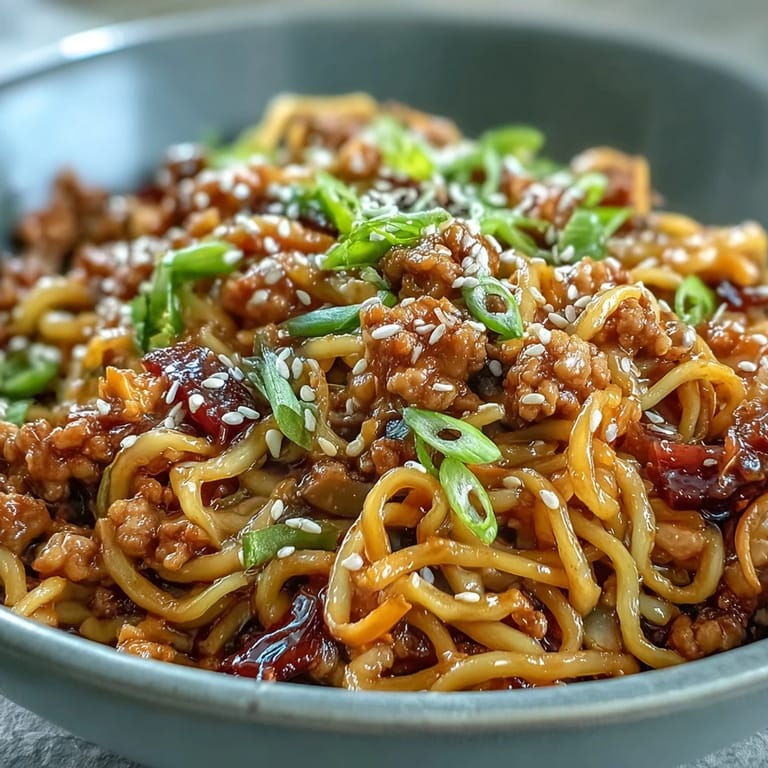
- Return the cooked turkey to the pan, add the noodles and your prepared sauce, and toss everything over high heat for 2 to 3 minutes until the sauce clings to every strand and the heat distributes evenly. The kitchen will smell absolutely incredible at this point.
- Finish with freshness:
- Stir in the sliced spring onions just at the end so they stay bright and crisp.
- Plate and celebrate:
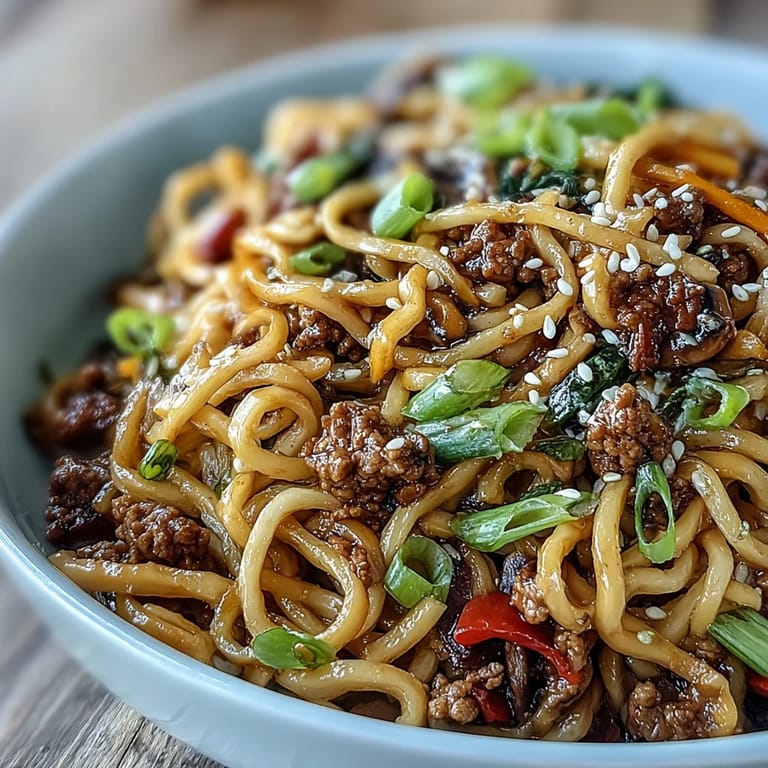
- Divide among bowls and scatter toasted sesame seeds and more spring onion slices on top for color and texture.
 Save to Pinterest
 There's something about the moment when you toss everything together in that hot wok and the sauce coats the noodles and the turkey and the vegetables all at once—it feels like magic, like you've pulled off something impressive without breaking a sweat. That's the feeling this recipe gives me every single time.
The Magic of Gochujang
Gochujang was intimidating to me until I realized it's just fermented chili paste, not some mysterious Korean secret ingredient that only experts can use. Once I started buying it regularly, I found myself adding it to soups, marinades, and even scrambled eggs. The fermentation gives it depth—it's not a one-note heat, it's savory and slightly sweet and complex. In this noodle dish, it's the backbone that makes people ask what makes it taste so good.
Why Ground Turkey Works Here
I used to default to ground beef for stir-fries until I realized turkey cooks faster and lets the sauce and vegetables shine instead of getting lost behind heavy meat flavor. Ground chicken would work too, but turkey has just enough fat to stay interesting without being greasy. The lightness of it means you can eat a full bowl and feel satisfied rather than stuffed, which makes me actually want to come back to this recipe instead of avoiding it for weeks.
Building Flavor Through Timing
The order of operations here isn't random—it's built to layer flavors so nothing gets overcooked or overshadowed. You start with turkey to build umami, add aromatics next for fragrance, then vegetables for texture, and finish with fresh spring onions for brightness. Each component gets exactly the time it needs, no more.
- If you're running short on time, prep all your vegetables before you start cooking—it makes the actual cooking phase feel effortless.
- Don't let the garlic and ginger cook longer than 30 seconds or they'll turn bitter and harsh instead of fragrant and sweet.
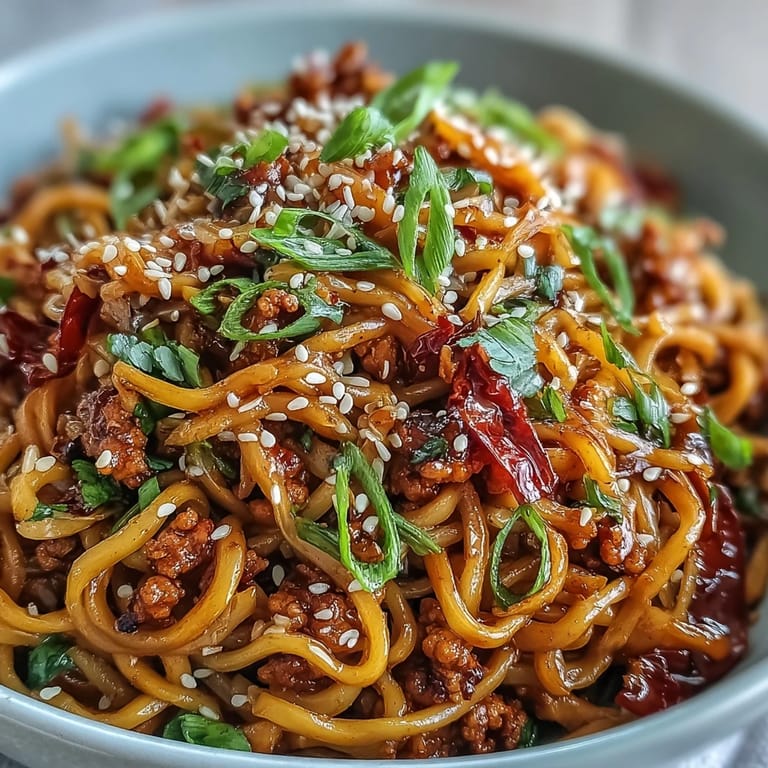
- The high heat at the end matters; it caramelizes the edges of vegetables slightly and helps the sauce cling instead of pooling at the bottom of the bowl.
 Save to Pinterest
 This recipe became part of my regular rotation because it proves that simple, accessible ingredients can taste sophisticated when you put them together thoughtfully. Make it for yourself on a Tuesday night and you might find yourself making it again by Friday.
Recipe Questions
- → What type of noodles work best?
Udon, ramen, or any wheat-based noodles work perfectly. Fresh noodles offer the best texture, but dried noodles are excellent when prepared according to package directions.
- → Can I make this dish spicy?
Absolutely. Add sliced fresh chilies, red pepper flakes, or extra gochujang to increase the heat level while maintaining the balanced flavor profile.
- → What proteins can substitute ground turkey?
Ground chicken, beef, or pork work equally well. For a vegetarian version, use crumbled tofu or diced tempeh for protein.
- → How do I prevent noodles from sticking?
Rinse cooked noodles with cold water to remove excess starch. Toss them with a small amount of oil before adding to the stir-fry.
- → What vegetables can I add?
Zucchini, snap peas, spinach, bean sprouts, or bok choy make excellent additions. Adjust cooking time to maintain crisp-tender texture.
- → Can this be made ahead?
Prepare sauce and chop vegetables in advance. Cook everything fresh for best texture, though leftovers reheat well in a skillet with a splash of water.