 Save to Pinterest
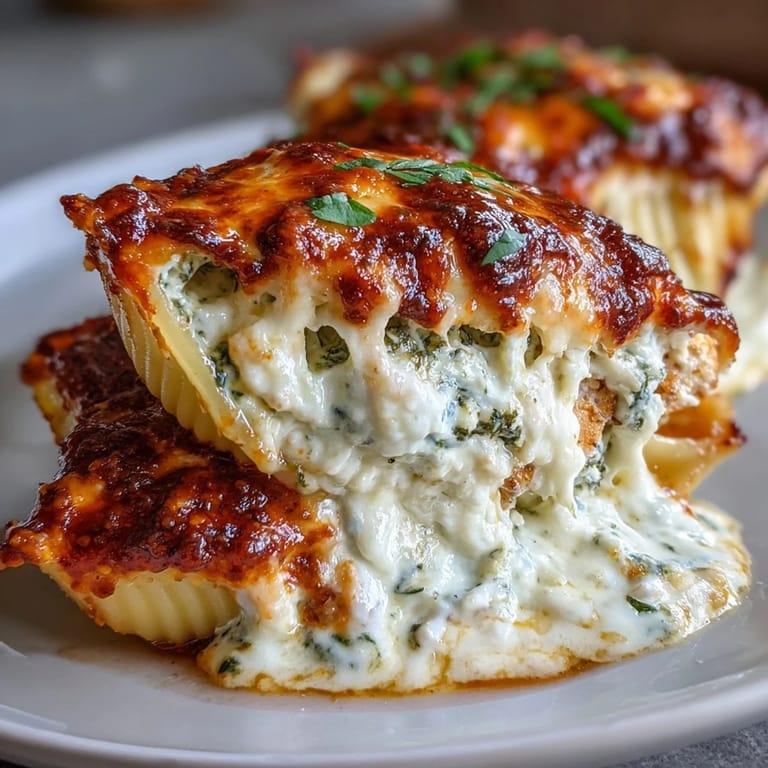
 My neighbor Marco handed me a container of homemade pesto one summer afternoon, insisting I had to do something more interesting with chicken than my usual routine. That evening, I found myself staring at a box of jumbo pasta shells, wondering if I could somehow marry his vibrant green sauce with the comforting idea of lasagna. What emerged from my oven that night—those tender shells cradling creamy ricotta and herb-kissed chicken—became something I've made countless times since, each time feeling like I'm sharing Marco's generosity all over again.
I made this for my sister's book club gathering on a rainy Tuesday, and watching eight people go quiet mid-conversation to focus entirely on their plates felt like winning some invisible kitchen lottery. She still texts me asking when I'm making it again, which tells me everything about how this dish lands with people.
Ingredients
- Jumbo pasta shells (20 total): These are your vessels, so don't grab regular shells by mistake—jumbo ones hold the filling without tearing and create those satisfying little pockets of texture.
- Ricotta cheese (1½ cups): This creamy base is what makes everything tender; some people use cottage cheese in a pinch, but ricotta has a delicate richness that cottage cheese can't quite match.
- Parmesan cheese, grated (¾ cup): Use freshly grated if you have time—the pre-grated stuff contains anti-caking agents that make the filling slightly grainy, a detail I only noticed after making this dozens of times.
- Large egg (1): This acts as a binder to keep your filling from becoming watery as it bakes; don't skip it thinking it won't matter.
- Mozzarella cheese, shredded (1 cup plus ½ cup for topping): The first cup goes into the filling for creaminess, while the top layer gets those gorgeous golden bubbles you're after.
- Salt and black pepper: Season generously because these cheeses need help to shine—I learned this the hard way with an underseasoned batch that tasted flat.
- Dried Italian herbs (½ teaspoon, optional): I skip these when I have fresh basil later, but they add subtle warmth if you're keeping things simple.
- Cooked chicken breast, shredded (2 cups): Rotisserie chicken is your secret weapon here—it's juicy, seasoned, and saves you from boiling and shredding; this was the game-changer that made this dish feel less like work.
- Basil pesto (⅓ cup): Store-bought works perfectly fine, though homemade tastes like you really meant it; the key is using good pesto, not the kind that's been sitting in the back of your pantry since winter.
- Marinara sauce (2 cups): A quality sauce matters here because it's not hiding under anything—taste it before adding to the dish and adjust seasoning if needed.
- Fresh basil leaves for garnish: This is purely optional but transforms the dish from tasty to restaurant-quality in the final moments before serving.
Tired of Takeout? 🥡
Get 10 meals you can make faster than delivery arrives. Seriously.
One email. No spam. Unsubscribe anytime.
Instructions
- Prepare your oven and workspace:
- Heat your oven to 375°F and lightly grease your baking dish—this prevents those crispy edges that stick and tear when you try to serve, which is less romantic than it sounds.
- Cook and cool the shells:
- Boil your pasta in salted water until just al dente, then drain and let it cool on a clean kitchen towel for a few minutes so you can handle it without burning your fingers. The slight cooling also makes the shells less fragile when you're stuffing them.
- Build your ricotta mixture:
- Combine ricotta, Parmesan, egg, mozzarella, salt, pepper, and herbs in a bowl until everything is evenly distributed and smooth. This is where you taste and adjust seasoning—a pinch more salt usually makes all the difference between ordinary and memorable.
- Coat the chicken in pesto:
- In a separate bowl, toss your shredded chicken with the basil pesto until every piece is coated in that green goodness. The pesto should cling to the chicken and create little flecks of flavor throughout.
- Create your sauce base:
- Spread 1 cup of marinara on the bottom of your baking dish—this prevents sticking and gives the shells something to absorb from below. Think of it as the foundation that makes everything taste better.
- Stuff each shell with intention:
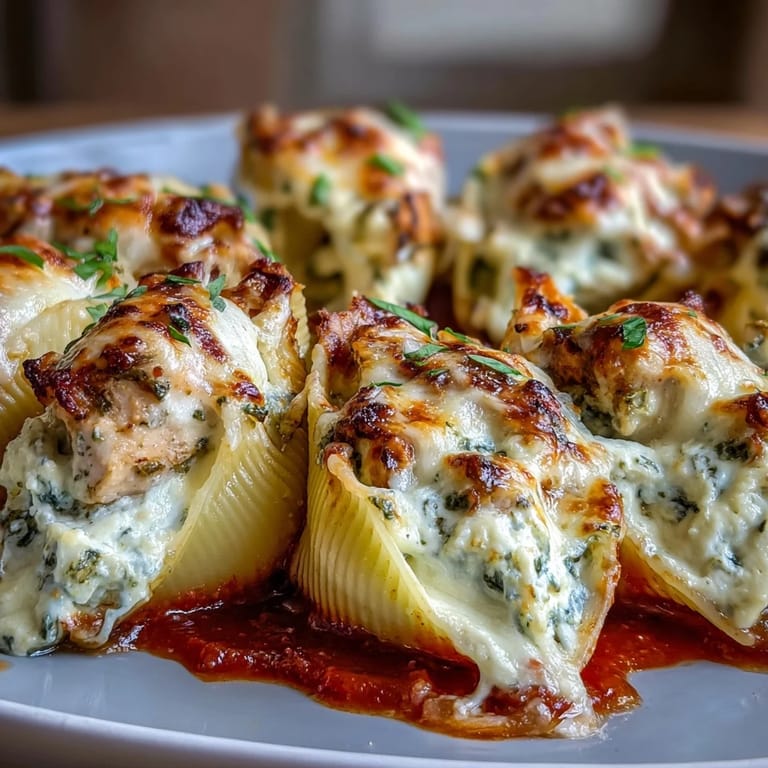
- Spoon about 1 tablespoon of ricotta mixture into each shell, then top with a small spoonful of pesto chicken—the ratio matters because too much filling makes them burst, while too little leaves them looking sad. Arrange them seam-side up in the dish so they nestle together slightly and support each other as they bake.
- Top and cover:
- Pour the remaining marinara sauce over your stuffed shells, then scatter the half cup of mozzarella across the top for those golden, bubbly bits everyone reaches for first. Cover the whole dish with foil—this traps steam and keeps everything moist during the first part of baking.
- Bake in two stages:
- Bake covered for 25 minutes until everything is heated through and the cheese beneath the sauce has softened, then remove the foil and bake another 10 minutes so the top layer gets bubbly and lightly browned. The uncovered time is crucial—it's what gives you that contrast between creamy filling and slightly crispy top.
- Rest before serving:
- Let the whole dish sit for 5 minutes after coming out of the oven; this lets the cheese set slightly so your shells hold their shape when plated instead of sliding around like they're having their own adventure.
 Save to Pinterest
 There's something about watching someone take that first bite—the way they pause, process the combination of creamy and savory and herbaceous all at once, then look back at their fork like it just did something magic. That's when I know this dish has done its job.
Why This Dish Works So Well
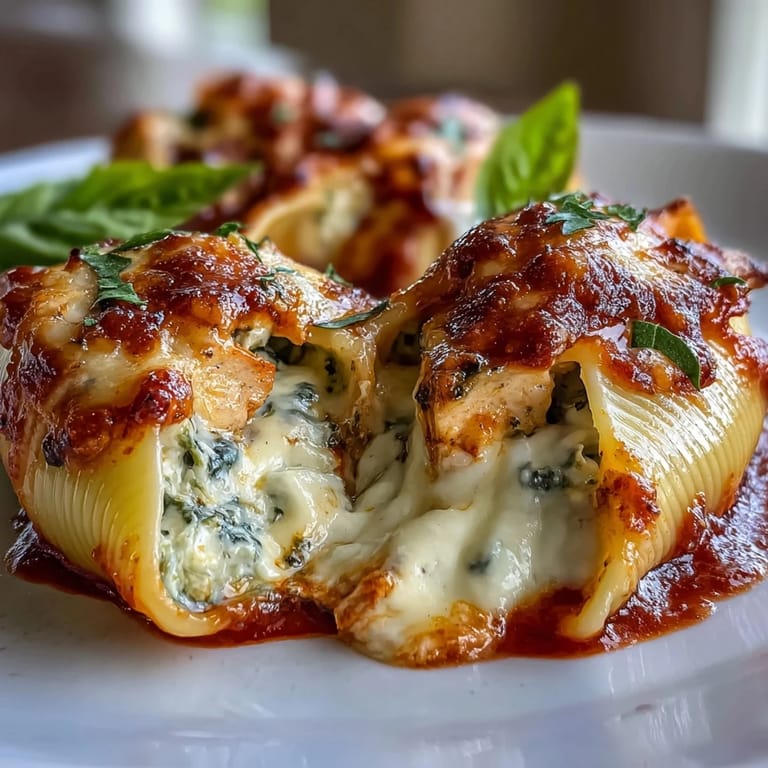
The beauty of pesto lasagna stuffed shells is that it layers three completely different flavor profiles without any of them fighting for attention. The creamy ricotta gives you richness, the pesto chicken adds brightness and herbs, and the marinara provides that familiar tomato comfort. Each component knows its role, and when you bite through a shell, you get all three in a single forkful—it's architecture and flavor combined.
Variations and Swaps That Actually Work
The first time someone asked me for a vegetarian version, I panicked thinking the pesto chicken was non-negotiable. Instead, I tried sautéing fresh spinach with garlic and mixing it where the chicken would go, and honestly, it was just as satisfying in a completely different way. The pesto still anchored everything, the ricotta was still creamy, and nobody at the table felt like they were eating a compromise.
You can also swap cottage cheese for ricotta if that's what you have, though you'll want to drain it first and possibly add an extra tablespoon or two of Parmesan to compensate for the texture difference. Some people use a mix of ricotta and cream cheese to make the filling even silkier, which isn't traditional but absolutely works if you're feeling experimental.
Storage, Freezing, and Make-Ahead Magic
This dish is genuinely one of the best candidates for freezing I've encountered in my kitchen—you can assemble it completely, cover it tightly with foil and plastic wrap, and freeze it for up to three months without any noticeable quality loss. When you want to bake it, just add about 15 extra minutes to the cooking time since you're starting from frozen, and everything comes out as tender and delicious as if you'd made it fresh.
You can also make it the morning of and leave it covered in the fridge until dinner time; sometimes I do this on weekends so I only have to think about baking, not assembling. The shells don't dry out because they're buried in sauce and cheese, which is one of the reasons I love this format so much more than traditional lasagna noodles.
- Freeze it before baking for maximum flexibility, or bake it first and then freeze if you prefer to just reheat.
- Leftovers keep for three to four days in the fridge and reheat beautifully covered with foil at 325°F for about 15 minutes.
- Never microwave—I'm serious about this because the cheese can become rubbery and the shells lose their tender texture instantly.
 Save to Pinterest
 This is the kind of dish that reminds you why you love cooking in the first place—it asks for a little bit of your time and attention, then rewards you with something that tastes infinitely better than the sum of its parts. Make it once, and you'll find yourself making it again and again.
Recipe Questions
- → Can I make these stuffed shells ahead of time?
Yes, assemble the dish completely, cover tightly, and refrigerate for up to 24 hours before baking. You may need to add 5-10 minutes to the baking time if baking cold from the refrigerator.
- → Can I freeze pesto stuffed shells?
Absolutely. Assemble the dish in a freezer-safe baking dish, wrap tightly with plastic and foil, and freeze for up to 3 months. Thaw overnight in the refrigerator before baking as directed.
- → What can I use instead of ricotta cheese?
Cottage cheese blended until smooth makes an excellent substitute with similar texture and protein content. You can also use mascarpone for a richer, creamier result.
- → How do I make this vegetarian?
Simply omit the chicken and add sautéed spinach, mushrooms, or sun-dried tomatoes to the pesto mixture. You can also increase the cheese or add roasted vegetables for extra substance.
- → What type of pesto works best?
Traditional basil pesto works beautifully, but try arugula pesto for peppery notes or sun-dried tomato pesto for deeper flavor. For nut allergies, look for nut-free pesto or make your own using sunflower seeds.
- → How many jumbo shells are in a box?
Most 12-ounce boxes contain about 40-45 jumbo shells, so you'll have plenty to select the best 20 intact ones. Save any broken shells for another use like pasta soup or baked pasta dishes.