 Save to Pinterest
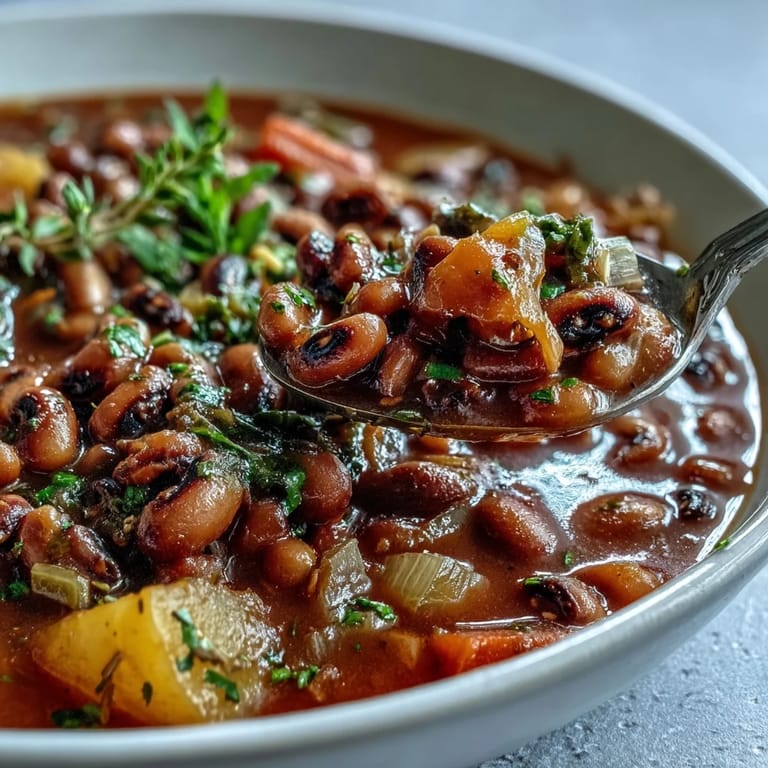
 There's something about stirring a pot of black-eyed peas that slows everything down. Years ago, I watched my neighbor make this stew on a particularly gray afternoon, and I was struck by how the kitchen filled with warmth before we'd even tasted a spoonful. The smell of sweet onions and thyme drifting through the air felt like an invitation to slow down, to pay attention. I've made it dozens of times since, and it never fails to feel like coming home.
I made this for a friend who was going through a rough patch, someone who'd stopped cooking for themselves. When they took that first spoonful, their shoulders relaxed in a way I hadn't seen in months. They asked for the recipe that night, and I realized the stew had done what food does best—it gave us permission to be present with each other.
Ingredients
- Extra virgin olive oil: Don't skip this; it's where the flavor foundation begins, and cheap oil turns this from special into ordinary.
- Sweet onion: A large one, diced small so it melts into the broth rather than staying chunky—I learned this the hard way.
- Carrots and celery: The holy trinity starts here, and using fresh rather than frozen makes a subtle but noticeable difference in depth.
- Potatoes: Medium ones, peeled and diced into bite-sized pieces so they soften evenly without falling apart.
- Diced tomatoes: Canned is perfectly fine and honestly more consistent than fresh; just make sure to use them with their juices.
- Garlic cloves: Three minced cloves might seem modest, but they're enough to whisper rather than shout.
- Black-eyed peas: If using canned, drain and rinse them thoroughly—this removes the starchy liquid that can cloud your broth.
- Vegetable broth: Four cups of good quality broth matters more than you'd think; it's the backbone of everything that follows.
- Bay leaf, thyme, smoked paprika: This is where the magic happens; the bay leaf infuses gently, thyme adds woodsy comfort, and smoked paprika gives it a whisper of depth.
- Salt and black pepper: Always taste at the end; your broth might be saltier than mine.
- Fresh parsley: Chopped fresh, stirred in at the very end so it stays bright and doesn't turn dark and bitter.
Tired of Takeout? 🥡
Get 10 meals you can make faster than delivery arrives. Seriously.
One email. No spam. Unsubscribe anytime.
Instructions
- Heat the oil and start with onions:
- Pour two tablespoons of olive oil into your pot over medium heat and let it warm until it shimmers slightly. Add the diced sweet onion and listen for that gentle sizzle—it should smell sweet and caramelly after 3 to 4 minutes, not harsh.
- Build the flavor base:
- Toss in your carrots and celery and stir occasionally for about 4 minutes, letting them soften and release their natural sweetness. You're building layers here, each vegetable adding something essential.
- Add potatoes and garlic:
- Stir in the diced potatoes and cook for 2 minutes, then add your minced garlic and let it sizzle for just 1 minute—this is the critical moment where raw garlic transforms into something mellow and aromatic.
- Pour in the liquids and seasonings:
- Add the canned tomatoes with all their juices and the vegetable broth, then scatter in your bay leaf, thyme, smoked paprika, salt, and black pepper. Stir everything together so the seasonings distribute evenly.
- Simmer the first phase:
- Bring the pot to a gentle boil, then lower the heat and let it simmer uncovered for 15 minutes. You're waiting for the potatoes and carrots to soften to the point where a fork meets almost no resistance.
- Add the black-eyed peas:
- Stir in your drained and rinsed black-eyed peas and simmer for another 10 minutes, allowing the flavors to meld and the peas to warm through completely. The stew should look cohesive now, not like ingredients sitting in liquid.
- Finish and taste:
- Remove the bay leaf, take a spoonful, and taste. If it needs more salt or pepper, add it now in small amounts. Stir in your fresh parsley just before serving so it stays vibrant and fresh.
 Save to Pinterest
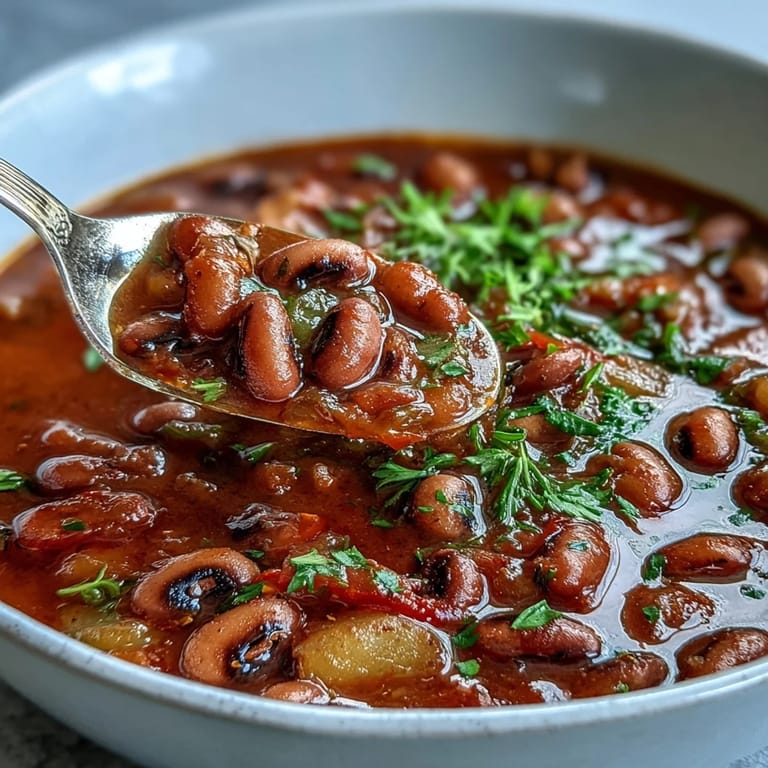
 My daughter, who was going through a phase of refusing vegetables, asked for a second bowl without prompting. That's when I knew this recipe had crossed from being just nourishing into something that speaks a language all its own.
Variations and Swaps
This stew is forgiving in the best way. If you don't have smoked paprika, regular paprika works fine—you'll lose that subtle smokiness, but you'll gain clarity instead. For a smokier take, add a teaspoon of liquid smoke or a chopped chipotle pepper when you pour in the broth. I've also made this with diced sweet potato instead of regular potatoes, which adds a touch of natural sweetness that plays beautifully against the savory broth. If leafy greens appeal to you, chop kale or spinach into bite-sized pieces and stir them in during the last 5 minutes of simmering; they wilt into the broth without overpowering anything else.
Serving Suggestions
I've learned that how you serve this matters almost as much as what goes into it. Crusty bread—the kind with a dark, crackled crust and a tender interior—is non-negotiable for soaking up the broth. Sometimes I ladle it over rice, which transforms it from a soup into something more substantial. On nights when I want to feel like I've put in more effort than I actually did, I serve it in deep bowls with a drizzle of good olive oil and a handful of fresh parsley scattered on top.
Make-Ahead and Storage Tips
This stew actually improves after a day or two in the refrigerator, as the flavors settle and deepen. I often make a double batch on Sunday and pack portions into glass containers for the week ahead. It reheats beautifully on the stovetop over low heat—just add a splash of broth or water if it seems too thick. Frozen portions last about three months, though I've never had one last that long.
- Store leftovers in airtight containers and refrigerate for up to 4 days, or freeze for up to 3 months.
- When reheating from frozen, thaw overnight in the refrigerator first, then warm gently on the stovetop.
- Fresh parsley should always be stirred in right before serving, never before storing.
 Save to Pinterest
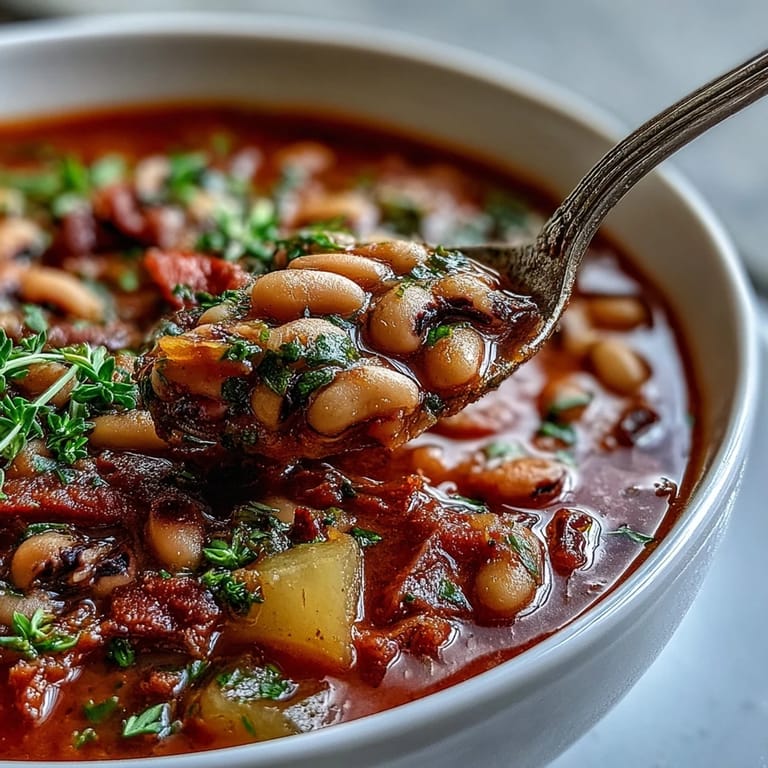
 There's comfort in knowing that something this nourishing, this warm, and this kind can come together in your own kitchen on an ordinary evening. Make it when you need it most.
Recipe Questions
- → How long does this stew keep in the refrigerator?
This stew stores beautifully in an airtight container for 4-5 days. The flavors continue to develop, often tasting even better the next day.
- → Can I use dried black-eyed peas instead of canned?
Absolutely. Soak 1 cup dried peas overnight, then simmer for 45-60 minutes until tender before adding to the stew. Adjust cooking time accordingly.
- → What makes this version special?
The combination of smoked paprika, fresh thyme, and a quality tomato broth creates layers of flavor. Finishing with fresh parsley adds brightness that balances the hearty vegetables.
- → Can I freeze this stew?
Yes, this freezes exceptionally well for up to 3 months. Cool completely before transferring to freezer-safe containers. Thaw overnight in the refrigerator before reheating.
- → What proteins can I add?
Consider adding smoked turkey, ham hock during simmering, or diced andouille sausage. For plant-based options, stir in chopped kale or spinach during the final 5 minutes.
- → How do I adjust the consistency?
For a thicker stew, mash some potatoes against the side of the pot. To thin, add more vegetable broth. Simmer longer to reduce and concentrate flavors further.