 Save to Pinterest
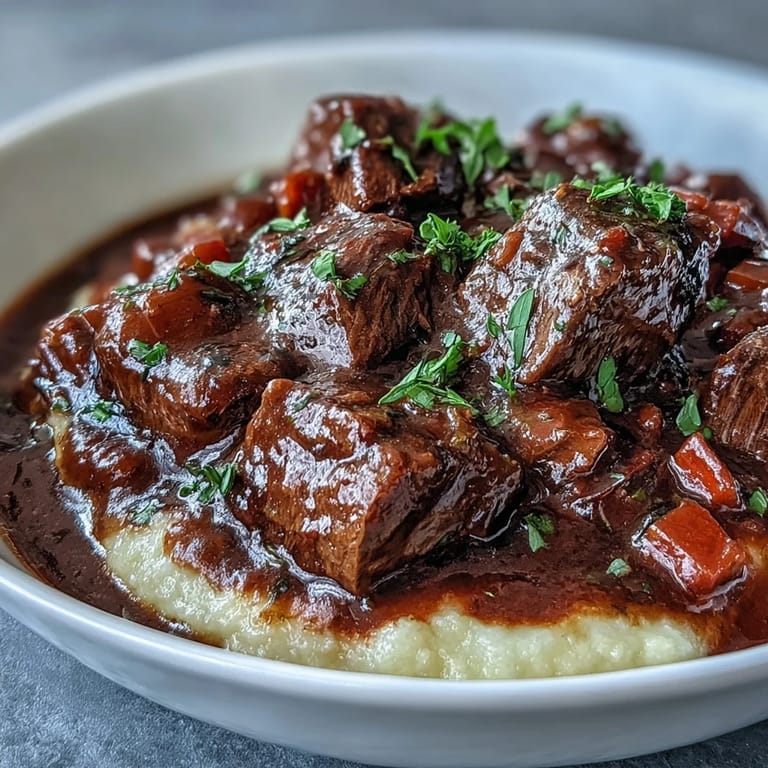
 The smell of browning venison still brings me back to a January kitchen, windows fogged and the radio playing low. I'd bought the meat on a whim from a farm stall, unsure what to do with it. Then I remembered a half-bottle of sloe gin tucked behind the vinegar, a gift I'd forgotten about. That stew turned into something I never expected: dark, tender, quietly boozy, with a sweetness that made everyone at the table go quiet for a moment.
I made this for a small dinner party once, and one guest asked if I'd trained in a restaurant. I laughed, because an hour earlier I'd been scraping burnt polenta off the bottom of a pan. But that's the magic of a dish like this: it forgives you, it waits, and it always tastes like you knew exactly what you were doing.
Ingredients
- Venison shoulder or stewing venison (800 g, cut into 3 cm cubes): Venison can be lean and tough if rushed, but given time it becomes incredibly tender and rich, with a flavor that's deeper than beef but never gamey if cooked right.
- Olive oil (2 tbsp): A high smoke point oil works best here since you're searing meat at high heat, and olive oil adds a gentle fruity note that doesn't compete with the gin.
- Onion (1 large, finely chopped): The base of sweetness and body in the stew, it melts into the sauce and thickens it naturally as it cooks down.
- Carrots (2, sliced): They add earthiness and a hint of sweetness that balances the acidity of the tomato paste and the booze.
- Celery (2 stalks, diced): Often overlooked, celery brings a quiet herbal note that makes the whole stew taste more layered and complete.
- Garlic (2 cloves, minced): Don't skip this, it wakes up the tomato paste and ties all the aromatics together in a way that feels essential.
- Tomato paste (2 tbsp): Adds umami and a slight tang, it also helps the sauce cling to the meat and darken beautifully during the simmer.
- Sloe gin (150 ml): This is the heart of the dish, bringing berry sweetness, a little bitterness, and a warmth that makes the stew feel special and seasonal.
- Beef or game stock (400 ml, gluten-free if needed): Use the best stock you can find or make, it becomes the body of your sauce and carries every flavor forward.
- Redcurrant jelly (1 tbsp): A classic pairing with game, it adds a glossy finish and a fruity sharpness that brightens the whole pot.
- Bay leaves (2): They add a subtle woodsy depth that you'd miss if they weren't there, pull them out before serving.
- Fresh thyme (2 sprigs): Thyme loves slow-cooked meat, it perfumes the stew gently and never overwhelms.
- Juniper berries (1 tsp, lightly crushed): These little berries echo the gin botanicals and add a piney, floral note that makes venison sing.
- Salt and freshly ground black pepper: Season boldly, venison can handle it and the long cook mellows everything beautifully.
- Whole milk (750 ml): Makes the polenta creamy and rich, far better than water alone, and it won't split or curdle if you stir gently.
- Water (250 ml): Thins the milk just enough so the polenta doesn't become too heavy or cloying.
- Polenta (150 g, quick-cooking or regular): I prefer regular polenta for texture, but quick-cooking works in a pinch and still tastes good if you stir it properly.
- Unsalted butter (40 g): Stirred in at the end, it gives the polenta a silky finish and a richness that makes it feel indulgent.
- Grated Parmesan cheese (50 g): Adds a salty, nutty depth that turns plain polenta into something you'd happily eat on its own.
Tired of Takeout? 🥡
Get 10 meals you can make faster than delivery arrives. Seriously.
One email. No spam. Unsubscribe anytime.
Instructions
- Sear the venison:
- Heat the olive oil in a large, heavy-based casserole over medium-high heat until it shimmers. Brown the venison cubes in batches, making sure not to crowd the pan, then set them aside on a plate.
- Soften the aromatics:
- In the same pan, add the onion, carrots, and celery, cooking for 5 to 7 minutes until softened and starting to color. Stir in the garlic and tomato paste, cooking for another minute until fragrant and slightly darkened.
- Deglaze with sloe gin:
- Return the venison to the pan, pour in the sloe gin, and let it bubble for 2 minutes to reduce slightly. Scrape up any browned bits from the bottom of the pan, they're pure flavor.
- Build the stew:
- Add the stock, redcurrant jelly, bay leaves, thyme, and juniper berries, then season with salt and pepper. Bring everything to a gentle simmer, cover, and cook on low heat for 2 hours, stirring occasionally, until the venison is very tender and the sauce has thickened.
- Make the polenta:
- While the stew cooks, heat the milk and water in a saucepan until just simmering. Gradually whisk in the polenta, then cook over low heat, stirring constantly, for 5 to 10 minutes or according to packet instructions until thick and creamy.
- Finish the polenta:
- Stir in the butter and Parmesan, season to taste with salt. Keep it warm over very low heat, stirring occasionally to prevent it from sticking.
- Serve:
- Remove the bay leaves and thyme sprigs from the stew. Spoon the creamy polenta into bowls and ladle the venison stew over the top, making sure everyone gets plenty of sauce.
 Save to Pinterest
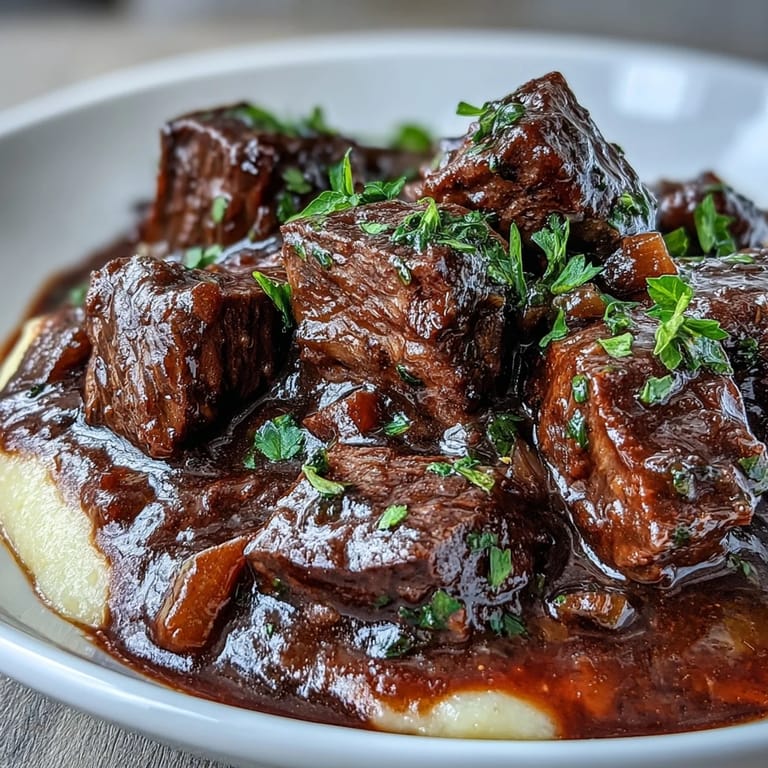
 The first time I served this, someone asked for seconds before they'd even finished their first bowl. That's when I knew it was a keeper, not just because it tasted good, but because it made people slow down and savor. It's the kind of dish that turns a cold night into an occasion.
Choosing Your Venison
I've learned that shoulder or stewing cuts are your friends here, they have enough fat and connective tissue to stay moist during the long braise. Avoid lean loin cuts, they'll dry out and turn tough no matter how carefully you cook them. If you can, buy from a butcher who knows game, they'll trim it properly and often give you tips on cooking times.
What If You Can't Find Sloe Gin
I've swapped it for port, for cassis, even for a berry liqueur once when I was desperate. The stew still works, though it loses a little of that hedgerow magic. If you go with port, add a spoonful of blackberry jam to echo the fruitiness. Red wine works too, but use a good one and maybe a splash of gin to keep the botanical notes alive.
Storing and Reheating
This stew tastes even better the next day, the flavors deepen and settle overnight in the fridge. Reheat it gently on the stove, adding a splash of stock if it's thickened too much. The polenta doesn't store as well, it firms up and loses its creaminess, so I usually make it fresh each time or loosen leftovers with milk and butter over low heat.
- Store the stew in an airtight container in the fridge for up to 3 days.
- You can freeze the stew for up to 3 months, just thaw it overnight before reheating.
- Make fresh polenta each time for the best texture, or be ready to whisk in extra liquid and butter when reheating.
 Save to Pinterest
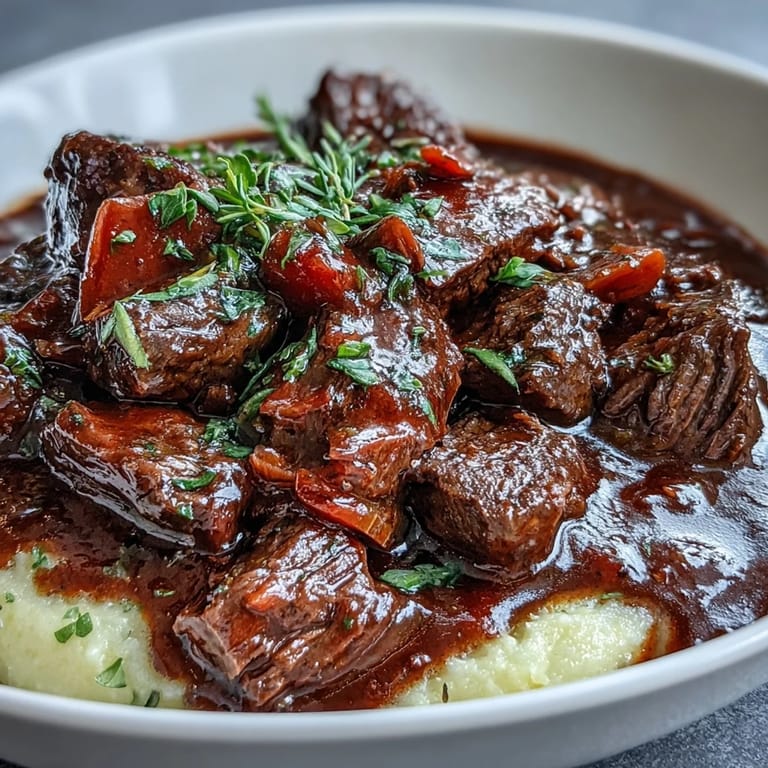
 This is the kind of meal that makes winter feel like a gift instead of something to endure. Serve it to people you want to linger at the table with, and don't be surprised if the conversation goes on long after the bowls are empty.
Recipe Questions
- → Can I substitute the sloe gin with another ingredient?
Yes, you can substitute sloe gin with port, berry liqueur, or a combination of red wine and a splash of blackcurrant cordial for a similar depth of flavor.
- → What cut of venison works best for this stew?
Venison shoulder or stewing cuts are ideal as they become tender and flavorful during the slow braising process. Avoid lean cuts like loin which can dry out.
- → Can I make this stew ahead of time?
Absolutely. The stew tastes even better the next day as flavors develop. Store in the refrigerator for up to 3 days and reheat gently. Prepare fresh polenta when serving.
- → How do I prevent the polenta from becoming lumpy?
Whisk the polenta gradually into simmering liquid and stir constantly while cooking. Use a steady stream when adding and maintain consistent stirring to ensure smooth, creamy results.
- → What wine pairs best with venison stew?
Full-bodied red wines like Shiraz, Cabernet Sauvignon, or Malbec complement the rich, gamey flavors beautifully. Choose wines with good tannin structure and dark fruit notes.
- → Is this dish suitable for freezing?
The venison stew freezes excellently for up to 3 months. Cool completely before freezing in airtight containers. Polenta is best made fresh as it doesn't freeze well.