 Save to Pinterest
 The first time I made Turkish manti, I was standing in a cramped Istanbul kitchen with my friend's grandmother, and she watched me fumble with the dough squares like I was performing surgery. She laughed—not unkindly—and showed me how to pinch them just right, her weathered hands moving with the practiced ease of someone who'd made these tiny dumplings a thousand times. That moment stuck with me: the smell of melting butter, her patient corrections, and the realization that these delicate little pockets of cheese weren't just food, they were a conversation between generations.
I remember making this for a dinner party when I was trying to impress someone, and I got so worried about perfectly sealing each dumpling that I nearly ran out of time. My friend grabbed a handful of the pinched manti from the cooling rack and popped one in her mouth raw, just to taste the filling, and declared it "dangerously good." That's when I stopped overthinking and just cooked—and somehow that batch turned out better than all my precious, perfectionist attempts.
Ingredients
- All-purpose flour: The foundation of the dough; you want enough structure to hold delicate squares, but not so much that the manti becomes tough.
- Turkish white cheese and ricotta: The white cheese brings a salty tang while ricotta adds creaminess; if you can't find Turkish cheese, feta works beautifully and is easier to track down.
- Greek yogurt: Thicker than regular yogurt, so it clings to the dumplings without pooling; it's worth buying the good stuff here.
- Unsalted butter: You control the salt, and melted butter infused with paprika is where half the magic lives.
- Aleppo pepper or chili flakes: This isn't just heat—Aleppo pepper has a fruity warmth that regular chili flakes don't quite capture, though both work.
Tired of Takeout? 🥡
Get 10 meals you can make faster than delivery arrives. Seriously.
One email. No spam. Unsubscribe anytime.
Instructions
- Make a dough you can trust:
- Combine your flour and salt, then create a little volcano in the center and crack in your egg. Add water gradually as you mix, because every kitchen is different and your flour might drink water faster than mine does. Knead until the dough feels smooth and slightly elastic—you're looking for the texture of a soft earlobe, not a brick.
- Let the dough breathe:
- Cover it and walk away for 20 minutes. This rest is essential; it relaxes the gluten so your squares won't snap back when you try to seal them.
- Combine your filling while you wait:
- Crumble the cheese, mix in ricotta, add the parsley and black pepper, then taste it. You want it to taste good enough to eat with a spoon, because honestly, you will.
- Prepare your yogurt sauce:
- Stir the garlic into the yogurt with a pinch of salt. The garlic will soften slightly as it sits, releasing its flavor into the cool yogurt.
- Roll and cut with patience:
- This is where people rush and regret it. Roll your dough thin—almost translucent if you can manage it, about 2 mm. Cut into 1.5-inch squares and don't worry if they're not perfect; manti are supposed to feel homemade.
- Seal each dumpling carefully:
- Place about 1/2 teaspoon of filling in the center of each square, then pinch all four corners together above the filling. You're creating a tiny purse, and a gentle pinch is better than an aggressive squeeze that squashes the dough.
- Boil until they float and surrender:
- Drop your manti into salted boiling water in batches so they have room to move. They're done when they float and feel tender when you fish one out with a slotted spoon, usually 5 to 7 minutes.
- Finish with spiced butter:
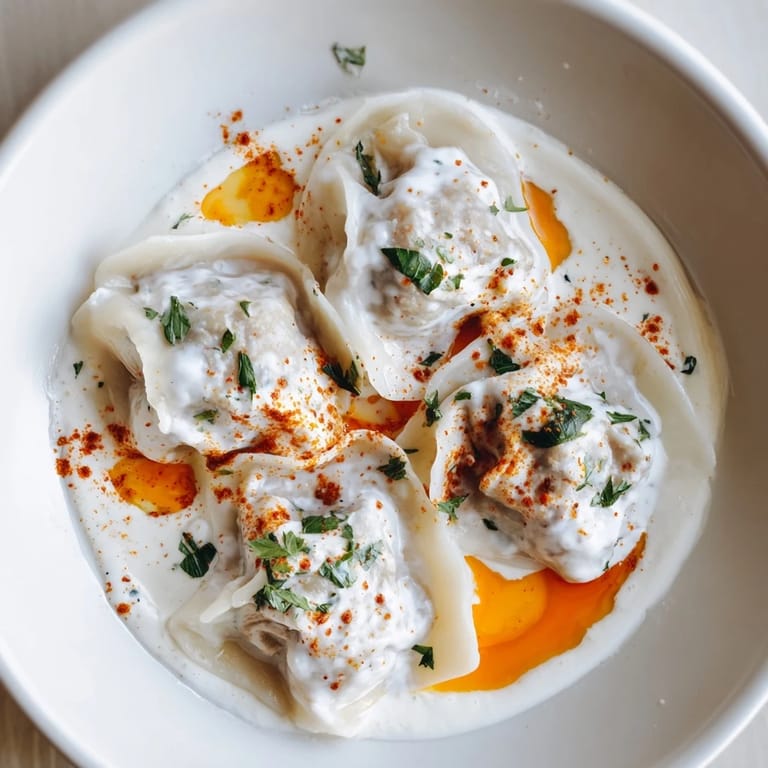
- Melt your butter gently, then add the paprika and Aleppo pepper and let them sizzle for just 30 seconds. The heat releases the flavors without burning them.
- Compose your plate:
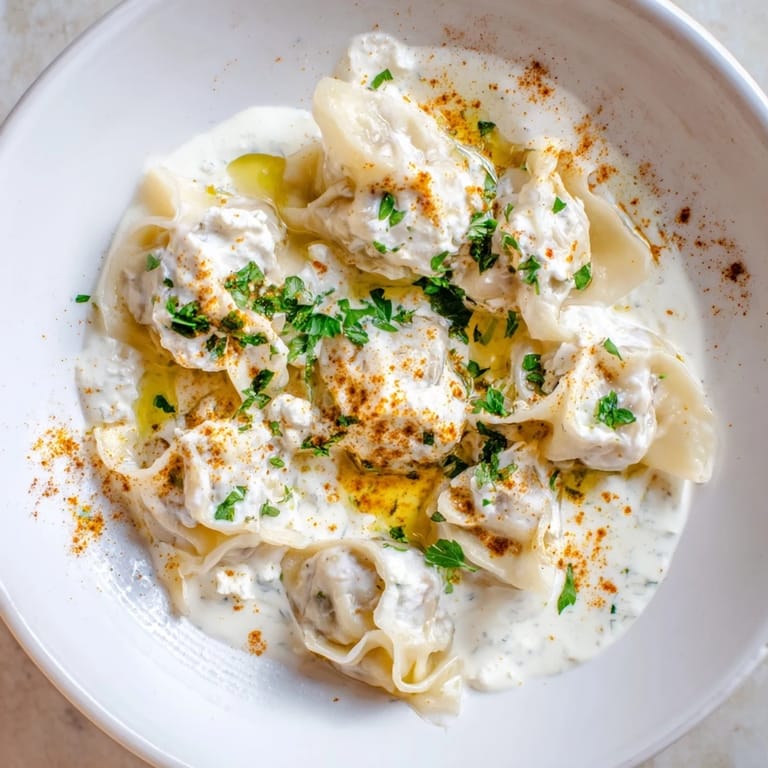
- Arrange the drained manti, spoon the yogurt sauce over them generously, and drizzle that spiced butter on top. The warm dumplings, cold yogurt, and fragrant butter should all exist in the same bite.
 Save to Pinterest
 There was one evening when I made manti for someone who'd never had them before, and I watched their face change with that first bite—the surprise of the cheese, the cooling yogurt, the bloom of paprika from the butter. They asked for the recipe that night, and I realized that these little dumplings had done what food does best: created a moment that mattered.
Why This Dish Feels Like Home
Turkish manti exist in that sweet spot where cooking feels both manageable and special. You're not standing over a stove for hours, but you're also not just reheating something from a box. There's a rhythm to rolling, cutting, and sealing that's almost meditative once you stop worrying about perfection. The dough comes together quickly, and by the time you've pinched the last dumpling, the first batch is already bobbing in boiling water, ready to be transformed by heat and sauce.
The Sauce Matters More Than You Think
I spent a long time making manti before I understood that the sauce isn't just an accompaniment—it's the whole point. The cool, garlicky yogurt against warm, tender dumplings, finished with that burnished butter: that contrast is where the recipe lives. Don't skimp on the yogurt quality, don't undersalt the sauce, and don't pour that spiced butter like you're shy about it. The best manti I've ever eaten had so much sauce that it pooled on the plate, and I sopped it up with bread because waste felt like a crime.
Making Manti Ahead
You can assemble your manti hours before cooking and store them on a flour-dusted tray in the fridge, which takes the pressure off when guests arrive. The yogurt sauce tastes even better if you make it the morning of and let the garlic settle into it. The only thing you truly need to do at the last moment is boil the dumplings and finish with that warm spiced butter—and honestly, that's the easy part.
- Dust your assembled manti generously with flour so they don't stick to the tray or to each other.
- If you're making them more than a few hours ahead, freeze them on the tray, then transfer to a bag; they'll cook straight from frozen without extra time.
- The spiced butter can be made earlier and reheated gently just before serving.
 Save to Pinterest
 Making Turkish manti taught me that some dishes are worth the small effort they ask. These dumplings deserve a moment on the table, a pause before you eat them, a real conversation alongside them.
Recipe Questions
- → What type of cheese is best for the filling?
Turkish white cheese or feta, combined with creamy ricotta, provides a balanced, tangy, and smooth filling perfect for manti.
- → How thin should the dough be rolled?
The dough should be rolled very thin, approximately 2 mm, to ensure delicate dumplings that cook evenly and have a tender bite.
- → What is the cooking method for the dumplings?
The dumplings are cooked by boiling in salted water until they float and become tender, usually within 5–7 minutes.
- → How is the spiced butter prepared?
Butter is melted and combined with paprika and Aleppo pepper, warmed briefly to release fragrant spices, then drizzled over the cooked dumplings.
- → Can I add herbs or spices for extra flavor?
Yes, a pinch of sumac or dried mint can be sprinkled on top for added brightness and aroma.