 Save to Pinterest
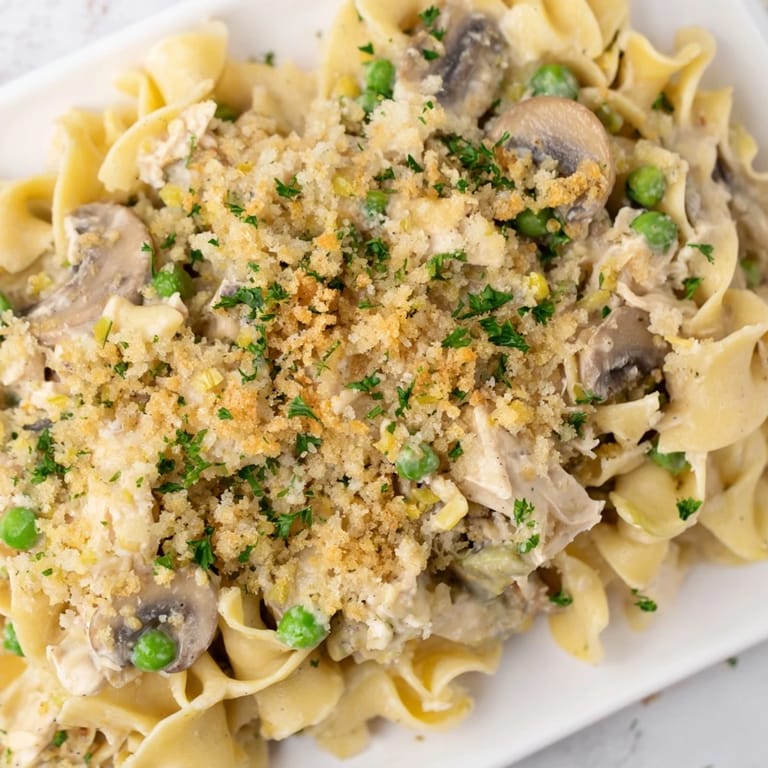
 My grandmother's tuna casserole was a Tuesday night staple, the kind of dish that meant comfort without fanfare. Years later, I found myself craving that same warm, creamy feeling but wanting something a bit more refined, so I started tinkering with the recipe—better broth, fresh mushrooms instead of canned soup, a proper sauce built from scratch. The first time I pulled this updated version from the oven, my kitchen smelled nothing like nostalgia; it smelled like something entirely new that somehow felt familiar.
I made this for my sister's book club last month, and what I remember most wasn't anyone asking for seconds—it was how quickly people relaxed around the table. There's something about casserole that transforms a meal into permission to linger, to talk longer, to refill wine glasses without watching the clock. That single dish became the reason the evening felt unhurried.
Ingredients
- Egg noodles: The wider ribbons hold the sauce better than thin pasta, and cooking them just shy of tender gives them a slight chew that stands up to baking.
- Solid white tuna in water: The quality difference between solid and chunk is real; solid breaks into tender flakes that disappear into the casserole rather than chunking it up.
- Frozen peas: Don't thaw them first if you want them to stay distinct and bright; they'll warm through in the oven and retain their shape.
- Cremini mushrooms: These have more flavor than white button mushrooms and turn a deeper, richer brown when sautéed.
- Yellow onion and celery: This aromatic base creates the savory foundation that makes people say the dish tastes somehow elevated, even if they can't pinpoint why.
- Garlic: Just two cloves keeps the flavor present without overpowering the delicate fish.
- Unsalted butter: Control the salt level yourself rather than guessing what salted butter might add to the sauce.
- All-purpose flour: Creates the roux that thickens the sauce into something silky and coating.
- Low-sodium broth: The cooking process concentrates flavors, so starting with restraint gives you control over the final salt balance.
- Whole milk and sour cream: Whole milk brings richness while sour cream adds a subtle tang that prevents the dish from tasting cloying or one-dimensional.
- Dijon mustard: A half teaspoon is barely detectable but adds a whisper of depth that makes the entire sauce more interesting.
- Panko and parmesan topping: Panko stays crispy longer than regular breadcrumbs, and parmesan adds salt and umami that makes people fight over the crusty bits.
Tired of Takeout? 🥡
Get 10 meals you can make faster than delivery arrives. Seriously.
One email. No spam. Unsubscribe anytime.
Instructions
- Prep your stage:
- Preheat the oven to 400°F and grease your 9x13-inch baking dish with a light hand so nothing sticks but nothing tastes oily either. Having everything measured and chopped before you start cooking means you're free to focus on the sauce rather than scrambling mid-stir.
- Cook the noodles:
- Boil salted water and cook the egg noodles until they're just barely al dente—they'll finish cooking in the oven, and overcooked noodles turn to mush in the heat. Drain them well so excess water doesn't dilute your sauce.
- Build the vegetable base:
- Melt butter in a large skillet over medium heat, add the onion and celery, and let them soften for about three minutes until they release their sweetness. The smell alone tells you when they're ready—it shifts from raw and sharp to something golden and mellow.
- Add the mushrooms:
- Stir in the sliced mushrooms and let them cook undisturbed for a minute or two before stirring, which helps them brown rather than steam. After another few minutes, when they've released their moisture and started to collapse slightly, add the minced garlic and cook just long enough to hear it sizzle and smell its fragrance.
- Make the roux:
- Sprinkle the flour over the vegetables and stir constantly for about one minute, coating everything and letting the flour cook slightly so it loses its raw taste. This is where the casserole gets its structure—don't skip this step or rush it.
- Build the sauce:
- Pour the broth in slowly while stirring, breaking up any flour lumps that form, then add the milk and bring everything to a gentle simmer. Stir occasionally for three to four minutes as the sauce thickens into something smooth and creamy that coats the back of a spoon.
- Season and finish:
- Remove the skillet from heat and stir in the sour cream, Dijon mustard, salt, and pepper, tasting as you go because you can always add more salt but you can't take it back. Fold in the tuna gently so it breaks into tender flakes, then add the peas and cooked noodles, stirring until everything is evenly coated.
- Assemble the casserole:
- Pour the mixture into your prepared baking dish and smooth the top with a spatula so it bakes evenly. In a separate bowl, mix the panko, parmesan, and melted butter with your fingers until it resembles wet sand, then sprinkle it evenly over the top.
- Bake and rest:
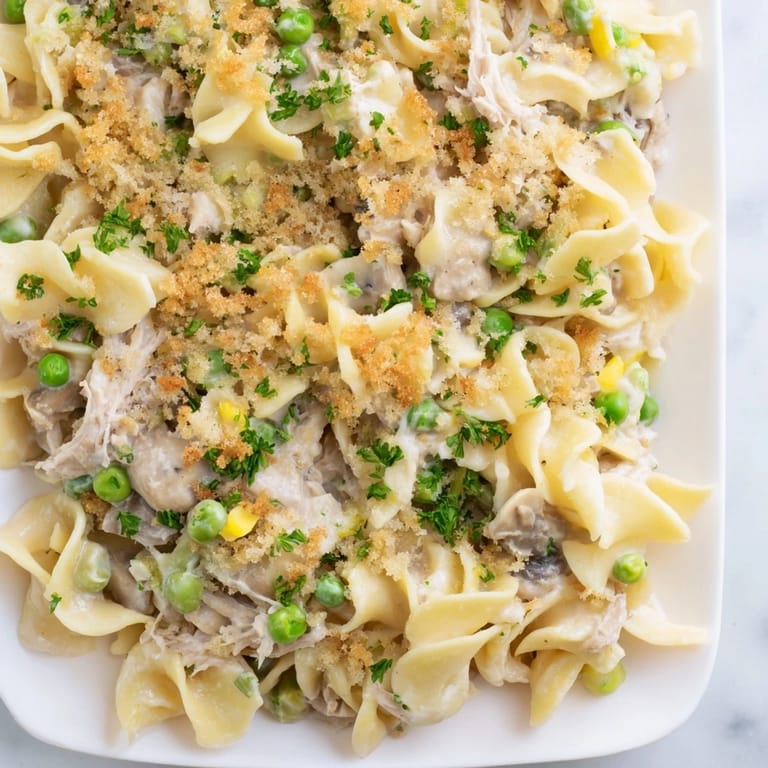
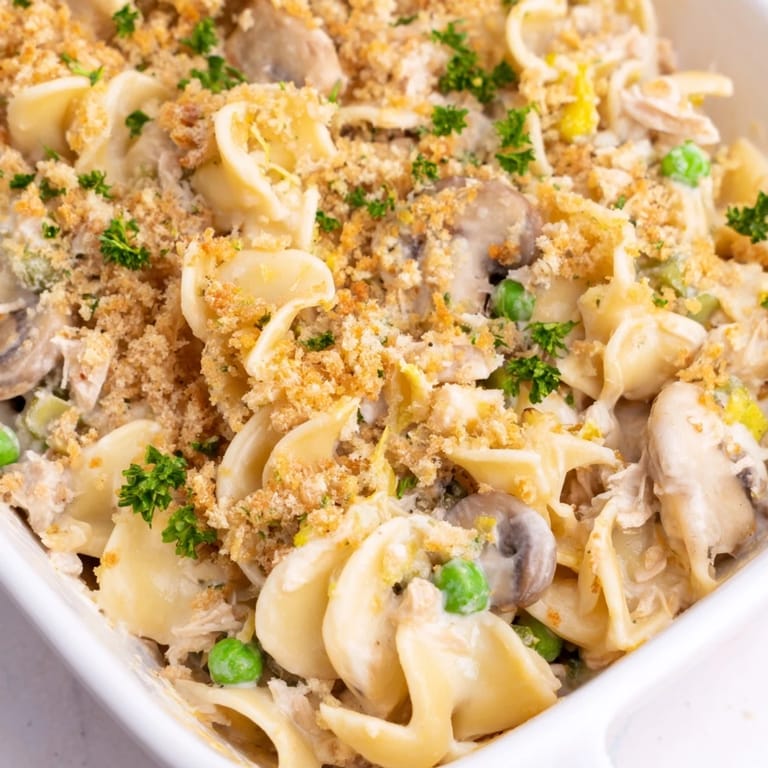
- Bake at 400°F for twenty to twenty-five minutes until the topping turns golden and the filling bubbles slightly at the edges—you'll know it's ready when the aroma fills your whole kitchen. Let it rest for five minutes before serving so the sauce sets just enough to hold together on the plate.
 Save to Pinterest
 I had a moment last winter when someone asked why this casserole tasted different from the one they remembered from childhood, and I realized that sometimes the point isn't to recreate the past but to make people feel the same thing—safe, fed, cared for—in a new way. This dish became my answer to that.
Why This Works
The magic of this casserole is that every component serves a purpose. The creamy sauce binds everything together while the fresh vegetables add texture and brightness, the tuna provides lean protein, and the panko topping gives you that essential contrast of crispy against soft. It's comfort food that doesn't apologize for wanting to taste good alongside feeling good to eat.
Variations to Try
I've made this dish at least a dozen different ways depending on what's in the kitchen or what I'm craving. Some versions get a handful of sharp cheddar stirred into the sauce, which rounds out the tang of the sour cream beautifully. Other nights, I use Greek yogurt instead of sour cream for a lighter version that still tastes rich and satisfying. You can swap the tuna for cooked chicken if you want, or add fresh herbs like dill or tarragon to the sauce if you're feeling adventurous.
Serving and Storage
This casserole is best served warm directly from the oven, ideally with a simple green salad or steamed broccoli on the side to cut through the richness. It reheats beautifully—cover it loosely with foil and warm it in a 350°F oven for about fifteen minutes, or reheat individual portions in the microwave. Leftovers keep in the refrigerator for three or four days, and somehow they taste even better the next day when all the flavors have had time to meld.
- Pair with a crisp white wine like Sauvignon Blanc to echo the brightness of the vegetables.
- A simple arugula salad with lemon vinaigrette balances the creamy richness perfectly.
- Serve with crusty bread to soak up any extra sauce on your plate.
 Save to Pinterest
 This casserole reminds me that the best dishes are the ones that taste like home, no matter whose home you're in. It's simple enough to make on a weeknight but special enough to serve when it matters.
Recipe Questions
- → What type of noodles work best?
Egg noodles hold the sauce well and maintain texture after baking, but other short pasta like rotini or penne can also be used.
- → Can I substitute sour cream?
Greek yogurt is a great substitute for a lighter tangy note without sacrificing creaminess.
- → How to achieve a crispy topping?
Mix panko breadcrumbs with melted butter and parmesan cheese before sprinkling on top, then bake until golden.
- → Can I add extra cheese?
Adding shredded cheddar or gruyère to the sauce adds richness and depth to the flavor profile.
- → Is this suitable for pescatarian diets?
Yes, this dish includes fish and dairy but omits meat, aligning well with pescatarian preferences.