 Save to Pinterest
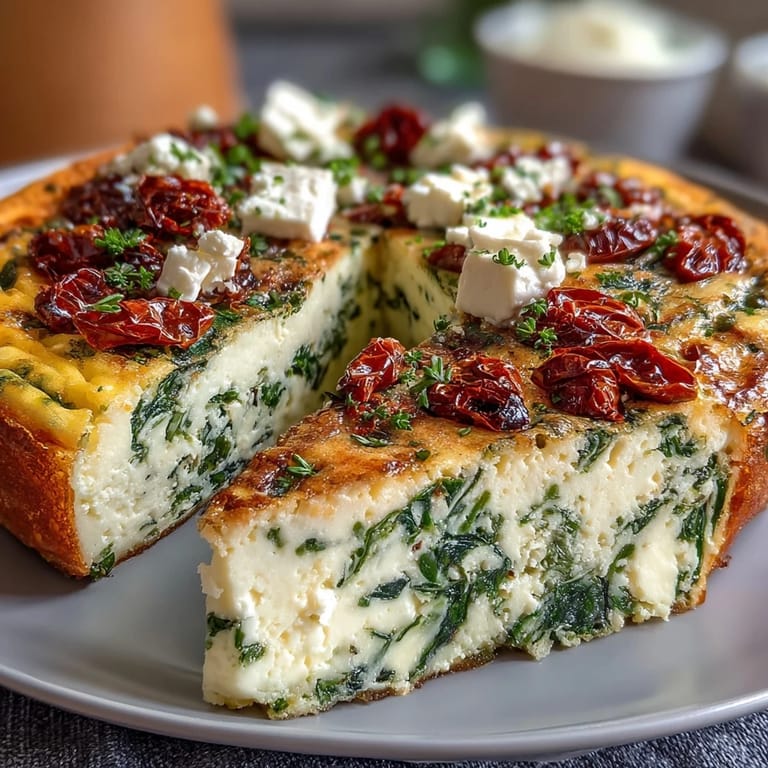
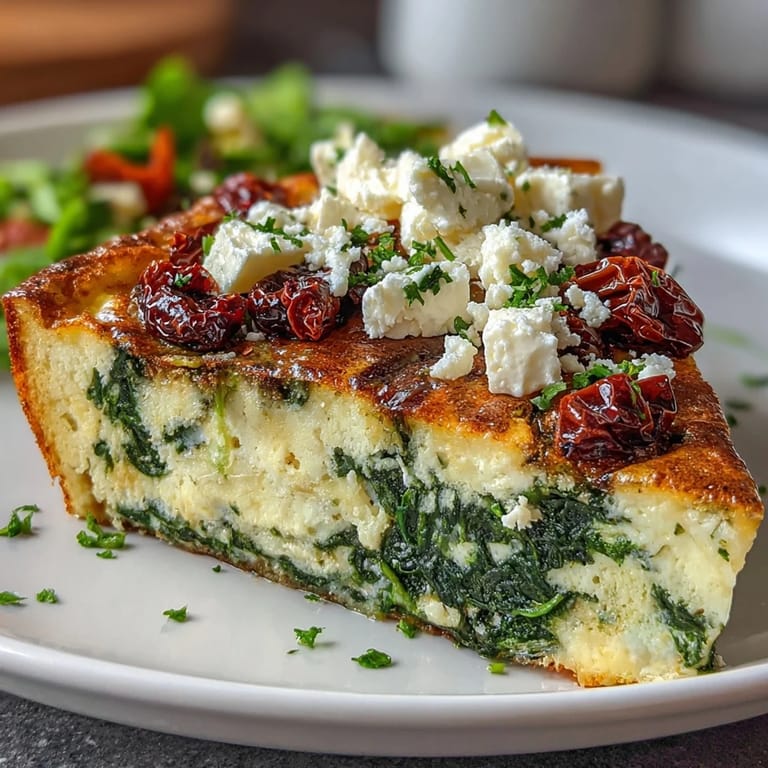
 There's something deeply satisfying about the moment a frittata emerges from the oven—golden, puffed, and still trembling slightly in the center like it's been caught doing something wonderful. I discovered this particular version during a lazy Sunday when my fridge held exactly three things I wanted to use up: a bag of wilting spinach, a jar of sun-dried tomatoes I'd forgotten about, and the tail end of some crumbly feta. What I didn't expect was how the sweet-tart tomatoes would play off the salty cheese and buttery eggs, creating something that tasted far more intentional than its hodgepodge origins.
I made this for my neighbor Sarah one Saturday afternoon after she mentioned craving something "not sad" for lunch, which apparently meant no plain sandwiches or leftover pasta. The look on her face when she took the first bite—that moment when you can tell someone is genuinely surprised by flavor—made me realize this frittata had somehow crossed over from weeknight shortcut into proper company food.
Ingredients
- Fresh baby spinach: Two cups might look like an avalanche but it collapses down to almost nothing once it hits the heat, so don't be shy with it.
- Sun-dried tomatoes: The oil-packed ones make this so much easier than hunting down the dry kind, and that residual oil becomes part of your cooking foundation.
- Yellow onion: One small one, finely chopped, gives you sweetness without overwhelming the other flavors.
- Garlic: Just one clove minced fine so it doesn't scatter throughout but still perfumes everything.
- Large eggs: Six of them are your canvas here, so use the freshest ones you have sitting around.
- Whole milk: A quarter cup makes the eggs custardy instead of rubbery, which changes everything.
- Feta cheese: Half a cup crumbled, and don't rinse it or drain it too much or you'll lose the flavor.
- Parmesan cheese: A quarter cup grated adds depth and helps the top turn that gorgeous pale gold.
- Dried oregano: Half a teaspoon ties the whole Mediterranean moment together without screaming about it.
- Black pepper and salt: Freshly ground pepper matters here more than you might think, and taste as you go with the salt since cheese brings its own.
- Olive oil: Two tablespoons to start the vegetables, something decent enough to taste good but not your finest bottle.
Tired of Takeout? 🥡
Get 10 meals you can make faster than delivery arrives. Seriously.
One email. No spam. Unsubscribe anytime.
Instructions
- Heat and prepare:
- Get your oven to 375°F first so it's ready when you need it, then warm olive oil in your ovenproof skillet over medium heat. You want it shimmering but not smoking.
- Build the vegetable base:
- Toss in your chopped onion and let it soften for about three to four minutes until it's turning translucent at the edges. Add the minced garlic and give it another minute—the smell will tell you when it's ready, that sweet toasted note that fills the kitchen.
- Wilt the greens:
- Pile in the spinach and watch it transform from a forest to something that actually fits in the pan, roughly two minutes of stirring. Scatter in the sun-dried tomatoes and stir everything together, just a minute more to let them warm through.
- Combine the eggs:
- In a separate bowl, whisk together your eggs with the milk until they're pale and slightly frothy, then add the oregano, salt, and pepper. Fold in both cheeses gently so they're distributed but not fully broken down.
- Bring it together:
- Pour the egg mixture over the vegetables in the skillet and give it one gentle stir to make sure everything mingles. Cook on the stovetop for two to three minutes until you see the edges beginning to set and pull slightly away from the pan sides.
- Finish in the oven:
- Slide the whole skillet into your preheated oven and bake for ten to twelve minutes until the center is just barely set—it should still have a tiny bit of jiggle in the middle, not completely firm. The top will turn a pale golden color that means you've nailed it.
- Rest and serve:
- Let it cool for a few minutes so it firms up enough to slice cleanly, then cut into wedges and serve warm or even at room temperature if that's your mood.
 Save to Pinterest
 What changed for me was realizing this frittata isn't just food, it's permission to slow down and actually taste things. My daughter started requesting it specifically, not as a side dish but as her lunch, and suddenly I was making it twice a week just because it made her happy and required almost no effort on my part.
Why This Works as Brunch or Dinner
There's no pretense here, no fancy technique or intimidating ingredients list, which is exactly why it shows up at so many tables. It works for a casual family meal at six o'clock and equally well for a leisurely gathering at ten in the morning, served with bread and salad and people lingering over coffee. The frittata doesn't demand your attention once it goes into the oven, which means you can actually have a conversation or set a proper table instead of standing at the stove.
Variations Worth Trying
Once you understand how this frittata works, it becomes a template rather than a fixed recipe. I've made it with roasted red peppers instead of sun-dried tomatoes, with fresh dill in place of oregano, with goat cheese swapped for feta when I'm in a different mood. The vegetables and cheese are flexible—think of them as guidelines rather than commandments—so use what's in your crisper drawer without guilt.
Storage and Make-Ahead Tips
This frittata actually improves slightly overnight in the refrigerator, the flavors settling and becoming more cohesive, which makes it perfect for meal prep or a quick breakfast that doesn't require any thinking. You can reheat slices gently in a low oven or eat them cold straight from the fridge, which I've done countless times standing at the counter in my pajamas. The dairy and eggs mean it keeps beautifully for three to four days, something I've relied on when life gets chaotic and I need food that doesn't judge me.
- Wrap leftover slices tightly so they don't absorb other fridge flavors or dry out.
- Cold frittata is genuinely delicious, not a consolation prize for being too lazy to reheat.
- Make a double batch and freeze half for mornings when you need something substantial but have zero time.
 Save to Pinterest
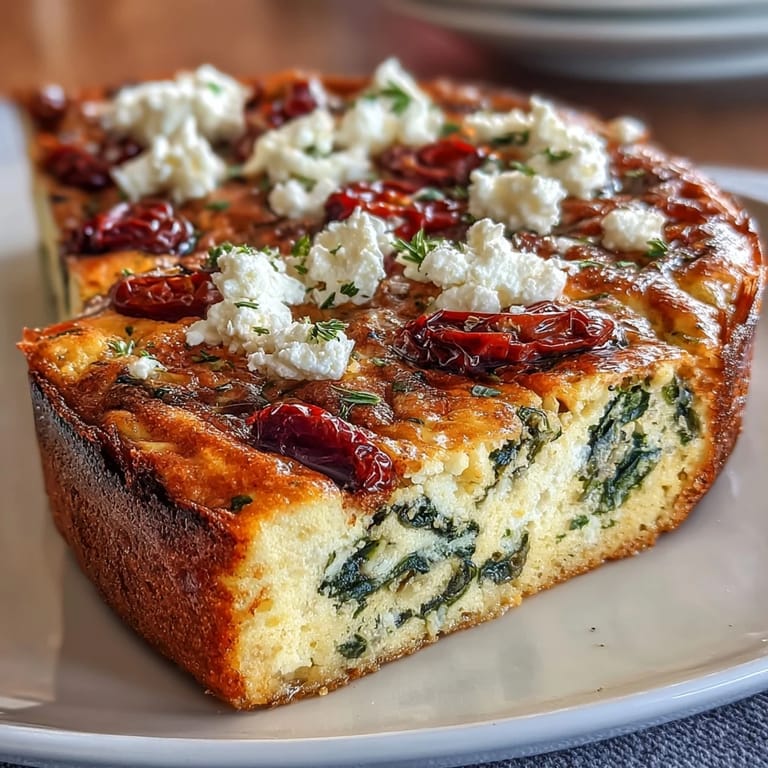
 This is the kind of recipe that becomes part of your regular rotation without you even planning for it, showing up when you need something nourishing and straightforward. Make it enough times and you'll stop reading the instructions altogether, which is exactly when you know it's truly yours.
Recipe Questions
- → Can I use frozen spinach instead of fresh?
Yes, thaw and drain frozen spinach thoroughly before adding to avoid excess moisture.
- → What kind of cheese works best here?
Feta provides a tangy flavor, while Parmesan adds depth; both contribute a creamy texture.
- → Can I cook this on the stovetop only?
Baking gives a light, fluffy texture and helps the center set evenly; stovetop cooking alone may yield a denser result.
- → Is this suitable for a gluten-free diet?
Yes, all ingredients used are naturally gluten-free, but check sun-dried tomato labels for cross-contamination warnings.
- → What wine pairs well with this dish?
A crisp white wine such as Sauvignon Blanc complements the tangy and savory flavors nicely.