 Save to Pinterest
 My neighbor stopped by on a gray Tuesday afternoon just as I was standing in front of my open fridge, completely uninspired. She took one look at what I had and said, "Make that one-pot chicken and rice thing—you know, the one that smells like home." Twenty minutes later, the whole kitchen was warm and steaming, and she was already texting her sister the recipe. That's when I realized this soup wasn't just easy; it was the kind of dish that makes people linger at your table.
I made this for my sister during her first week in a new apartment, when her kitchen was still mostly empty boxes. She sat at her makeshift dining table with a bowl of this soup, and I watched her shoulders actually relax for the first time since she'd moved. That's the moment I understood why this recipe matters—it's not about being fancy, it's about being exactly what people need when life feels chaotic.
Ingredients
- Boneless, skinless chicken breasts (2, about 400 g), cut into bite-sized pieces: Cutting them into pieces rather than leaving them whole lets them cook faster and distribute evenly throughout the soup, so every spoonful has a little protein in it.
- Medium onion, finely chopped: This is your flavor foundation—don't skip the chopping step, as it helps the onion break down and sweeten as it cooks.
- Carrots and celery (2 carrots, 2 stalks), peeled and sliced: These three vegetables together create that classic, almost nostalgic base that makes the broth taste like it's been simmering for hours.
- Garlic cloves (3), minced: Adding garlic after the softer vegetables prevents it from burning and gives you that aromatic, almost perfumed quality that makes people ask what smells so good.
- Long-grain white rice (2/3 cup, 120 g), rinsed: Rinsing removes excess starch so the rice stays separate and fluffy instead of turning gluey, which I learned the hard way on my first attempt.
- Low-sodium chicken broth (6 cups, 1.5 liters): Low-sodium lets you control the salt level and prevents the final soup from tasting overly salty as the rice absorbs the liquid.
- Olive oil or unsalted butter (1 tablespoon): Either works; butter gives a richer taste, while oil keeps it dairy-free if that matters to you.
- Dried thyme, bay leaf, black pepper (1 teaspoon thyme, 1 bay leaf, 1/2 teaspoon pepper): These seasonings build warmth without overwhelming the delicate chicken flavor.
- Salt (3/4 teaspoon), or to taste: Add this early so it distributes through the broth, then taste at the end because you can always add more.
- Fresh parsley (2 tablespoons, chopped): This gets stirred in at the very end, keeping it bright and fresh-tasting rather than cooked down.
- Lemon wedges, for serving (optional): A squeeze of fresh lemon at the table cuts through the richness and makes everything taste fresher.
Tired of Takeout? 🥡
Get 10 meals you can make faster than delivery arrives. Seriously.
One email. No spam. Unsubscribe anytime.
Instructions
- Start with the base:
- Heat your oil or butter in a large pot over medium heat until it shimmers, then add the onion, carrots, and celery. Let them cook for about 5 minutes, stirring every minute or so, until the edges of the vegetables start to turn soft and slightly golden—this is when they're releasing their sweetness into the pot.
- Build the flavor:
- Add your minced garlic and cook for just 1 minute, stirring constantly so it becomes fragrant without burning, which happens faster than you'd think. You'll know it's ready when your kitchen suddenly smells incredible.
- Introduce the chicken:
- Stir in your chicken pieces and let them cook for 2 to 3 minutes, turning them occasionally until the outside loses its raw appearance. They don't need to be cooked all the way through—they'll finish cooking in the broth.
- Bring it together:
- Add your rinsed rice, the full amount of chicken broth, thyme, bay leaf, salt, and pepper, stirring everything together so the rice doesn't clump up on the bottom. You want all these ingredients distributed evenly throughout the pot.
- Let it simmer:
- Turn up the heat until you see big bubbles breaking the surface, then reduce it to a gentle simmer where just small bubbles appear here and there. Cover the pot and let it cook for 20 to 25 minutes, giving it a stir every few minutes to make sure nothing sticks.
- Check for doneness:
- The rice should be tender enough to bite through easily, and the chicken should shred apart with just a fork. If the rice still feels firm, give it another few minutes—rice times can vary slightly depending on your stove and pot.
- Season and finish:
- Fish out that bay leaf, taste a spoonful, and adjust the salt and pepper to your preference. Stir in your fresh parsley right before serving so it keeps its bright color and fresh taste.
- Serve with intention:
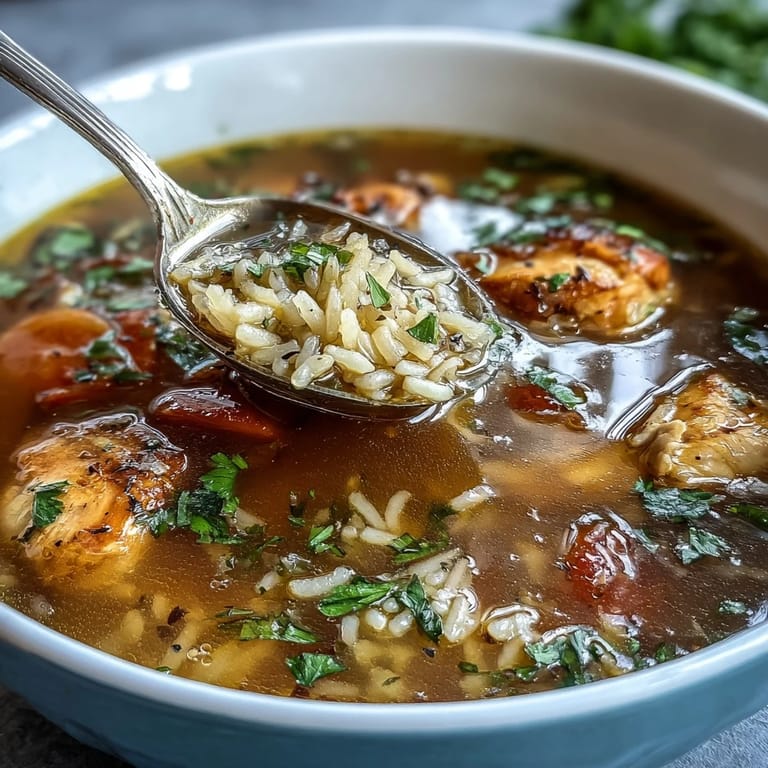
- Ladle into bowls and serve hot with lemon wedges nearby, letting everyone squeeze a little brightness into their own bowl if they want it.
 Save to Pinterest
 There's a quiet magic in watching someone eat this soup without checking their phone, without talking about anything except maybe asking for seconds. My dad, who usually eats standing up over the sink, sat down with a bowl and just... stayed there.
Why This Soup Never Gets Old
The beauty of this recipe is that it tastes like you've been cooking all day, but it actually takes less time than ordering takeout. Every time I make it, I add something different—sometimes it's just the vegetables that came home with me from the farmers market, sometimes it's whatever herbs are still green in the garden. It never feels like I'm making the same soup twice, even though the core is always the same.
How to Make It Your Own
If you want to turn this into something completely different, you have so much freedom. Brown rice works beautifully if you give it those extra 15 to 20 minutes to soften, though it makes the soup earthier and slightly more dense. A handful of fresh spinach or torn kale stirred in during the last 5 minutes adds color and a gentle bitterness that balances the richness, and I've also thrown in diced zucchini, green beans, or even leftover roasted mushrooms without changing a single other ingredient.
The Parmesan Rind Secret and Other Upgrades
If you have a Parmesan rind hiding in your fridge, toss it in while the soup simmers and watch how it melts into the broth, adding an almost savory depth that makes people ask what the secret ingredient is. You can remove it before serving, or just let people know it's there. Beyond that, a splash of white wine added after the garlic, or a pinch of red pepper flakes for heat, or even a drizzle of good olive oil and fresh herbs stirred in right before eating all work beautifully.
 Save to Pinterest
 This soup reminds me that the simplest meals, the ones that don't require any special techniques or hard-to-find ingredients, are often the ones people remember. Make it when you need comfort, make it when someone else needs comfort, or just make it because your kitchen deserves to smell this good.
Recipe Questions
- → Can I substitute brown rice in this dish?
Yes, brown rice can be used, but it requires a longer simmering time, about 15–20 minutes more than white rice, to become tender.
- → Is it possible to make this dairy-free?
Absolutely. Using olive oil instead of butter keeps the dish dairy-free without sacrificing flavor.
- → How can I add extra greens to the soup?
Stir in spinach or kale during the last 5 minutes of cooking for added nutrients and color.
- → What is the best way to reheat leftovers?
Reheat gently on the stove and add a splash of broth or water to loosen the soup as the rice thickens when chilled.
- → Can I enhance the flavor without extra seasoning?
Adding a Parmesan rind during simmering enriches the broth with a subtle savory depth. Remove before serving.