 Save to Pinterest
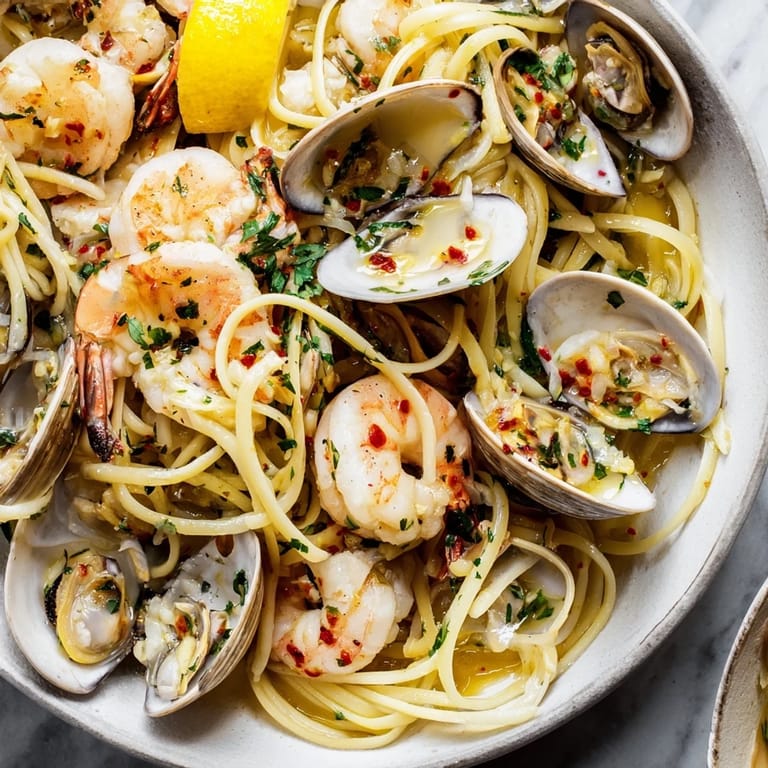
 There's something about the sizzle of garlic hitting hot oil that makes me stop whatever I'm doing and pay attention. One Friday evening, I found myself at the fishmonger's counter with no real plan, just a craving for something that tasted like the coast. The vendor recommended a mix of shrimp, clams, and mussels, and within an hour I'd created this seafood linguine—a dish that's since become my go-to when I want to feel like I'm cooking something restaurant-worthy without the stress.
I made this for my partner after a particularly rough week, and I'll never forget how their whole face lit up when they smelled the wine reducing with the garlic. We sat at the kitchen counter—because who has time to set the table when you're hungry—and ate straight from the skillet while the sun set. That's when I realized this dish wasn't just about the seafood; it was about creating a moment that felt a little bit special.
Ingredients
- Large shrimp (200g): Look for ones that feel firm and smell briny, not fishy—that's your freshness check right there.
- Fresh clams (250g): These little guys add brininess and texture; tap each one before cooking and discard any that won't close, as that means they're already dead.
- Fresh mussels (250g): The debearding part sounds intimidating but it's just tugging a little stringy bit away—takes seconds per mussel.
- Dried linguine (400g): The long, flat shape catches the sauce beautifully, but thin spaghetti works just as well if that's what you have.
- Extra virgin olive oil (3 tbsp): This is your base, so use one you actually like tasting—it makes a real difference in the final flavor.
- Garlic cloves (4): Slice them thin so they cook evenly and soften into the oil instead of burning.
- Shallot (1 small): More delicate than onion and adds a subtle sweetness that complements seafood beautifully.
- Red pepper flakes (½ tsp optional): Just a whisper of heat—I include them because they wake up all the other flavors without overpowering anything.
- Dry white wine (200ml): Use something you'd actually drink; the cheaper wines can leave a bitter taste, and you want the acidity to balance the richness.
- Fish or chicken stock (250ml): Fish stock is ideal but honestly, chicken works fine and is usually easier to find.
- Unsalted butter (2 tbsp): Added at the end, this creates that silky coating that makes everything taste restaurant-quality.
- Lemon zest and juice (½ lemon): This brightness is essential—it cuts through the richness and reminds you of the sea.
- Fresh parsley (3 tbsp chopped): Don't skip the garnish; it's not just pretty, it adds a fresh, grassy note that makes each bite interesting.
Tired of Takeout? 🥡
Get 10 meals you can make faster than delivery arrives. Seriously.
One email. No spam. Unsubscribe anytime.
Instructions
- Get your pasta going:
- Fill a large pot with salted water—it should taste like the sea, not a salt mine—and bring it to a rolling boil. Cook the linguine until it's just al dente, which means it still has a tiny bit of resistance when you bite it. Don't overcook it because it'll finish cooking slightly when you toss it with the sauce.
- Coax out the garlic's sweetness:
- Heat your olive oil in a large deep skillet over medium heat and add the sliced garlic and chopped shallot. You want them to become soft and fragrant, turning golden at the edges—this takes about 2 minutes and fills your kitchen with the most incredible smell. If using red pepper flakes, add them now too.
- Give the shrimp a quick sear:
- Turn the heat up to medium-high and add your shrimp, cooking them for just about 1 minute per side until they turn from gray to pink. They'll continue cooking later, so resist the urge to leave them in too long or they'll turn rubbery. Pull them out onto a plate and set aside.
- Open up the clams and mussels:
- Add your cleaned clams and mussels to the skillet, pour in the white wine, and cover the pan with a lid. Listen for the gentle sounds of shells popping open—it's actually really satisfying—and after 3 to 4 minutes, most of them should have opened. Any that stubbornly stay closed should be discarded because they weren't alive.
- Build the sauce:
- Pour in your stock and bring everything to a gentle simmer, letting it bubble for 2 to 3 minutes so the flavors meld. Then slide the shrimp back into the pan and let them warm through.
- Bring it all together:
- Add your drained linguine directly to the skillet along with that reserved pasta water, the butter, lemon zest, and fresh lemon juice. Toss everything together over low heat, letting the pasta absorb all that gorgeous sauce—it should coat every strand silkily, not be swimming in liquid. Season with salt and pepper to your taste.
- Plate and serve:
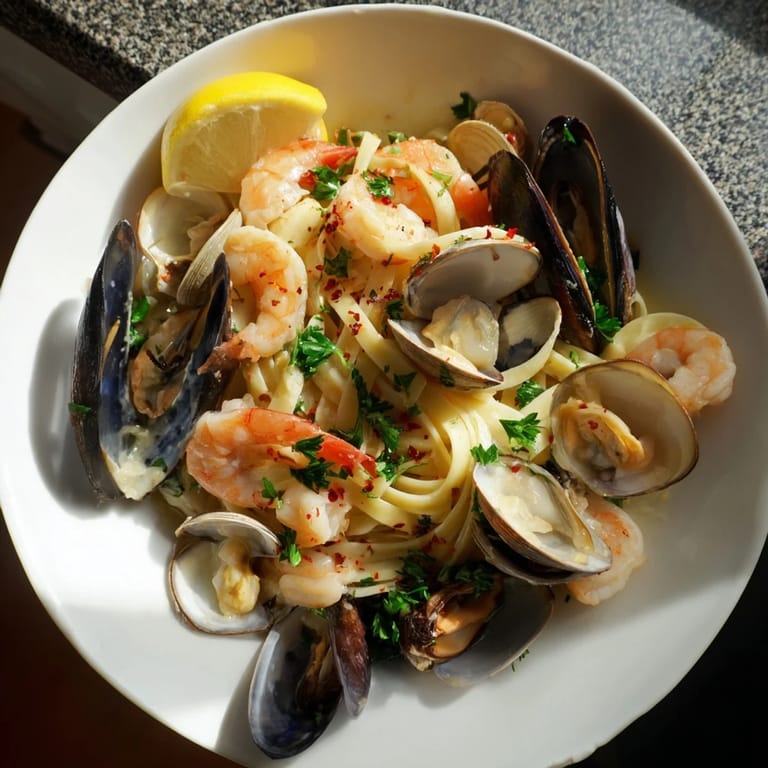
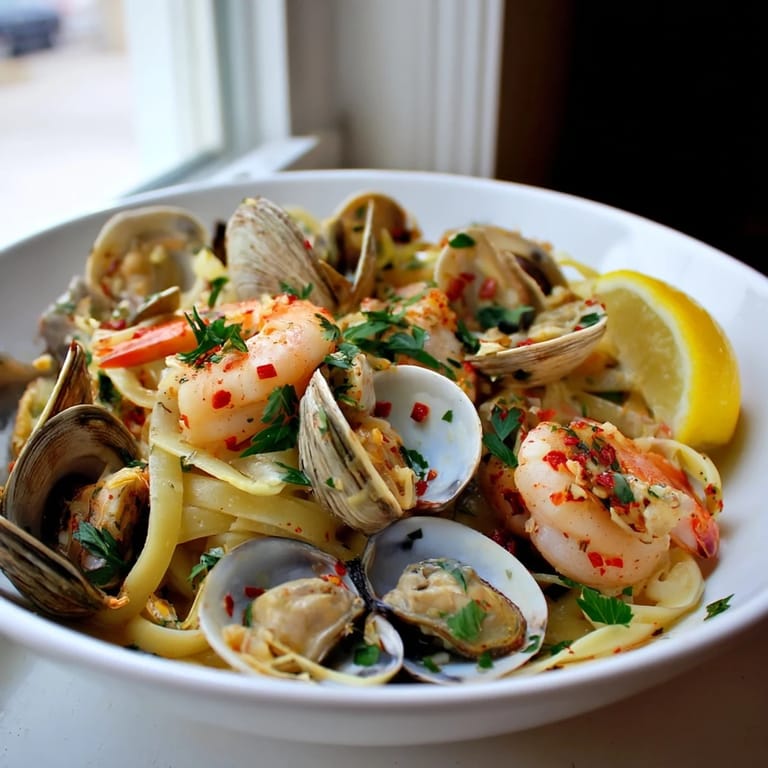
- Transfer to serving bowls, scatter fresh parsley over the top, and add a lemon wedge for people to squeeze over as they eat. Serve immediately while everything is still hot and the flavors are singing.
 Save to Pinterest
 Last year, I made this for my parents on their anniversary, and my mom actually teared up a little—not because I'm some incredible cook, but because the whole experience felt like a gift. There's something about a dish where you can taste the care in every ingredient that makes people feel seen.
The Magic of Fresh Seafood
I learned the hard way that seafood quality makes or breaks this dish. The first time I grabbed whatever looked cheap at the supermarket, I ended up with shrimp that had a weird smell and clams that felt slimy. Now I go to a real fishmonger or a grocery store with serious seafood turnover, and I always ask if they got their delivery that day. A good fishmonger becomes your friend—they'll tell you what's fresh, how to store it, and will even scrub your clams if you ask nicely.
Wine Matters More Than You Think
The first time I made this with a really cheap cooking wine, the sauce tasted vaguely bitter and metallic, which was disappointing. My neighbor suggested I use the same white wine I'd drink with dinner, and the difference was night and day. You only need three-quarters of a cup, so grab a bottle you actually enjoy—the acidity in a good Pinot Grigio or Sauvignon Blanc brightens the whole dish and balances the richness of the butter and shellfish.
Timing and Temperature Control
The secret to not ending up with rubbery shrimp and overdone clams is understanding that these proteins cook quickly and will keep cooking from residual heat even after you remove the pan from the flame. I keep the heat lower than feels natural, and I'm constantly reminding myself that slightly underdone is better than overdone because you can always cook it a bit more, but you can't undo overcooked seafood. Here are the things that changed my game:
- Cook the shrimp for just 45 seconds to 1 minute per side and trust that they'll continue cooking as the sauce bubbles around them.
- Listen for the shells popping open rather than watching the clock; shellfish tell you when they're done if you pay attention.
- Use low heat when tossing the pasta into the sauce so nothing seizes up or gets tough from sudden high temperature.
 Save to Pinterest
 This seafood linguine has become my answer to the question of what to cook when I want to feel like I'm celebrating something without it being a holiday. It reminds me that good cooking isn't about complexity—it's about respecting your ingredients and taking your time.
Recipe Questions
- → How do I know if clams and mussels are fresh?
Choose clams and mussels with tightly closed shells that don't smell fishy. If any shells are open, tap them gently—they should close. Discard any that remain open or have cracked shells. Store them in the coldest part of your refrigerator on ice, and use within 1-2 days of purchase.
- → What should I do if shells don't open during cooking?
Discard any clams or mussels that fail to open after cooking, as this indicates they were dead before cooking. This is a safety precaution, as unopened shells may harbor bacteria. The majority should open within 3-4 minutes of heat exposure.
- → Can I make this dish ahead of time?
This dish is best served immediately after cooking for optimal texture and flavor. However, you can prepare components separately—cook pasta earlier and reheat gently, and prepare your seafood and sauce ingredients in advance. Combine and cook when ready to serve.
- → What pasta alternatives work well?
While linguine is traditional, you can use fettuccine, spaghetti, or bucatini with equally delicious results. Thinner pastas like vermicelli work too. Choose shapes that allow sauce to cling properly. Fresh pasta will require shorter cooking times than dried varieties.
- → How can I adjust the sauce consistency?
If sauce seems thin, reduce it slightly over higher heat before adding pasta. If too thick, add reserved pasta water gradually while tossing. The starchy pasta water naturally emulsifies with butter and olive oil, creating silky coating without cream.
- → What white wine is best for cooking?
Use a dry white wine you'd actually drink—Pinot Grigio, Sauvignon Blanc, or Vermentino work beautifully. Avoid overly oaky or sweet wines. The wine's acidity complements the shellfish and brightens the finished dish. A ¾ cup dry white wine is perfect for this quantity.