 Save to Pinterest
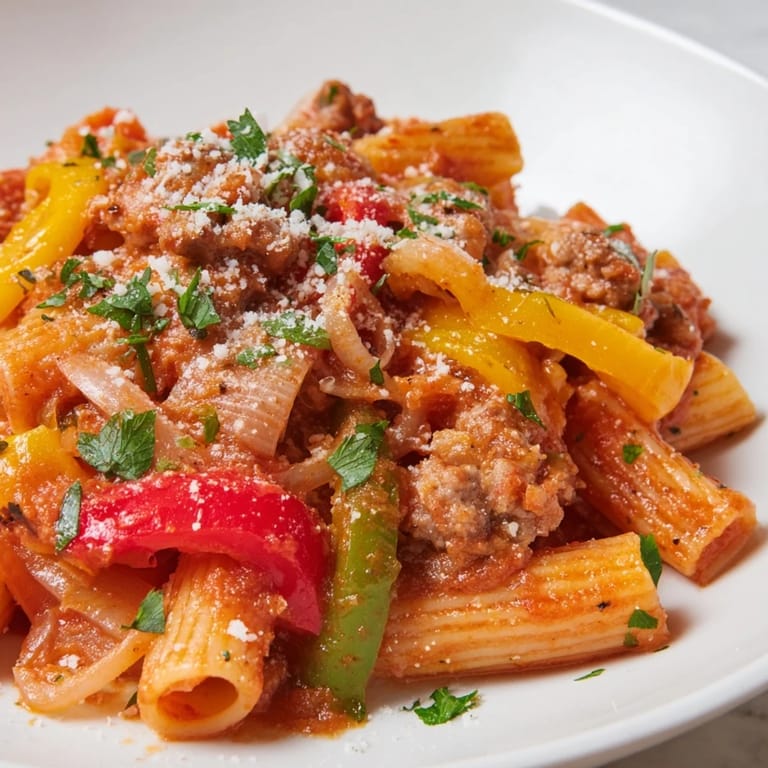
 My neighbor Marco once stood in my kitchen on a random Tuesday evening, the smell of browning sausage filling the air, and said, "This is what my nonna made when she wanted us to stop complaining about dinner." That moment stuck with me—there's something almost defiant about sausage and peppers pasta, a dish that doesn't apologize for being exactly what it is: bold, uncomplicated, and deeply satisfying. I've made it countless times since, and every time those peppers hit the hot oil, I'm reminded that the best meals rarely come from fancy techniques.
I remember cooking this for my sister the winter she decided to stop eating out, and watching her twirl pasta on her fork with this quiet contentment made me realize that home cooking isn't about impressing anyone—it's about feeding the people you actually want to sit with.
Ingredients
- Italian sausage, 1 lb: Buy it from the meat counter if you can; it browns better and tastes fresher than the pre-packaged kind, and the butcher will remove the casings for you if you ask nicely.
- Bell peppers, 3 (red, yellow, green): The mix of colors isn't just pretty—each one brings slightly different sweetness, and together they become this almost caramelized, jammy layer at the bottom of your pan.
- Onion, 1 large: Slice it thin and cook it slowly with the peppers; you want it to soften and turn translucent, not brown and bitter.
- Garlic, 3 cloves: Mince it fine, and add it after the peppers soften so it doesn't burn and turn harsh.
- Crushed tomatoes, 1 can (14 oz): The foundation of everything; buy the good stuff if you can because there's nowhere to hide a mediocre tomato here.
- Tomato paste, 2 tbsp: This concentrate of tomato flavor goes in early and helps build the sauce's body without cooking it for hours.
- Dried oregano and basil, 1 tsp and 1/2 tsp: These herbs are dried, so they need time to bloom in the warm sauce; don't skip them or your sauce tastes flat.
- Crushed red pepper flakes, 1/2 tsp (optional): A small amount brings heat without overwhelming; taste as you go and add more if you like it spicier.
- Pasta, 12 oz penne or rigatoni: The shape matters here—tubes and ridges catch the chunky sauce better than long thin noodles ever could.
- Olive oil, 2 tbsp: Use something decent but not your expensive stuff; you're cooking hot, not finishing delicate flavors.
- Fresh parsley and Parmesan: These are not optional finishing touches; they brighten everything and remind you this isn't just sustenance.
Tired of Takeout? 🥡
Get 10 meals you can make faster than delivery arrives. Seriously.
One email. No spam. Unsubscribe anytime.
Instructions
- Start the pasta:
- Fill a large pot with cold water, salt it generously so it tastes like the sea, and bring it to a rolling boil before you add the pasta. Stir it once so nothing sticks, then let it cook according to the package timing; you want it tender but still with a tiny bit of resistance when you bite it.
- Brown the sausage:
- While water heats, pour olive oil into your skillet over medium heat and add the sausage meat (not in a whole link—break it apart with your spoon as it hits the hot oil). Let it cook undisturbed for a minute or two so it colors, then stir and break it into smaller pieces, cooking until no pink remains and the meat has rendered some of its own fat, about 5 to 7 minutes total.
- Soften the peppers and onions:
- Scoop the browned sausage onto a clean plate, then add your sliced peppers and onions to the same skillet, letting them sit in that sausage-flavored oil. They'll release their own moisture and begin to soften, turning golden and sweet at the edges after about 5 to 6 minutes.
- Build the sauce base:
- Add your minced garlic and stir constantly for just one minute—you want it fragrant but not burned. Then in goes the tomato paste; stir it around in the oil for a minute or two so it caramelizes slightly before you add the crushed tomatoes, oregano, basil, red pepper flakes, and a good pinch of salt and pepper.
- Simmer and unite:
- Let this sauce bubble gently for about 5 minutes so the flavors wake up and marry together, then return your sausage to the skillet and stir everything to combine. Cook it all together for another 3 to 4 minutes, and if the sauce looks too thick and heavy, splash in some of that pasta water you reserved to loosen it into something saucier.
- Combine and finish:
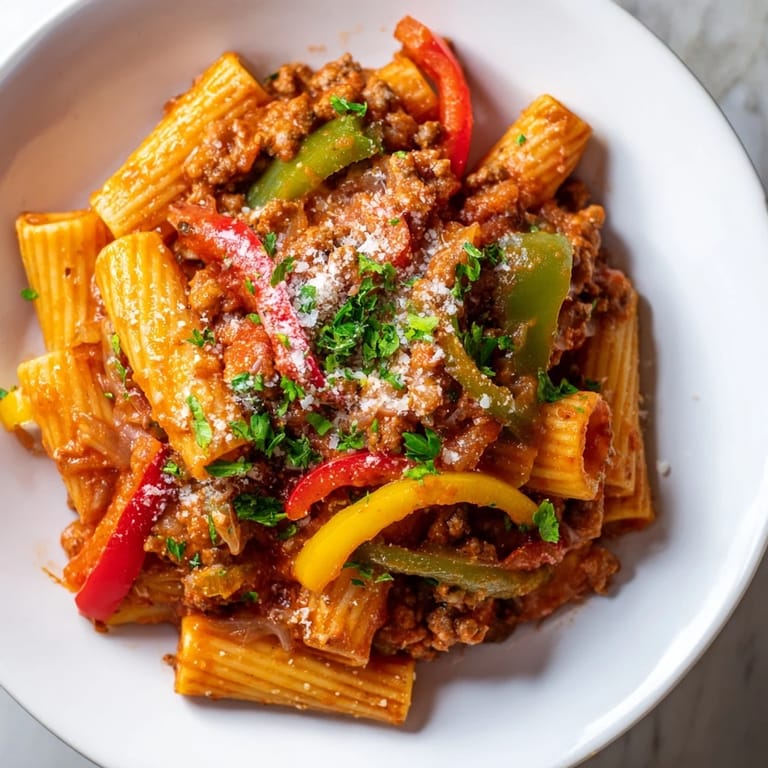
- Drain your pasta and add it right to the skillet with the sauce, tossing everything together so every piece gets coated. Let it heat through for a minute or two so the pasta absorbs some of that flavor, then taste and adjust the seasoning one last time before you serve.
 Save to Pinterest
 Years ago, a friend's elderly mother took one bite of this at our kitchen table and said, "You know how to cook," and that one sentence meant more than a hundred compliments ever could. That's when I understood this isn't a fancy dish; it's a dish that proves you care about feeding people well.
Why This Dish Works
There's a reason this combination has survived from Italian nonna kitchens to American dinner tables unchanged—sausage naturally contains enough fat and seasoning that you don't need to overthink anything, and sweet peppers act as a built-in counterbalance to all that richness. The tomatoes bring acid and brightness, the pasta soaks up all the flavor, and somehow it all tastes better than the sum of its parts. This is the kind of cooking where technique matters less than respecting each ingredient.
Making It Your Own
Once you've made this a few times and it feels natural in your hands, you can start playing around without breaking anything. Some nights I add a glass of red wine to the sauce and let it bubble away for a minute before the tomatoes go in; other times I'll throw in some sliced mushrooms with the peppers, or a pinch of fennel seeds if I'm craving something extra savory. The beauty of this dish is that it's forgiving enough to absorb your experiments without punishing you for trying.
Storage and Reheating
This actually tastes better the next day once the flavors have had time to settle and deepen, and it reheats beautifully in a low oven or gently on the stove with a splash of water if it's gotten thick. You can eat it straight from the fridge cold, though that's not recommended, but it also freezes well for up to three months if you keep the pasta and sauce together in a container. A quick tip: if you're making it for the week, cook the pasta just slightly under, because reheating will soften it further.
- Store in an airtight container for up to four days in the refrigerator.
- Reheat gently on the stovetop over medium-low heat, adding a tablespoon of water to loosen the sauce.
- Finish with fresh parsley and cheese every time you serve it, even if it's your third bowl that week.
 Save to Pinterest
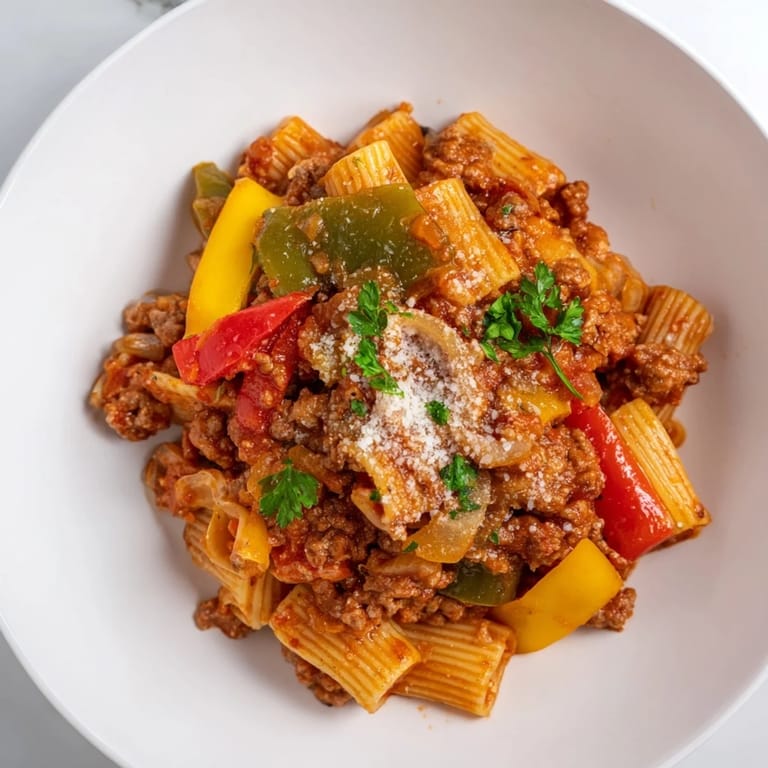
 This is the kind of meal that feeds you and reminds you why you learned to cook in the first place. Make it tonight.
Recipe Questions
- → What type of sausage works best?
Italian sausage, either mild or spicy, provides the best balance of flavor and texture for this dish.
- → Can I substitute the pasta type?
Penne or rigatoni are ideal as they hold the sauce well, but other short pasta shapes can also be used.
- → How do I prevent the sauce from becoming too thick?
Adding reserved pasta water while simmering can help adjust the sauce consistency to your liking.
- → Are the bell peppers cooked before combining with sausage?
Yes, bell peppers and onions are sautéed until softened and slightly caramelized to enhance their sweetness.
- → What garnishes complement this dish?
Fresh parsley and grated Parmesan cheese add color and a savory finishing touch to the pasta.