 Save to Pinterest
 The first time I watched my grandmother prepare Kabsa, I was struck by how the kitchen transformed the moment those spices hit the hot oil—suddenly, the entire house smelled like celebration. She'd laugh while toasting the cumin and coriander in her palm, letting the warmth release their secrets before adding them to the pot. There was something unhurried about the way she built this dish, layer by layer, as if she had all the time in the world even though we both knew guests were arriving soon.
I made this for my family on a Friday evening last winter, and my daughter asked why we couldn't eat like this every day—not because she was being dramatic, but because there was something in the warmth of the bowl that felt like home. Watching everyone slow down, taking smaller bites to savor it, reminded me why these rituals matter. Food that takes time to build deserves time to be appreciated.
Ingredients
- Meat (1 kg bone-in lamb or chicken pieces): Bone-in cuts stay juicy and contribute depth to the broth; lamb gives earthier flavor while chicken keeps it lighter, so choose based on your mood and crowd.
- Vegetable oil (1 tbsp): Just enough to build the foundation without making the dish heavy.
- Onion (1 large, finely sliced): It melts into sweet golden strands that become the base of everything that follows.
- Garlic (3 cloves, minced): Added after the onion so it doesn't burn, keeping its gentle warmth throughout.
- Ground cumin (2 tsp): The soul of Kabsa; toast it first if you can, and you'll taste the difference immediately.
- Ground coriander (2 tsp): It brings brightness without sharpness, a quiet partner to the cumin.
- Ground cinnamon (1 ½ tsp): A whisper of warmth that deepens the spice profile without announcing itself.
- Ground black pepper (1 ½ tsp): Fresh ground makes all the difference; pre-ground loses its punch.
- Ground turmeric (1 tsp): Adds color and a subtle earthiness that ties everything together.
- Ground cardamom (1 tsp): If you've never used this before, you're about to understand why it's precious in Middle Eastern cooking.
- Ground cloves (½ tsp): A small amount goes far; this is where restraint matters.
- Ground allspice (½ tsp): One of those spices that feels like it contains multitudes.
- Dried bay leaves (2): Remove them at the end, but don't skip them during cooking.
- Dried black lime, loomi (1, pierced, optional): This is the authentic touch that separates Kabsa from ordinary rice; if you find it, use it.
- Tomatoes (2 medium, chopped): They add acidity and body to the broth, preventing it from tasting flat.
- Carrot (1 medium, grated): The grating helps it dissolve into the broth, adding subtle sweetness.
- Basmati rice (3 cups, rinsed and soaked 20 minutes): Soaking is not optional; it helps each grain stay separate and prevents mushiness.
- Chicken or lamb stock (5 cups): Homemade is worth it, but quality store-bought works when life doesn't allow for time.
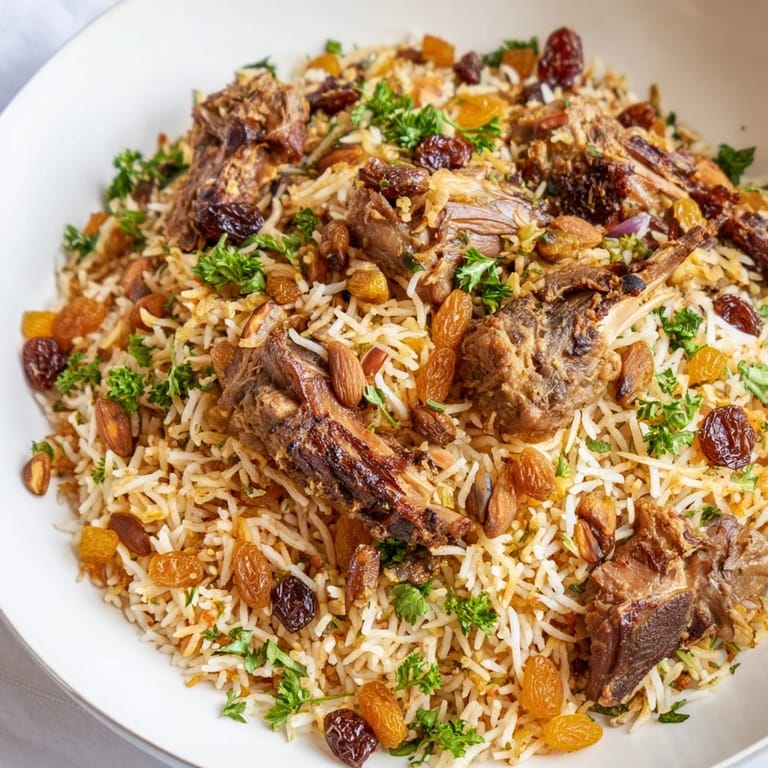
- Golden raisins (½ cup): Scattered over the rice where they plump up and add pockets of sweetness.
- Slivered almonds (½ cup, toasted): Toast them yourself just before serving for maximum crunch and fragrance.
- Fresh parsley (¼ cup, chopped, optional): A final green note that brightens the whole plate.
- Salt: Adjust at the end; remember that the stock already carries salt.
Tired of Takeout? 🥡
Get 10 meals you can make faster than delivery arrives. Seriously.
One email. No spam. Unsubscribe anytime.
Instructions
- Begin with heat and patience:
- Pour oil into your heaviest pot over medium-high heat. When it shimmers, add your sliced onion and let it turn golden and soft, which takes about 5 minutes. You'll know you're ready when the kitchen starts to smell like caramelized sweetness.
- Build the meat foundation:
- Add minced garlic and cook for just a minute until it's fragrant, then add your meat pieces. Don't crowd the pan; let them brown on all sides, about 8 minutes total. This is where patience pays off—don't rush the browning.
- Wake up the spices:
- Stir in all your spices, bay leaves, and black lime if using. Let them cook for 1 to 2 minutes; you'll smell the transformation happen. This moment is what makes Kabsa sing.
- Add body and depth:
- Fold in your chopped tomatoes and grated carrot. Cook for 4 to 5 minutes, stirring occasionally, so everything melds together.
- Simmer the meat tender:
- Pour in your stock and bring everything to a boil, then lower the heat to gentle and cover. Lamb needs 60 minutes, chicken around 35 to 40 minutes. You're not in a rush; you're building something meant to be savored.
- Separate meat from rice foundation:
- Introduce the rice:
- Remove the meat and set aside somewhere warm. Stir your soaked and drained rice into the broth along with salt. Nestle the meat pieces back into the rice, pressing them gently so they're part of the whole.
- Let the raisins sweeten the top:
- Scatter golden raisins across the surface. Cover the pot and turn heat to low for 25 to 30 minutes, until every grain has absorbed the broth and the rice is fluffy.
- Release and plate:
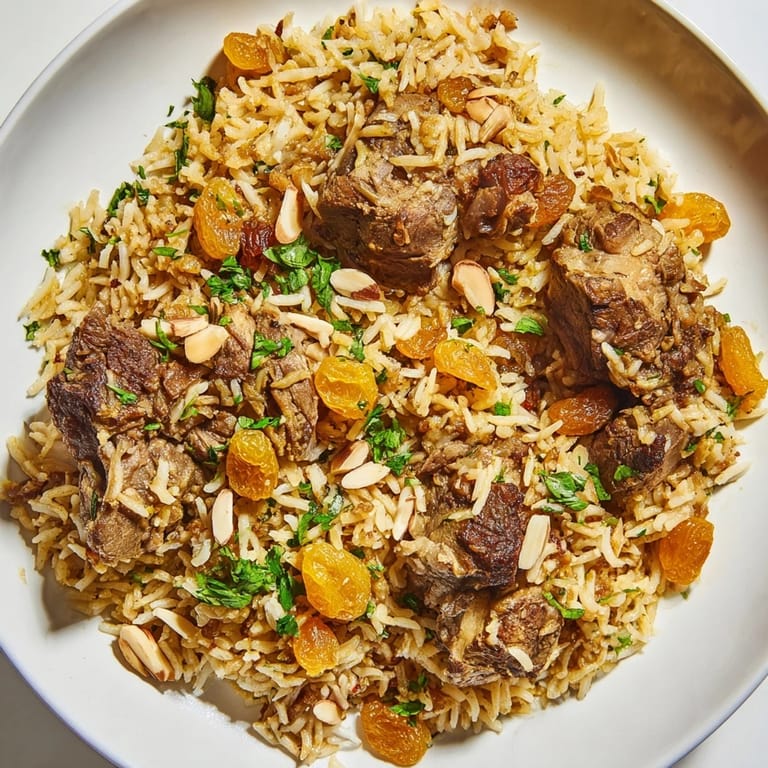
- Discard the bay leaves and black lime. Use a fork to gently fluff the rice, bringing it to life. Transfer to a serving platter with the meat distributed throughout.
- Finish with texture and green:
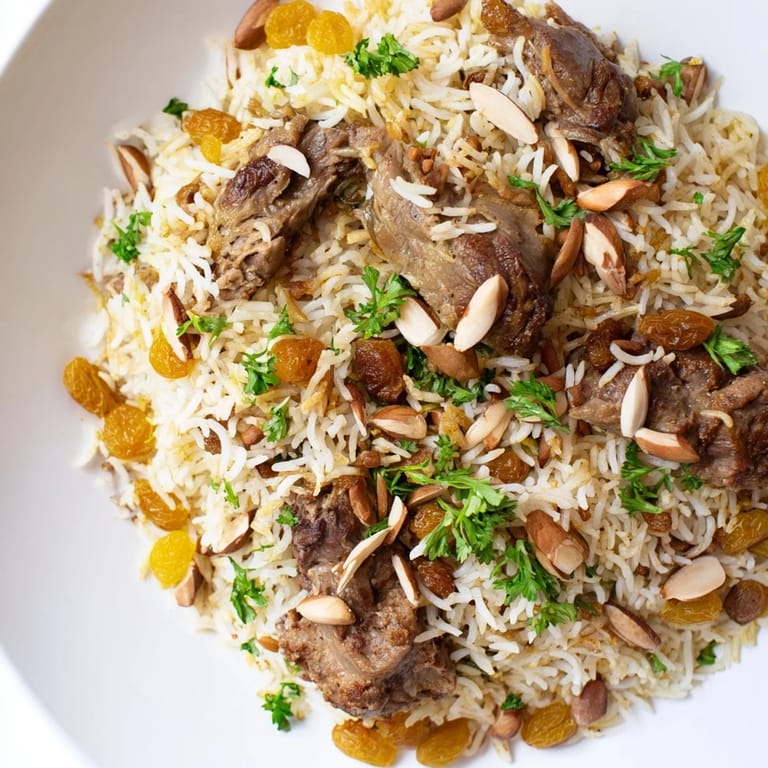
- Just before serving, scatter toasted almonds and fresh parsley across the top. This final step is where the dish becomes a feast for the eyes as well as the stomach.
 Save to Pinterest
 There's a moment when everyone at the table stops talking and just eats, and that's when you know you've made something right. This dish has that power—it brings people together not through fussiness, but through the kind of comfort that feels earned.
The Role of the Black Lime
The dried black lime is what transforms this from a good rice dish into something that tastes authentically Saudi. It's not something you taste directly like a squeeze of fresh lemon; instead, it adds a subtle fermented depth that makes people pause mid-bite and ask what that flavor is. If you cannot find it, your Kabsa will still be delicious, but it will be missing its signature note. Many specialty spice shops and Middle Eastern grocers carry it, and one package lasts for months since you only use one per pot.
Choosing Between Chicken and Lamb
Lamb is the traditional choice and delivers richer, more complex flavor that stands up beautifully to the spice blend. Chicken makes a lighter, more delicate version that's equally valid and works better if you're cooking for those who prefer gentler flavors. I often ask my guests what they're craving rather than choosing for them; both versions deserve respect and deliver completely.
Serving and Pairing
Kabsa is substantial enough to stand alone, but it's meant to be served with small sides that refresh the palate between bites.
- A simple tomato and cucumber salad with a squeeze of lemon cuts through the richness perfectly.
- Plain yogurt or labneh on the side gives everyone a cooling element they can control.
- Serve it warm but not piping hot, so the flavors can shine without the burn of steam in your nose.
 Save to Pinterest
 Kabsa is the kind of dish that stays with you long after the meal ends, both in memory and in the satisfied feeling it leaves behind. Make it once and you'll understand why it's served at every celebration worth remembering.
Recipe Questions
- → What type of meat works best for this dish?
Lamb or chicken with bones are ideal for rich flavor and tenderness.
- → Can I substitute the dried black lime (loomi)?
Yes, loomi adds a unique tang, but it can be omitted or replaced with a splash of lemon for acidity.
- → How do I ensure the rice is perfectly fluffy?
Soak the basmati rice before cooking and gently fluff with a fork after cooking to separate grains.
- → What is the purpose of toasting the almonds?
Toasting almonds enhances their crunch and adds a nutty depth to the dish.
- → Can this dish be prepared ahead of time?
It can be made in advance; flavors deepen overnight and it reheats well.