 Save to Pinterest
 I discovered sabich on a sweltering afternoon at a tiny stall in Tel Aviv, where a woman with flour-dusted hands moved with the speed of muscle memory, assembling pitas with a confidence that made the whole thing look effortless. The crispy eggplant crackled between my teeth, the tahini sauce cool and nutty against the warmth of the bread, and I realized this wasn't fancy cooking—it was street food at its most honest. Years later, I finally understood what made it work: the contrast of textures, the way acid cuts through richness, and how a simple pile of ingredients becomes something transcendent when assembled with intention.
The first time I made this for friends, someone asked if I'd ordered it from a restaurant while they weren't looking—and I realized that's exactly when you know a recipe is working. There was this moment of chaos in my kitchen, eggplant sizzling, eggs cooling in an ice bath, someone chopping cilantro while another person argued about whether the tahini should be thinner or thicker, and it felt less like cooking and more like a small celebration that happened to involve food.
Ingredients
- Eggplant: Medium rounds, about half an inch thick—this size fries evenly and stays tender inside while the outside crisps up beautifully.
- Salt (for salting eggplant): Drawing out the moisture beforehand is the secret to keeping them from absorbing too much oil and becoming greasy.
- All-purpose flour: Just a light coating; too much flour makes them heavy instead of delicate.
- Vegetable oil: You need enough to create that shallow frying effect that gives you the perfect golden crust.
- Eggs: Hard-boiled until just set with a faint creamy yolk—exactly nine minutes gets you there.
- Fresh tomatoes and cucumber: Dice them small so they fit neatly inside the pita without making everything fall apart.
- Fresh parsley: Brightens everything with a green, almost peppery note that ties the whole dish together.
- Tahini paste: Use a good quality one—it makes an enormous difference in the final sauce.
- Lemon juice: Essential in three places: the salad, the tahini sauce, and maybe a squeeze over the finished sandwich.
- Pita bread: Warm it gently so it stays soft and pliable without becoming tough or crispy.
- Amba: The pickled mango sauce is optional but becomes almost mandatory once you've tasted it—sweet, tangy, and somehow perfect with everything else.
Tired of Takeout? 🥡
Get 10 meals you can make faster than delivery arrives. Seriously.
One email. No spam. Unsubscribe anytime.
Instructions
- Salt and rest your eggplant:
- Slice the eggplants and sprinkle generously with salt, then let them sit for fifteen minutes while the salt draws out their moisture. This is not a step you can rush—it's what prevents soggy, oil-logged eggplant later.
- Flour and fry until golden:
- Pat the eggplant dry, coat lightly with flour, then fry in hot oil until both sides are deep golden brown, about two to three minutes per side. You'll know it's ready when the outside is crispy and the inside feels tender when you press it gently.
- Boil eggs to creamy perfection:
- While the eggplant cooks, bring eggs to a rolling boil, then reduce heat and let them simmer quietly for exactly nine minutes. Plunge them immediately into ice water so the yolks stay creamy rather than turning gray and sulfurous.
- Build your salad with intention:
- Combine diced tomatoes, cucumber, red onion, and fresh parsley, then dress with lemon juice, olive oil, salt, and pepper. Taste it and adjust—the salad should taste bright and alive, with no single flavor overpowering the others.
- Whisk tahini into silk:
- Combine tahini, water, lemon juice, and minced garlic, whisking until completely smooth and creamy. Add water a little at a time until you reach a pourable consistency that still coats a spoon.
- Warm and slice your pita:
- Heat the pita breads gently—either wrapped in a towel in a low oven or quickly in a dry skillet—then carefully slice open to create a pocket without splitting all the way through.
- Assemble with layers and care:
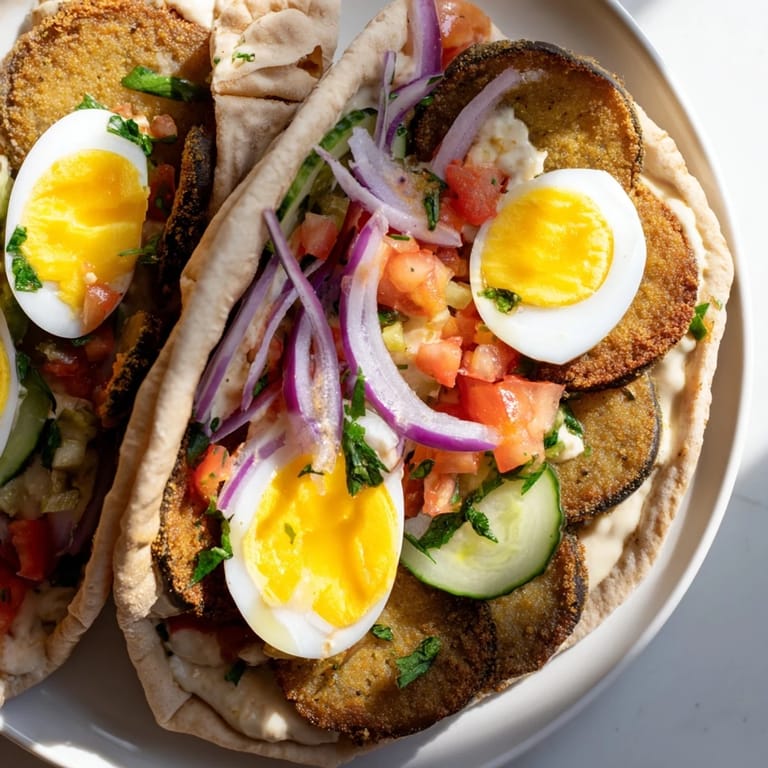
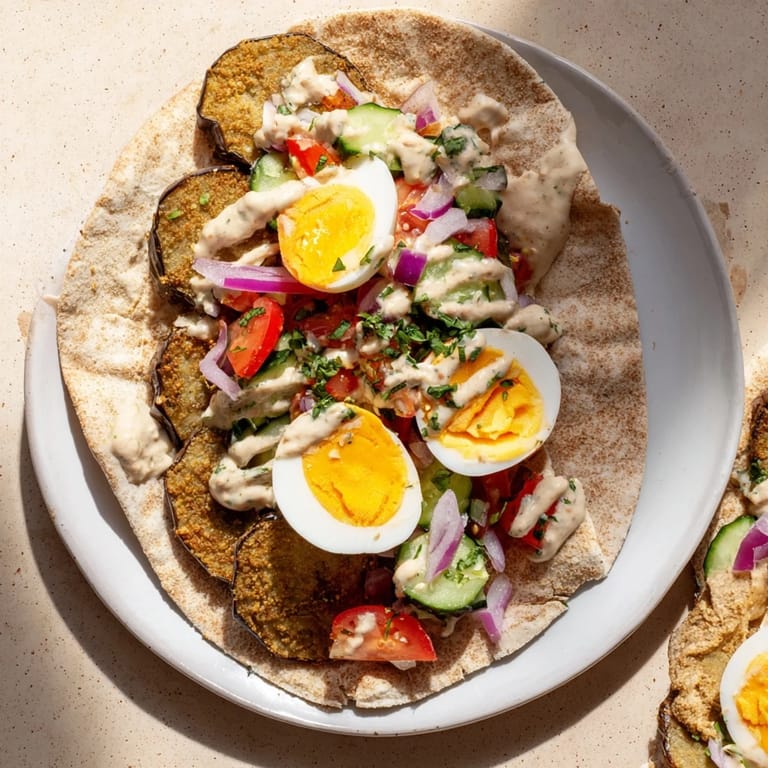
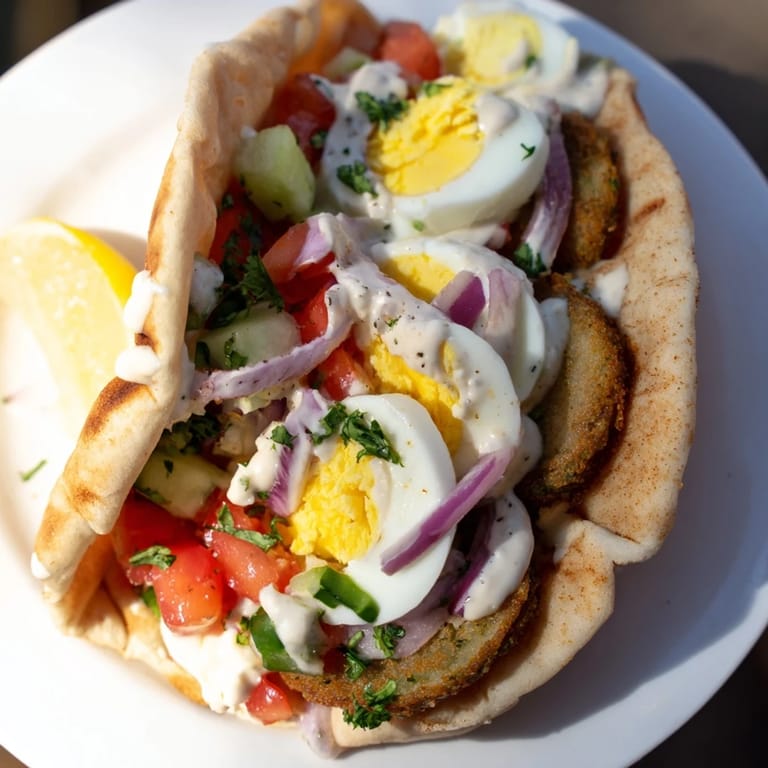
- Start with a foundation of fried eggplant, add sliced eggs, then a generous handful of Israeli salad, and finish with a drizzle of tahini sauce. Top with cilantro, amba, pickles, and hot sauce according to your preference.
- Eat it immediately while it's still warm:
- The magic of sabich exists in that narrow window when everything is still warm and the textures haven't blended into one another.
 Save to Pinterest
 There's something about watching people's faces when they take their first bite—that moment when they realize street food is just food made with complete attention to detail and zero pretense. Sabich became the sandwich I make when I want to feel connected to something bigger than my own kitchen, when I want to serve something that tastes like place and memory and care.
Why Fried Eggplant Changes Everything
If you've ever thought you didn't like eggplant, fried eggplant is the moment you might change your mind. The heat transforms it into something almost meat-like in texture, crispy on the outside while staying tender within, and it becomes the hero of the sandwich rather than just a supporting vegetable. The key is respecting the moisture in the eggplant by salting it first, treating the oil temperature seriously, and not crowding the pan—patience with eggplant pays off in ways that almost nothing else does.
Building Flavor Through Contrast
What makes sabich feel complete is the way nothing overstays its welcome: the tahini is rich but cut by lemon, the salad is fresh but grounded by the eggs, the pickles and amba add brightness and funk. This isn't a sandwich where one ingredient does all the talking; instead, they're in conversation with each other, each one making the others taste better. It's a technique worth remembering for any sandwich, really—that sense of balance where every element serves a purpose and nothing feels unnecessary.
Making It Your Own
Sabich is forgiving in the best way—there's a traditional structure, but the details are yours to adjust. Some people love it spicy, some barely use hot sauce at all; some are amba devotees while others think pickles are the real star. The bones of the recipe stay the same, but your version reflects what you actually want to taste, which is how all the best food becomes personal.
- If you can't find amba at your regular market, look for it at Middle Eastern grocers or order it online—it's worth seeking out.
- Leftover tahini sauce keeps for days in the fridge and becomes an instant dip for vegetables or pita chips.
- You can prep the components ahead of time, but always assemble your sandwich right before eating so nothing gets soggy.
 Save to Pinterest
 This is the sandwich that made me understand why people build entire meals around one perfect thing. Sabich isn't complicated, but it's complete.
Recipe Questions
- → How do you prepare the eggplant for stuffing?
Slice the eggplant into rounds, salt to draw out moisture, pat dry, lightly flour, then fry in vegetable oil until golden and crisp on both sides.
- → What ingredients are used in the Israeli salad?
The salad includes diced tomatoes, cucumber, finely chopped red onion, fresh parsley, lemon juice, olive oil, salt, and pepper, mixed to provide a refreshing balance.
- → How is the tahini sauce made?
Whisk tahini paste with water, lemon juice, minced garlic, and salt until smooth, adjusting water to reach desired consistency for drizzling.
- → Can this dish be adapted for vegan diets?
Yes, omit hard-boiled eggs or substitute with tofu, and ensure pita bread is vegan-friendly. Tahini sauce and vegetables remain suitable.
- → What optional toppings enhance the dish?
Pickled mango sauce (amba), sliced pickles, fresh cilantro, and hot sauce can be added to enhance flavor and texture.