 Save to Pinterest
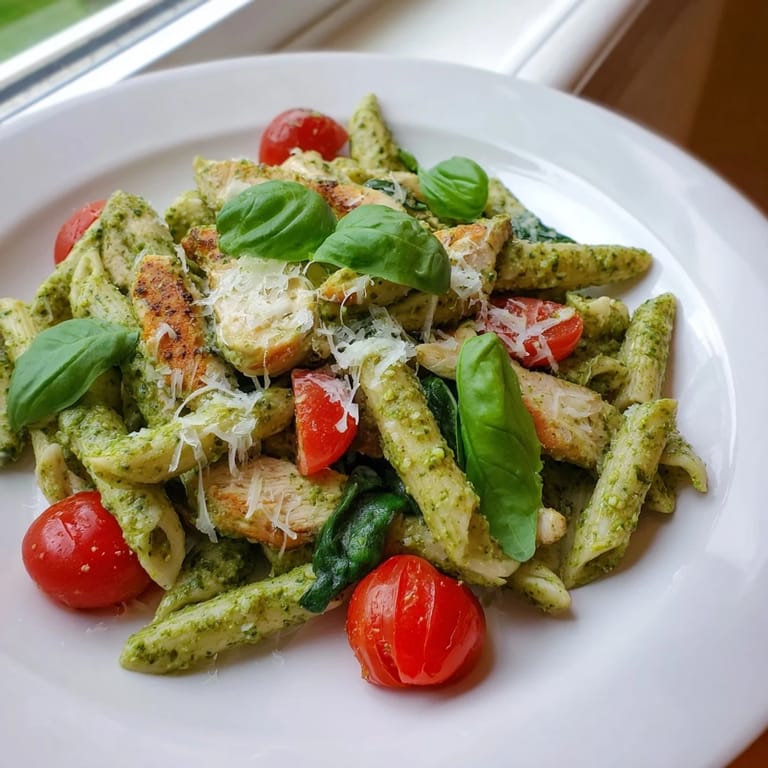
 There's something about the smell of basil hitting a hot pan that makes everything feel a little less rushed, even on nights when you're cooking dinner at 6:47 PM because someone has soccer practice at 7:30. This pesto chicken pasta became my answer to the question I ask myself most evenings: what can I make that tastes like I tried, but doesn't make me lose my mind? The beauty of it is that it genuinely tastes like you've been thinking about dinner all day, when really you've been thinking about literally anything else.
I made this for a friend who'd just moved into her place, and she sat at her kitchen island in a half-unpacked apartment just quietly eating, not saying much, and I realized that sometimes the best meals are the ones that let people settle into a new space without having to think too hard. She asked for the recipe immediately, which was funny because it felt like I'd done something clever when really I'd just trusted the pesto to carry the day. That's when I understood this dish isn't fancy because it's complicated—it's special because it respects your time.
Ingredients
- Chicken breasts (2 large, about 400 g, halved horizontally): Halving them means they cook evenly and quickly, and you get more surface area for that lovely charred crust that makes everything taste more intentional than it actually was.
- Penne or fusilli pasta (350 g): The ridges and curves catch the pesto beautifully, but honestly any pasta shape you have sitting in your cabinet will work just fine here.
- Store-bought basil pesto (120 g): This is where I stop apologizing—good pesto from a jar does the job perfectly and tastes like you made it yourself, which is the whole point of cooking on a weeknight.
- Extra-virgin olive oil (2 tbsp): Divided between the pan and the finishing sauce, it adds richness without needing to explain yourself.
- Garlic (2 cloves, minced): Just a moment in the pan releases its aroma and wakes up the entire dish.
- Parmesan cheese (50 g grated): Use the good stuff if you can find it, but more importantly, reserve some extra for the table because everyone will ask.
- Cherry tomatoes (150 g, halved): They burst slightly when they hit the warm pan, adding both sweetness and texture that keeps the dish from feeling one-note.
- Baby spinach (50 g, about 2 cups loosely packed): It wilts at the last moment, adding color and nutrition without tasting like you're being virtuous about it.
- Salt and freshly ground black pepper: Taste as you go—this matters more than the exact amounts anyone tells you.
- Fresh basil leaves for garnish: A handful scattered on top right before serving reminds everyone that fresh herbs exist and matter.
Tired of Takeout? 🥡
Get 10 meals you can make faster than delivery arrives. Seriously.
One email. No spam. Unsubscribe anytime.
Instructions
- Season and prepare your chicken:
- Pat the chicken dry with paper towels, then season generously with salt and pepper on both sides. Dry chicken gets a better crust, which is the kind of small technical detail that actually changes everything.
- Get a good sear on the pan:
- Heat a tablespoon of olive oil in your grill pan or skillet over medium-high heat until it shimmers—you'll know it's ready when a tiny piece of chicken sizzles immediately. This is when you need to trust the heat.
- Grill the chicken without moving it:
- Place the chicken breasts flat in the pan and let them sit for 4 to 5 minutes until the bottom is golden brown and charred in spots. Flip them once and cook the other side the same way, then transfer to a plate while you handle everything else.
- Let it rest while you cook the pasta:
- Those 5 minutes matter—they let the juices redistribute so the meat stays tender. Meanwhile, get salted water boiling and add your pasta, stirring occasionally so it doesn't stick to itself.
- Reserve the pasta water before draining:
- This starchy liquid is basically liquid gold for pasta sauces—it helps the pesto coat everything evenly and creates a silky sauce that actually clings to each piece. Scoop out about a quarter cup before you drain.
- Build your sauce in the same pot:
- After draining the pasta, add the remaining olive oil and minced garlic to the pot over medium heat. Let it sizzle for just 30 seconds until fragrant, then add the cherry tomatoes and cook for 2 minutes until they soften slightly.
- Bring everything together:
- Return the drained pasta to the pot, then stir in the pesto, reserved pasta water, and grated Parmesan. Toss constantly for about a minute, letting the heat bring it all into harmony.
- Finish with the chicken and spinach:
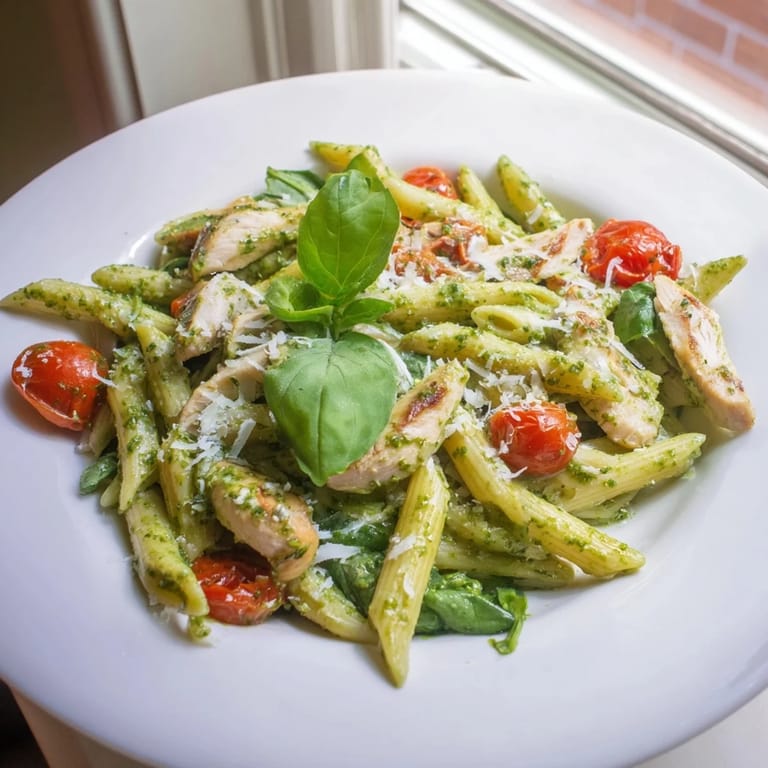
- Slice the rested chicken thinly and fold it into the pasta along with the baby spinach. Toss gently until the spinach wilts from the residual heat, which takes about 30 seconds.
- Taste and adjust seasoning:
- Add more salt and pepper if it needs it—trust your palate here, not the recipe.
 Save to Pinterest
 What I didn't expect was how this dish could shift depending on the season and what was sitting in my garden or at the market that day. In summer I've added fresh peaches to the tomatoes, in fall I've stirred in roasted butternut squash, and it somehow always works because the pesto adapts. That flexibility is a kind of freedom in cooking.
Why This Works on Any Night
The whole thing hinges on the fact that every single component comes together in about 25 minutes of actual work time, which means you can look at the clock at 6:15 PM and still have dinner plated by 6:45. But it never tastes rushed because you're not actually rushing—you're just being efficient about what matters. The pesto handles the heavy lifting in terms of flavor, the chicken provides substance, and the pasta absorbs everything like it was designed specifically for this purpose, which, in a way, it was.
The Pasta Water Secret
I learned this from someone who learned it from someone else, and now I'm passing it along: that starchy water from cooking pasta is basically edible silk. It's not glamorous to talk about, and it's the kind of thing professional cooks mention casually as if everyone already knows it, but it genuinely transforms how a sauce clings to pasta. The starch particles help the pesto emulsify and create a coating that actually sticks instead of sliding right off. Once you start doing this, you can't go back.
Making It Your Own
The architecture of this recipe is flexible enough that you can swap almost any protein in for the chicken without changing the method—shrimp takes the same time and cooks with equal grace, and pressed tofu picks up pesto flavor like it was designed for it. The vegetables can shift with what's available: sun-dried tomatoes if fresh ones aren't at their peak, arugula if you want a peppery edge, roasted zucchini if you're feeling generous with vegetables. The core idea holds.
- If you use sun-dried tomato pesto instead of basil, add a touch more garlic to keep it grounded.
- For a lighter version, use half the pesto and fold in fresh lemon juice at the end for brightness.
- Leftover pasta reheats better with a splash of pasta water and a few minutes in a warm skillet, not the microwave.
 Save to Pinterest
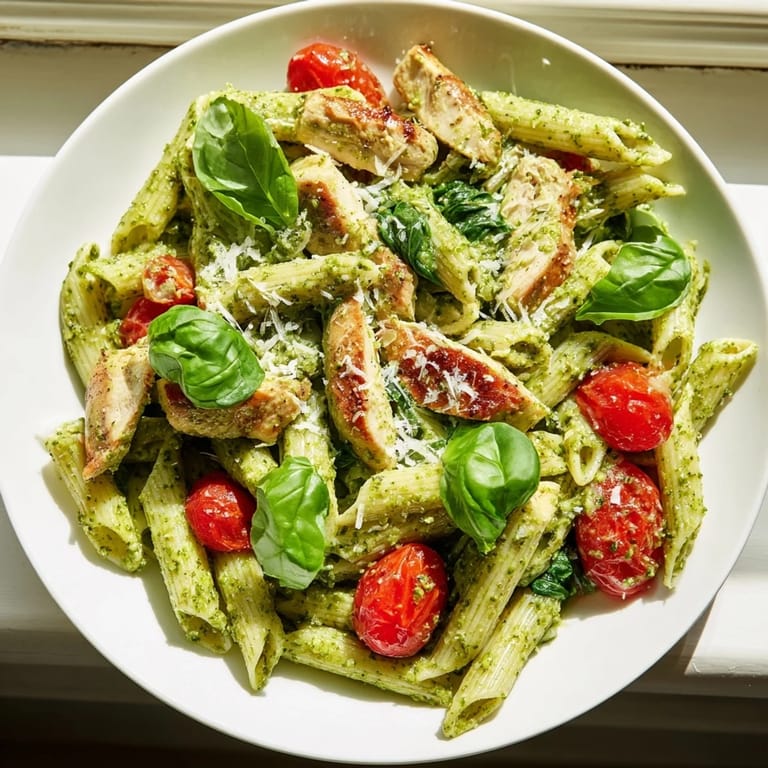
 This is the kind of dinner that quietly becomes a regular, the one you make when you want something that feels special but tastes effortless, the one you find yourself recommending to friends who ask what you made that night. It's proof that cooking doesn't need to be complicated to be genuinely good.
Recipe Questions
- → Can I use fresh pesto instead of store-bought?
Absolutely. Fresh homemade pesto will elevate the dish with brighter basil flavor. Use the same amount (120g), though you may need to adjust salt since homemade versions vary in seasoning intensity. Make ahead and refrigerate until ready to use.
- → How do I know when the chicken is cooked through?
Grill the chicken for 4-5 minutes per side until golden and charred. Check doneness by inserting a meat thermometer into the thickest part—it should read 75°C (165°F). The meat will also feel firm when pressed and show no pink when sliced.
- → What pasta shape works best?
Penne and fusilli are ideal for trapping pesto sauce in their ridges and spirals. Short tube or spiral pastas hold sauce better than long noodles. Any short pasta shape you prefer works well—choose what you have on hand.
- → Can I make this ahead?
Best served immediately after assembly while warm. However, you can prep components in advance: grill and refrigerate chicken, cook pasta and store in olive oil, prepare vegetables. Assemble and toss everything together just before serving for optimal texture and flavor.
- → What are good substitutions for chicken?
Grilled shrimp, white fish, or firm tofu work beautifully as swaps. Shrimp needs only 2-3 minutes per side on the grill. Vegetarian diners will appreciate hearty tofu sliced and pan-seared until golden. Adjust cooking times based on your protein choice.
- → How can I make this creamier?
Reserve more pasta water—up to ½ cup—and toss it in gradually until you reach desired consistency. Alternatively, stir in 2-3 tablespoons of heavy cream or mascarpone after adding the pesto. A touch of cream tempers the basil intensity while enriching the sauce.