 Save to Pinterest
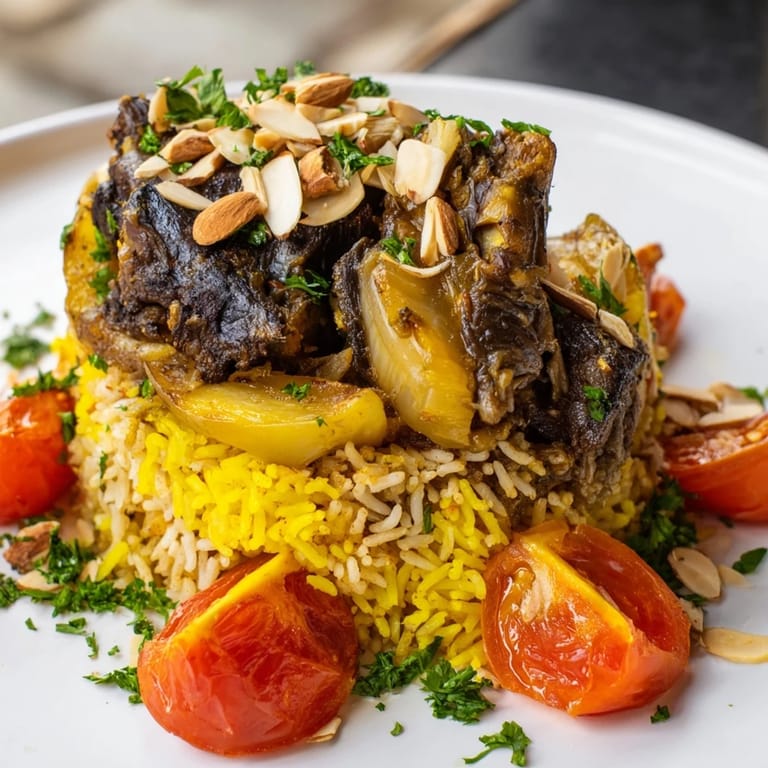
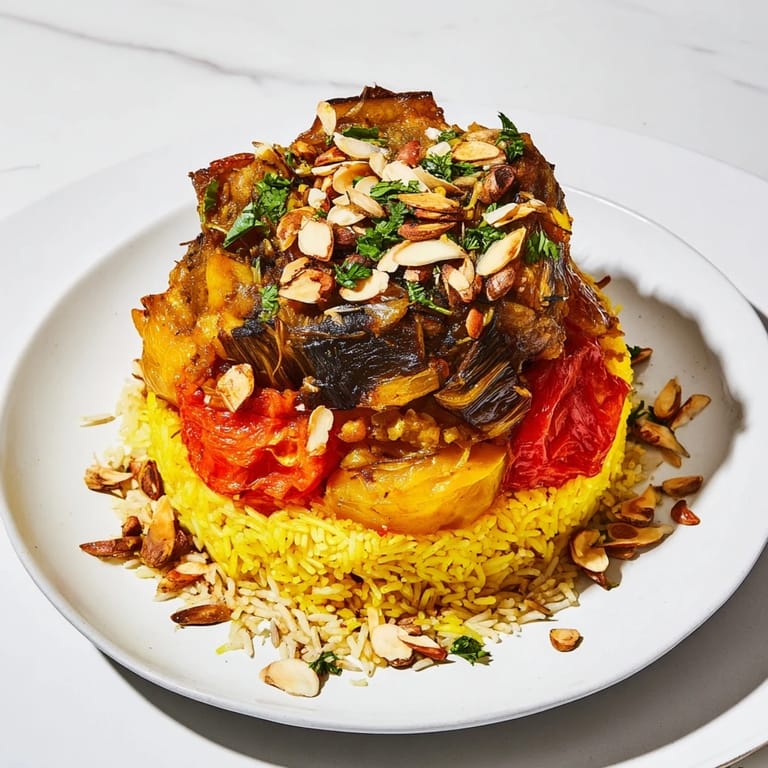
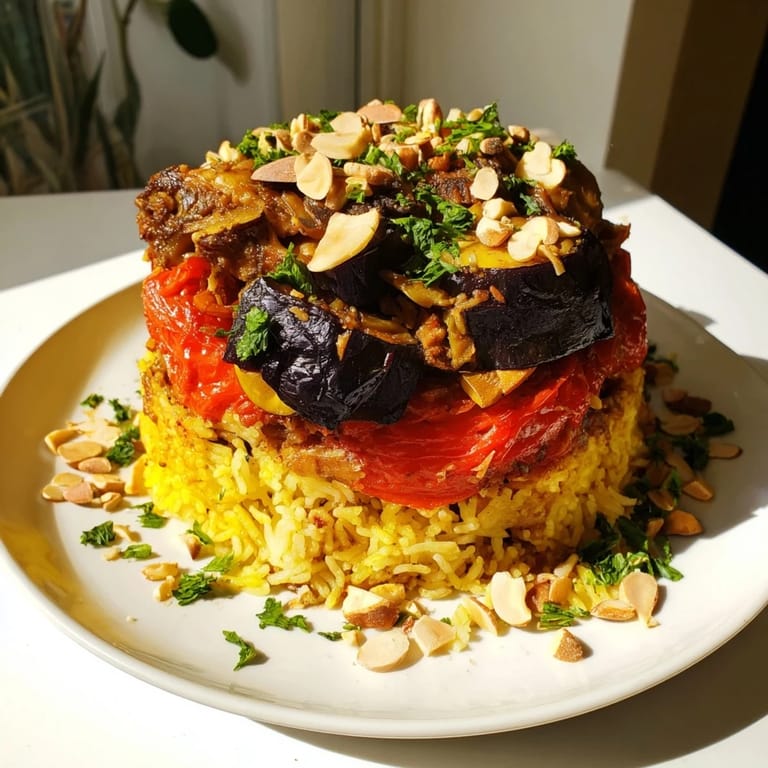
 The first time I made maqluba, I almost dropped the entire pot on my kitchen floor. My hands were shaking as I gripped the pot handle, counting to three before flipping it onto the platter, wondering if this dramatic Palestinian dish would collapse or hold together in that perfect, upside-down dome. When that golden rice and caramelized vegetables slid out intact, I understood why this dish has been passed down through generations—it's not just food, it's theater and love and tradition all layered together.
I made maqluba for my friend Sara who grew up eating her grandmother's version in Ramallah, and she got quiet when I set it on the table. She told me it reminded her of coming home from school to that exact smell—the cinnamon and allspice mingling with roasted eggplant—and that simple moment taught me that recipes are really about memory and care, not perfection.
Ingredients
- Bone-in lamb shanks or chicken pieces (900 g / 2 lbs): The bone gives the broth incredible depth; if using chicken, thighs stay juicier than breasts and won't dry out during the simmer.
- Ground black pepper, allspice, cinnamon (1 tsp, 1 tsp, 1/2 tsp): This spice trio is non-negotiable—don't skip the cinnamon, as it's what makes maqluba unmistakably Palestinian.
- Long-grain basmati rice (2 cups): Rinsing removes excess starch so grains stay separate; soaking helps them cook evenly and absorb the spiced broth without becoming mushy.
- Eggplant and potatoes (2 medium each): Slicing them the same thickness ensures they roast at the same pace and layer beautifully.
- Tomato slices (2 large): They form the bottom layer and create a slight sauce that keeps the rice tender from below.
- Slivered almonds or pine nuts (1/2 cup, toasted): Toasting brings out their sweetness and prevents them from turning soggy in the steam.
- Chicken or beef broth (3-4 cups): Use good quality—this is where much of the flavor lives once it infuses the rice.
Tired of Takeout? 🥡
Get 10 meals you can make faster than delivery arrives. Seriously.
One email. No spam. Unsubscribe anytime.
Instructions
- Rinse and soak the rice:
- Run the rice under cold water, stirring gently with your fingers until the water runs almost clear—this takes about six or seven rinsings. Soak for 30 minutes so each grain can absorb water evenly before it hits the hot broth.
- Season and sear the meat:
- The spices should coat the meat generously; don't be shy. Sear it hard enough to create a golden crust on all sides, which locks in flavor and takes about 8 minutes total.
- Simmer the meat in broth:
- The meat doesn't need to be fully cooked here—it will continue cooking in the oven-style finish later. You're mainly infusing the broth with flavor and softening the meat enough to be tender but not falling apart.
- Roast the vegetables:
- Brush them lightly with oil and spread in a single layer so they caramelize rather than steam. Golden edges matter—they add texture and prevent the final dish from becoming soggy.
- Layer thoughtfully:
- Start with tomato on the bottom, then potatoes, then eggplant, then meat with its onions, and finally rice on top. Each layer acts like a filter, and the order prevents the bottom from burning while keeping the top moist.
- Infuse the broth with aromatics:
- Turmeric, cumin, and salt go directly into the reserved broth so every grain of rice drinks in the flavor. Pour until the rice is just covered—not submerged, but moist.
- Use a plate as an internal lid:
- The smaller plate or heatproof lid presses down on the rice, keeping the layers from shifting and ensuring even cooking. Make sure it fits inside the pot with room to spare.
- Cook low and patient:
- Once it reaches a gentle simmer, turn heat to low and resist the urge to lift the lid. The trapped steam does all the work, and peeking only releases precious moisture.
- Rest before the flip:
- Those 15 minutes let the structure set just enough to hold together when inverted. It's the difference between a beautiful dome and a pile of components.
- Flip with confidence:
- Place your platter over the pot, take a breath, and flip decisively in one smooth motion. If you hesitate, the layers might slide.
 Save to Pinterest
 My neighbor came over and watched me flip the maqluba, then asked why I was so nervous about a pot. I told him that sometimes food is about the moment of trust—you follow steps faithfully, prepare carefully, and then you have to believe it will work. He smiled and said that sounded like life, and we both laughed while eating warm maqluba with yogurt.
The Vegetable Layer
The beauty of maqluba lives in its vegetables, and roasting them separately is what changed the game for me. Instead of steaming them in the rice-cooking process, you get crispy, caramelized edges that taste like they've been kissed by a proper oven. The eggplant develops a tender, almost silky interior while its skin turns golden, and the potatoes get creamy in the middle and slightly crispy on the outside. This is where patience pays off—rushing this step and boiling everything together in the pot will give you a mushy, watery dish that falls apart when you flip it.
Building Flavor in the Broth
The reserved meat broth is essentially liquid gold in this dish, and it deserves respect. After simmering the lamb or chicken, you're not just left with water—you have a deep, savory base infused with bone, aromatics, and subtle spices. Adding turmeric, cumin, and salt directly to this broth before pouring it over the rice means every single grain drinks in complex flavor rather than tasting plain or one-dimensional. I learned this the hard way by making maqluba with store-bought broth the first time, and the difference was night and day. The spiced broth also creates a subtle pooling at the bottom of the pot, which gives you that slight sauciness when you plate it alongside yogurt.
Serving and Storing
Maqluba is best served hot, right after the flip, when the layers are still warm and the contrast between the crispy bottom and tender rice is most dramatic. Serve it with a cooling side of cucumber-yogurt salad or simple labneh to balance the richness, and watch how people's faces light up when they see that perfect dome.
- Leftover maqluba keeps in the fridge for three days and can be gently reheated in a covered pot over low heat with a splash of broth.
- You can assemble the pot the morning of serving and refrigerate it uncooked, then bring it to room temperature before cooking—this actually helps the flavors meld.
- If the flip feels risky, you can serve it directly from the pot in layers, though you'll miss that theatrical presentation moment.
 Save to Pinterest
 Maqluba is more than a recipe—it's an invitation to slow down and trust the process. When that platter comes away from the pot and reveals that perfect golden dome, you'll understand why this dish has survived generations and traveled across borders.
Recipe Questions
- → What meat options work best for this dish?
Bone-in lamb shanks or chicken pieces provide rich flavor and tenderness when simmered slowly.
- → Can I substitute vegetables in this layered dish?
Yes, cauliflower florets can replace eggplant for a different taste and texture.
- → How do I achieve the perfect flip for serving?
Let the dish rest covered after cooking, then invert a large platter over the pot before flipping carefully to keep the layers intact.
- → What spices enhance the rice’s flavor?
Turmeric, cumin, and salt mixed into the broth infuse the rice with warm, earthy aromas.
- → Are there any tips for roasting the vegetables?
Brush eggplant and potato slices with oil and roast until golden and tender to enrich their natural flavors.
- → How can I make this dish suitable for faster preparation?
Using boneless chicken thighs reduces cooking time while maintaining moistness and flavor.