 Save to Pinterest
 The first time I made miso ginger soup, it was during a particularly harsh winter when a nasty cold was making its rounds through my household. Standing in my kitchen with frost patterns decorating the windows, I remember how the warming scent of ginger and garlic filled the air as they simmered, already making me feel better before I'd taken a single sip. The steam rising from the pot seemed to carry healing properties, and by the time I stirred in that first spoonful of miso, I knew I'd found something special.
Last February, my neighbor knocked on my door looking absolutely miserable with a winter cold, and I immediately packaged up a container of this soup. Two days later, she appeared with the empty container and asked for the recipe, saying her husband had practically licked the bowl clean and demanded to know what healing wizardry Id performed. We laughed about how sometimes the simplest foods bring the most comfort, especially when shared with care.
Ingredients
- Fresh ginger: I always keep extra ginger in the freezer now specifically for this soup, as I discovered it grates more easily when frozen and actually releases more flavor into the broth.
- Miso paste: White or yellow miso works best here as their mild, slightly sweet flavor wont overwhelm the delicate vegetables, though I sometimes use red miso when Im craving something more robust.
- Shiitake mushrooms: These arent just for flavor, theyre what gives the soup its satisfying umami depth, and I learned to slice them extra thin so they cook quickly and absorb maximum broth.
- Vegetable broth: Using low-sodium allows you to control the saltiness, especially important since miso already brings plenty of salt to the party.
- Leafy greens: Baby spinach or bok choy wilt beautifully into the hot soup, adding color and nutrients without requiring long cooking times.
Tired of Takeout? 🥡
Get 10 meals you can make faster than delivery arrives. Seriously.
One email. No spam. Unsubscribe anytime.
Instructions
- Infuse your broth:
- Start by bringing your vegetable broth to a gentle simmer, then add those thin slices of ginger and garlic. The kitchen will start to fill with the most amazing aroma as these ingredients release their essence into the liquid.
- Add the hearty vegetables:
- Toss in the mushrooms and carrots, giving them time to soften slightly while still maintaining a pleasant bite. Watch how they begin to take on the golden hue of the broth.
- The miso secret:
- Never add miso directly to boiling soup or youll kill all those beneficial probiotics. Instead, take a small ladle of hot broth and whisk the miso into it separately until smooth, then return this mixture to the pot with the heat turned low.
- Green finish:
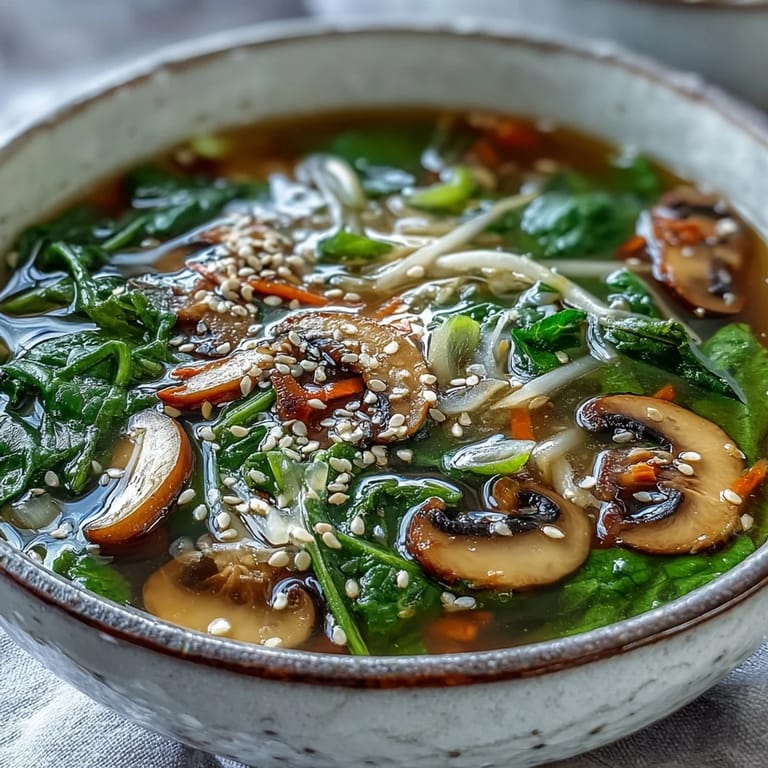
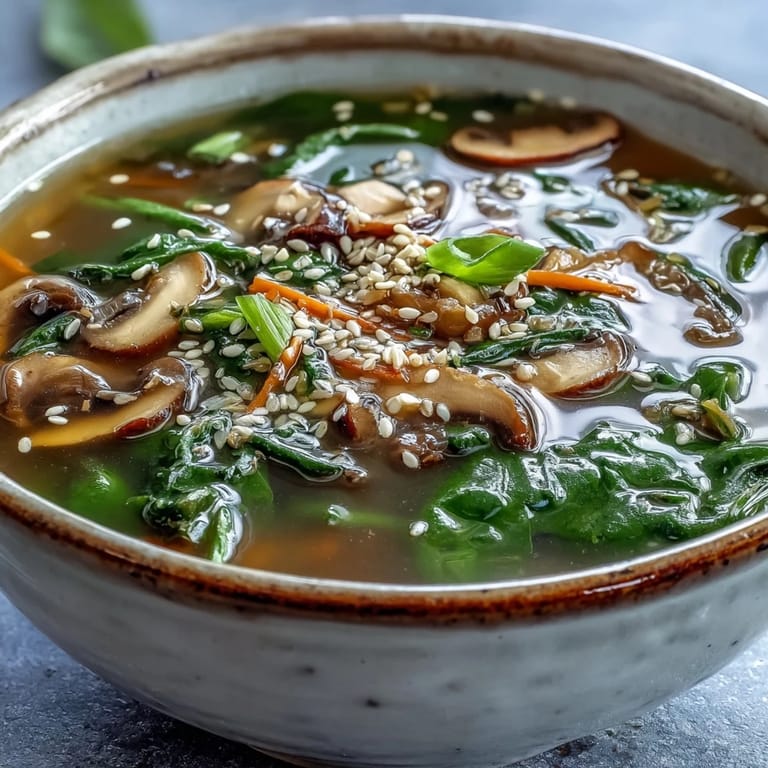
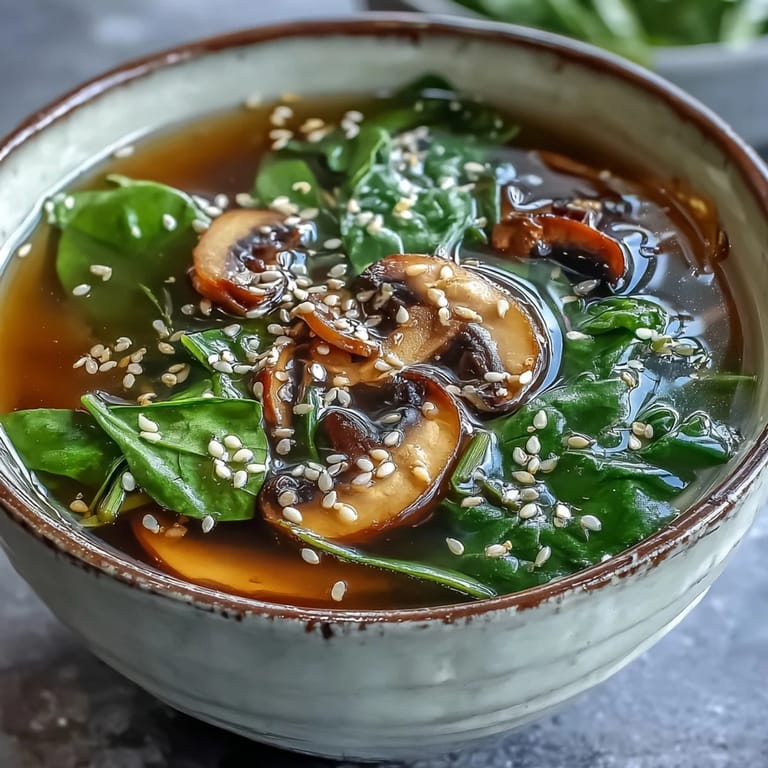
- Just before serving, add your leafy greens and green onions, stirring just until they wilt and turn vibrant. The color contrast against the golden broth is absolutely beautiful.
- Garnish with intention:
- The toasted sesame seeds add a subtle crunch while cilantro brings freshness. If youre feeling adventurous, a few drops of chili oil create lovely crimson swirls across the surface.
 Save to Pinterest
 When my sister visited during her final trimester of pregnancy, she wasnt able to keep much down, but this gentle soup became her daily request. We would sit at the kitchen table, steam warming our faces as we sipped from oversized mugs, talking about the baby to come. Now whenever she makes it for her own family, she texts me a photo, a little tradition that began with those quiet winter afternoons.
Customizing Your Healing Bowl
The beauty of this soup lies in its adaptability. During particularly busy weeks, I add cubed tofu or pre-cooked shredded chicken for protein, turning it into a complete meal. Sometimes when my garden is overflowing with summer greens, Ill use kale or swiss chard instead of spinach, though they need an extra minute or two to soften properly. The soup seems to welcome whatever you have on hand, adjusting its character slightly while maintaining that restorative quality that made me fall in love with it initially.
Storing and Reheating
This soup actually develops deeper flavors overnight in the refrigerator, though Ive learned to store it without the leafy greens and add fresh ones when reheating. Something magical happens as the ginger and garlic continue to infuse into the broth, creating an even more aromatic experience the next day. For meal prep, I often make a double batch of just the broth base on Sunday, then add the vegetables fresh each day for quick lunches throughout the week.
Making It a Complete Meal
On evenings when this soup needs to serve as our main dinner rather than a starter, I keep a selection of toppings and add-ins ready for everyone to customize their bowls. The interactive element makes it fun for family meals, and somehow the same base transforms into something unique for each person.
- Cook soba or udon noodles separately and add them to the bowl before pouring in the hot soup to create a more substantial meal.
- Keep a small dish of sliced fresh chili peppers for those who enjoy heat, allowing everyone to adjust their own spice level.
- For special occasions, add a soft-boiled egg with a jammy center that enriches the broth as you eat.
 Save to Pinterest
 This humble soup has earned its place as a healing ritual in my home, something I turn to not just for nourishment but for comfort. I hope it brings the same gentle warmth to your kitchen on cold days when both body and spirit need restoration.
Recipe Questions
- → Can I use different types of miso?
Yes, white or yellow miso works best for a lighter flavor. Red miso will provide a deeper, more intense taste. Just adjust the quantity to taste since darker misos are stronger.
- → Why shouldn't I boil the miso?
Boiling miso destroys the beneficial probiotics and can make the flavor bitter. Always reduce heat to low and stir in the prepared miso mixture just before serving.
- → Can I add protein to make it more filling?
Absolutely. Cubed silken tofu adds protein while maintaining the light texture. You can also add cooked chicken or shrimp if not following a vegetarian diet.
- → How long does this keep in the refrigerator?
Store in an airtight container for up to 3 days. Reheat gently over low heat—do not boil—to preserve the miso's beneficial properties and flavor.
- → Can I make this soup gluten-free?
Yes, use certified gluten-free vegetable broth and miso paste, and skip the chili oil if it contains soy sauce. Most traditional miso is naturally gluten-free but always check labels.
- → What vegetables work best in this soup?
Shiitake mushrooms add umami, carrots provide sweetness, and bok choy or spinach bring nutrition. You can also add kale, Swiss chard, or snow peas depending on what's in season.