 Save to Pinterest
 My first encounter with fesenjan came on a cold evening when my neighbor invited me over and filled her kitchen with this intoxicating aroma—tart pomegranate mingling with toasted walnuts and warm spices. She spooned it over rice with such ceremony, explaining that this was the dish her grandmother made for celebrations, the kind that transforms ordinary chicken into something worthy of ceremony. Watching that glossy burgundy sauce coat each grain of rice, I understood why she'd insisted I learn it. It felt less like a recipe and more like being handed a family secret.
I made this for the first time when I had people coming over and was too nervous to attempt anything fussy. I threw the ingredients into a pot, set the timer, and was shocked when everyone went quiet mid-bite—the kind of quiet that means you've done something right. One guest asked for the recipe immediately, which almost never happens. Since then, it's become my quiet confidence dish, the one I make when I need to prove something without announcing it.
Ingredients
- Boneless chicken thighs or duck (700 g): Thighs stay juicy and tender through the long simmer, while duck is the traditional choice if you want to feel more elegant about it.
- Salt and black pepper (1/2 tsp each): Season generously—it's your only chance to flavor the meat before it surrenders to the sauce.
- Vegetable oil (2 tbsp): Neutral oil that won't compete with the spice profile.
- Large onion, finely chopped: The foundation that sweetens as it browns, creating the base every layer of flavor will build upon.
- Ground walnuts (250 g): Grind them yourself if you can; pre-ground loses its subtle nuttiness and can turn slightly bitter when heated.
- Pomegranate molasses (500 ml): This is non-negotiable—it's the soul of the dish, tart without being sharp, complex enough to taste like depth itself.
- Water (500 ml): Dilutes the sauce to the right consistency and lets the other flavors speak.
- Sugar (2 tbsp): Acts as a bridge between the tart and savory; start conservative and adjust to your preference.
- Ground cinnamon, turmeric, and cardamom (1/2 tsp, 1/4 tsp, 1/4 tsp): These spices whisper rather than shout, warming the background of every spoonful.
- Pomegranate seeds and fresh parsley (optional): The final flourish that catches the light and reminds everyone this is meant to celebrate.
Tired of Takeout? 🥡
Get 10 meals you can make faster than delivery arrives. Seriously.
One email. No spam. Unsubscribe anytime.
Instructions
- Season and prepare:
- Pat your meat dry and season generously with salt and pepper. This small step makes all the difference in browning.
- Build the foundation:
- Heat oil in your heavy pot over medium heat and add onions, letting them soften and turn golden—listen for the gentle sizzle that means they're caramelizing, about 8–10 minutes. This patience pays off.
- Brown the meat:
- Increase heat slightly and add your seasoned pieces, letting them sit long enough to develop a golden crust on each side, around 5–7 minutes total. You're not cooking it through; you're just searing it awake.
- Toast the walnuts:
- Stir in the ground walnuts and cook for 2–3 minutes, stirring constantly to avoid burning them into bitterness. The kitchen will smell unbelievably good here.
- Build the sauce:
- Pour in the pomegranate molasses, water, sugar, and spices, stirring until everything dissolves into a unified sauce. Taste it now—this is when you learn the dish's personality.
- First simmer:
- Bring the pot to a gentle boil, then drop the heat to low, cover, and let it simmer for a full hour, stirring occasionally. The meat will become tender and the flavors will start holding hands.
- Final thicken:
- Uncover and simmer for another 30 minutes, stirring more frequently, until the sauce reduces and thickens enough that the walnut oil rises to the top like gold leaf. Adjust seasoning and sweetness one more time.
- Plate and serve:
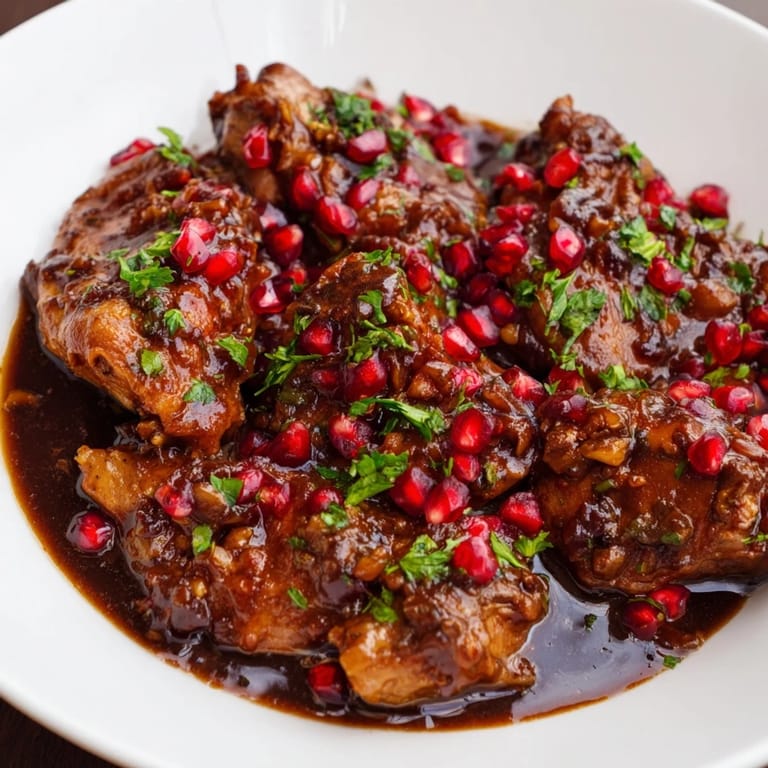
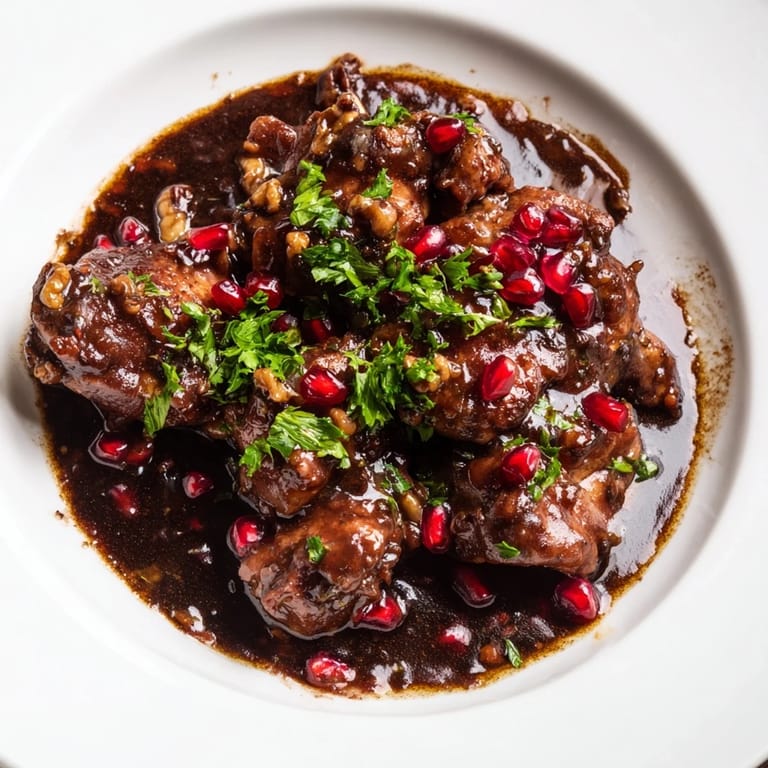
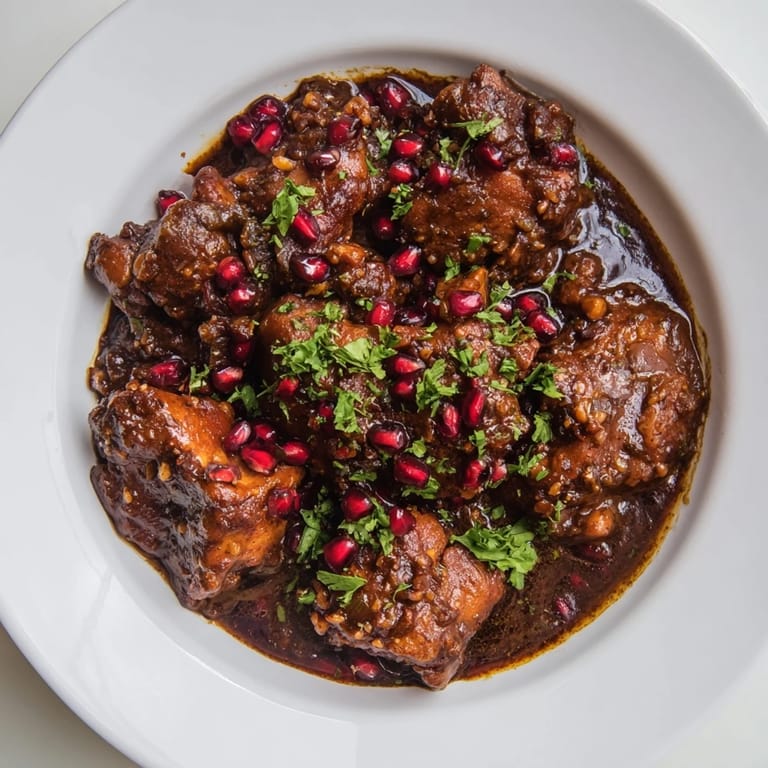
- Serve over steamed basmati rice, garnished with pomegranate seeds and parsley if you want to make it shine. This is when people remember why they came to dinner.
 Save to Pinterest
 The moment I understood this dish was when I made it for my mother, who's skeptical of most things I cook, and she asked for seconds without being prompted. She sat there quietly, working through each spoonful like she was reading a book, which meant the balance was perfect. That's when food stops being sustenance and becomes a conversation.
Choosing Your Protein
Duck is what your grandmother's grandmother made this with—it's richer, more luxurious, and somehow feels more earned. Chicken is what we make on regular Thursdays, and it's just as honest. The sauce doesn't judge your choice; it elevates whatever meat you give it, which is the mark of a truly good recipe. If you're vegetarian, mushrooms or eggplant take on the sauce with a tender sadness that's completely different but somehow works.
Understanding Pomegranate Molasses
This ingredient might seem exotic, but it's just pomegranate juice reduced until it's thick, tart, and almost black. You can find it in most well-stocked grocery stores or Middle Eastern markets, and once you have it, you'll find excuses to use it in everything. It's the secret weapon that makes this dish taste less like cooking and more like alchemy, transforming simple ingredients into something that tastes like it took much longer than it did.
Timing and the Stew Philosophy
There's something meditative about watching a pot simmer for 90 minutes—you're not required to do much, just stir occasionally and let the flavors marry. This is the kind of dish that rewards patience without demanding perfection. Make it on weekends when you can let your kitchen smell like spiced pomegranate for hours, or make it for guests who will understand that the time you spent on this is a form of respect.
- Start it in the afternoon if you want dinner served by early evening, giving yourself grace to adjust seasoning at the end.
- Reheats beautifully and tastes even more balanced the next day as flavors continue to meld.
- The sauce can be made ahead and the meat added just before serving if you're planning a dinner party.
 Save to Pinterest
 This is the kind of dish that stays with people after they've finished eating, the kind worth making again and again. Serve it with respect, with rice, and with the knowledge that you're honoring a tradition while making it entirely your own.
Recipe Questions
- → What types of meat work best for this dish?
Chicken thighs and duck are traditional choices, offering rich flavor and tender texture when slow-cooked.
- → How can the sauce be thickened properly?
Simmering the stew uncovered during the last 30 minutes helps reduce liquid and concentrates the sauce, creating a thick, glossy finish.
- → Is it possible to adjust the sweetness and tartness?
Yes, by varying the amount of sugar and pomegranate molasses, you can balance the sweet and sour flavors to your preference.
- → Can this dish be made vegetarian?
Yes, mushrooms or eggplant can replace meat for a vegetarian version while maintaining the sauce's rich character.
- → What side dishes complement this preparation?
Steamed basmati or Persian saffron rice pairs perfectly, soaking up the flavorful sauce for a complete meal.