 Save to Pinterest
 My grandmother used to say that Hoppin John wasn't just food—it was insurance, a edible wish for good fortune slipped onto your plate on New Year's Day. The first time I made it myself, I was standing in her kitchen on a cold January morning, the bacon sizzling so loudly it drowned out the neighbor's dog barking outside. There's something about the smell of that smoky bacon mixing with the earthiness of black-eyed peas that feels like tradition catching fire in a pot. Now whenever I stir a fresh batch, I'm not just cooking; I'm holding onto something bigger than myself.
I made this for my neighbor Tom when he moved in across the street, and watching him take that first bite—the way his eyes softened—told me everything I needed to know about food being a language. He came back three days later with an empty container and a shy smile, asking if I could maybe teach him how. That afternoon, standing side by side at the stove, felt less like a cooking lesson and more like the beginning of a real friendship.
Ingredients
- Thick-cut bacon (6 oz): Don't skimp here—the quality of your bacon becomes the soul of this dish, so choose something smoky and substantial that renders down to liquid gold.
- Onion, celery, and garlic: These three create the holy trinity that gives the peas their savory backbone, so mince them fine and don't rush the sautéing step.
- Green bell pepper (optional): It adds sweetness and brightness, but honestly, the dish works beautifully without it if that's what you have on hand.
- Dried black-eyed peas (1½ cups soaked): Soaking overnight softens them and makes them cook faster, but if you're in a pinch, canned ones work—just adjust your cooking time down to 20–25 minutes.
- Chicken or vegetable broth (4 cups): This is where flavor lives, so use low-sodium so you can season properly without oversalting.
- Bay leaf, thyme, and cayenne: Bay leaf is non-negotiable for depth; thyme whispers warmth; cayenne is there if you want heat, but it's completely optional.
- Long-grain white rice (2 cups): The fluffy bed underneath everything, so measure carefully and don't skip the standing time after cooking.
- Scallions and hot sauce: These are your finishing touches—they brighten what could otherwise feel heavy and let each person customize their own plate.
Tired of Takeout? 🥡
Get 10 meals you can make faster than delivery arrives. Seriously.
One email. No spam. Unsubscribe anytime.
Instructions
- Start with the bacon foundation:
- Dice your bacon into small pieces and cook them in a large pot over medium heat until they're crisp and the fat is rendering—this takes about 6 to 8 minutes and will fill your kitchen with the most irresistible aroma. Remove half the bacon with a slotted spoon to save for garnish, but keep the drippings in the pot because that's liquid gold.
- Build your flavor base:
- Add the chopped onion, celery, and bell pepper to that bacon fat and let them soften for about 5 minutes, stirring occasionally. When the vegetables are turning translucent and tender, stir in the minced garlic and cook just until fragrant—about 1 minute is all you need.
- Combine and simmer the peas:
- Pour in your soaked black-eyed peas, the broth, bay leaf, thyme, and cayenne if you're using it, then bring everything to a boil. Once it's boiling, turn the heat down to a gentle simmer, leave the pot uncovered, and let it bubble away for 35 to 45 minutes (or 20 to 25 if you're using canned peas) until the peas are tender but haven't fallen apart.
- Cook your rice while the peas simmer:
- In a separate saucepan, combine rice, water, butter, and a pinch of salt, then bring it to a boil. Immediately turn the heat to low, cover the pot, and let it cook undisturbed for 15 minutes until all the water is absorbed. Turn off the heat and let it sit covered for 5 more minutes, then fluff it gently with a fork.
- Bring it all together:
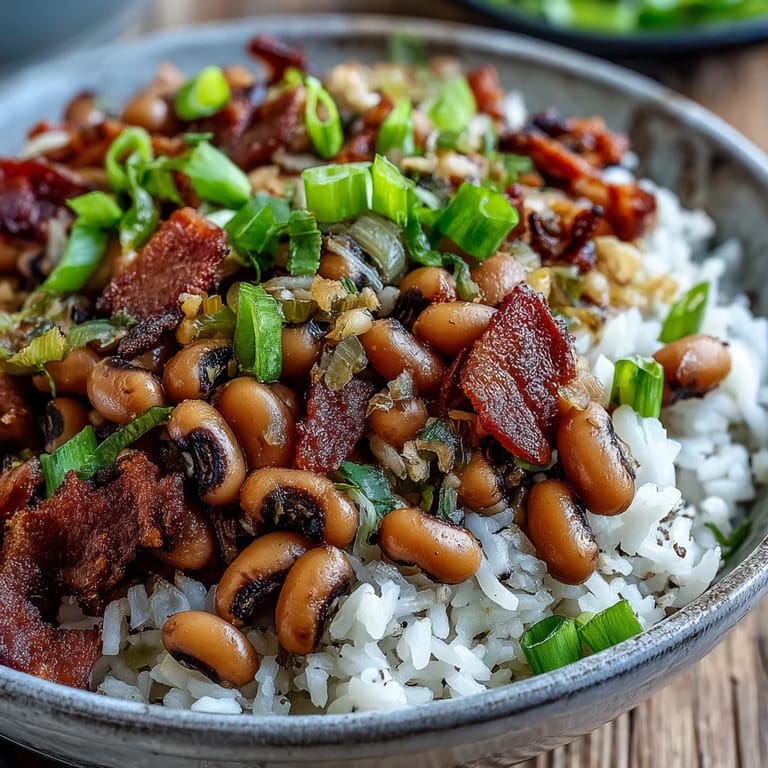
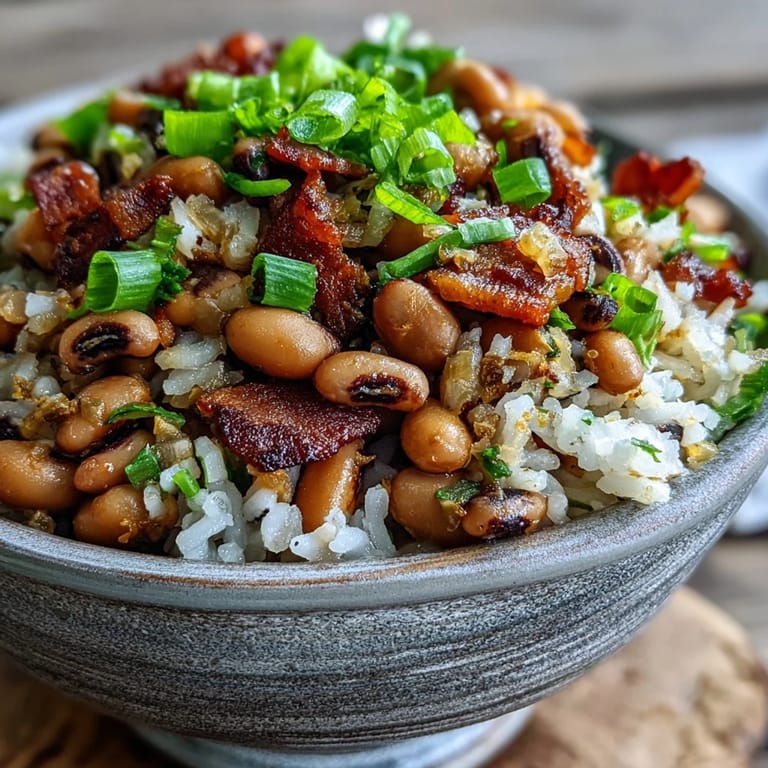
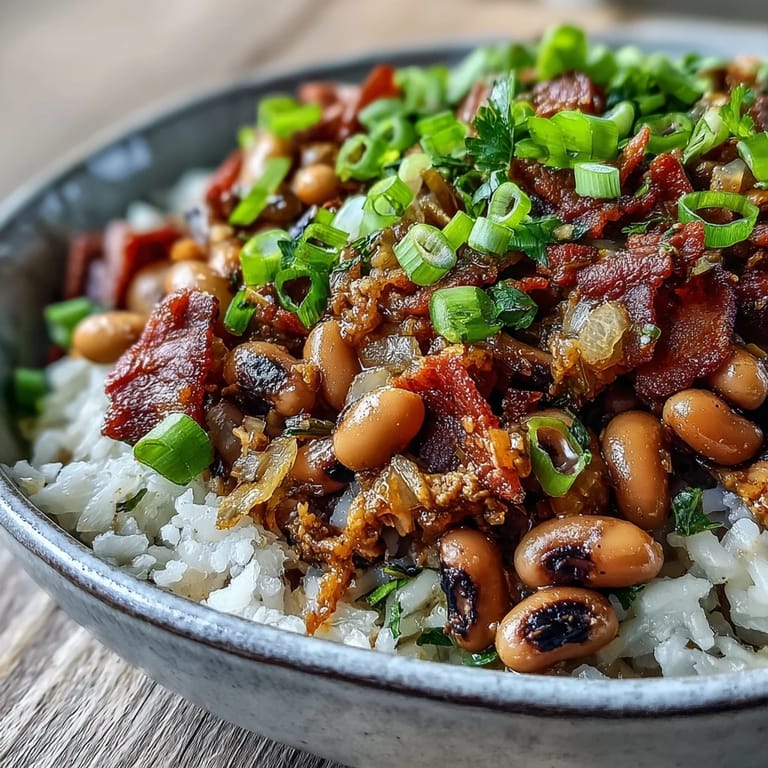
- Taste your peas and season them with salt and pepper until they taste like happiness, then remove the bay leaf. Spoon the fluffy rice into bowls, ladle the black-eyed peas over the top, and crown it with that reserved crispy bacon and sliced scallions. Drizzle with hot sauce if that's your style.
 Save to Pinterest
 Years ago, my kids decorated the table with dollar bills on New Year's Eve because someone told them Hoppin John brought money luck, and they wanted to help it along. I didn't have the heart to tell them that wasn't how it worked, so I just let them tape green paper everywhere while we cooked together. When we sat down to eat that morning, watching them shoveling in spoonfuls while grinning at their handmade decorations—that's when I understood the real magic wasn't in the peas at all, it was in the moment.
The Soul of Southern Cooking
This dish exists at the intersection of resourcefulness and celebration, born from the kind of cooking that makes something magnificent from humble ingredients. Black-eyed peas were historically food for enslaved people and animals, yet they became the heart of a celebration, a reclamation of dignity and joy on one's own terms. When you're making this, you're not just following a recipe; you're participating in that same transformation of turning necessity into something worth gathering around.
Making It Your Own
The beauty of Hoppin John is that it welcomes variations and personal touches without losing its identity. Some cooks add diced tomatoes near the end for brightness, others swear by smoked paprika if they're leaving out the bacon, and a few I know throw in a splash of apple cider vinegar for tang. Your kitchen, your peas, your story—there's room for all of it here.
Serving and Celebrating
This dish is meant to be shared, whether you're observing a New Year tradition or just craving something that tastes like home. The rice provides a gentle canvas, the peas deliver all the flavor, and those toppings let everyone at your table customize their own experience. There's something deeply right about food that brings people together and asks them to hope for something better in the year ahead.
- Serve it with cornbread on the side to soak up every last bit of those peas and their savory liquid.
- Collard greens alongside add color and a traditional Southern meal feel, plus they're done in just 15 minutes.
- Make extra on purpose—it reheats beautifully and tastes even better the next day when all the flavors have gotten to know each other.
 Save to Pinterest
 Hoppin John is more than New Year's tradition; it's a quiet way of saying you believe good things are coming, and you're bringing people you care about along for the ride. Every time you make it, you're adding your own story to something much older and infinitely warmer.
Recipe Questions
- → Why is Hoppin John eaten on New Year's Day?
Hoppin' John is a traditional Southern New Year's dish believed to bring good luck and prosperity. The black-eyed peas represent coins, while the greens often served alongside symbolize paper money.
- → Do I need to soak the black-eyed peas?
Yes, dried black-eyed peas should be soaked overnight for even cooking. Alternatively, you can use canned peas, which will reduce the simmering time to 20-25 minutes.
- → Can I make Hoppin John vegetarian?
Absolutely. Simply omit the bacon and add smoked paprika or liquid smoke to maintain that savory, smoky flavor profile. Use vegetable broth instead of chicken broth.
- → What should I serve with Hoppin John?
Traditional accompaniments include cornbread, sautéed collard greens, or chopped tomatoes. Hot sauce and sliced scallions make excellent toppings for added flavor and freshness.
- → How long does Hoppin John keep?
Stored in an airtight container in the refrigerator, Hoppin John will keep for 4-5 days. The flavors often improve after a day or two. It also freezes well for up to 3 months.