 Save to Pinterest
 There's something about breaking into a can of black-eyed peas that transports me straight to my friend Marcus's kitchen in Charleston, where he was teaching me that Southern food doesn't have to be heavy to be meaningful. He tossed together this impossibly fresh salad one humid afternoon, and what struck me wasn't the nostalgia—it was how alive it tasted, how the tarragon cut through everything with this green, almost herbaceous whisper. That day changed how I think about elevating classics without losing their soul. Now whenever I make this, I'm channeling that same spirit: respect the tradition, but let it breathe.
I made this for a potluck last spring, and someone actually asked for the recipe before they'd finished their first bite—which never happens at these things because everyone's too busy talking. Watching people realize that black-eyed peas could taste this refined, this intentional, felt like sharing a small secret. That moment reminded me why cooking matters: it's a quiet way of saying you care enough to get the details right.
Ingredients
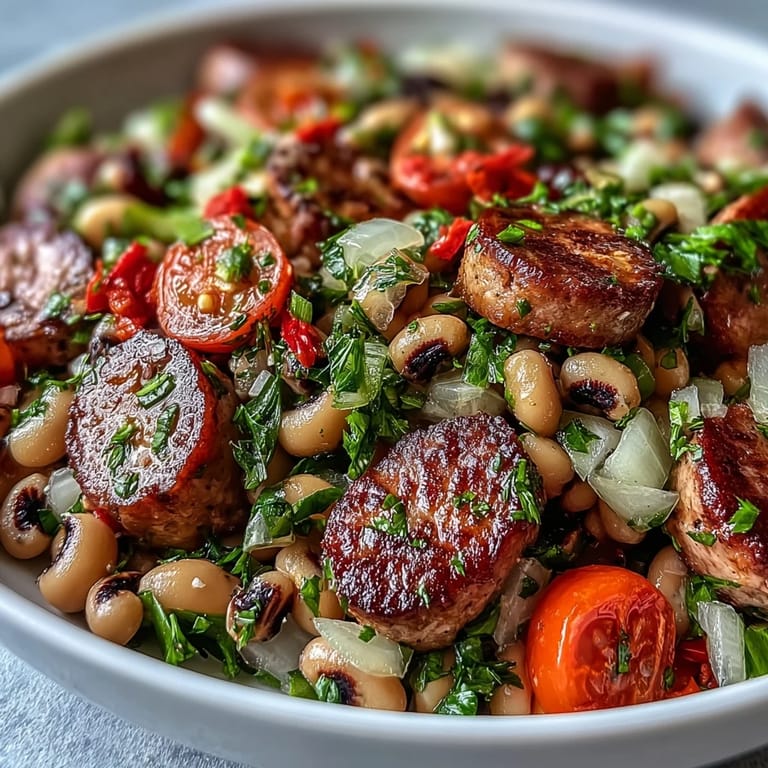
- Black-eyed peas: The foundation here—canned and rinsed works beautifully because you're not after that soft, stewed texture, you want them to hold their shape and structure the whole salad.
- Turkey sausage: Fully cooked versions save you time and keep everything lean, but make sure they're quality ones with real seasoning so you're not just adding protein filler.
- Cherry tomatoes: Halving them instead of quartering means they don't disappear into the mix and you get proper bursts of brightness.
- Red bell pepper and celery: The crunch here is non-negotiable—dice them fine enough that they integrate but coarse enough that you feel them.
- Red onion: Use a mandoline if you have one because getting them to that whisper-thin state makes all the difference in how they soften slightly without becoming mushy.
- Fresh tarragon: This is what transforms the whole thing from a regular salad into something people remember—don't skip it or swap it for parsley, the anise notes are essential.
- Mixed salad greens: Keep them cold and dry, and add them just before serving so they don't wilt under the dressing weight.
- Extra virgin olive oil: The quality of this matters because the dressing is simple enough that mediocre oil becomes the voice of the whole thing.
- Dijon mustard: Not the yellow stuff—real Dijon with those little seeds visible, it's the backbone of the dressing and worth buying the good version.
- White wine vinegar: Bright and clean without being harsh, which is exactly what you need to balance the richness of the oil and sausage.
- Honey: Just enough to round the edges and make the mustard feel less aggressive, though it's so subtle you might forget it's there.
- Garlic: One clove is plenty because the tarragon and mustard are already doing the heavy lifting on flavor.
Tired of Takeout? 🥡
Get 10 meals you can make faster than delivery arrives. Seriously.
One email. No spam. Unsubscribe anytime.
Instructions
- Warm up your sausage gently:
- Slice your turkey sausages and let them hang in a medium-hot nonstick skillet for about four to five minutes, turning them occasionally until you see the edges brown slightly and you can smell that toasty richness. Don't overcrowd the pan or let them sit too long—you want them warm and lightly caramelized, not shriveled.
- Build the salad base:
- In your largest mixing bowl, combine the drained peas with your tomatoes, peppers, celery, red onion, and that fresh tarragon—don't be shy with the tarragon, it's the secret that makes this feel elevated. The vegetables should be evenly distributed so every forkful gets a little bit of everything.
- Emulsify your dressing:
- In a separate small bowl or jar, start with your olive oil and mustard, whisking them together first until they start to form a golden paste, then slowly add the vinegar and honey while whisking so the whole thing comes together silky and cohesive. Add your minced garlic and tarragon at the end, along with salt and pepper, and taste it—you want it bright and punchy but not so acidic it makes your face pucker.
- Bring it all together:
- Once your sausage has cooled just enough to handle, add it to the pea mixture, then pour that mustard dressing over everything and toss gently but thoroughly so every bean and vegetable gets coated. The dressing should glisten but not pool at the bottom.
- Compose your plate:
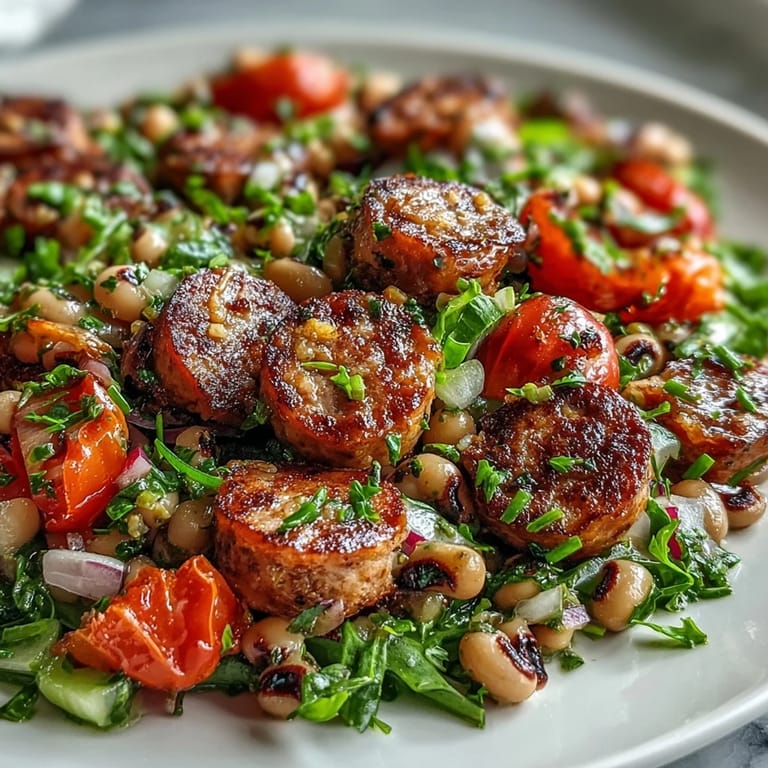
- Arrange your cold salad greens on a platter or individual plates as a base, then top generously with the black-eyed pea mixture—the greens will provide a cool, fresh contrast to the warmed sausage and dressed beans. Garnish with extra tarragon if you're feeling fancy, and get it to the table while everything's still at its peak.
 Save to Pinterest
 There's a moment with every recipe where you realize it's no longer just instructions on a page—it becomes the thing you reach for when you want to feel good about feeding yourself or someone else. This salad is that for me now, the one I make when I want to prove that eating well doesn't mean sacrificing flavor or sophistication.
The Tarragon Factor
Tarragon is not an herb you see in a lot of home kitchens, which is honestly a travesty because it does something no other herb can—it tastes faintly like anise without being licorice-forward, it has this green peppery undertone that makes everything feel more intentional. The first time I used it in a dressing instead of just a garnish, I realized I'd been cooking with one hand tied behind my back my whole life. In this salad, it's what separates a good black-eyed pea situation from one that makes people pause mid-bite and ask what they're tasting.
Playing with Variations
The beauty of this salad is that it can shift with what you have on hand or what you're in the mood for without losing its identity. I've added avocado slices when I want something richer, tossed in roasted corn kernels when I want a subtle sweetness, even swapped the turkey sausage for smoked tofu one time when a vegetarian friend was coming over and realized the whole thing still sang. You could add roasted chickpeas if you want more heft, or cherry barley if you want something grainier, but the constants—the tarragon, the mustard dressing, those bright vegetables—those are what make it feel intentional instead of random.
Making It Work For Your Life
This is one of those recipes that actually gets better if you prep components ahead, which means it's perfect if you're the type who finds five minutes to chop vegetables on Sunday but never manages to cook during the week. You can cook the sausage the night before, store it in the fridge, and reheat it gently just before serving, and you can make the dressing a full day ahead because the flavors actually deepen and settle. The peas and vegetables can sit together for a few hours as long as you hold off on the greens and dressing until you're ready to plate—which means you could theoretically have a restaurant-quality dinner on your table in ten minutes flat if you've prepped smart.
- If you're concerned about mustard allergens, use whole grain mustard instead or a lesser-known brand you trust, but tell me if you find one that works as well as Dijon because honestly I haven't.
- A crisp Sauvignon Blanc or even a light Pinot Grigio pairs beautifully if you're entertaining, but a cold glass of sparkling water with lemon is honestly just as satisfying.
- This salad tastes best served at room temperature or cool room temperature, not ice-cold from the fridge, so pull it out about ten minutes before you want to eat it.
 Save to Pinterest
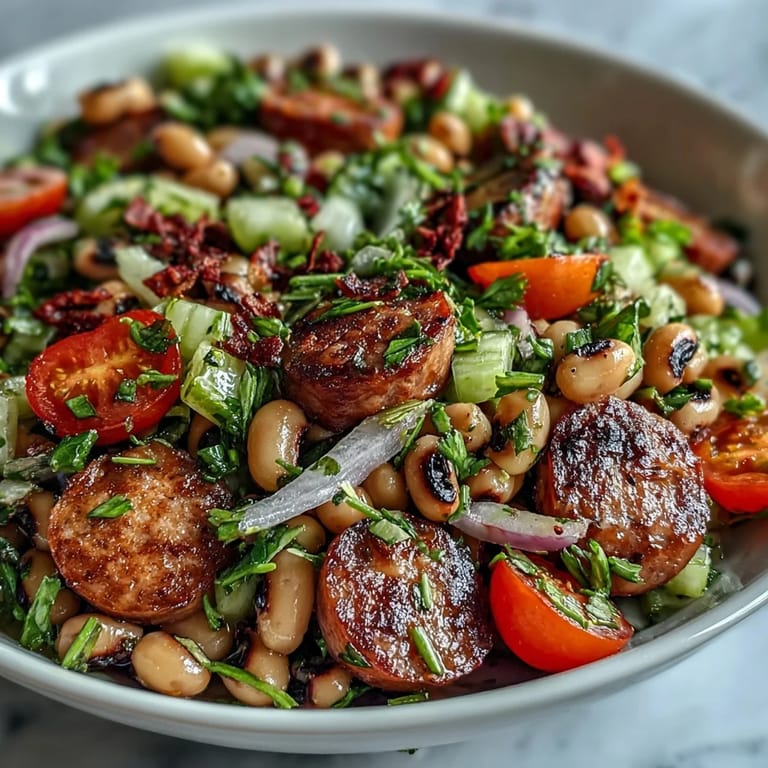
 This salad has become the recipe I hand over when someone asks what they should make when they want to impress without stress. It's honest food that happens to be elegant, which might be the best kind of recipe to have in your rotation.
Recipe Questions
- → Can I make this dish ahead of time?
Yes, you can prepare the components up to a day in advance. Store the dressed salad separately from mixed greens and combine just before serving to maintain freshness and texture.
- → What can I substitute for fresh tarragon?
Fresh basil or chives work well as alternatives. Dried tarragon can be used in a pinch—reduce the amount to 1 teaspoon since dried herbs are more concentrated.
- → Is this salad served warm or cold?
It's versatile! Serve immediately while the sausage is still slightly warm for a comforting dish, or chill completely for a refreshing cold salad perfect for warm weather.
- → How do I store leftovers?
Store in an airtight container in the refrigerator for up to 3 days. Note that the vegetables may soften over time. The dressing can be stored separately for better texture retention.
- → Can I use dried black-eyed peas instead of canned?
Absolutely. Cook 1 cup dried peas according to package directions until tender, then drain and cool before using. This adds about 1-2 hours to the preparation time.
- → What wine pairs well with this salad?
A crisp Sauvignon Blanc complements the mustard dressing and fresh herbs beautifully. For red wine lovers, a light Pinot Noir or dry rosé also pairs nicely.