 Save to Pinterest
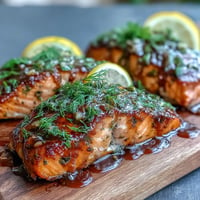
 There's something about the sound of salmon skin hitting a hot pan that signals dinner is about to get good. I discovered this ginger-soy glaze completely by accident one evening when I was trying to use up a half-empty bottle of soy sauce and some ginger that had been sitting in my crisper drawer. What started as improvisation turned into the dish I now make whenever I want to feel like I actually know what I'm doing in the kitchen, even if it takes barely twenty minutes from start to finish.
I made this for my sister's surprise dinner last month, and she actually paused mid-bite to ask what I'd done differently. I won't lie, that moment of someone genuinely impressed by something you cooked hits different, especially when it's simple enough that you're not stressed the whole time they're eating.
Ingredients
- Salmon fillets (4 pieces, 6 oz each): Skin-on is essential because that's where the magic happens, the part that gets perfectly crispy and turns into a thin, salty treasure.
- Kosher salt and black pepper: These two do the quiet work of making the fish taste like itself, nothing fancy but absolutely non-negotiable.
- Low-sodium soy sauce (1/4 cup): Low-sodium matters here so the glaze doesn't taste like pure salt by the time it thickens.
- Honey (2 tablespoons): It balances the salty and tangy notes, and it's what helps the glaze catch a little caramel color in the pan.
- Fresh ginger (1 tablespoon, grated): Bottled ginger won't give you that bright, almost sharp bite that makes this dish feel alive.
- Garlic (2 cloves, minced): Two cloves is enough to be there in the background without overwhelming everything else in the glaze.
- Rice vinegar (1 tablespoon): This small amount cuts through the sweetness and keeps the whole thing feeling balanced instead of cloying.
- Sesame oil (1 teaspoon): Just a teaspoon because it's potent, but it's the detail that makes people wonder what your secret ingredient is.
- Sesame seeds and green onions for garnish: The crunch and fresh allium brightness at the end are what push this from good to memorable.
Tired of Takeout? 🥡
Get 10 meals you can make faster than delivery arrives. Seriously.
One email. No spam. Unsubscribe anytime.
Instructions
- Dry your salmon and season it:
- Pat each fillet thoroughly with paper towels so the skin can actually crisp up instead of steam. Sprinkle both sides with salt and pepper, and let it sit for a minute while you move on to the glaze.
- Whisk the glaze together:
- In a small bowl, combine soy sauce, honey, ginger, garlic, rice vinegar, and sesame oil. The glaze should smell incredible at this point, a little spicy from the ginger, a little toasty from the sesame.
- Get your pan ready:
- Heat a large nonstick or cast iron skillet over medium-high heat until you can feel the heat radiating from it. If you're using cast iron, a tiny bit of neutral oil helps, but honestly nonstick handles this beautifully without it.
- Sear the salmon skin-side down:
- Place fillets skin-side down in the hot pan and don't touch them for four minutes. This is the hard part because you'll want to move them, but that stillness is what creates the crispy skin everyone fights over. You'll hear the gentle sizzle, smell the salmon beginning to cook.
- Flip and cook the other side:
- After four minutes, use a fish spatula to flip each fillet carefully. Cook for another two to three minutes on the flesh side until it's nearly done through but still has a tiny bit of give when you press it.
- Add the glaze and finish:
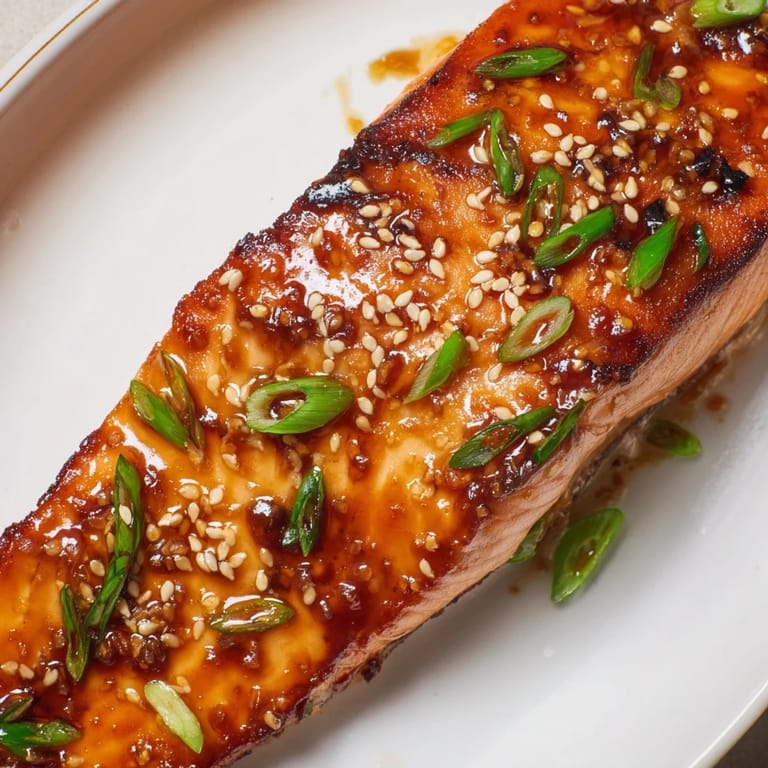
- Turn the heat down to medium-low and pour the glaze evenly over all the fillets. Tilt the pan and spoon that sticky, glossy sauce over the fish constantly for the next two to three minutes, watching as it darkens slightly and coats everything. The salmon will finish cooking gently in that sauce.
- Plate and garnish:
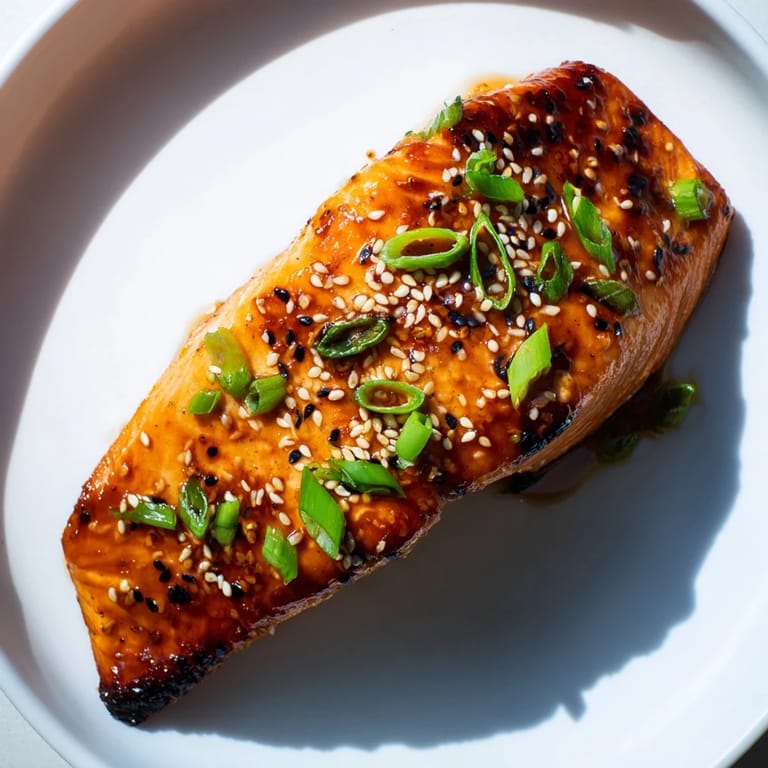
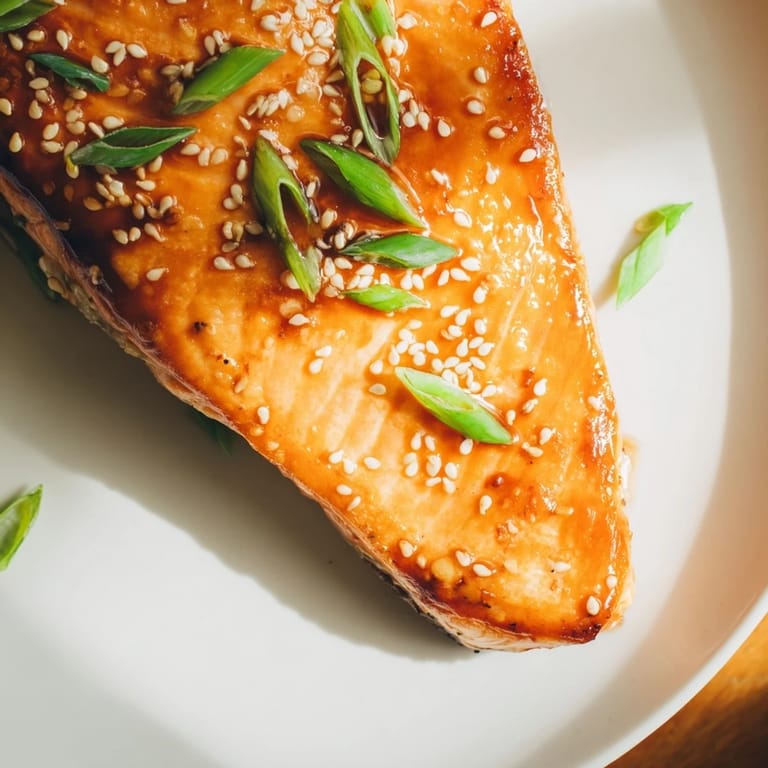
- Transfer each fillet to a plate, spoon any remaining glaze from the pan over the top, and finish with a scatter of toasted sesame seeds, thinly sliced green onions, and a wedge of lemon or lime on the side.
 Save to Pinterest
 My mom took one bite and declared it better than the version she'd paid twenty-two dollars for at that sushi place downtown. There's a specific kind of pride that comes from cooking something you weren't sure would work and having it land exactly right.
Why This Works
The beauty of this dish is that you're using high heat to do all the heavy lifting, which means you're not standing around waiting or constantly adjusting things. The salmon cooks from residual heat and the gentle braising of that glaze, so by the time you finish spooning sauce, everything is perfectly done. The ginger and garlic infuse into the honey, creating something that tastes like you spent way more time on it than you actually did.
What to Serve Alongside
I typically make steamed jasmine rice because it's neutral enough to soak up any extra glaze from the plate, and the slight floral note complements the ginger beautifully. Sometimes I'll do a quick sauté of bok choy or broccolini in garlic and sesame oil, which mirrors the flavors in the salmon and feels intentional rather than like an afterthought.
Making It Your Own
Once you understand the formula, this glaze works as a jumping-off point for whatever direction you want to go. I've added a quarter teaspoon of red chili flakes when I wanted something with a bite, swapped lime juice in place of some of the vinegar, and even tried a touch of miso for deeper umami. The foundation is solid enough that you can play around without breaking anything.
- Brown sugar or maple syrup can replace the honey if that's what you have, and honestly some people swear it's better.
- If your salmon fillets are thicker than usual, just extend that second cooking phase by a minute or so, watching the sides for that opaque line moving up the fish.
- Leftover glaze keeps in the fridge and tastes great spooned over rice or roasted vegetables the next day.
 Save to Pinterest
 This is the kind of dinner that tastes like you made an effort without the stress, the one that turns a regular Tuesday into something you actually remember fondly. That's worth the twenty minutes, every single time.
Recipe Questions
- → How do I ensure the salmon skin gets crispy?
Pat the salmon dry before cooking and sear skin-side down without moving it for several minutes in a hot skillet to achieve crispiness.
- → Can I substitute honey in the glaze?
Yes, maple syrup or brown sugar can be used as alternatives to honey for a similar sweetness.
- → Is sesame oil necessary in the glaze?
Sesame oil adds a nutty aroma and depth to the glaze but can be omitted if unavailable or replaced with a mild vegetable oil.
- → How can I add a spicy kick to this dish?
Incorporate red chili flakes into the glaze to introduce a gentle heat without overwhelming the flavors.
- → What side dishes pair well with this salmon?
Steamed rice, sautéed greens, or roasted vegetables complement the flavors and make a balanced meal.