 Save to Pinterest
 There's something almost magical about the moment when you're standing in your kitchen on a Saturday morning, and you realize you have three eggs, a good slice of bread, and absolutely no idea what to do with them. That's when the egg flight concept clicked for me—not from some fancy restaurant, but from sheer experimentation and a stubborn desire to make breakfast feel less ordinary. Each egg preparation brings its own personality to the plate, and when they're nestled together on toasted bread, it becomes something far greater than the sum of its parts.
I made this for a friend who claimed to "not really like eggs much," which I took as a personal challenge. Watching her methodically work through each section of that toast, commenting on how the creamy scrambled part contrasted with the runny fried yolk, something shifted—she went from egg skeptic to egg enthusiast in about three minutes. That's when I knew this recipe was worth perfecting and sharing.
Ingredients
- Sourdough or country-style bread: One large, thick slice is your foundation; good bread makes all the difference because it needs to support the weight of three eggs without turning into mush.
- Three large eggs: You'll prepare each one differently, so freshness matters—the yolk should break with minimal pressure when fried.
- Unsalted butter: Use 1 tablespoon total, split between the scrambled and fried eggs so you're not adding excess salt.
- Olive oil: Just 1 teaspoon for the fried egg to prevent sticking and add a whisper of flavor.
- Salt and freshly ground black pepper: Season each egg individually as you cook it; the flavors build better this way than adding everything at the end.
- Chives, chili flakes, and microgreens: These garnishes aren't just pretty—chives add bite, chili flakes bring heat, and microgreens add a peppery crunch that ties the whole thing together.
Tired of Takeout? 🥡
Get 10 meals you can make faster than delivery arrives. Seriously.
One email. No spam. Unsubscribe anytime.
Instructions
- Toast your foundation:
- Preheat your oven to 180°C and slide that bread onto a baking sheet. After 5–7 minutes, you want it golden and crisp enough to hold moisture without disintegrating—tap it with your finger and it should feel sturdy.
- Set the soft-boiled egg in motion:
- Get water boiling in a small pot, gently lower in your first egg, and set a timer for 6½ minutes—this is precise because you want that jammy, barely set yolk. Ice water is your friend here; it stops the cooking instantly.
- Scramble with intention:
- Heat half your butter over medium-low heat (low heat is the secret to creamy scrambles). Whisk your egg with salt and pepper, pour it in, then resist the urge to stir constantly—let it sit for a few seconds, then gently push it around with a spatula until it's just barely set with a slightly wet sheen.
- Fry the final egg:
- Wipe out your skillet, add the remaining butter and olive oil over medium heat, and crack your egg in carefully. You're aiming for set whites with a runny yolk, about 2–3 minutes depending on your stove's temperament.
- Assemble your masterpiece:
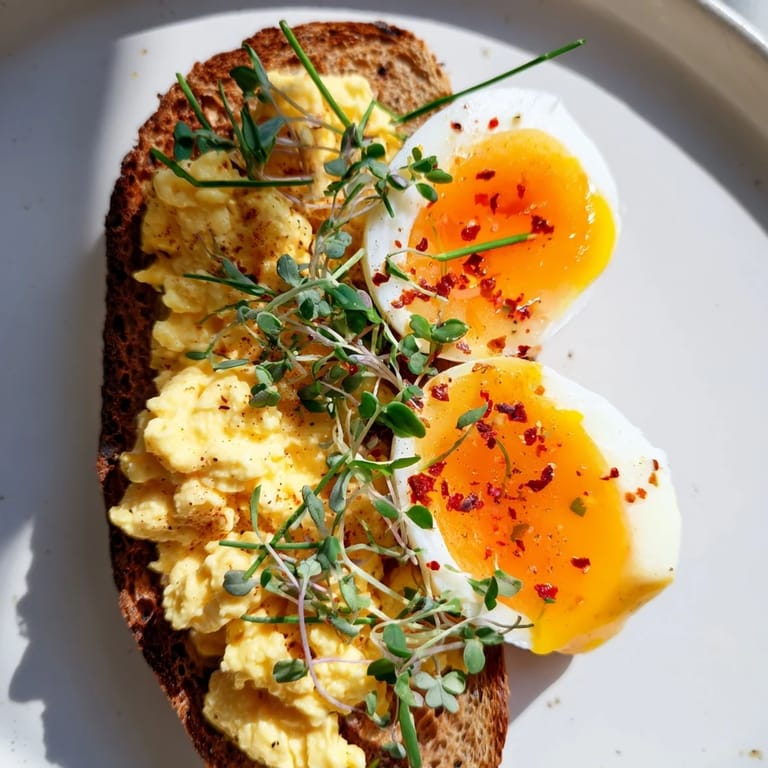
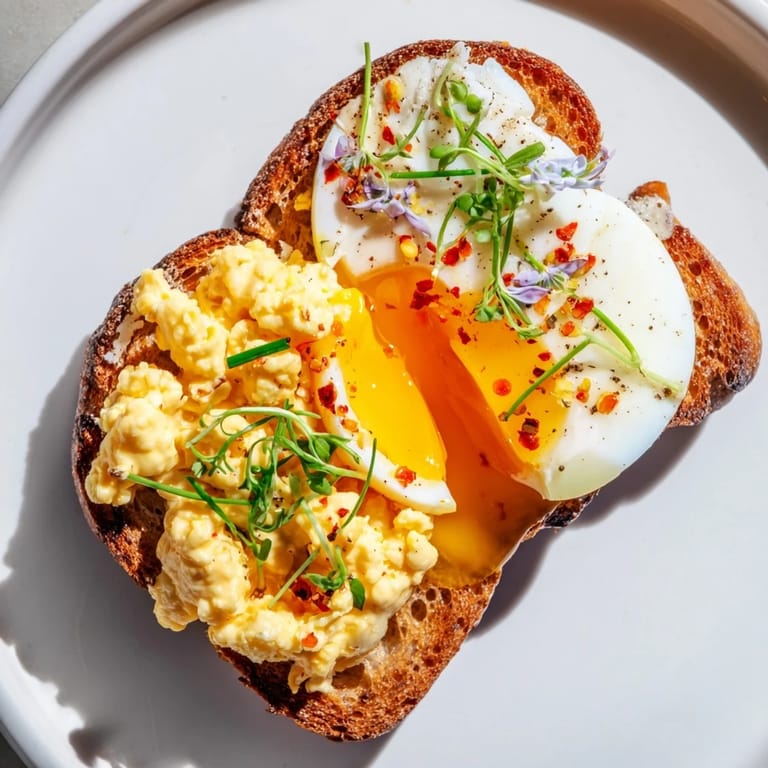
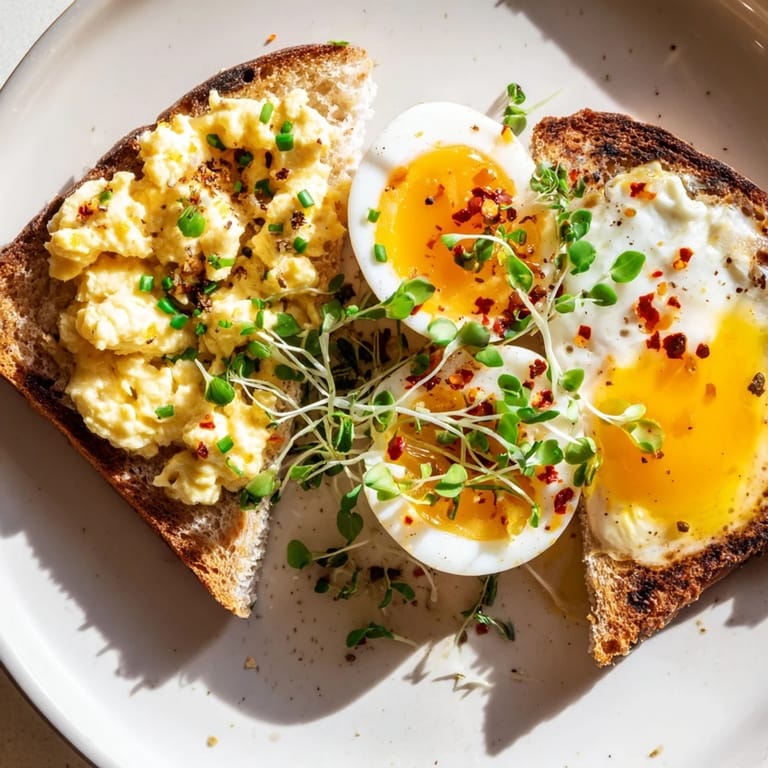
- Place your toasted bread on a plate and divide it into thirds—scrambled egg on one side, halved soft-boiled on the middle, and fried egg on the last third. The visual contrast is half the appeal.
- Garnish with purpose:
- Sprinkle chives over the scrambled section, chili flakes over the fried egg, and scatter microgreens across the whole thing. Serve immediately before everything starts cooling down.
 Save to Pinterest
 I remember the exact moment I plated this for my niece, who'd been living on cereal for weeks during college exams. She looked at it like I'd handed her edible art, took one bite with all three preparations, and just closed her eyes for a second. No words, just a quiet moment of breakfast appreciation that made the whole exercise worthwhile.
The Secret Life of Egg Textures
What makes this recipe work isn't just the eggs themselves—it's understanding that each cooking method creates a completely different experience on your palate. The scrambled egg brings comfort and creaminess, the soft-boiled adds richness and slight resistance when you break into that yolk, and the fried egg delivers drama with its runny center. When you eat all three in one bite (if your toast slice is generous enough), your mouth gets this beautiful symphony of temperatures, densities, and flavors that somehow feel both chaotic and perfectly intentional.
Bread Matters More Than You'd Think
I learned this the hard way with thin, flimsy bread that basically disintegrated under the weight of wet eggs. Your bread needs substance—sourdough's tang plays beautifully against the richness of eggs, and country-style bread has that structure that holds up without tasting like cardboard. The toasting step isn't just for crunch; it creates a slight barrier that prevents the eggs from turning your toast into porridge within thirty seconds of plating.
Making This Meal Sing
The magic of this breakfast isn't just in the individual components but in how you can customize each section without losing the essence of the recipe. Some mornings I'll add a thin slice of avocado under the fried egg, other times I'll toss a handful of sautéed spinach with the scrambled eggs, and occasionally I'll use poached instead of soft-boiled if I'm feeling adventurous. The framework stays the same, but the possibilities shift with what's in your fridge and how you're feeling.
- Try smoked salmon or prosciutto draped under the fried egg for a brunch-worthy upgrade.
- A small dollop of cream cheese mixed with the scrambled eggs adds tangy richness that rounds out the plate.
- Keep extra fresh herbs like dill or tarragon on hand—they can completely change the mood of your breakfast without adding complexity.
 Save to Pinterest
 Breakfast doesn't have to be complicated to feel special—sometimes it just needs a little intention and three different ways of treating the same ingredient. This egg flight is my reminder that the best meals come from curiosity and willingness to play around in your kitchen.
Recipe Questions
- → How long should I soft-boil the egg?
Cook the egg in boiling water for about 6½ minutes to achieve a tender yolk that's just set but still creamy inside.
- → What bread types work best for this dish?
Use a large slice of sourdough or country-style bread for sturdy texture, though gluten-free options can also be used.
- → Can I substitute the egg styles for variety?
Yes, try poached eggs or an omelette in place of the original styles to create new flavor combinations.
- → What garnishes complement the toast and eggs?
Chopped fresh chives, chili flakes, and microgreens add color and subtle flavor without overpowering the eggs.
- → How should the eggs be seasoned?
Lightly season the eggs with salt and freshly ground black pepper to enhance their natural flavors.
- → Are there tips for cooking scrambled eggs creamy?
Cook scrambled eggs gently over medium-low heat and stir softly until just set for a creamy texture.