 Save to Pinterest
 There's something almost magical about pulling a batch of sourdough croissants from the oven on a quiet morning, the kitchen suddenly filled with the scent of butter and caramelized crust. My first attempt at these came after a friend casually mentioned she'd been feeding her starter for months—something about the tartness it adds to pastries made me curious. What started as a weekend project turned into an obsession, and honestly, once you nail the lamination technique, you realize these aren't nearly as intimidating as they seem.
I still think about bringing a fresh batch to my neighbor's house last winter—she'd been stressed about something work-related, and I remember her closing her eyes after taking that first bite, exhaling like she'd been holding her breath. That moment reminded me that croissants aren't really about technique or timing; they're about creating something warm to share when people need it most.
Ingredients
- Bread flour (500 g): The higher protein content helps build structure through all that folding, and it's worth seeking out instead of all-purpose flour if you want that proper flaky texture.
- Granulated sugar (60 g): This feeds the yeast and adds subtle sweetness without making them taste like dessert—it's just enough to notice on the second bite.
- Fine sea salt (10 g): Don't skip this or use table salt; it controls fermentation and strengthens the gluten network in ways coarser salt can't.
- Cold whole milk (240 ml): The temperature matters because cold liquid slows initial gluten development, giving you more time to incorporate the butter properly.
- Active sourdough starter (100 g at 100% hydration): This is the soul of the recipe—make sure yours is bubbly and fed within a few hours of using it, or you'll miss out on that characteristic tang.
- Unsalted butter (30 g softened, plus 250 g cold): The small amount mixed into the dough enriches it, while the cold butter block creates those distinct flaky layers; always use European-style butter if you can find it.
- Egg wash (1 egg plus 1 tbsp milk): This simple combination browns the croissants beautifully without making them glossy, giving them that bakery-quality finish.
Tired of Takeout? 🥡
Get 10 meals you can make faster than delivery arrives. Seriously.
One email. No spam. Unsubscribe anytime.
Instructions
- Mix your base dough:
- In a large bowl, combine the bread flour, sugar, and salt—this dry blend is your foundation. Add the cold milk, sourdough starter, and softened butter, stirring until shaggy and rough, then knead for about 8 minutes until the dough becomes smooth and elastic, which you'll feel under your hands.
- First chill:
- Shape the dough into a rough rectangle, wrap it tightly in plastic wrap, and let it rest in the refrigerator for at least 2 hours—this relaxes the gluten and makes rolling easier later.
- Prepare your butter block:
- Place 250 g of cold butter between two sheets of parchment paper and pound it with a rolling pin until it softens slightly, then roll it into a 20 x 15 cm rectangle. Pop it back in the fridge to firm up again.
- Laminate: first incorporation:
- Roll your chilled dough into a 40 x 20 cm rectangle on a lightly floured surface, then place the butter block on one half, fold the dough over, and seal the edges by pressing them gently with your fingers. You're encasing that butter block completely.
- First letter fold:
- Turn the dough 90 degrees and roll it out again to 60 x 20 cm, then fold it into thirds like a business letter—this is called a single turn, and you'll repeat this process three times total. Wrap it and chill for 1 hour.
- Second and third letter folds:
- Repeat the rolling and folding process two more times, always chilling for 1 hour between turns—this builds the hundreds of butter layers that create flakiness. The dough should feel firmer each time.
- Final overnight rest:
- After your third fold, wrap the dough and refrigerate overnight for 8–12 hours—this extended rest develops flavor through fermentation and makes the dough much easier to shape in the morning.
- Shape into croissants:
- Roll the chilled dough into a 60 x 30 cm rectangle about 5 mm thick and cut it into 12 long triangles using a sharp knife. Starting from the wide end of each triangle, roll toward the tip, then tuck that tip underneath to create the classic crescent shape.
- Proof until puffy:
- Place the shaped croissants on parchment-lined baking sheets, cover them loosely with a kitchen towel, and let them sit at room temperature for 2–3 hours until they've roughly doubled in size—this final rise creates the airy, open crumb inside.
- Prepare and bake:
- Preheat your oven to 200°C (400°F), whisk together the egg and milk for egg wash, and brush it lightly over each croissant. Bake for 18–22 minutes until the outsides are deep golden brown and sound crisp when tapped, then cool for a few minutes before serving.
 Save to Pinterest
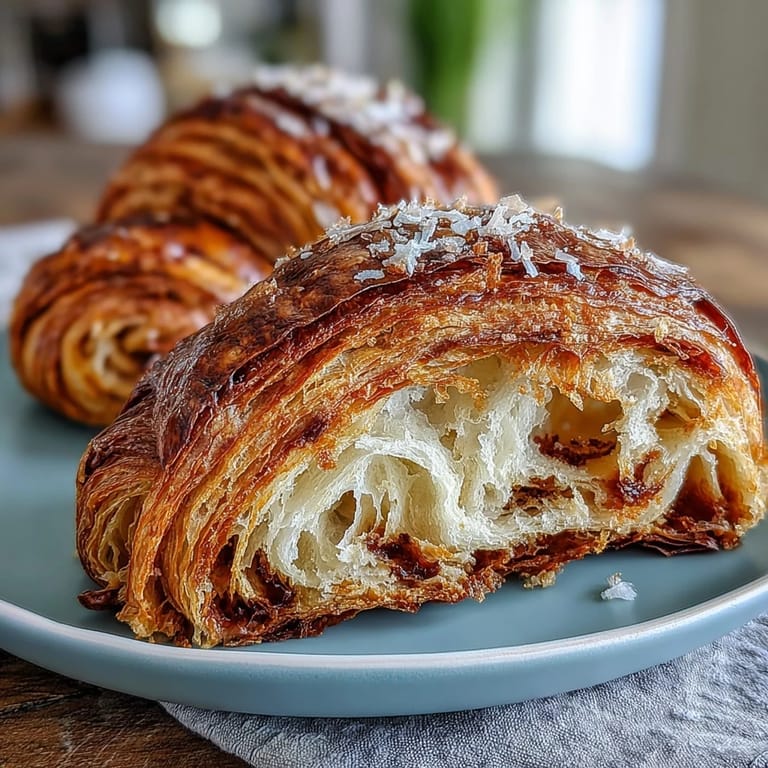
 There's a particular sound croissants make when they're baked perfectly—that crispy crackle when you bite through the caramelized exterior into the steaming, stratified interior. I've learned it's worth waiting for that moment instead of rushing them out of the oven, because underproofed croissants taste dense and heavy, while properly proofed ones practically dissolve on your tongue.
The Sourdough Difference
What makes these special compared to commercial croissants is the sourdough starter, which adds complexity that keeps developing even after baking—the flavor actually improves slightly as they cool. The tang pairs beautifully with butter in a way that feels more sophisticated than straight yeast alone, and if you're already maintaining a starter for bread, it's nice to have another use for it.
Timing and Planning
The genius of this recipe is how it spreads the work across two days, which actually reduces stress—you're not standing at a counter for eight hours straight. The overnight chill after your final fold isn't just convenient; it's when the dough develops flavor, so rushing that step means missing out on the whole point of using a sourdough starter.
Storage and Variations
Fresh croissants are obviously best served the day they're made, but they freeze remarkably well—just let them cool completely, wrap them individually, and thaw at room temperature before serving. For variety, you can tuck a small piece of dark chocolate into the center before rolling, add a teaspoon of vanilla to the dough itself, or even try savory fillings like grated gruyère or a thin slice of good ham tucked inside the triangle.
- A gentle reheat in a 160°C oven for about 5 minutes revives the crispness if they've sat around for a few hours.
- If you're serving these at a gathering, bake them in the early morning so they're still warm when people arrive—the aroma alone is half the gift.
- Keep a small bowl of softened butter and maybe some good jam nearby because not everyone knows how good croissants are when you tear them open and spread something inside.
 Save to Pinterest
 These sourdough croissants are proof that patience and proper technique create something extraordinary from simple ingredients. There's real satisfaction in pulling a golden batch from the oven and knowing you've earned every flaky layer.
Recipe Questions
- → What makes sourdough croissants different?
The use of sourdough starter adds a tangy depth and natural fermentation, enhancing flavor and texture.
- → How long should the dough chill overnight?
The dough requires 8-12 hours of refrigeration to develop flavor and improve lamination.
- → Can I replace the butter block with margarine?
Butter is preferred for its flavor and layering properties, but margarine can be used with varying results.
- → How do I achieve a flaky, golden crust?
Proper folding, chilling, and an egg wash before baking create the desired crispness and color.
- → What is the best way to proof croissants?
Allow croissants to rise at room temperature until doubled in size, typically 2-3 hours, for optimal lightness.