 Save to Pinterest
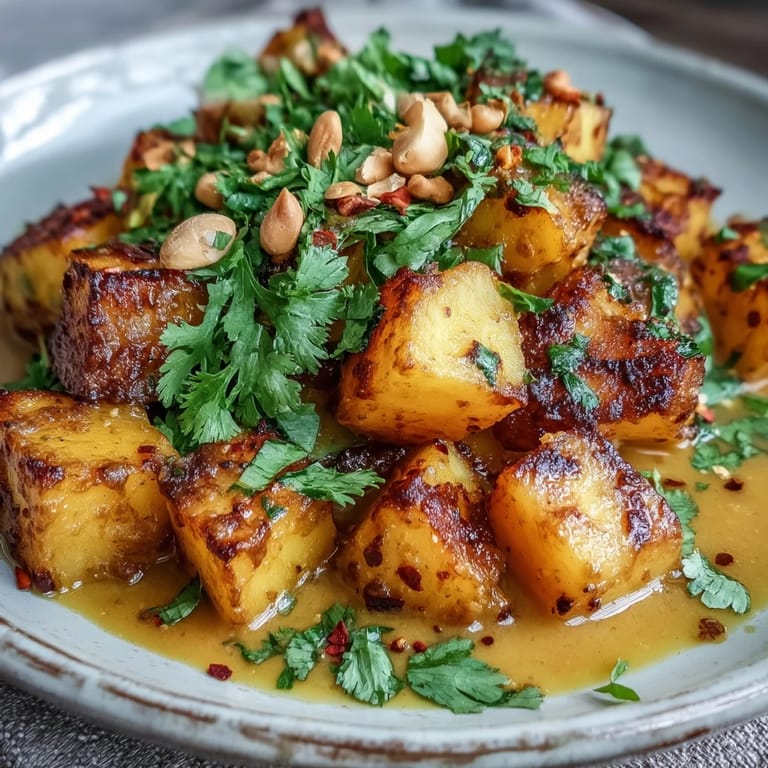
 The smell hit me before I even opened the oven, that warm, earthy sweetness of celeriac turning golden at the edges. I'd bought it on a whim at the farmers market, drawn to its knobby, almost alien appearance, with no real plan except curiosity. When I tossed those roasted chunks into a bubbling curry sauce for the first time, the kitchen filled with the kind of aroma that makes neighbors knock. It was one of those accidental wins that you scribble down immediately, knowing you'll want it again and again.
I made this for a friend who swore she didn't like celeriac, mostly because she'd only ever had it raw and stringy in remoulade. She took one bite, paused, then asked if I'd secretly used potatoes instead. Watching her go back for seconds felt like a small victory for weird vegetables everywhere. Now she asks me to bring it every time we have dinner at her place, and I never tell her how ridiculously easy it actually is.
Ingredients
- Celeriac: Choose a firm, heavy one without too many crevices, it makes peeling so much easier and the flesh stays creamy when roasted.
- Onion: A large one gives you that sweet, mellow base that holds the whole sauce together without fighting the spices.
- Garlic and ginger: Fresh is non-negotiable here, the brightness they add is what makes the curry sing instead of just sitting flat.
- Curry powder: Use a blend you actually like eating, because it's the backbone of the dish and cheap curry powder tastes exactly like you'd expect.
- Cumin and turmeric: These deepen the warmth and give the sauce that gorgeous golden color that makes it look as good as it tastes.
- Chili flakes: Optional but recommended if you like a gentle kick that builds slowly in the background.
- Olive oil: For roasting and sautéing, it brings a subtle fruitiness that complements the coconut milk beautifully.
- Coconut milk: Full-fat is the way to go, it creates that velvety, rich sauce that clings to every celeriac cube.
- Vegetable stock: Thins the sauce just enough to keep it from being heavy while adding another layer of savory depth.
- Cilantro, nuts, and lime: These garnishes aren't just pretty, they add brightness, crunch, and acidity that balance the richness perfectly.
Tired of Takeout? 🥡
Get 10 meals you can make faster than delivery arrives. Seriously.
One email. No spam. Unsubscribe anytime.
Instructions
- Roast the celeriac:
- Preheat your oven to 200°C and toss those chunky cubes with olive oil, salt, and pepper on a baking sheet. Roast for 25 to 30 minutes, flipping them halfway so they get golden and caramelized on multiple sides, with edges that turn crispy and sweet.
- Sauté the aromatics:
- While the celeriac roasts, heat olive oil in a large pan and cook the onion until it's soft and just starting to turn translucent. Add the garlic and ginger, stirring constantly for about a minute until your kitchen smells incredible and the rawness is gone.
- Bloom the spices:
- Toss in the curry powder, cumin, turmeric, and chili flakes, stirring them around for a full minute to toast them in the hot oil. This step wakes up the spices and makes them taste fuller and more complex instead of dusty.
- Build the sauce:
- Pour in the coconut milk and vegetable stock, stirring to combine everything into a smooth, fragrant sauce. Bring it to a gentle simmer and let it bubble away quietly while you wait for the celeriac to finish roasting.
- Combine and simmer:
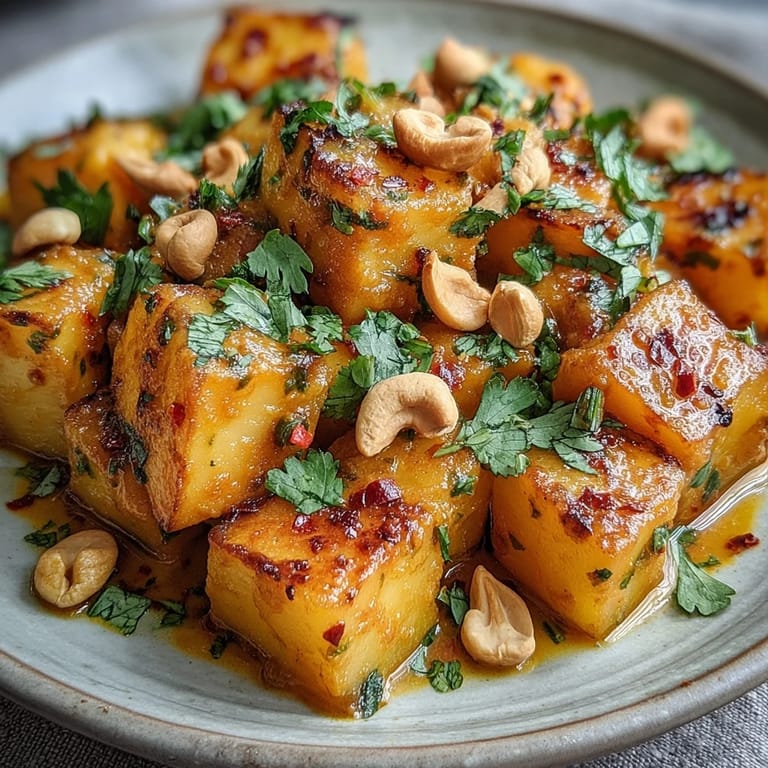
- Add the roasted celeriac to the sauce and let everything simmer together uncovered for 8 to 10 minutes. The sauce will thicken, the celeriac will soak up the curry flavors, and the whole dish will come together into something cohesive and comforting.
- Finish and serve:
- Taste and adjust the seasoning with more salt or pepper as needed, then serve it hot with a scattering of fresh cilantro, toasted nuts, and a squeeze of lime. The garnishes add pops of brightness and texture that make each bite feel complete.
 Save to Pinterest
 There was a rainy Tuesday when I made this just for myself, ate it straight from the pan with a spoon while standing at the stove. It wasn't fancy or Instagram-worthy, just warm and exactly what I needed after a long day. Sometimes the best meals are the ones no one else sees, the ones that remind you why you love cooking in the first place.
Making It Your Own
I've swapped celeriac for parsnips when I couldn't find a good one, and the dish still works beautifully with that slight sweetness. Sweet potato is another winner if you want something a bit more familiar, though it breaks down faster so watch the simmer time. Adding a can of drained chickpeas with the roasted veg turns this into a proper main dish with enough protein to keep you satisfied for hours.
Serving Suggestions
This begs to be spooned over fluffy basmati rice or scooped up with warm naan torn into pieces. I've also served it alongside quinoa for a lighter meal, or even with roasted flatbreads when I'm feeling ambitious. A simple cucumber raita or yogurt on the side cuts through the richness and adds a cool, creamy contrast that makes the whole plate feel balanced.
Storage and Reheating
Leftovers keep beautifully in the fridge for up to four days, and honestly taste even better once the flavors have had time to meld overnight. Reheat gently on the stove with a splash of water or stock to loosen the sauce, stirring occasionally so nothing sticks to the bottom. The celeriac holds its shape well, so you won't end up with mush even after a day or two in the fridge.
- Freeze individual portions in airtight containers for up to three months if you want a quick weeknight dinner stash.
- Add the fresh garnishes only after reheating, not before storing, so they stay bright and vibrant.
- If the sauce separates after freezing, a quick stir over heat brings it back together without any trouble.
 Save to Pinterest
 This dish has a way of making people curious, leaning in to ask what that smell is and whether there's enough to share. I hope it finds a spot in your rotation, becoming one of those recipes you turn to when you want something warm, satisfying, and just a little bit special.
Recipe Questions
- → Can I substitute celeriac with another vegetable?
Yes, parsnips or sweet potato work wonderfully as alternatives. They provide similar texture and absorb the curry flavors beautifully. Adjust roasting time based on the vegetable's density.
- → How can I make this dish spicier?
Use hot curry powder instead of medium, increase the chili flakes, or add a fresh chopped green chili when sautéing the garlic and ginger for an extra kick.
- → What can I serve with curried celeriac?
It pairs perfectly with steamed basmati rice, warm naan bread, quinoa, or cauliflower rice. Add a cooling cucumber raita or yogurt on the side to balance the warming spices.
- → Can I prepare this ahead of time?
Absolutely. The dish keeps well in the refrigerator for up to 3 days and the flavors deepen over time. Reheat gently on the stovetop, adding a splash of vegetable stock if needed.
- → How do I select a good celeriac?
Choose firm, heavy celeriac with minimal soft spots. Smaller bulbs tend to be less woody. Store in a cool, dark place and use within a week for best flavor and texture.
- → Can I add protein to this dish?
Yes, chickpeas are an excellent addition. Add them with the roasted celeriac for a complete protein-rich meal. Tofu cubes or paneer also work well for extra substance.