 Save to Pinterest
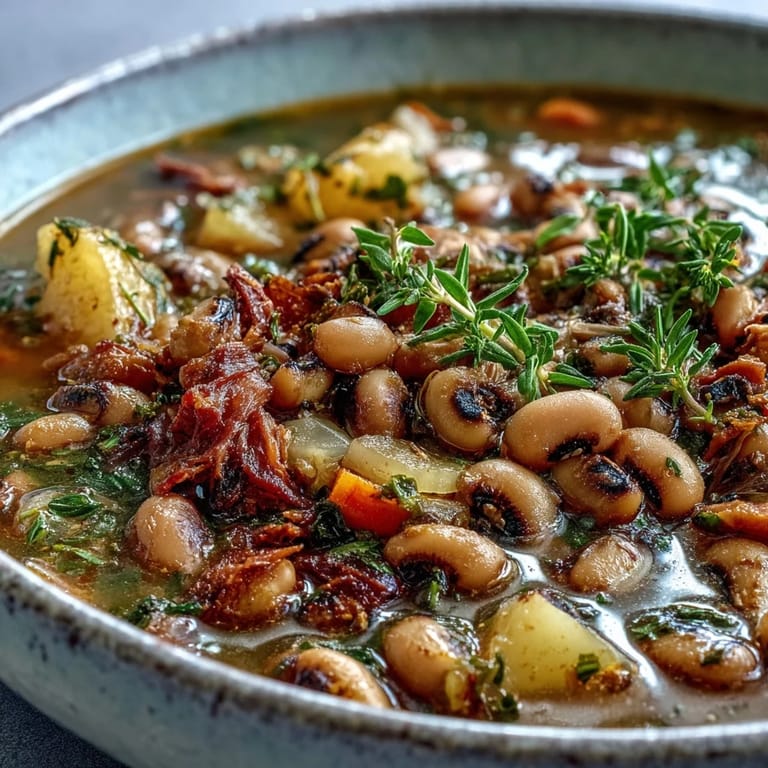
 My grandmother kept a cast-iron pot on her stove that seemed to never empty, always simmering with something warm and alive. One winter afternoon, watching her stir this exact stew—black-eyed peas gone soft and creamy, ham hock meat dissolving into the broth like it had given everything it had—I realized she wasn't just cooking. She was building something to share, something that made people linger at the table longer than they meant to.
I made this for a group of friends on a cold February evening when everyone seemed tired and scattered. By the second bowl, conversation had shifted from complaints to laughter, and someone asked for the recipe before dessert was even mentioned. That's when I understood—this stew does more than nourish.
Ingredients
- Smoked ham hocks (2, about 1.5 lbs): These aren't just seasoning—they're the backbone of the whole stew, giving the broth a depth that you simply cannot rush or fake with anything else.
- Dried black-eyed peas (2 cups, soaked overnight): Soaking matters more than you'd think; it ensures even cooking and lets them stay intact while getting tender enough to almost melt on your tongue.
- Onion, carrots, and celery (1 large onion, 2 carrots, 2 celery stalks, all diced): This trio is your flavor foundation, and taking time to cut them evenly means they'll cook at the same pace.
- Medium potatoes (2, peeled and cubed): One-inch cubes are key—any bigger and they'll still be hard when everything else is done, any smaller and they'll disappear entirely.
- Diced tomatoes with juice (one 14.5 oz can): Don't drain them; the juice adds brightness and helps balance the richness of the meat.
- Garlic (3 cloves, minced): Add it after the vegetables soften or it can turn bitter and taste harsh instead of warm.
- Low-sodium chicken or vegetable broth (6 cups): Low-sodium lets you control the salt level as the stew reduces and intensifies.
- Bay leaves (2), dried thyme (1 teaspoon), smoked paprika (1/2 teaspoon), black pepper (1/2 teaspoon), cayenne (1/4 teaspoon optional): These seasonings work together to create warmth without shouting—they're subtle and building, not aggressive.
- Salt, to taste: Always taste before serving and adjust; the ham hock will release salt as it cooks, so you'll likely need less than you expect.
- Fresh parsley (2 tablespoons, chopped), hot sauce for serving: These optional garnishes add brightness and let people customize their own bowl.
Tired of Takeout? 🥡
Get 10 meals you can make faster than delivery arrives. Seriously.
One email. No spam. Unsubscribe anytime.
Instructions
- Prepare your peas the night before (or at least 8 hours ahead):
- Cover dried black-eyed peas with plenty of cold water—they'll expand and need room—and let them sit overnight at room temperature. The next day, drain and rinse them well, running your fingers through them to release any starch.
- Build your flavor base slowly:
- Heat a splash of oil in your Dutch oven over medium heat, then add the diced onion, carrots, and celery. Let them soften together for about 5 minutes, listening for the gentle sizzle and watching the onion turn translucent. Add the minced garlic and let it perfume the oil for just one minute—you want it to bloom but not brown.
- Bring everything together in the pot:
- Add your ham hocks, drained peas, potato cubes, tomatoes with all their juice, broth, bay leaves, thyme, smoked paprika, black pepper, and cayenne if you're using it. Give it a good stir so nothing sticks to the bottom.
- Move from boil to gentle simmer:
- Raise the heat to bring everything to a rolling boil—you'll see the surface ripple and bubble—then immediately turn it down to low. Cover the pot and let it simmer for two hours, stirring occasionally so the bottom doesn't scorch and flavors stay even.
- Shred the ham and reincorporate it:
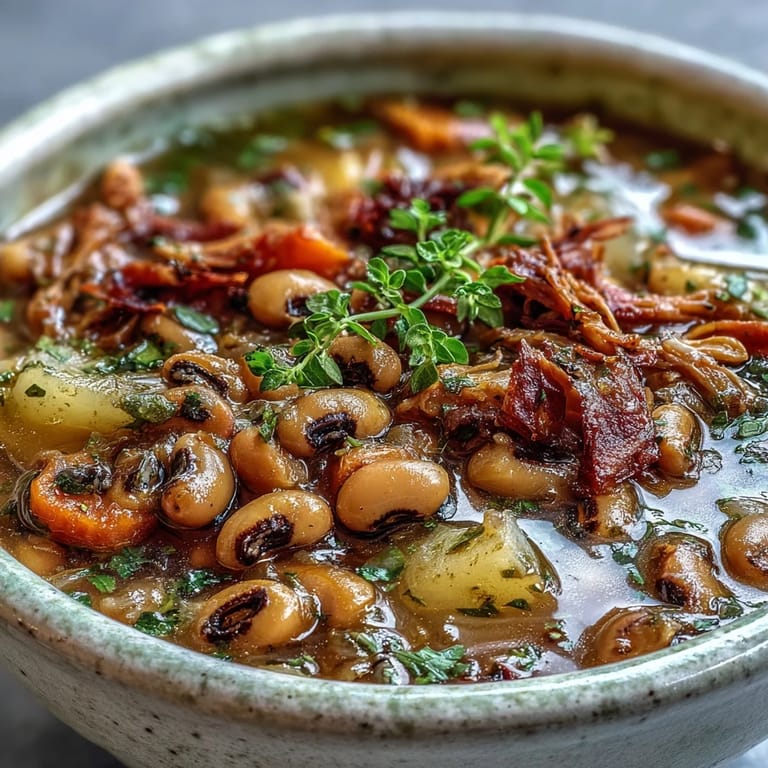
- After two hours, the peas should be tender but intact, and the ham hocks should be falling apart. Fish out the ham hocks carefully, let them cool just enough to handle, then pull the meat from the bone and skin, discarding the tough bits. Return all the shredded meat to the pot and stir it through.
- Taste and adjust:
- This is crucial—taste a spoonful of broth and add salt as needed. If you want a thicker stew, simmer uncovered for another 10 to 15 minutes to let some liquid cook away.
- Finish and serve:
- Remove the bay leaves, ladle the stew into bowls, and if you like, scatter fresh parsley on top and set out hot sauce for those who want it. Serve with cornbread or over rice, or just as it is.
 Save to Pinterest
 There's a moment about halfway through cooking when you lift the lid and the steam hits you, carrying that undeniable scent of ham and peas and home, that you know you've made something right. That's when you stop worrying about whether you did everything perfectly and just let yourself feel proud.
Why This Stew Becomes Better Overnight
Leftovers are where this stew truly shines. After a day in the refrigerator, the flavors have melded and deepened in ways you couldn't predict—the broth tastes richer, the peas have absorbed even more seasoning, and somehow everything feels more cohesive. I've found that reheating it gently on the stovetop, stirring occasionally and adding a splash of broth if it's thickened too much, brings it back to that perfect consistency.
Customizing Your Bowl
One of the best things about this stew is how it invites personalization without needing to be fussy about it. Some people pile theirs over rice, others crumble cornbread into theirs, and a few will drizzle hot sauce across the top and stir it in. I've also seen people add a squeeze of fresh lemon juice at the last moment, which brightens everything without making it feel less warm or substantial.
When You Need to Adapt
If you're cooking for someone who doesn't eat meat, the smoked paprika and a dash of liquid smoke can replicate some of what the ham hock provides, though it won't be identical. The stew will taste good—still deeply flavored and satisfying—just in a different way. You can also boost umami by adding a splash of tamari or soy sauce and an extra bay leaf to compensate.
- For a vegetarian version, use smoked paprika or a teaspoon of liquid smoke to echo the depth the ham hock would have given.
- If potatoes aren't your preference, try swapping in cubed sweet potato or even parsnips for a different kind of sweetness.
- Make sure to check your broth label if gluten-free is important; not all broths are certified, and some canned tomatoes can hide additives.
 Save to Pinterest
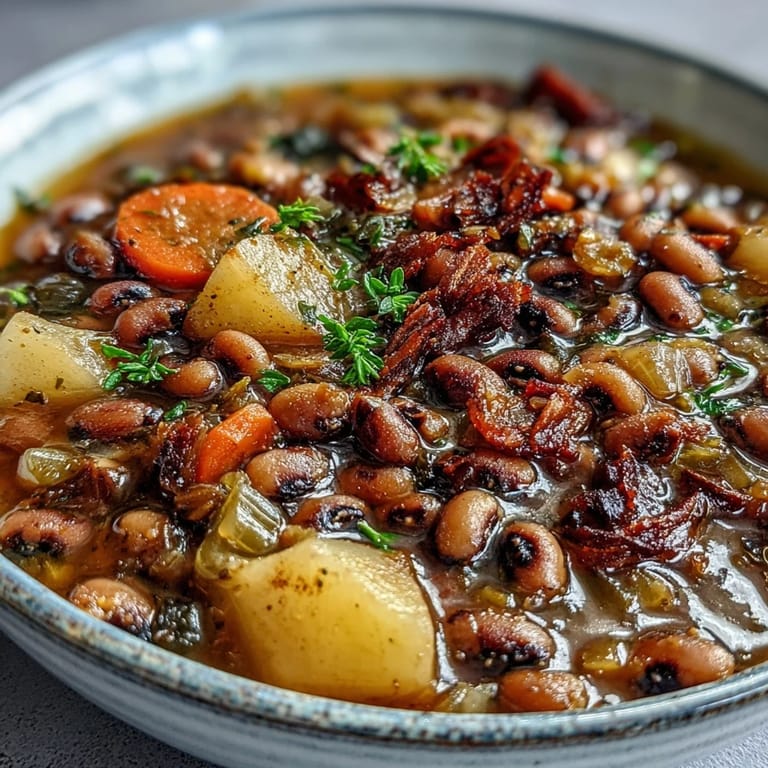
 This stew is meant to be made without rushing, tasted as you go, and shared generously. It's the kind of dish that improves your day just by existing in your kitchen.
Recipe Questions
- → Do I need to soak the black-eyed peas?
Yes, dried black-eyed peas need overnight soaking to soften properly. Alternatively, use canned peas to skip this step and reduce cooking time significantly.
- → Can I make this in a slow cooker?
Absolutely. Sauté vegetables first, then add everything to your slow cooker. Cook on low for 6-8 hours or high for 3-4 hours until peas are tender.
- → What can I substitute for ham hocks?
Try smoked turkey wings, pork shoulder, or bacon. For vegetarian options, use extra smoked paprika, liquid smoke, or smoked salt to maintain depth of flavor.
- → How do I store and reheat leftovers?
Refrigerate for up to 3 days or freeze for 3 months. The stew thickens as it sits—add broth when reheating on the stove or microwave.
- → Why are my black-eyed peas still hard after cooking?
Old peas or acidic ingredients like tomatoes can prevent softening. Add tomatoes after peas are tender, and ensure your dried peas aren't expired.
- → What sides pair well with this stew?
Cornbread is the classic choice. Steamed rice, crusty bread, or collard greens also complement the smoky, savory flavors beautifully.