 Save to Pinterest
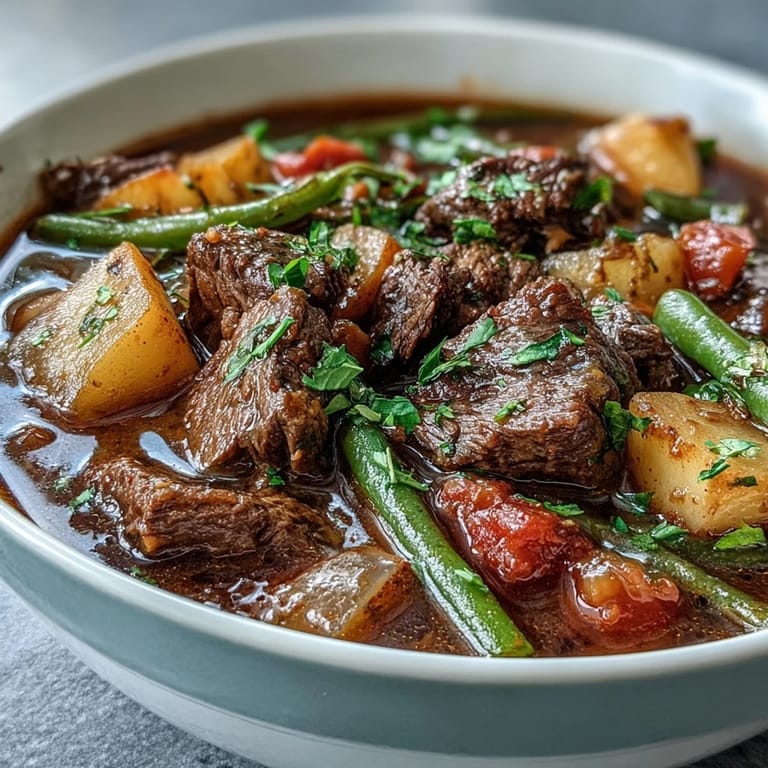
 The windows were fogged with steam and the kitchen smelled of savory warmth when I first perfected this beef and vegetable soup. It was during a particularly fierce January snowstorm, when the drifts piled high against the door and we needed something substantial to fortify us. I remember how the broth deepened in color as it simmered, transforming from pale amber to a rich mahogany that promised comfort with every spoonful. My wooden spoon kept returning to the pot for another taste, each one better than the last.
Last winter, my neighbor Elaine lost power during an ice storm, and I invited her family over for dinner. I served this soup with thick slices of sourdough bread, and her typically picky ten-year-old asked for seconds, then thirds. The adults fell into that contented silence that only happens around truly satisfying food, interrupted only by the occasional scrape of spoons against bowls. Later, Elaine confessed she'd never made beef soup from scratch before, thinking it too complicated.
Ingredients
- Beef chuck, 1.5 lbs: The marbling in chuck creates that velvety mouthfeel after slow cooking, and I've learned through many batches that pre-browning it deeply—not just a cursory sear—builds the foundation for the entire flavor profile.
- Parsnip: Though listed as optional, this humble root vegetable adds a subtle sweetness that balances the savory elements, and I discovered its importance after accidentally adding one when I was short on carrots.
- Bay leaves: These unassuming leaves work quiet magic, infusing the broth with an earthy depth that you'll miss immediately if you forget them—trust me, I've made that mistake exactly once.
- Beef broth, 8 cups: While homemade stock is glorious, I've found a good-quality store-bought broth doctored with a splash of Worcestershire sauce creates nearly comparable results when time is tight.
Tired of Takeout? 🥡
Get 10 meals you can make faster than delivery arrives. Seriously.
One email. No spam. Unsubscribe anytime.
Instructions
- Brown with patience:
- Heat that olive oil until it shimmers before adding your beef cubes, then resist the urge to stir constantly. Let each side develop a rich brown crust that will flavor the entire pot.
- Build the flavor base:
- When you sauté the onion, carrots, and celery in the beef drippings, you're creating the soul of your soup. The vegetables should soften and the onions should become translucent but not brown.
- Low and slow magic:
- Once everything is in the pot, maintain that gentle simmer—never a rolling boil. You should see occasional lazy bubbles breaking the surface as the beef transforms from tough to tender.
- Timing matters:
- Adding the peas in the final minutes preserves their bright color and sweet pop. I once added them too early and watched them dissolve into mushy oblivion.
 Save to Pinterest
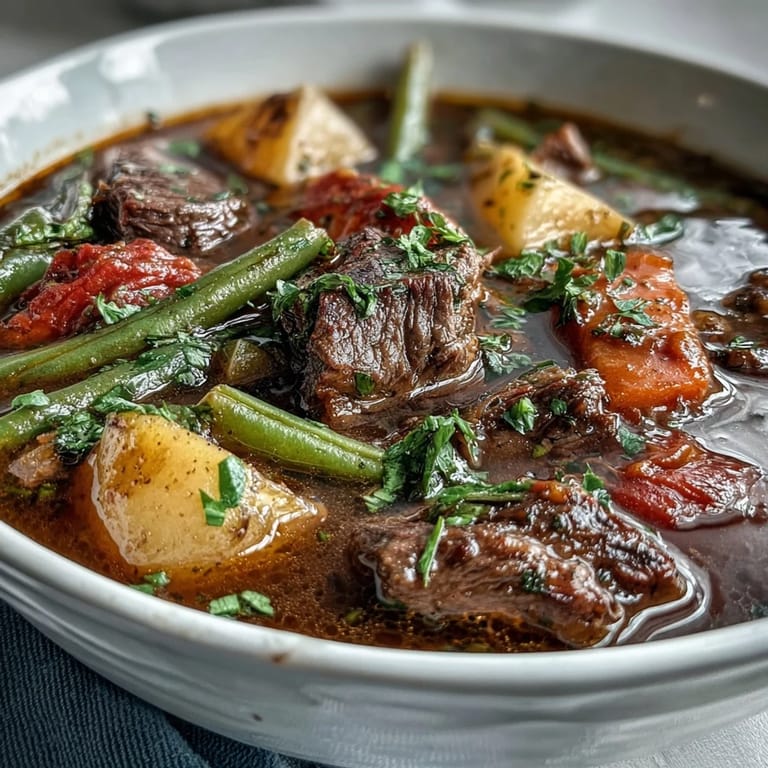
 My most cherished memory of this soup comes from when my brother visited after moving across the country. We hadn't seen each other in nearly two years, and conversation felt awkward at first. But as we sat at the kitchen table with steaming bowls before us, the familiar flavors seemed to dissolve the distance. By the time we reached the bottom of our bowls, we were finishing each other's sentences again, the soup having bridged what time and distance had separated.
Mastering the Beef
The quality of your beef makes a tremendous difference in this recipe. One Sunday I splurged on beef from a local farm instead of my usual grocery store variety, and the flavor was noticeably richer. The butcher suggested I look for pieces with good marbling, explaining that those thin white lines of fat would slowly melt during cooking, basting the meat from within. He was absolutely right—that batch had a luxurious quality that elevated a simple soup into something I'd have been proud to serve at a dinner party.
Storage and Leftovers
This soup has saved me on countless busy weeknights when cooking from scratch seemed impossible. I portion cooled leftovers into individual containers that stack neatly in the freezer, creating a personal stockpile of homemade fast food. The soup keeps beautifully for up to three months frozen, though the potatoes can become slightly softer upon reheating. Once when unexpected company arrived late on a Sunday evening, I was able to defrost and serve this soup with some crusty bread, receiving compliments as though I'd spent the entire day cooking.
Seasonal Adaptations
Each season brings its own possibilities to this adaptable recipe, and I've come to see it as a canvas rather than a strict formula. In late summer, I throw in fresh corn kernels sliced straight from the cob and diced zucchini from the garden, creating a lighter version that still satisfies. Fall inspires the addition of butternut squash and a pinch of nutmeg, while springtime calls for tender asparagus tips and baby peas just barely cooked through.
- For a thicker, more stew-like consistency, try mashing some of the potatoes against the side of the pot toward the end of cooking.
- A splash of red wine added after browning the beef but before adding the broth creates remarkable depth—just let it reduce for about 2 minutes.
- For those who enjoy heat, a diced jalapeño or a generous pinch of red pepper flakes can transform the flavor profile completely.
 Save to Pinterest
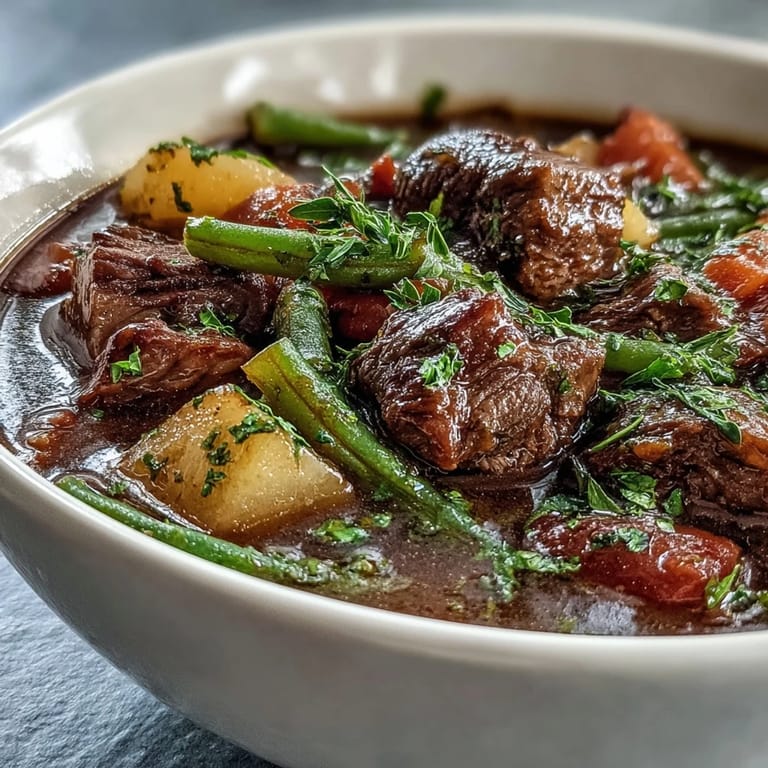
 This soup has become my edible love language, the thing I make when words aren't enough but nourishment speaks volumes. Whether you're seeking comfort, connection, or simply a delicious meal, it delivers with humble ingredients and a bit of time.
Recipe Questions
- → How do I make the beef more tender?
Use beef chuck which has good marbling, brown it well before simmering, and cook it slowly over low heat for the full 1 hour 15 minutes. The long cooking time breaks down connective tissue, resulting in tender, melt-in-your-mouth beef.
- → Can I make this soup in a slow cooker?
Yes, brown the beef first then transfer everything to your slow cooker. Cook on low for 7-8 hours or on high for 4-5 hours, adding the green beans and peas during the last 30 minutes of cooking time.
- → What other vegetables work well in this soup?
Try adding rutabaga, turnips, sweet potatoes, or leeks for variety. Spinach or kale can be stirred in during the last 5 minutes of cooking for extra nutrition and color.
- → Can I freeze this soup?
Absolutely. Let it cool completely, then transfer to freezer-safe containers leaving some room for expansion. It freezes well for up to 3 months. Thaw overnight in the refrigerator before reheating.
- → How do I adjust the seasoning?
Taste near the end of cooking since flavors concentrate as the soup simmers. Add more salt, pepper, or herbs as needed. A splash of Worcestershire sauce or balsamic vinegar can deepen the flavor profile.
- → Why does my soup taste better the next day?
The flavors continue to meld as the soup rests, allowing herbs and spices to infuse more deeply into the broth and vegetables. This seasoning development is common in slowly simmered soups and stews.