 Save to Pinterest
 My sister called me in a panic three weeks before her baby shower, asking if I could bring something that would photograph well for Instagram. That's when this focaccia came to life—not from a cookbook, but from standing in her kitchen, looking at a pile of colorful vegetables and thinking, what if we made the bread itself a canvas? The first attempt was a bit chaotic, vegetables sliding around on the oily surface, but by the second try, we'd cracked the code: patience, good planning, and letting the vegetables tell their own story on the dough.
I'll never forget watching my mom take that first slice at the baby shower, hesitating because she didn't want to cut through the asparagus flower we'd spent ten minutes arranging. But then she bit into it, and her face softened—she realized this wasn't about perfection, it was about care. That bread disappeared faster than any of the store-bought pastries, and three people asked for the recipe before dessert was even served.
Ingredients
- Bread flour: Use 500 g (4 cups) for structure that holds up to the weight of the toppings without becoming dense or gummy.
- Instant yeast: 2 teaspoons gets the dough rising steadily; make sure it's fresh or it'll sit stubbornly in the bowl.
- Sugar and salt: The 2 teaspoons of each balance flavors and feed the yeast without overpowering the bread itself.
- Lukewarm water: 325 ml (1⅓ cups) should feel like bathwater on your wrist—too hot kills the yeast, too cold and nothing happens.
- Extra-virgin olive oil: 60 ml (¼ cup) plus extra for brushing creates that tender crumb and golden crust that makes focaccia what it is.
- Bell peppers, onion, and tomatoes: These are your main canvas; slice them thin enough that they cook through but thick enough not to tear when arranging.
- Zucchini, asparagus, and carrots: The supporting cast that adds color variation and prevents any one vegetable from dominating the palette.
- Fresh herbs: Rosemary, thyme, basil, parsley, chives, and dill act as stems, leaves, and final touches—don't skip this layer of flavor.
- Edible flowers: Optional but they transform the focaccia from beautiful to absolutely magical, especially for special occasions.
Tired of Takeout? 🥡
Get 10 meals you can make faster than delivery arrives. Seriously.
One email. No spam. Unsubscribe anytime.
Instructions
- Mix your dry ingredients and create the well:
- In a large bowl, whisk together 500 g flour, 2 teaspoons yeast, 2 teaspoons sugar, and 2 teaspoons salt until evenly combined. Make a well in the center like a little volcano, then pour in 325 ml lukewarm water and 60 ml olive oil. You'll see the dry ingredients start to collapse into the wet ingredients.
- Stir and bring it together:
- Mix with a wooden spoon or your hands until a shaggy, sticky dough forms and no dry flour remains in the bowl. It'll look messier than typical bread dough, but that's exactly right.
- Knead until smooth and elastic:
- Turn the dough onto a lightly floured surface and knead for 8-10 minutes, or use a stand mixer with the dough hook for 5-7 minutes, until the dough becomes smooth, elastic, and slightly tacky but no longer sticky. You'll feel it transform under your hands from rough to silky.
- First rise in a warm spot:
- Place the dough in a lightly oiled bowl, cover with a damp cloth or plastic wrap, and let it rise in a warm, draft-free spot (like your oven with the light on, or a sunny windowsill) for 1-2 hours until roughly doubled in size. The timeline depends on your kitchen temperature, so don't panic if it takes longer.
- Prep your baking sheet:
- While the dough rises, preheat your oven to 220°C (425°F) and line a large baking sheet (about 30x40 cm or 12x16 inches) with parchment paper. Drizzle the paper generously with olive oil so the focaccia doesn't stick and gets crispy edges.
- Stretch and dimple the dough:
- Punch down the risen dough to release excess air, then transfer it to your prepared baking sheet. Gently stretch and press it to fill the pan, working from the center outward. Use your fingertips to create dimples all over the surface—these little pockets will catch the oil and herbs and turn golden and crispy.
- Brush with olive oil:
- Coat the entire surface generously with olive oil using a pastry brush. This is your base for everything that comes next.
- Arrange your vegetables into floral patterns:
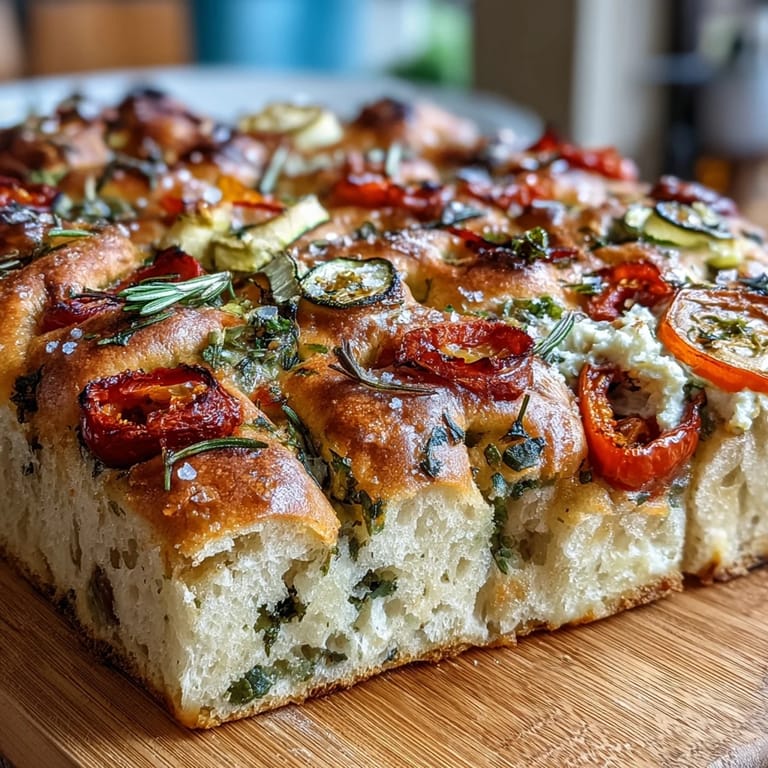
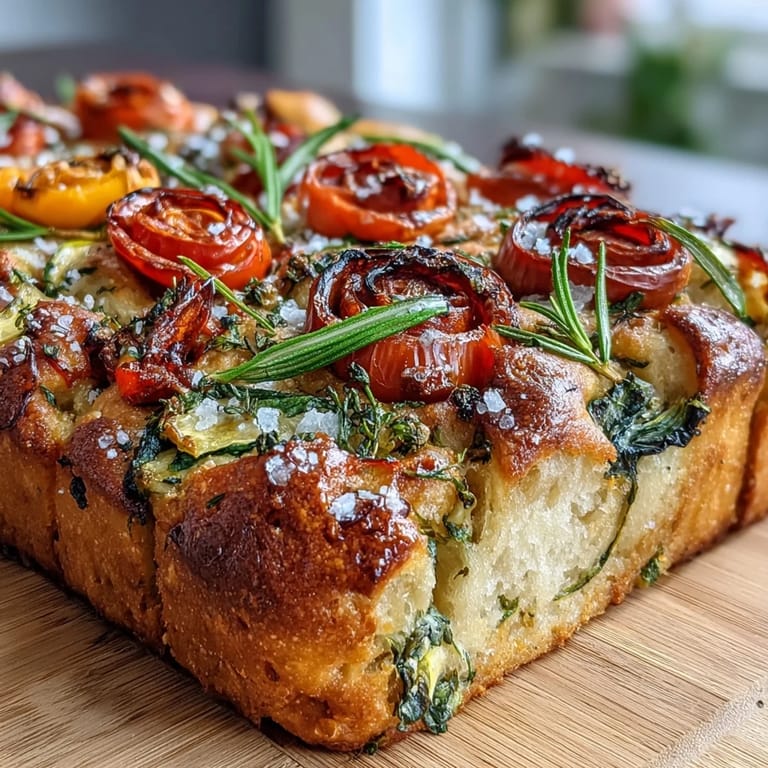
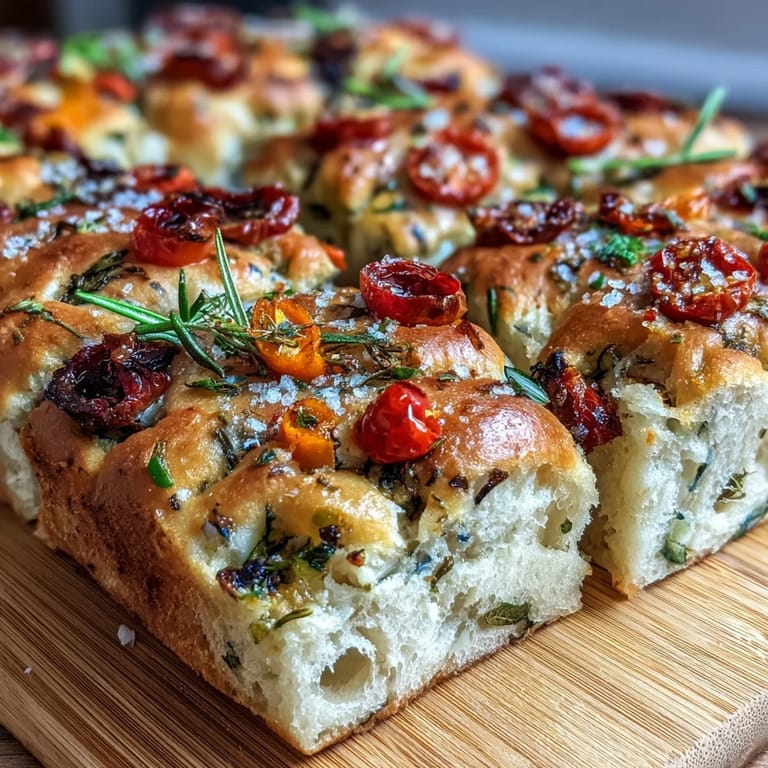
- This is where you get creative and have fun. Start by laying down your main shapes—bell pepper rings become flower petals, halved cherry tomatoes form the centers, asparagus spears create stems, and fresh herbs fill in as leaves and tendrils. Carrot ribbons can be petals or accents, zucchini slices layer for depth. There's no right way; just think garden and arrange as you go. Scatter edible flowers on top if you're using them, and finish with a sprinkle of flaky sea salt and black pepper.
- Second short rest:
- Let the decorated dough rest uncovered for 10-15 minutes while the oven finishes preheating and the dough relaxes slightly. This helps it rise a bit more in the oven.
- Bake until golden:
- Bake for 22-25 minutes, rotating the pan halfway through for even browning, until the focaccia is golden brown and the vegetables are slightly softened and their edges have caramelized. The bread should sound hollow when you tap the bottom.
- Cool before serving:
- Transfer the focaccia to a cooling rack and let it sit for at least 10 minutes before slicing. This sets the crumb structure so it doesn't fall apart when you cut into those pretty vegetables.
 Save to Pinterest
 There's something magical about watching people slow down when they see this bread, actually pausing mid-conversation to admire it before eating. That's when you know you've made something that's more than just food—it's a moment, a memory they'll mention later.
Choosing Your Vegetables Strategically
The vegetables you choose matter less for flavor than for color contrast and how they'll look on the canvas. Red bell peppers and yellow ones pop against the golden bread, while purple onions add unexpected depth. Thin slicing is crucial—a mandoline or very sharp knife makes this exponentially easier and safer. I learned the hard way that thick vegetable slices won't cook through and will slide around annoyingly while the thin ones brown beautifully and stay put.
Infusing Your Oil for Extra Depth
Before brushing the dough, consider whisking your olive oil with minced fresh garlic, lemon zest, or even a tiny pinch of red pepper flakes. I did this for one batch and suddenly the focaccia had so much more personality without being overwhelming. Let the infusion sit for just 5 minutes so the flavors meld but nothing gets bitter.
Making It Your Own and Beyond
This recipe is honestly just a starting point. Once you've made it once, you'll see endless possibilities—fresh corn kernels, thin slices of summer squash, thinly shaved fennel, or even sautéed mushrooms work beautifully. The key is thinking about what colors excite you and what flavors make sense together. A few final thoughts to keep you confident:
- Don't overthink the arrangement; organic and slightly wild-looking gardens are often the most beautiful.
- If a vegetable starts to slide, a toothpick gently wedged underneath holds it in place until it bakes.
- Make this recipe at least twice before serving it at a big event so you're not stressed about timing or presentation.
 Save to Pinterest
 This focaccia has a way of turning an ordinary afternoon into something worth celebrating. Make it for people who matter, arrange it with care, and watch how something as simple as a beautiful bread becomes the heart of the gathering.
Recipe Questions
- → How do I achieve the floral vegetable arrangement?
Thinly slice colorful vegetables like bell peppers, carrots, and zucchini, then carefully arrange them on the dough's surface to mimic flowers and leaves before baking.
- → What herbs work best for this focaccia?
Fresh rosemary, thyme, basil, parsley, chives, and dill provide a fragrant and flavorful herb mix that complements the bread perfectly.
- → Can I prepare the dough in advance?
Yes, you can prepare the dough and allow it to rise overnight in the refrigerator to develop deeper flavors and convenience.
- → How do I ensure the focaccia stays moist?
Brushing the dough generously with extra-virgin olive oil before and after arranging the toppings helps keep the crumb tender and moist.
- → Are edible flowers necessary?
Edible flowers are optional but add a beautiful and delicate touch to the decoration; ensure they are safe for consumption.