 Save to Pinterest
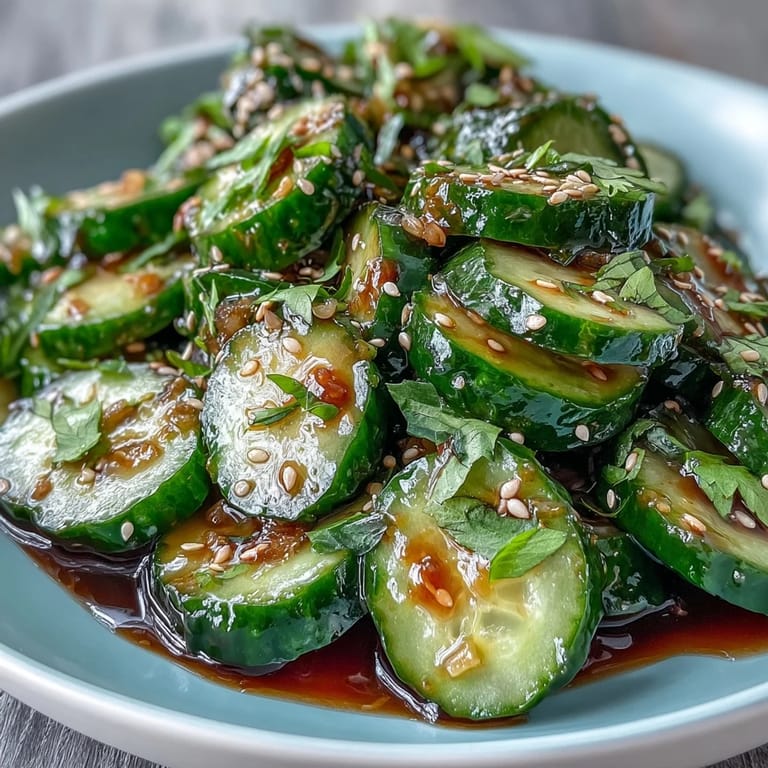
 My neighbor brought over this sesame cucumber salad on a sweltering summer afternoon, and I watched her slice those cucumbers with such confident rhythm that I knew I had to learn her method. She said the trick was letting them weep in salt first, which seemed counterintuitive until I tasted how crisp and clean they stayed. That dressing—just a whisked mixture of soy, rice vinegar, and sesame oil—tasted like it held some kind of secret. I've made it dozens of times since, usually when I need something that tastes both light and deeply satisfying.
There was this Tuesday night when I made this for my partner after a particularly exhausting day at work, and he took one bite and just exhaled like the tension left his shoulders. We sat on the porch eating it straight from the serving bowl while the sun dropped behind the neighbor's fence, not saying much, just tasting how bright and alive everything tasted. That's when I understood this salad wasn't just refreshing—it was restorative.
Ingredients
- English cucumbers: These are longer and less seedy than regular ones, which means less watering down your salad—use them if you can find them.
- Spring onions: They add a gentle allium bite that mellows when they sit in the dressing, so don't skip them or substitute harshly with regular onions.
- Carrot: Julienne it thin so it softens slightly as it marinates and becomes almost sweet against the salty dressing.
- Soy sauce: The umami backbone—tamari works beautifully if you're avoiding gluten, and honestly the flavor difference is so minimal you won't miss it.
- Rice vinegar: Gentler and slightly sweet compared to other vinegars, which keeps this from tasting sharp or aggressive.
- Toasted sesame oil: Non-negotiable for that nutty depth; untoasted sesame oil tastes flat and disappointed by comparison.
- Sugar: Just a teaspoon to balance the salty and acidic elements, though maple syrup adds a whisper of complexity if you have it.
- Garlic and ginger: Fresh is essential here because they perfume the entire salad, not just flavor it.
- Sesame seeds: Toast them yourself if you can, or buy them already toasted—their crunch is the final word on texture.
Tired of Takeout? 🥡
Get 10 meals you can make faster than delivery arrives. Seriously.
One email. No spam. Unsubscribe anytime.
Instructions
- Salt your cucumbers and let them breathe:
- Slice those cucumbers thin, lay them in your colander, and sprinkle with salt. This isn't punishment—it's drawing out the water that would otherwise make everything soggy in 10 minutes. Pat them dry after 5 to 10 minutes and you'll notice how crisp and firm they become.
- Gather your vegetables in one bowl:
- Combine the salted cucumbers with your sliced spring onions and julienned carrot in a large bowl, mixing gently so you don't bruise anything.
- Whisk your dressing until it's balanced:
- In a small bowl, whisk together soy sauce, rice vinegar, sesame oil, sugar, minced garlic, grated ginger, and your chili if using. The sugar should dissolve completely, and everything should smell like umami and warmth.
- Bring it all together:
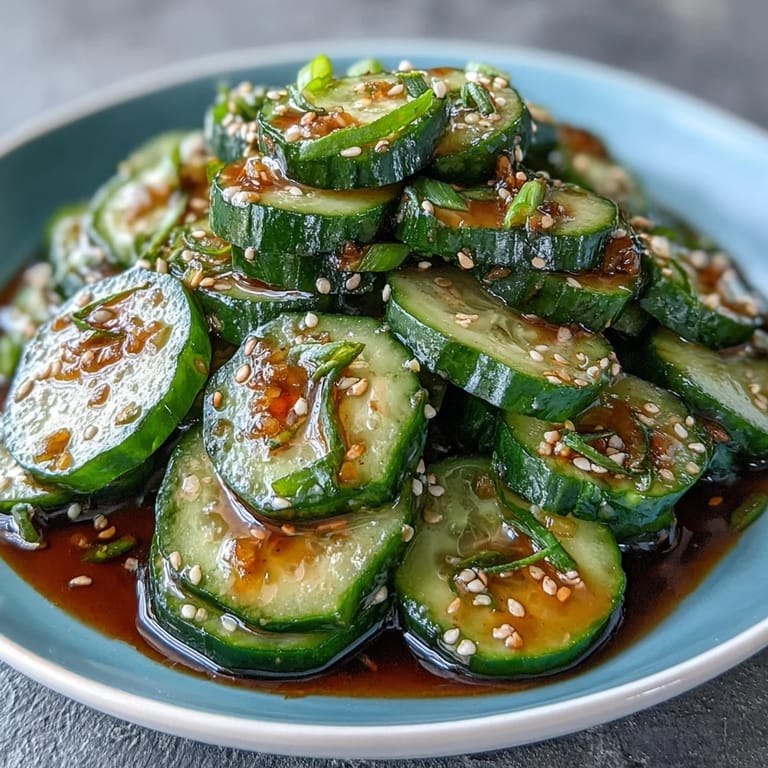
- Pour that dressing over the vegetables and toss with enough motion to coat everything without crushing the cucumbers. You want each piece glossy and bathed in flavor.
- Finish and serve:
- Transfer to your serving dish and scatter the toasted sesame seeds and fresh cilantro across the top. Serve right away for maximum crunch, or chill it for 10 to 15 minutes if you prefer everything a little softer and more marinated.
 Save to Pinterest
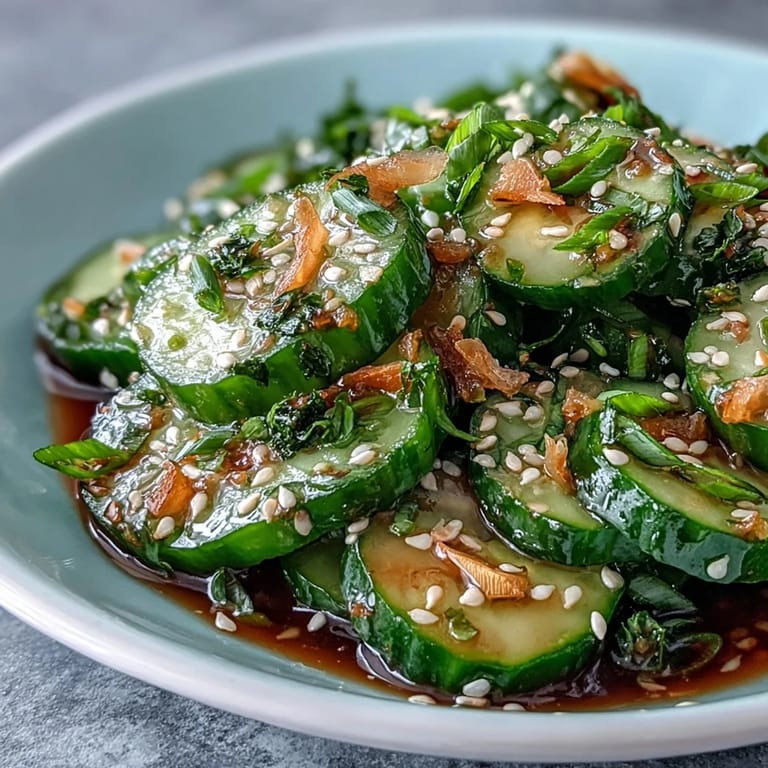
 My mother-in-law once made this for Christmas dinner as a palate cleanser between courses, and I realized then that a salad this simple could shift the entire rhythm of a meal. It wasn't trying to be fancy, but somehow it was the thing everyone remembered asking for seconds of.
When to Serve This
This salad lives in that perfect overlap between appetizer and side dish—light enough to start a meal without filling you up, substantial enough to stand beside grilled fish or roasted chicken without feeling like an afterthought. I often make it for potlucks because it travels well and tastes even better the next day once everything has marinated together. It also pairs beautifully with rice bowls if you want to build something heartier around it.
Flavor Variations to Explore
The beauty of this recipe is how forgiving it is with substitutions and additions. Swap the cilantro for fresh mint and suddenly it tastes more Thai, or use basil if you're leaning Vietnamese. Add thin slices of radish for more peppery crunch, or toss in thinly sliced bell pepper for sweetness and color. Even the chili can be adjusted based on your mood—go gentle with a pinch of flakes, or slice a fresh red chili if you want heat that lingers.
The Dressing Goes Further Than You Think
I've learned to always make extra dressing because it's brilliant on so many things beyond cucumber salad. Drizzle it over warm roasted vegetables, use it as a marinade for tofu before pan-frying, or spoon it over cold noodles for an impromptu lunch. The soy-sesame combination is like a flavor multiplier that makes whatever it touches taste intentional and considered.
- Store leftover dressing in a glass jar in the fridge for up to a week, and shake it well before each use.
- If the dressing thickens when chilled, warm it slightly or whisk in a teaspoon of water to loosen it back up.
- Double the dressing recipe if you're meal prepping—you'll find uses for it faster than you'd expect.
 Save to Pinterest
 This is the kind of recipe that proves how much can be done with restraint and fresh ingredients. Serve it when you want people to taste summer.
Recipe Questions
- → How do I keep cucumbers from becoming soggy?
Sprinkle sliced cucumbers with salt and let them sit for 5-10 minutes to draw out excess moisture, then pat dry before mixing.
- → Can I adjust the spiciness of the salad?
Yes, add chili flakes or fresh sliced chili to taste, or omit them entirely for a milder flavor.
- → What can I substitute for soy sauce for gluten-free options?
Use tamari, a gluten-free soy sauce alternative, to maintain the umami flavor without gluten.
- → What herbs work well as a garnish besides cilantro?
Fresh mint or basil can be great alternatives, offering different herbal notes to the dish.
- → Can additional vegetables be added for variety?
Thinly sliced radishes or bell peppers add extra crunch and color, complementing the cucumber base nicely.