 Save to Pinterest
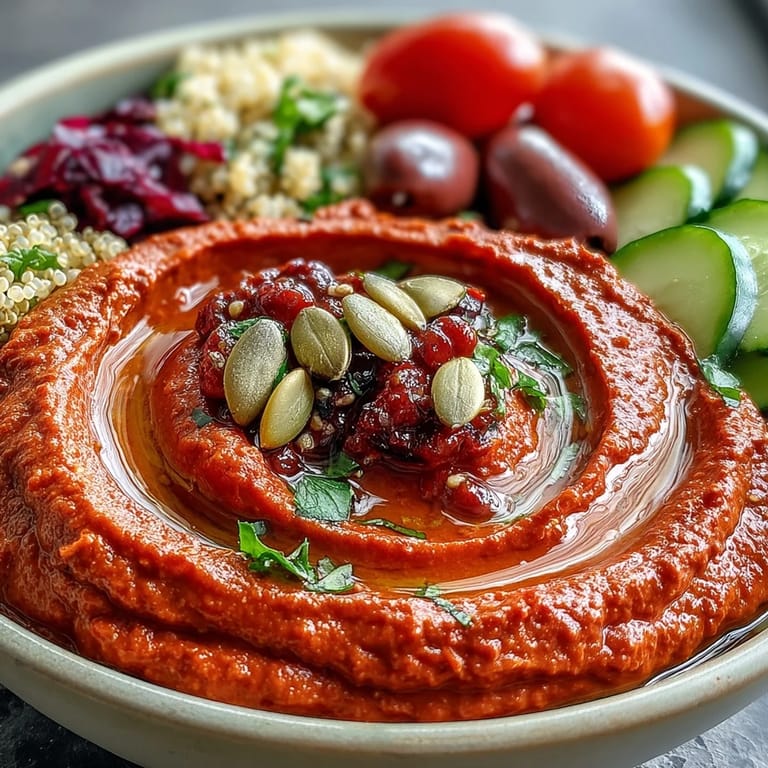
 There's something about assembling a bowl that feels less like cooking and more like creating—a blank canvas where every vegetable gets to shine. I discovered the magic of roasted red pepper hummus on a lazy Sunday afternoon when I was determined to use up some charred peppers from my farmers market haul, and what started as an experiment became the centerpiece of every lunch I've packed since. The hummus is silky, slightly smoky, and tastes nothing like the tired beige version people assume hummus must be. What makes these bowls truly special isn't just the hummus though; it's how every element—the crisp vegetables, the nutty grains, the creamy avocado—comes together to make you feel nourished without any fuss.
I made these bowls for my sister's first week of her new job, and she texted me later saying she'd eaten the same lunch four days straight because she couldn't stop thinking about it. Watching someone genuinely excited about vegetables and grains reminded me that plant-based eating doesn't have to be complicated or taste like sacrifice—it just needs good ingredients treated with a little care. She's now the one making them for her coworkers, which somehow feels like the highest compliment.
Ingredients
- Chickpeas (1 can, drained and rinsed): These are the protein foundation of your hummus, and rinsing them well removes that starchy liquid that can make everything taste slightly off.
- Roasted red bell pepper (1 large, prepped): If you can roast your own by charring it over a flame and letting it steam in a plastic bag, the flavor deepens beautifully, but store-bought jarred peppers save serious time.
- Tahini (2 tablespoons): This sesame paste is what creates that luxurious, creamy texture—don't skip it, and give it a stir before measuring since the oil can separate.
- Fresh lemon juice (2 tablespoons for hummus, plus extra for dressing): Bottled juice works, but fresh makes a noticeable difference in brightness and prevents the hummus from tasting flat.
- Garlic (1 clove, minced): A single clove is plenty since garlic flavor intensifies as the hummus sits, and you can always add more.
- Extra virgin olive oil (2 tablespoons): This adds richness and body to the hummus, so choose one you actually enjoy tasting.
- Ground cumin and smoked paprika (1/2 teaspoon each): These warm spices tie everything together and give the hummus its distinctive depth.
- Cooked quinoa, brown rice, or millet (1 cup total): Pick whichever grain makes you happy—quinoa is my default because it's fluffy and holds up well to moisture from the vegetables.
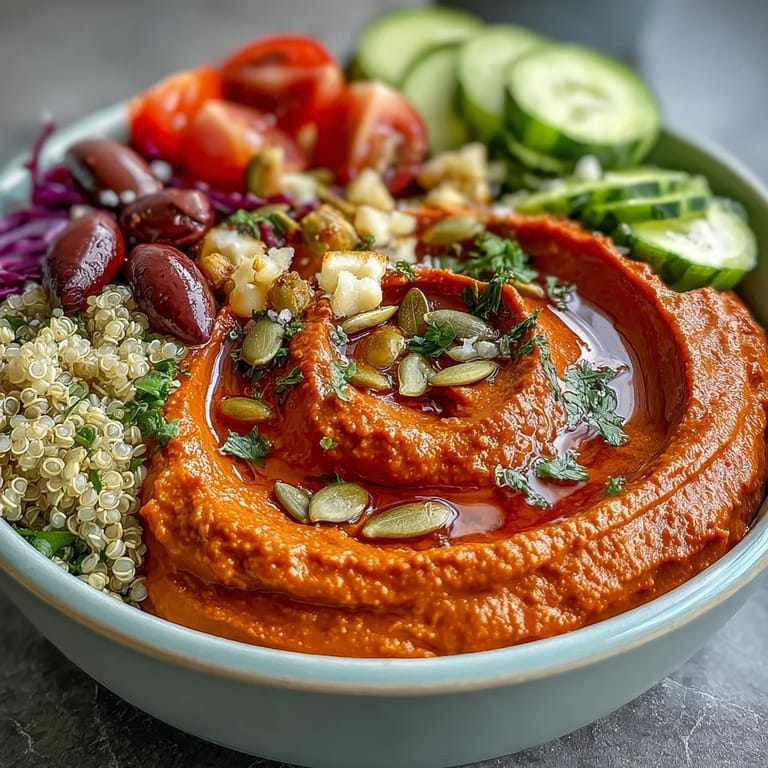
- Cherry tomatoes, cucumber, shredded cabbage, baby spinach, avocado, carrots, kalamata olives, and pumpkin seeds: These are your chance to play with color and crunch; buy what looks best at your market and don't stress about exact quantities.
- Fresh parsley or cilantro: The final garnish that makes everything look intentional and tastes bright against the creamy hummus.
Tired of Takeout? 🥡
Get 10 meals you can make faster than delivery arrives. Seriously.
One email. No spam. Unsubscribe anytime.
Instructions
- Blend Your Hummus Base:
- Add your chickpeas, roasted red pepper, tahini, lemon juice, minced garlic, olive oil, cumin, smoked paprika, and salt to a food processor and pulse everything together for about a minute. You want it smooth but not yet at that perfect creamy consistency.
- Reach Peak Creaminess:
- Pour in cold water one tablespoon at a time while blending, tasting as you go—the hummus should feel luxurious on your tongue, not stiff or overly thick. Stop when it's exactly how you want it, then adjust salt and spices if needed.
- Cook or Warm Your Grains:
- If you haven't already, prepare your quinoa or grain of choice according to package directions and let it cool slightly so it's pleasant to eat rather than steaming hot. I like to give it a light fluff with a fork while it's still warm.
- Arrange Your Vegetables:
- Lay out all your raw vegetables on a clean cutting board and prep them into bite-sized pieces—halved cherry tomatoes, diced cucumber, shredded cabbage, and thin avocado slices. This takes a few minutes but makes assembly feel smooth and meditative.
- Build Each Bowl:
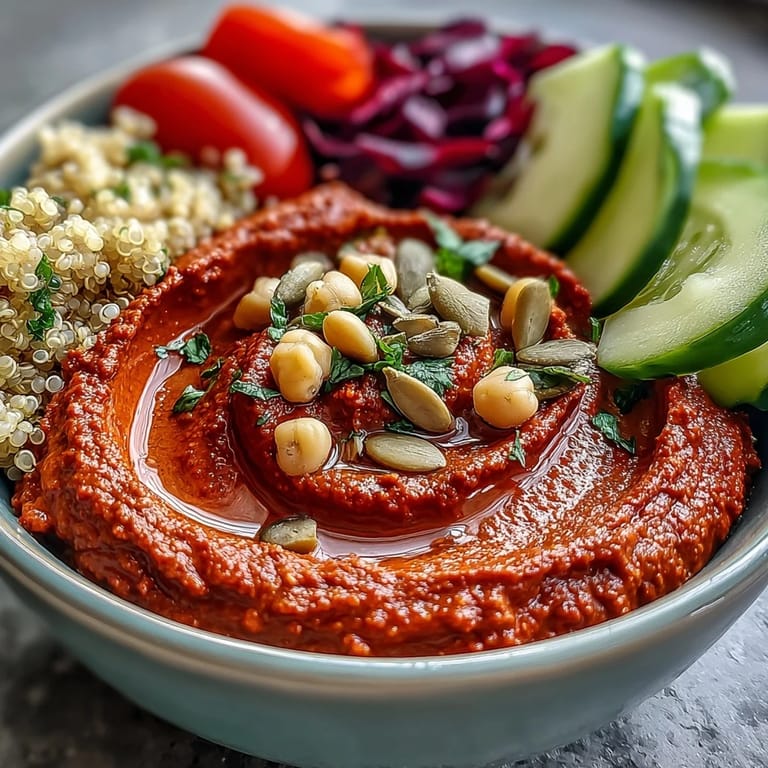
- Start with a base of cooled grain in the center of each bowl, then arrange your vegetables around it in whatever pattern appeals to you—there's no wrong way, but organized sections look prettier than a jumble. Spoon a generous dollop of hummus into each bowl and scatter toasted pumpkin seeds and sliced olives over the top.
- Dress and Garnish:
- Whisk together lemon juice, olive oil, salt, and pepper to make a simple dressing, then drizzle it lightly across each bowl. Finish with a handful of fresh herbs and serve immediately while everything is still crisp and the avocado hasn't had time to brown.
 Save to Pinterest
 What struck me most about these bowls was realizing how satisfying plant-based eating becomes when you stop thinking of it as restriction and start thinking of it as abundance. Every element earns its place—the hummus isn't trying to be something it's not, the vegetables taste like themselves, and somehow together they become greater than the sum of their parts.
Why This Bowl Became My Go-To Lunch
There's a practical magic to these bowls that extends beyond just taste. Once you've prepped the hummus, you can assemble four complete, gorgeous meals in under ten minutes, which means you're actually more likely to make them instead of defaulting to something quick but uninspiring. The fact that they taste equally good the next day (if you pack the hummus separately and add avocado right before eating) means lunch planning suddenly feels possible instead of like a burden. I've also discovered that making these bowls together is somehow a good conversation starter—people get curious about what's in them and before you know it, you're chatting with someone about grains and vegetables in a way you wouldn't expect.
Customizing Your Bowls Without Losing the Magic
The beauty of a Buddha bowl is that it's genuinely flexible without becoming a blank slate that lacks personality. If you love spice, add a pinch of cayenne or hot sauce to the hummus, or layer in some pickled onions for tang. If you're feeding someone who needs extra protein, roasted chickpeas tossed in paprika and oil are a five-minute addition, or crumbled tofu works beautifully too. I've made these with farro instead of quinoa, swapped purple cabbage for shredded beets, and even added roasted sweet potato when I had it on hand—the hummus is always the constant that ties everything together and keeps the bowl feeling cohesive.
Storing and Prepping Ahead
The hummus keeps beautifully in the refrigerator for five days in a covered container, and honestly, it tastes even better on day two once the flavors have had time to settle and deepen slightly. You can prep all your vegetables the morning of and store them in separate containers, though I find it's worth slicing the avocado fresh right before eating to keep it from browning and releasing its water into the bowl. If you're meal-prepping multiple bowls at once, assemble the base and vegetables, then keep the hummus, avocado, and dressing separate until you're ready to eat, and everything stays fresh and crisp the way it should be.
- Hummus lasts up to five days refrigerated in a covered container, and you can freeze it for up to three months if you want to get ahead.
- Pre-cooked frozen quinoa from the grocery store is a genuine time-saver on busy mornings and tastes just as good as homemade.
- Pack the hummus and dressing in small containers to pour or spread right before eating, so your grain base doesn't get soggy.
 Save to Pinterest
 These bowls taught me that nourishing food doesn't need to be complicated, and that eating well can feel like abundance rather than obligation. Make them, tweak them, share them with someone you care about, and watch how a simple bowl becomes something people genuinely look forward to eating.
Recipe Questions
- → How do I roast the red bell pepper properly?
To roast a red bell pepper, place it directly on a gas flame or under a broiler until the skin is charred and blistered. Then, place it in a bowl covered with plastic wrap to steam for 10 minutes. Peel off the skin before chopping.
- → Can I substitute quinoa with other grains?
Yes, cooked brown rice, millet, or any gluten-free grain can be used as a base to suit your preferences or dietary needs.
- → What’s the best way to achieve creamy hummus texture?
Blend the chickpeas and roasted red pepper with tahini, lemon juice, garlic, olive oil, and spices in a food processor, adding cold water slowly until smooth and creamy.
- → Are there any suitable garnishes to enhance flavor?
Fresh parsley or cilantro provides a bright herbal note, while toasted pumpkin seeds add a satisfying crunch and nutty flavor.
- → Can this bowl be prepared ahead of time?
Yes, you can prepare the hummus and chop vegetables ahead. Assemble the bowl just before serving to keep fresh textures.