 Save to Pinterest
 My first real encounter with a proper Turkish meze platter wasn't in a restaurant—it was on a friend's kitchen counter during a lazy Sunday afternoon, and I remember standing there mesmerized by the sheer abundance of textures and colors. There were creamy spreads catching the light, glossy olives, cubes of cheese that seemed to glow against the ceramic bowl, and the smell of olive oil and oregano hanging in the air like an invitation. She made it look effortless, and when I asked if it was complicated, she laughed and said the beauty of a meze platter is that it doesn't pretend to be anything other than what it is—a celebration of simple, quality ingredients arranged with care.
I brought a meze platter to a potluck once where everyone had made the same expected casseroles and salads, and watching people's faces light up when they saw it felt like I'd uncovered something they didn't know they were hungry for. It became the centerpiece everyone gravitated toward, and I realized that sometimes the most impressive thing you can do is simply honor good ingredients by letting them shine. There's something about arranging different textures and flavors on one board that makes people slow down and actually taste things instead of just eating.
Ingredients
- Chickpeas (1 can, drained and rinsed): The foundation of smooth, creamy hummus—rinsing them thoroughly removes the starchy liquid that can make it grainy.
- Tahini (2 tbsp): This sesame paste is what gives hummus its signature nutty depth; quality matters here because it's a starring ingredient.
- Extra-virgin olive oil (3 tbsp total): Use the good stuff you actually enjoy tasting, not the bottle hidden in the back of your pantry.
- Fresh lemon juice (2 tbsp): Bottled juice will work if you're in a hurry, but fresh lemon brings a brightness that transforms the whole thing.
- Garlic (1 small clove, minced): One clove is usually enough unless you're the type who loves garlic with everything—I learned this the hard way.
- Ground cumin (1/2 tsp): Just a whisper of this spice adds warmth without overwhelming the delicate hummus.
- Feta cheese (100 g, cubed): Choose creamy feta over the crumbly kind if you can; it looks better on the platter and tastes richer.
- Beyaz peynir or extra feta (100 g): This mild white cheese is soft and slightly salty, a perfect contrast to the earthier elements.
- Kasseri or halloumi (100 g, sliced): The denser cheese that holds its shape and provides a different mouthfeel.
- Mixed Turkish olives (100 g, pitted if possible): Buy them from a good source if you can; mass-market olives sometimes taste like the brine they're sitting in.
- Dried oregano (1/2 tsp): Toast it slightly in your mind as you sprinkle it over the olives to wake up the flavor.
- Fresh parsley (2 tbsp, chopped): The final flourish that makes everything look intentional and alive.
- Cucumber and tomato, sliced fresh: These add crunch and color, but choose ripe, flavorful ones or they'll feel like an afterthought.
- Lemon wedges and warm pita: The lemon awakens everything; the pita is your edible utensil and canvas for every element.
Tired of Takeout? 🥡
Get 10 meals you can make faster than delivery arrives. Seriously.
One email. No spam. Unsubscribe anytime.
Instructions
- Make the hummus smooth and tasted:
- Pulse the drained chickpeas in your food processor with the tahini, garlic, and cumin first, then slowly drizzle in the lemon juice and olive oil while it blends. Stop occasionally to taste and adjust seasoning because this is the one component where your preference truly matters.
- Give it the finishing touch:
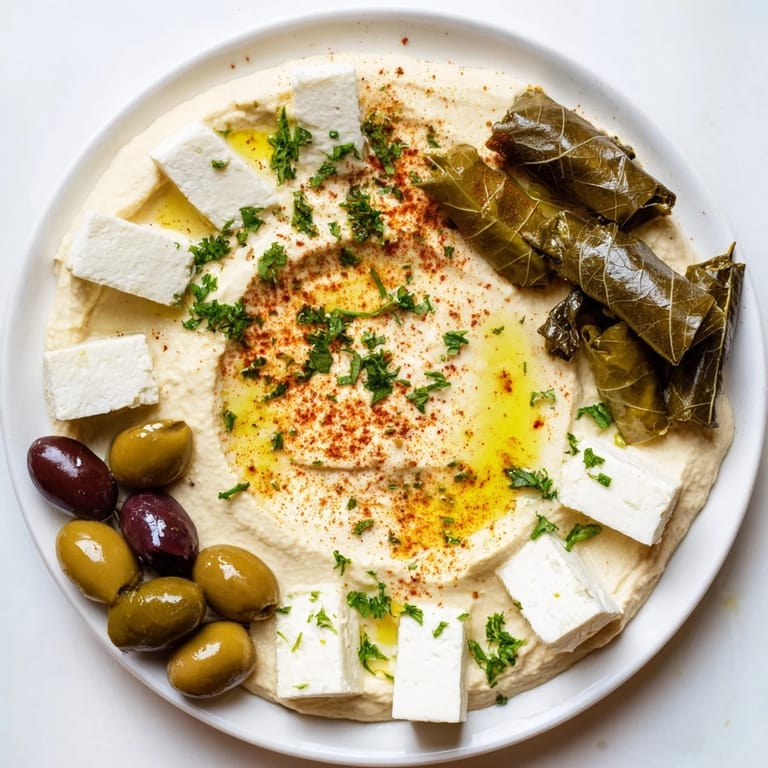
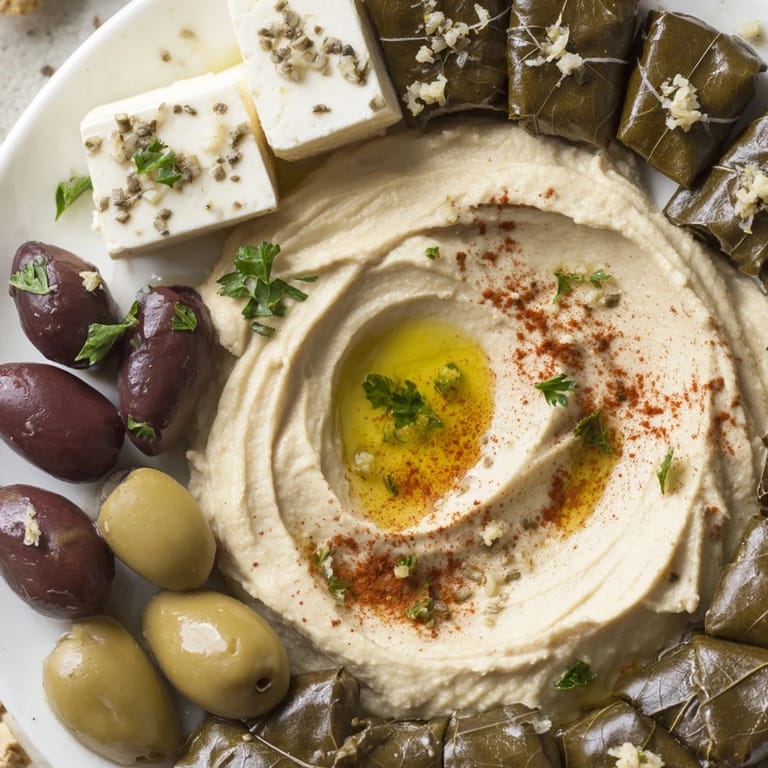
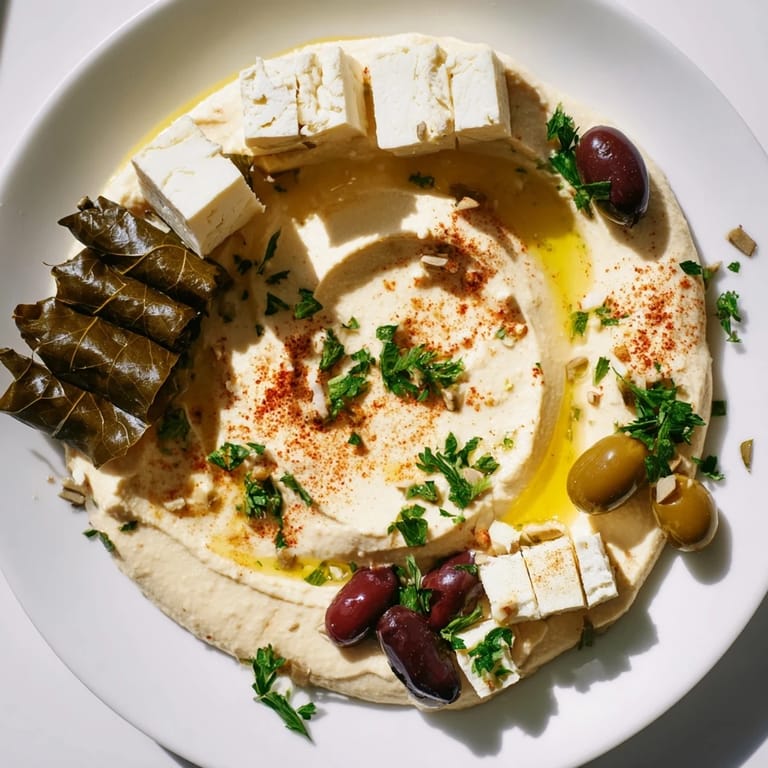
- Transfer your hummus to a shallow serving bowl and create a small well in the center with the back of a spoon, then drizzle with a bit more olive oil. A sprinkle of paprika or sumac in that well makes it look like you've done something fancy.
- Arrange the grape leaves with intention:
- If you're using store-bought dolmas, place them seam-side down so they look neat and composed. Space them so each one is visible rather than crowded.
- Cut your cheeses into inviting pieces:
- Aim for cubes that fit comfortably on pita or in your mouth, not too large and not crumbly. Group different cheeses together so people can taste the contrasts.
- Wake up your olives with oil and herbs:
- Toss the olives in a small bowl with olive oil and oregano just before serving so they glisten and smell incredible. You can scatter them directly on the platter or keep them in a small bowl for less mess.
- Layer your platter with color and balance:
- Start with the hummus as an anchor, then arrange everything else around it so no two similar textures sit directly next to each other. The goal is visual rhythm—color, then texture, then color again.
- Serve warm and unhurried:
- Warm your pita just before people arrive so it's soft and flexible, and arrange lemon wedges where they'll actually get used rather than ignored.
 Save to Pinterest
 There's a particular quiet moment that happens when a meze platter is first set down at a table—everyone pauses, and you can see them mentally deciding where to start. That hesitation means you've done something right. It's not just food; it's an offering, a way of saying you're worth slowing down for.
Why Turkish Meze Is Pure Hospitality
Turkish cuisine has always understood something that other food traditions sometimes miss: the most meaningful meals are the ones where everyone grazes together, where there's no hierarchy of main course and sides, and where conversation matters as much as eating. A meze platter embodies this philosophy perfectly. It's an invitation to take your time, to try a little of everything, to share without ceremony. I've noticed that when you serve food this way, people actually talk more because they're not focused on finishing their plates.
Building Your Own Platter Philosophy
Once you've made this basic Turkish meze platter, you'll start seeing it as a template rather than a rigid recipe. Some days I add roasted red peppers because they're sweet and jammy against the salty cheese. Other times I'll include grilled eggplant that's been drizzled with lemon and garlic. The foundation stays the same—good hummus, good cheese, good olives—but the variations are endless. This flexibility is part of what makes a meze platter so satisfying to make; you're not following someone else's vision, you're creating your own.
The Details That Make the Difference
I've learned that the quality of your cheese matters more than the quantity, and your olive oil should be something you'd actually want to taste on its own. Don't assume you need fancy equipment or special ingredients—this platter thrives on simplicity and care rather than complexity. Small touches like toasting your oregano briefly in your palm before crumbling it, or choosing olives from a real olive bar instead of a vacuum-sealed package, are the moments where you're cooking with intention.
- Taste your hummus before it hits the platter and adjust the lemon juice or salt so it sings on its own.
- Keep a damp towel nearby while assembling so your hands stay clean and you're not smudging the presentation.
- Always have a small bowl of extra olive oil on the side because people will want to drizzle more on everything.
 Save to Pinterest
 A meze platter is less about following a recipe perfectly and more about understanding the spirit of what it represents: abundance, warmth, and the belief that good food shared with others is one of life's truest pleasures. Once you've made it once, you'll find yourself making it again and again.
Recipe Questions
- → What is the best way to serve the meze platter?
Arrange the hummus, dolmas, cheeses, and olives neatly on a platter with fresh cucumber, tomato, lemon wedges, and parsley, served alongside warm pita or flatbread.
- → Can I make the dolmas from scratch?
Yes, cook rice with herbs and spices, then stuff grape leaves before steaming. This adds freshness but requires extra time.
- → How can I enhance the hummus flavor?
Blend chickpeas with tahini, garlic, lemon juice, olive oil, and spices like cumin, then drizzle with olive oil or sprinkle sumac for extra depth.
- → Are there suitable pairing options for this platter?
This platter pairs well with crisp white wines such as Turkish Narince or traditional drinks like raki for an authentic experience.
- → What variations can be added to the platter?
Consider adding roasted red peppers, grilled eggplant, or spiced walnuts to diversify the flavors and textures.