 Save to Pinterest
 I discovered these crispy rice bites on a late Friday night when my sushi craving hit but the good places were closed. Instead of ordering takeout, I raided my pantry and found sushi rice, some decent tuna, and sriracha—and honestly, what came out of the pan was better than anything I could've ordered. The way the rice crackles when you bite into it, followed by that creamy spicy tuna mixture, felt like a revelation. Now they're my go-to move when friends drop by unexpectedly and I want something that looks impressive but doesn't require much fuss.
I made these for a small dinner party once, and my friend Sarah sat by the stove waiting for each batch to finish, stealing them straight off the paper towels before they even cooled down. That's when I realized these aren't just appetizers—they're the kind of food that makes people linger in your kitchen, asking for more, and somehow starting conversations you didn't expect to have.
Ingredients
- Sushi rice: The foundation of everything here; rinsing it removes excess starch so it stays tender rather than gummy, and seasoning it with vinegar gives you that signature sushi flavor without any fuss.
- Rice vinegar, sugar, and salt: This trio transforms plain rice into something with backbone and character—don't skip the microwave step, it dissolves the sugar properly.
- Sushi-grade tuna: Non-negotiable for safety and because regular tuna won't give you that silky, delicate texture that makes these special.
- Kewpie mayonnaise: It's richer and slightly sweeter than regular mayo, which matters when you're building layers of flavor in something this small.
- Sriracha: The heat that ties everything together without overwhelming the delicate fish.
- Sesame oil and toasted sesame seeds: These add a nutty depth that prevents the whole thing from tasting one-dimensional.
- Vegetable oil for frying: Use something neutral that won't compete with the other flavors, and keep it at the right temperature or the rice absorbs oil instead of crisping up.
- Avocado: The cooling, creamy element that balances the heat and adds a visual contrast that makes people want to eat them even more.
Tired of Takeout? 🥡
Get 10 meals you can make faster than delivery arrives. Seriously.
One email. No spam. Unsubscribe anytime.
Instructions
- Prepare and season the rice:
- Rinse sushi rice under cold water until the water runs clear, which removes starch and prevents mushiness. Cook it with water following a 1:1.25 ratio, then gently fold in the vinegar mixture after it cools—rough handling will turn it into mush.
- Press and chill the rice:
- Pack the rice firmly into an 8x8-inch pan lined with plastic wrap, then refrigerate for at least an hour or ideally overnight. This step is what gives you that structural integrity when frying, so don't skip it.
- Build the spicy tuna:
- Dice your tuna fine and combine it gently with mayo, sriracha, soy sauce, sesame oil, and green onion—overworking it will make the fish mushy and destroy the delicate texture. Taste as you go; some sriracha brands are hotter than others.
- Cut and fry the rice:
- Cut your chilled rice into 16 neat squares and fry them in batches in oil that's at medium-high heat until they're golden on both sides. Work in batches so you don't overcrowd the pan and drop the temperature, which prevents proper crisping.
- Assemble and serve:
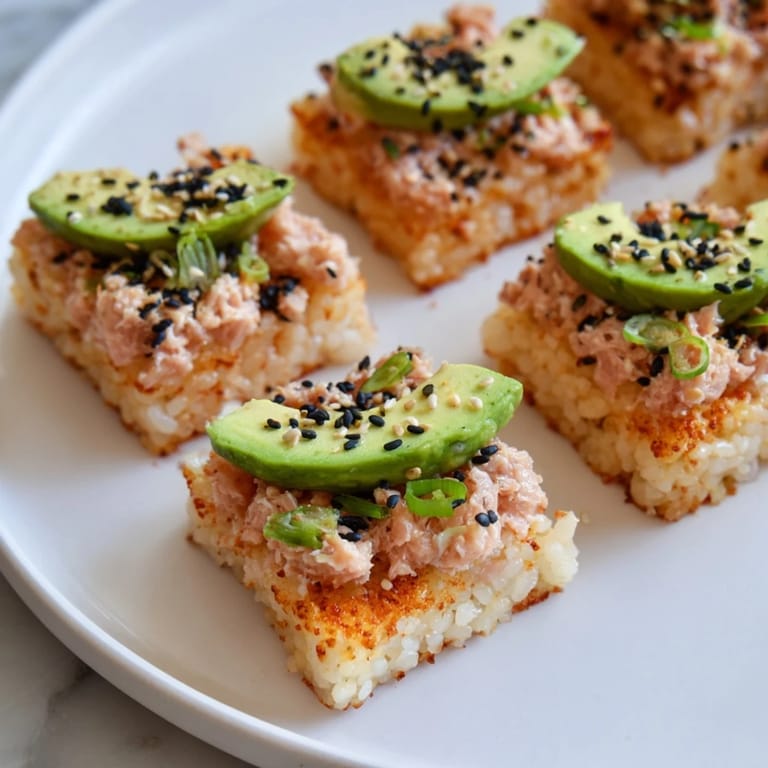
- Top each warm crispy square with a generous spoonful of spicy tuna, a piece of avocado, and a sprinkle of sesame seeds and green onion. Serve immediately while the contrast between warm crispy rice and cool toppings is still there.
 Save to Pinterest
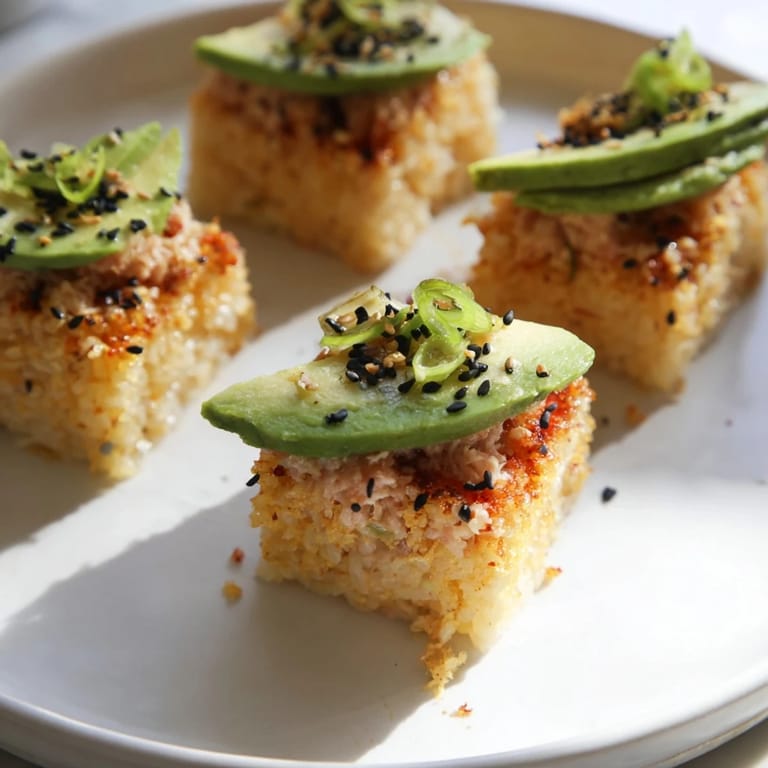
 There's a moment when these come together that feels almost magical—the moment you bite into that perfect contrast of the warm crispy rice shattering, the cool creamy tuna mixture, the cold avocado all hitting at once. It stopped being just a recipe for me and became the thing I make when I want to remind myself that good food doesn't have to be complicated to be memorable.
The Science of Crispy
The magic happens in two places: first when you chill the rice, which allows the starches to set and hold structure, and second in the pan when the oil temperature is just right. Too cold and you're poaching rice in oil; too hot and you're charring the outside before heating the inside through. I learned this by trial and error, burning several batches before understanding that medium-high isn't a suggestion—it's the actual sweet spot. The deeper reason is that you want the water in the rice to evaporate and the exterior to crisp while the interior stays warm but not dry, and that balance only happens in a narrow temperature range.
Why Sriracha and Sesame Matter Here
This recipe could have been one-note without the sesame oil and sesame seeds adding that toasty undertone, and without the sriracha providing both heat and tang. The sriracha isn't just about spice—it adds vinegary depth that echoes the seasoned rice underneath. Sesame brings an almost subtle sweetness that ties everything together and makes people try to guess what makes them taste so good. When all three elements hit your palate at once, there's this moment where the flavors feel complete rather than scattered.
Variations and Swaps That Actually Work
I've made these with salmon, crab, and even thin slices of seared yellowtail, and they all work beautifully as long as you respect the ratio of protein to creamy binder. Some friends prefer swapping half the sriracha for a touch of wasabi paste if they want more bite. The avocado is flexible too—some nights I use thin mango slices instead when I want something brighter, and one memorable evening my friend brought gorgeous cucumber slices that added a refreshing crunch I didn't expect to love. You can even top with a tiny quail egg yolk for richness, or swap sesame seeds for furikake if you want more umami and color.
- Cold rice chilled overnight fries crispier than rice chilled just one hour.
- Sashimi-grade or sushi-grade tuna are the same thing—ask your fishmonger to cut it fresh the day you're making this.
- Make the spicy tuna mixture last so it doesn't sit around getting watery.
 Save to Pinterest
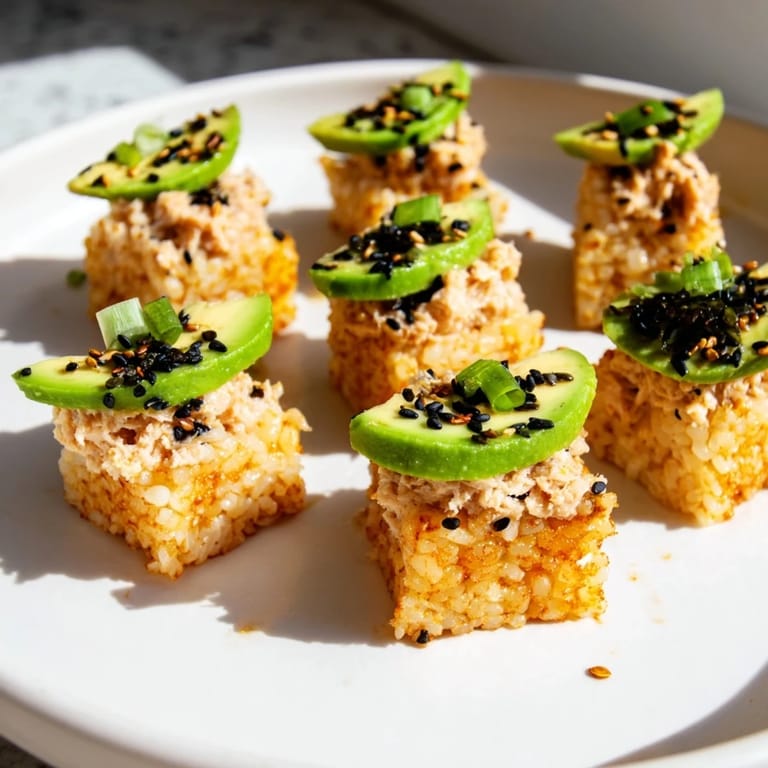
 These bites have somehow become the thing people ask me to bring to gatherings, the thing that makes my kitchen smell incredible, and honestly the reason I keep sushi rice and good tuna in my fridge at all times. They remind me that the simplest idea, executed with attention to temperature and texture, can become something unforgettable.
Recipe Questions
- → What type of rice is best for crispy rice bites?
Sushi rice is ideal due to its sticky texture that helps the rice squares hold together when fried.
- → How do I get the rice crispy without it falling apart?
Press the cooked rice firmly into a pan and chill it for at least an hour before frying to ensure it crisps well and stays intact.
- → Can I substitute the tuna with another protein?
Yes, chopped salmon or cooked crab can be excellent alternatives, offering different flavors while maintaining the dish’s character.
- → What gives the spicy tuna its heat?
Sriracha provides the spice, while sesame oil and soy sauce add depth and balance to the mixture.
- → How should the spicy tuna mixture be prepared?
Finely dice sushi-grade tuna and gently mix with mayonnaise, Sriracha, soy sauce, sesame oil, green onion, and toasted sesame seeds for a creamy, flavorful topping.
- → What garnishes complement the spicy tuna crispy rice?
Slices of avocado, black sesame seeds, and thinly sliced green onion add freshness and texture to each bite.