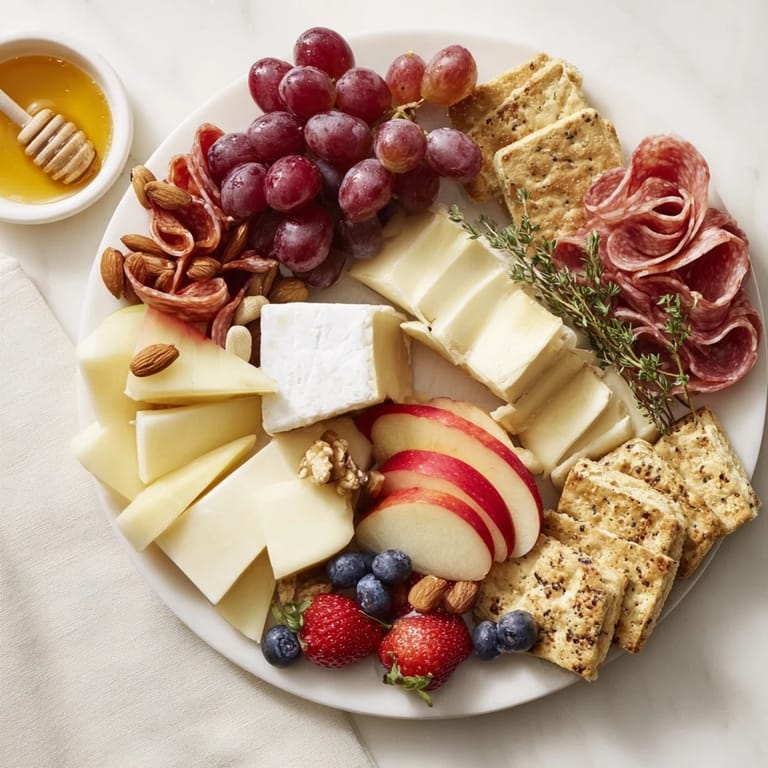
 Save to Pinterest
 There's something magical about throwing together a charcuterie board without overthinking it—no recipes, no stress, just ingredients you actually want to eat. I discovered the joy of this kind of board one lazy Friday when I realized I had an odd collection of cheeses and meats in my fridge that didn't belong in any single dish. Instead of letting them go to waste, I grabbed a wooden board, arranged them with whatever produce was on hand, and suddenly had something that felt fancy enough to serve but easy enough to make while barely dressed. It's become my go-to move whenever I want to look like I've put in effort without actually spending more than ten minutes.
I made this for my friend Sarah when she dropped by unexpectedly one evening, and I watched her face light up when she realized I'd put together something so thoughtful in the time it took her to settle onto the couch. We sat there for hours just grazing, talking about nothing in particular, and that's when I realized this board had become my secret weapon for turning an ordinary night into something that felt intentional and shared. The beauty of it is that it never feels like you're trying too hard, but somehow it always lands.
Ingredients
- Brie cheese: This one melts slightly at room temperature and becomes almost spreadable on crackers, adding a creamy anchor to the board.
- Sharp cheddar cheese: Go for a really sharp one—the bite cuts through the richness and keeps things interesting.
- Goat cheese: The tanginess is a game-changer; it makes everything taste more sophisticated without trying.
- Prosciutto: Paper-thin and salty, it's the graceful way to add meatiness without heaviness.
- Salami: Choose something with good flavor; this is where you don't skimp.
- Seedless grapes: They add sweetness and little bursts of relief between the rich stuff.
- Apple slices: Toss them in a tiny bit of lemon juice so they don't brown, and they'll be your best friend on this board.
- Berries: Fresh and slightly tart, they balance everything beautifully.
- Crackers or baguette slices: This is your vehicle for everything else, so choose ones you actually enjoy eating on their own.
- Mixed nuts: Toast them lightly beforehand if you have the time—it makes a noticeable difference.
- Honey or fig jam: This is the secret that makes people say "wow"—a drizzle of honey next to the goat cheese is almost unfair.
- Olives: Pick ones you love; they're small but they carry a lot of personality.
Tired of Takeout? 🥡
Get 10 meals you can make faster than delivery arrives. Seriously.
One email. No spam. Unsubscribe anytime.
Instructions
- Start with the anchors:
- Place your three cheeses on opposite sides of the board, leaving room to breathe between them. This gives the board structure and lets each cheese be its own moment.
- Fold in the meats:
- Gently fold or roll the prosciutto and salami into loose shapes and tuck them between the cheeses. They should look casual, not military-precise.
- Scatter the fruit:
- Group the grapes, apple slices, and berries in small clusters around the board. This breaks up the heaviness and adds color.
- Fill the spaces:
- Arrange crackers, nuts, and olives in the remaining gaps. Think of it like a puzzle where every piece should look intentional.
- Add the sweet note:
- Pour honey or fig jam into a small bowl and place it on the board. The sight of it will draw people in.
- Finish and serve:
- Tear a few fresh herbs over the top if you're feeling fancy, then step back and admire your work. It should feel abundant but not cluttered.
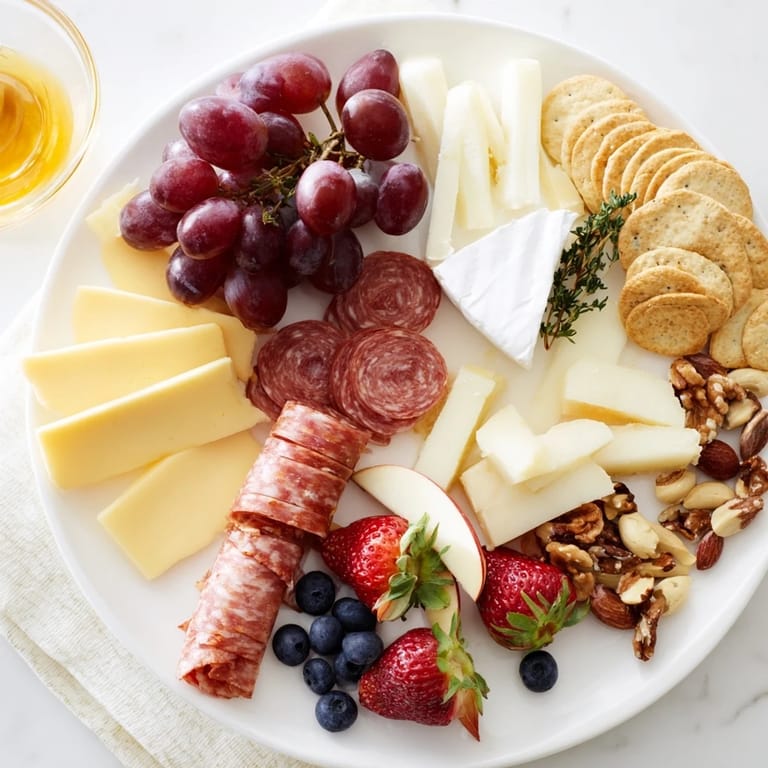 Save to Pinterest
 The first time I really understood the power of this board was when my neighbor came over feeling genuinely stressed about a work situation, and by the end of the evening—after eating our way through the whole thing while talking—everything felt lighter. Food doesn't fix problems, but somehow sharing food changes the way we experience them.
The Art of Balance
A great charcuterie board is really about contrast: creamy against sharp, salty against sweet, firm against soft. Think about how each element plays against the others instead of just throwing things on a board randomly. The goat cheese becomes more interesting next to the salty salami; the apple feels sweeter next to the bitter olives. This isn't complicated, but it's worth thinking about for thirty seconds.
Adaptations That Actually Work
The beauty of this board is that it bends to whatever you have or whatever you're craving. If you're vegetarian, load up on extra cheeses, roasted vegetables, dried fruits, and nuts—you honestly won't miss the meat. Seasonally, swap your fruits around: pears and grapes in fall, fresh berries in summer, dried apricots and figs when fresh fruit feels sparse. Don't think of this as a rigid recipe but as a framework that belongs to you.
Pairing and Serving
A crisp white wine, rosé, or even sparkling water becomes something special when you're sipping it alongside this board. The key is letting people graze at their own pace—there's no rush, no courses, just time and good things to eat. Serve it on a wooden board or large ceramic plate, make sure there's plenty of space so people can actually reach things without playing Jenga, and put out small plates so people don't feel weird about taking bites.
- Set everything up at least 30 minutes before people arrive so nothing is rushed or fussy.
- Keep a small cutting board nearby in case someone wants to cut a bit of cheese while the board is out.
- If you're making this ahead, cover it loosely with plastic wrap and it'll hold for a few hours without looking sad.
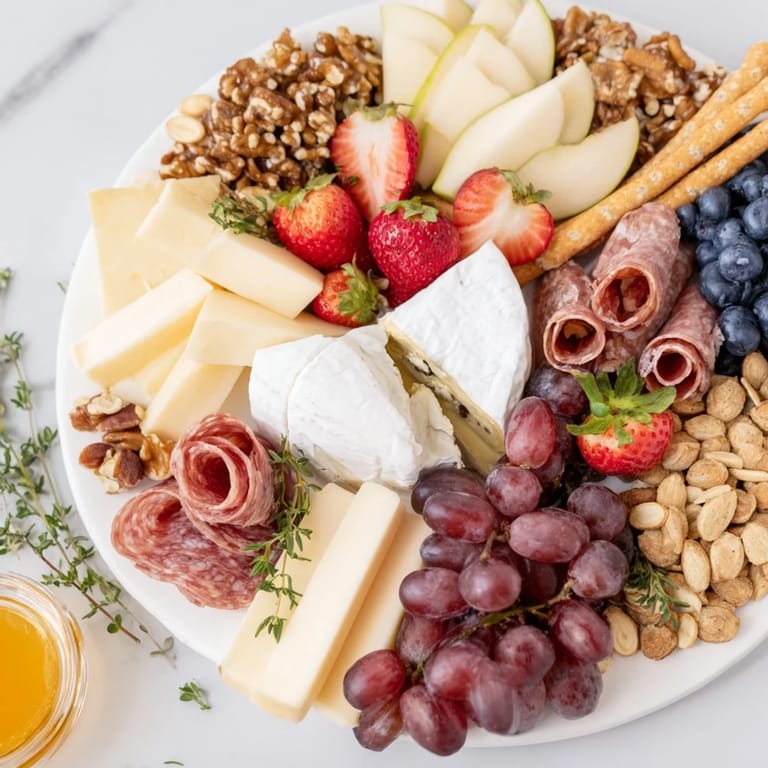 Save to Pinterest
 This board has taught me that sometimes the best meals are the ones that don't feel like meals at all—just an excuse to slow down and be present with someone. It's become my answer to the question I never want to ask out loud: what if I want something good to eat but don't want to cook?
Recipe Questions
- → What cheeses work best on a charcuterie board?
A mix of soft, semi-hard, and aged cheeses like Brie, sharp cheddar, and goat cheese creates a balanced flavor profile and texture contrast.
- → How should cured meats be served for best presentation?
Folding or rolling prosciutto and salami provides an attractive look and makes the meats easy to pick up and enjoy.
- → Which fruits complement the savory elements?
Fresh fruits such as grapes, apple slices, and berries add a sweet, refreshing balance to the rich cheeses and meats.
- → What are good accompaniments to include?
Assorted crackers or baguette slices, mixed nuts, olives, and a touch of honey or fig jam enhance the flavors and add texture.
- → Can this board be adapted for vegetarian diets?
Yes, simply omit cured meats and add marinated vegetables or additional cheese varieties to maintain variety and satisfaction.