 Save to Pinterest
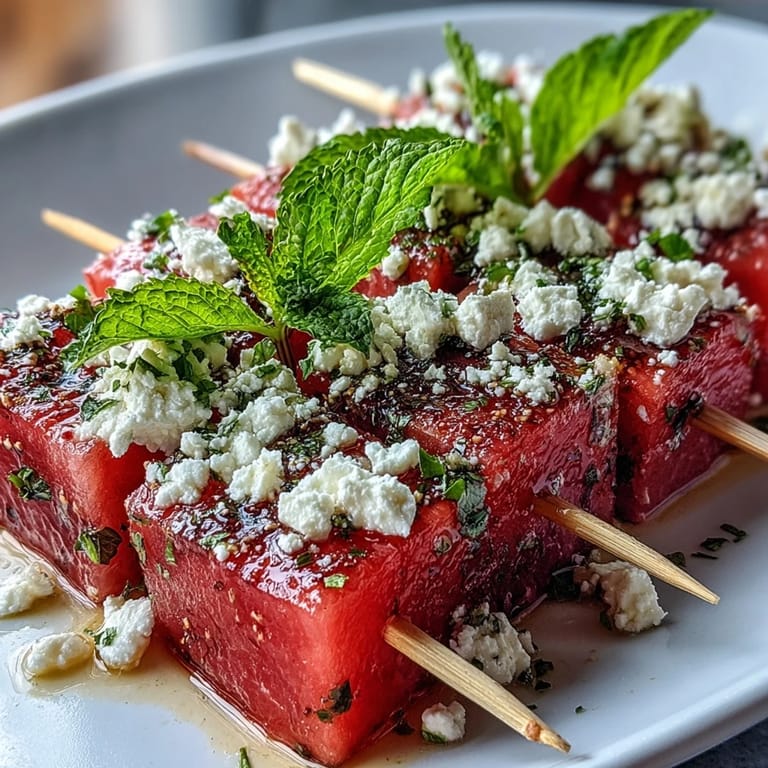
 Last summer, my neighbor brought over a platter of these skewers to a backyard dinner, and I watched them disappear in minutes while barely anyone sat down to eat. The combination caught me off guard—that salty feta against the cool sweetness of watermelon, punctuated by a whisper of mint. I've made them dozens of times since, always slightly amazed at how something so simple becomes the first thing guests reach for.
I remember assembling these one humid afternoon when my friend texted that she was bringing her parents over, and I had about twenty minutes to pull together something that didn't scream panic. These skewers became my secret weapon—impressive enough to feel intentional, casual enough that I could laugh about the watermelon juice that dripped all over my cutting board.
Ingredients
- Seedless watermelon, 4 cups cut into 1-inch cubes: Look for one that feels heavy for its size and has a dull spot on the bottom—that's where it sat ripening. Cut them uniform so they thread smoothly and look deliberately crafted.
- Feta cheese, 8 oz cut into 1-inch cubes: Buy a block and cube it yourself rather than pre-crumbled; the texture holds up better and tastes noticeably fresher and less dusty.
- Fresh mint leaves, 16 plus extra: Tear or bruise them slightly between your fingers as you thread them—this releases the oils and makes the flavor sing.
- Extra-virgin olive oil, 2 tbsp: This is one of those recipes where quality matters; a grassy, peppery oil makes a real difference in the final taste.
- Balsamic glaze, 1 tbsp optional: The slight tang bridges the salty and sweet beautifully, though it's truly optional if you prefer keeping things purely fresh.
- Freshly ground black pepper, to taste: Always grind it fresh right before serving—pre-ground loses its bite and personality.
- Bamboo or cocktail skewers, 16: Soak wooden skewers in water for thirty minutes beforehand so they don't char, even though there's no heat involved here.
Tired of Takeout? 🥡
Get 10 meals you can make faster than delivery arrives. Seriously.
One email. No spam. Unsubscribe anytime.
Instructions
- Prepare your canvas:
- Cut your watermelon and feta into even cubes—this matters more than you'd think for how they look on the platter and how they bite together. Rinse your mint leaves gently and pat them dry so they're not weeping water onto everything.
- Thread with intention:
- Take each skewer and slide on one watermelon cube first, then a single mint leaf (you can fold it slightly), then a feta cube. The order matters slightly because you want feta touching your tongue last for that salty finish.
- Arrange like you mean it:
- Lay them out on your serving platter in a way that feels organic—not rigidly straight, but not chaotic either. This is the moment they transform from ingredients into something that looks like you spent hours on it.
- Dress and serve:
- Right before guests arrive, drizzle the olive oil gently across all of them, add balsamic if you're using it, and give each skewer a grinding of black pepper. Tuck a few extra mint leaves around the platter for color and serve immediately while everything's still cold.
 Save to Pinterest
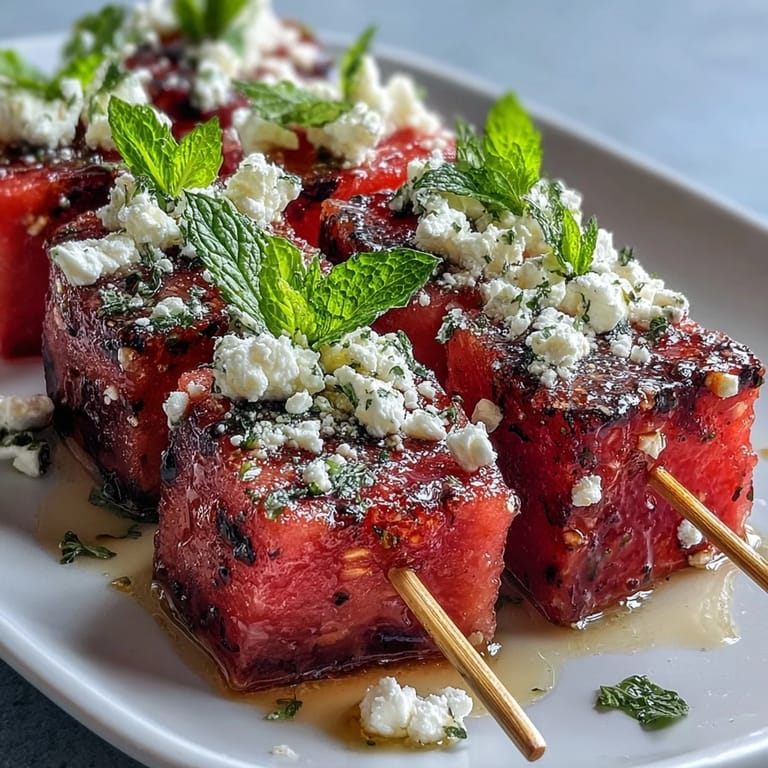
 There's something about offering someone food on a stick that makes them feel cared for in a way a bowl of ingredients never does. My daughter called these her favorite party food, which meant more to me than any compliment about my cooking ever has.
The Secret to Perfect Watermelon
Choose your melon by weight and sound—a ripe watermelon feels heavy in your hands and sounds hollow when you tap it, not dull. Cut into it the day of or the night before, but don't cube it until a few hours before assembly, or you'll end up with a sad, weeping pile instead of crisp, juicy pieces.
Why Feta Works Here
The creaminess of feta against something as watery as watermelon shouldn't work in theory, but it does—the salt in the cheese acts like a flavor amplifier, making both the sweetness and freshness of the other ingredients pop. It's one of those happy accidents in cooking where opposing textures create something greater than the sum of their parts.
Fresh Variations and Storage
Once you master the basic formula, these skewers become a playground for experimentation. I've tested adding cucumber rounds for crunch, swapping basil for mint, even a tiny drizzle of honey if we're serving after dinner instead of before.
- Store assembled skewers in the fridge covered loosely with plastic wrap for up to four hours, though they're truly best within an hour.
- If you're feeding a crowd, prep all your components the morning of and thread them thirty minutes before serving for the freshest taste.
- These don't refrigerate well the next day—the watermelon gets mushy and the whole thing loses its charm, so eat them fresh.
 Save to Pinterest
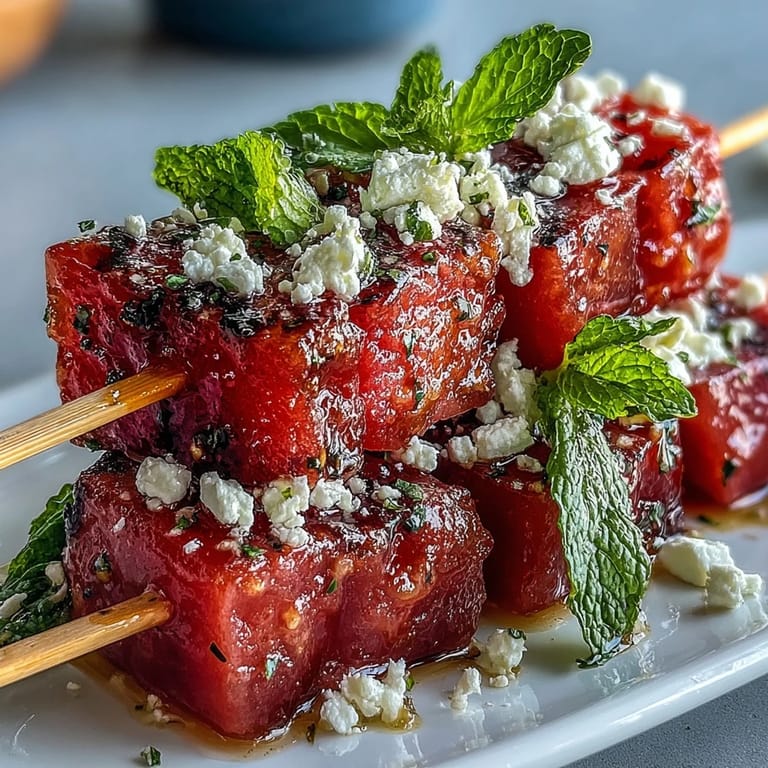
 These skewers have become my answer to every summer gathering invitation—they're foolproof, beautiful, and somehow always the thing people remember to ask about next time. That's the mark of a truly good recipe.
Recipe Questions
- → Can I prepare the skewers ahead of time?
It's best to assemble just before serving to keep the watermelon fresh and prevent skewers from becoming soggy.
- → Are there any suitable substitutions for mint?
Fresh basil can be used as an alternative for a different herbal note while maintaining the fresh flavor.
- → Can I add other seasonings to enhance flavor?
Sprinkling lemon zest or a dash of chili flakes adds a zesty or spicy kick without overpowering the balance.
- → What type of cheese pairs well with watermelon besides feta?
Soft cheeses like mozzarella or halloumi can serve as alternatives, offering mild and creamy textures.
- → How should I serve these skewers?
Arrange them neatly on a serving platter, drizzle with olive oil and balsamic glaze, and garnish with extra mint for freshness.