 Save to Pinterest
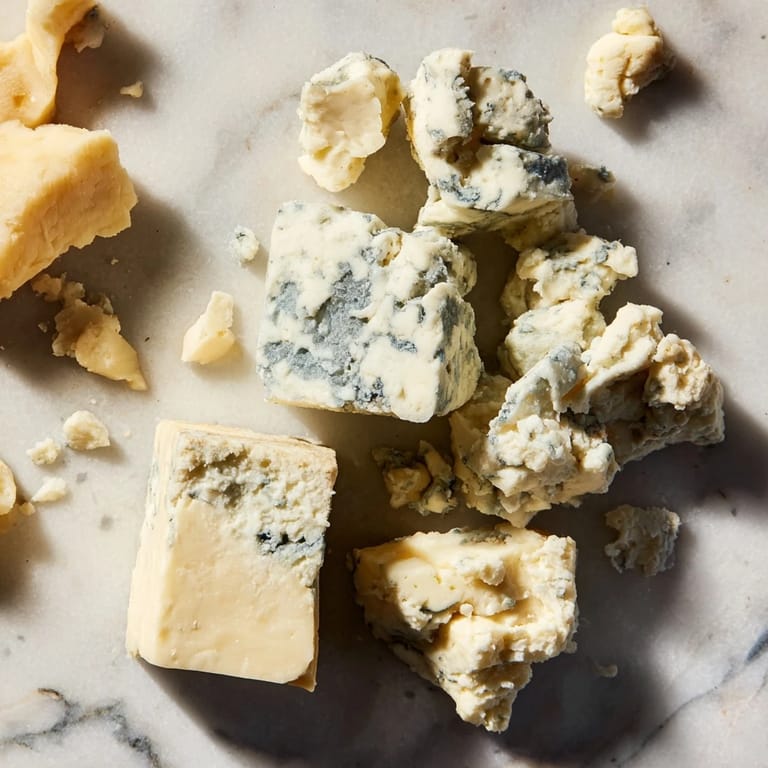
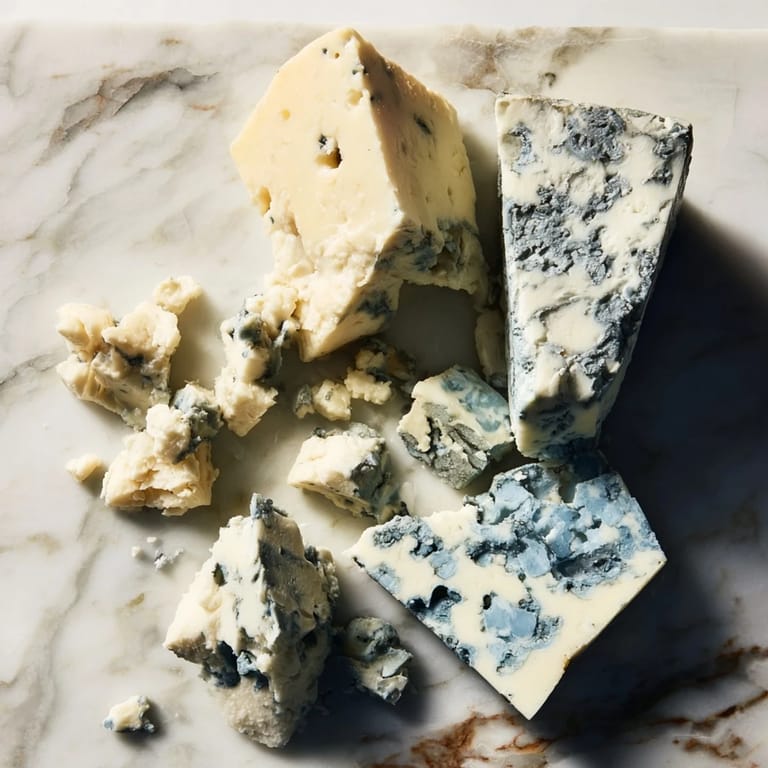
 I discovered The Marble Quarry at a gallery opening where the caterer had abandoned the usual cheese board for something that felt like edible sculpture. The blue cheese and cheddar were stacked like geological formations, and I spent more time studying it than the actual art on the walls. What struck me wasn't just how dramatic it looked, but how the irregular arrangement made you slow down and choose each piece thoughtfully instead of mindlessly grazing. That moment taught me that presentation isn't vanity, it's an invitation to pay attention.
I made this for my sister's book club night when she asked for something that didn't require reheating. Everyone arrived expecting wine and conversation, but instead they got quietly enchanted by the marble slab sitting in the center of the coffee table. No one touched it for the first twenty minutes because it felt too perfect. Once someone finally broke that spell with the first piece, it became this meditative, slow-paced experience where people actually talked instead of just eating and scrolling.
Ingredients
- Blue cheese (200g, Roquefort, Gorgonzola, or Stilton): Choose a blue with bold character but not an overwhelming ammonia smell, which signals it's past its prime. Cut into uneven, chunky pieces so each bite feels different.
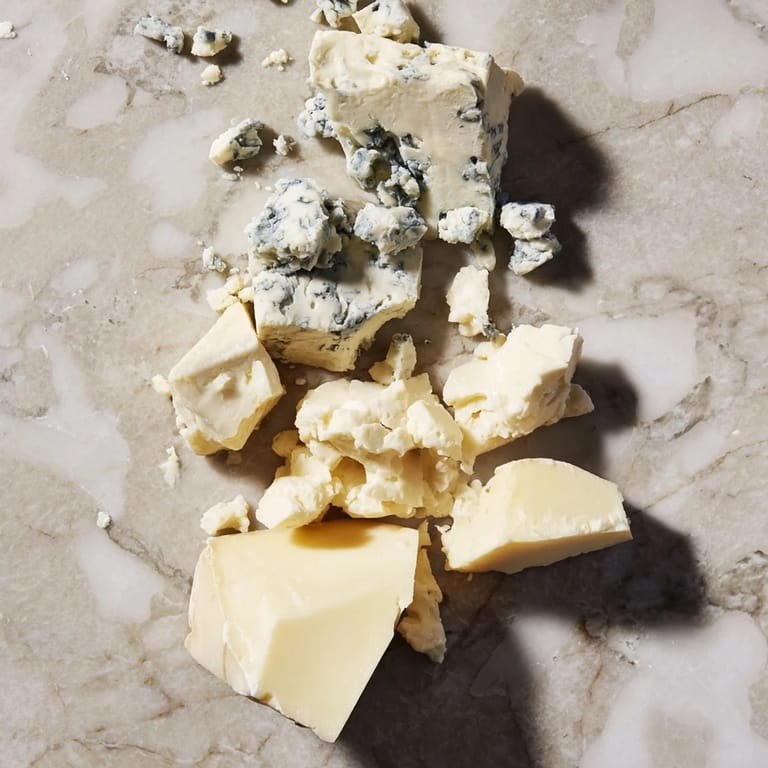
- Aged white cheddar (200g): The sharpness creates the perfect counterpoint to the blue's funkiness. Let it sit out for 15 minutes before serving so the flavor really opens up.
- Fresh grapes or sliced pears: These aren't just decoration, they're palate cleansers that make you want another bite of cheese.
- Assorted crackers or crusty bread: Pick something with enough character to stand up to strong cheese, not something that disappears into sweetness.
- Honey or fig jam: A small drizzle bridges the gap between sweet and savory in a way that feels almost unexpected.
Tired of Takeout? 🥡
Get 10 meals you can make faster than delivery arrives. Seriously.
One email. No spam. Unsubscribe anytime.
Instructions
- Set the stage:
- Place your marble slab on a clean, flat surface where people can gather around it without bumping elbows. If you have time, chill it in the freezer for 20 minutes so the cheese stays cool longer.
- Compose your quarry:
- Start by placing your largest cheese chunks first, leaving generous breathing room between them as if you're arranging landscape. The gaps matter as much as the pieces, they create visual rhythm and make the board feel intentional rather than crowded.
- Add the supporting cast:
- Tuck grapes or pear slices into the spaces, then position small bowls of honey or jam where they catch the light. Step back and look at it from where your guests will see it.
- Bring it to the table:
- Serve with crackers and bread nearby but not competing for space. Let people approach it like they're discovering something, not attacking a buffet.
 Save to Pinterest
 The real magic happened when my quiet neighbor, who never talks at parties, spent ten minutes telling me about the blue cheese from his hometown in England. Food became a bridge that evening, and suddenly I understood that a beautiful presentation gives people permission to be present instead of rushed. That's when a cheese board stopped being about feeding people and started being about inviting them somewhere.
The Power of Negative Space
I used to cram every inch of my boards, thinking fullness meant generosity. Then I realized that empty marble actually makes you appreciate each piece more. The shadows between chunks become part of the composition, and your eye knows where to look next. It's the same principle as a well-designed room, less becomes more when you're intentional about it.
Choosing Cheeses That Tell a Story
Blue and white cheddar work because they're honest opposites, they don't apologize for their intensity. I've seen people try to balance them with something mild and the whole thing becomes forgettable. The sharpness is the point, it's what makes people sit up and take notice. When you're serving cheese as the main event, commit to flavors that demand attention.
Wine Pairing and Timing
This board lives best with a crisp white wine or a light-bodied red, something that won't overpower the cheese but will echo its complexity. I learned this the hard way by pouring a heavy Cabernet and wondering why the whole thing tasted muddled. Timing matters too, bring everything out 30 minutes before guests arrive so you're not fussing while they watch.
- A Sauvignon Blanc or Pinot Grigio will make the blue taste less intense and more refined.
- If you want red, go for Pinot Noir or a light Beaujolais that won't compete for space on your palate.
- Have water nearby so people can reset between bites and taste each cheese fully.
 Save to Pinterest
 The Marble Quarry isn't a recipe so much as a philosophy about slowing down and choosing quality over quantity. Once you understand that, you'll find yourself making it again and again, each time a little more confident in the empty space.
Recipe Questions
- → What cheeses are best for this presentation?
Large chunks of strong blue cheese like Roquefort or Stilton paired with aged white cheddar provide contrasting flavors and textures.
- → How should the marble slab be prepared?
Chill the marble slab beforehand to keep the cheeses cool and fresh during serving.
- → What accompaniments complement the cheese display?
Fresh grapes, sliced pears, honey, fig jam, and various crackers or crusty bread enhance both flavor and visual appeal.
- → Can this be served at room temperature?
It's best to serve the cheese chilled on marble, but letting cheeses warm slightly unlocks additional flavor nuances.
- → Are there suggestions for adding variety?
Adding a third cheese with a different texture or color, such as creamy goat cheese, can create further interest.