 Save to Pinterest
 I discovered these honey-sriracha chicken bites at a potluck where someone showed up with a mysterious container, and within minutes the whole thing vanished. The person next to me described them as having this perfect tension between crispy and sticky, and I knew I had to figure out how to make them. Turns out, the magic isn't complicated—it's just respecting the balance between sweet heat and that satisfying crunch that makes you reach for one more.
The first time I made a batch for my roommate's friends, I panicked about the oil temperature, dipped my thermometer in too early, and forgot to account for carryover cooking. But even slightly overcooked, they were devoured so quickly that I ended up making a second batch halfway through the gathering, this time with the confidence of knowing exactly what I was doing.
Ingredients
- Boneless, skinless chicken breasts (500 g): Cut into roughly 1-inch cubes—smaller pieces cook faster and absorb the marinade better, and you'll notice they fry more evenly.
- Buttermilk (2 tablespoons): This mild acid tenderizes the chicken without the intensity of regular milk, and it's the secret to keeping the bites juicy.
- Garlic and onion powder (1 teaspoon each): These dried aromatics get into every corner of the meat while it marinates, doing the work that minced versions would struggle with.
- All-purpose flour (100 g) and cornstarch (50 g): The cornstarch is what gives you that extra-crispy crust—flour alone gets too dense.
- Paprika and cayenne (1 teaspoon and ½ teaspoon): The paprika adds color and subtle warmth while cayenne sneaks in real heat that plays beautifully with the honey later.
- Vegetable oil (500 ml): You need enough depth for the chicken to fry properly without crowding—shallow oil means uneven cooking and greasier results.
- Honey-sriracha sauce components: The honey mellows sriracha's aggression, soy sauce adds umami depth, rice vinegar brightens everything, and butter makes the glaze silky instead of sticky.
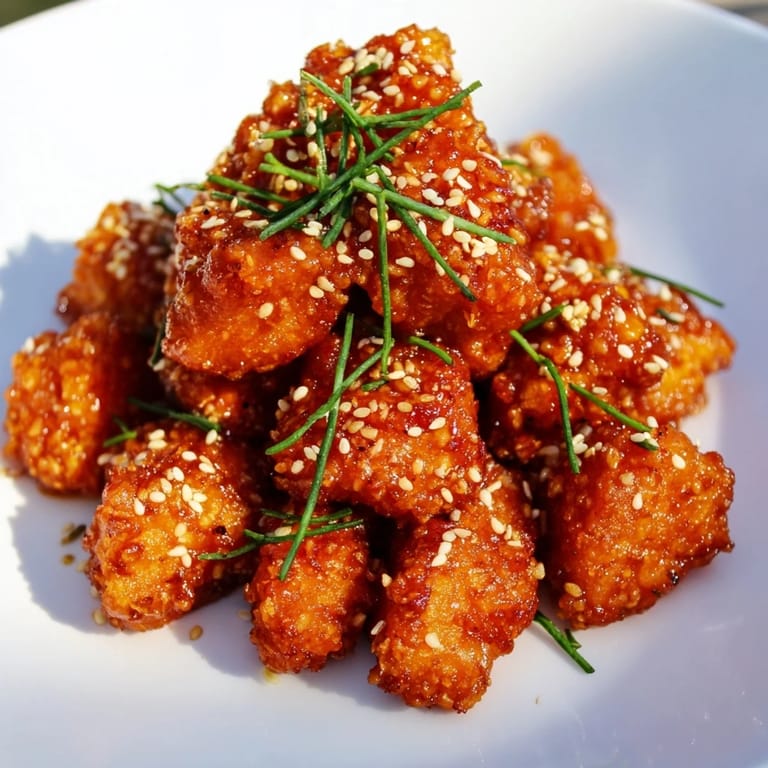
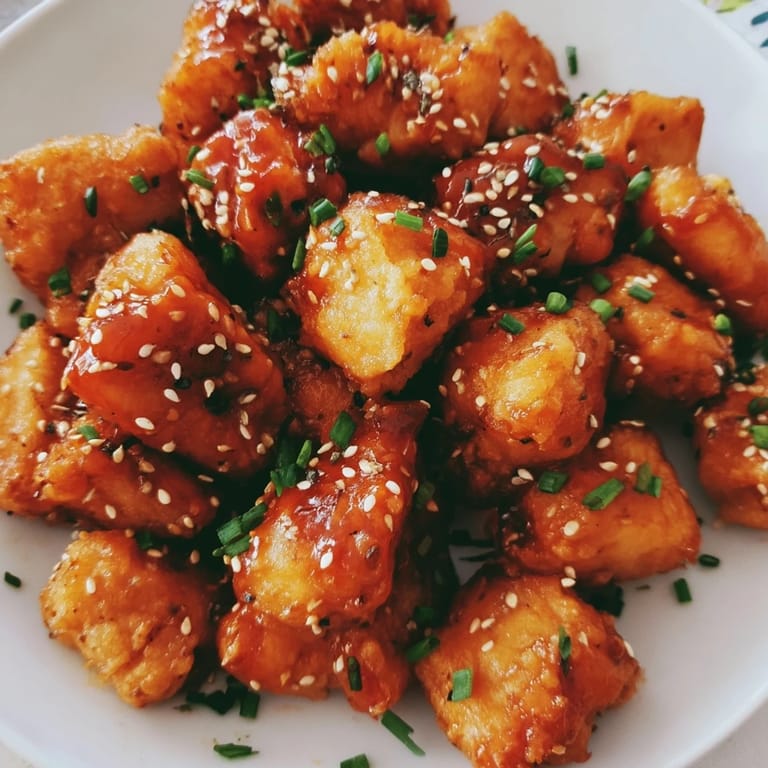
- Sesame seeds and chives (optional garnish): These add visual appeal and a final textural contrast that makes the dish feel intentional.
Tired of Takeout? 🥡
Get 10 meals you can make faster than delivery arrives. Seriously.
One email. No spam. Unsubscribe anytime.
Instructions
- Marinate the chicken:
- Toss your chicken cubes in a bowl with buttermilk and the powdered seasonings, making sure everything gets coated evenly. Let it sit for at least 15 minutes—or up to an hour if you have time, as the flavors will deepen.
- Prepare the breading station:
- Mix flour, cornstarch, paprika, cayenne, and salt in a shallow dish. Having this ready before you start frying means you won't have a moment of panic with hot oil waiting.
- Heat the oil:
- Get your oil to 175°C (350°F)—use a thermometer and trust it. Oil that's too cool makes greasy chicken; oil that's too hot burns the outside before the inside cooks.
- Dredge and fry:
- Working in batches so you don't crowd the pan, coat each chicken piece thoroughly in the flour mixture and carefully place it in the hot oil. Fry for 4 to 5 minutes, turning occasionally, until the outside is deep golden and a fork easily pierces the meat inside.
- Drain and rest:
- Remove the cooked bites with a slotted spoon and let them drain on paper towels for a minute—this keeps them crispy instead of steaming themselves soggy.
- Make the glaze:
- In a small saucepan, combine honey, sriracha, soy sauce, rice vinegar, and minced garlic over medium heat. Add a tablespoon of butter and let it all simmer together for 2 to 3 minutes, stirring gently until the butter melts and the sauce thickens just slightly.
- Toss and serve:
- Tip the hot chicken bites into the warm sauce and toss until every piece glistens. Transfer to a serving platter, sprinkle with sesame seeds and chives if you're using them, and serve while everything is still hot.
 Save to Pinterest
 There was an afternoon when I made these for my partner who was having a rough day, and watching their expression shift from tired to delighted with that first bite reminded me that food is sometimes the conversation you have when words feel stuck. These little golden moments have become my go-to when I want to show up for someone without making a big announcement about it.
The Double-Dip Secret
If you want maximum crunch and don't mind a little extra effort, dip each marinated piece in buttermilk a second time just before it goes into the breading station. This gives you a thicker, crunchier crust that stays satisfying even after the sauce cools slightly. I learned this trick the hard way by accident, and now I do it on purpose whenever I'm trying to impress.
Customizing the Heat Level
Sriracha varies wildly by brand—some bottles are genuinely mild, others will sneak up on you. Start with what the recipe calls for, taste the glaze before the chicken goes in, and adjust. I've learned to add sriracha in stages rather than all at once, because you can always make it spicier but you can't take it back.
Serving Suggestions and Storage
These are perfect as they are, but they also bridge the gap between appetizer and meal depending on how you serve them.
- Serve with cool ranch or blue cheese dip on the side to balance the heat and stickiness.
- Pile them over steamed white rice for a quick dinner that tastes far more intentional than it has any right to.
- Make them a few hours ahead and serve at room temperature for a picnic or gathering where hot food isn't practical.
 Save to Pinterest
 These bites have become my favorite thing to show up with because they disappear quickly and people always ask for the recipe. There's something deeply satisfying about that moment when something you made with your own hands becomes someone else's favorite flavor.
Recipe Questions
- → What cut of chicken works best for this dish?
Boneless, skinless chicken breasts cut into 1-inch cubes provide tender and uniform pieces ideal for even cooking and coating.
- → How can I make the chicken extra crispy?
Double-dip the chicken by repeating the buttermilk and flour mixture coating before frying for an added crunchy crust.
- → Can I adjust the spice level in the sauce?
Yes, modify the amount of Sriracha sauce to suit your preferred heat intensity, adding less for milder flavor or more for extra spice.
- → What oil is recommended for frying?
Vegetable oil with a high smoke point, such as canola or peanut oil, works best to achieve a perfectly fried crust without burning.
- → Are there gluten-free options for the coating?
Substitute regular flour with gluten-free flour blends and replace soy sauce with tamari to make the dish gluten-free friendly.
- → What garnishes complement the flavors?
Sprinkling toasted sesame seeds and chopped fresh chives or green onions adds a fresh, nutty contrast to the spicy-sweet bites.