 Save to Pinterest
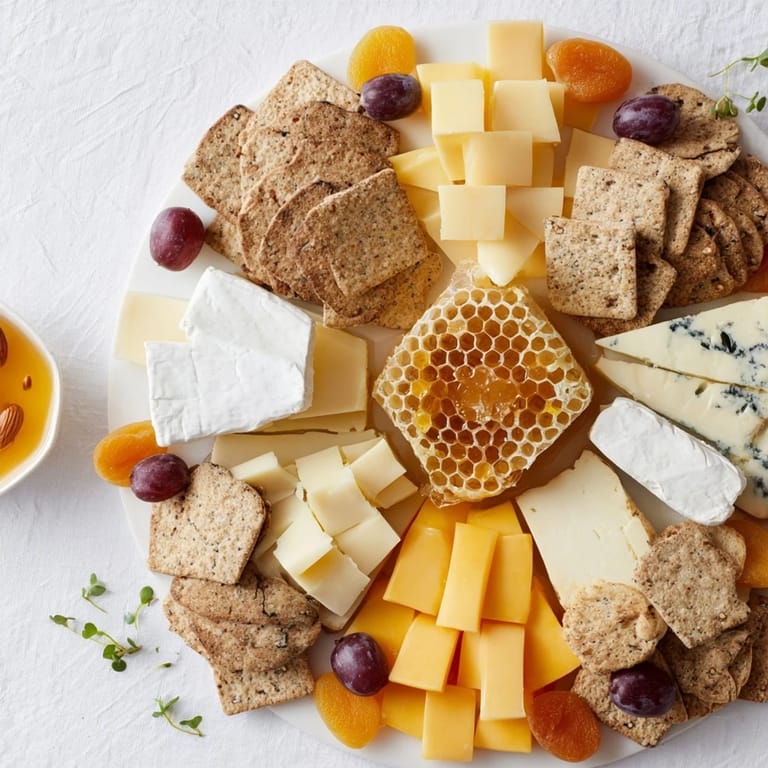
 I discovered The Gilded Hive while browsing a boutique food shop on an ordinary Tuesday, where a cheese board caught my eye—not because of what was on it, but how it was arranged. The pattern was hypnotic, geometric, almost alive. I stood there watching people pick through it, and I thought: what if I could recreate that magic at home, but make it mine? That's when the hexagon obsession began, and this board became my answer to every "what should I bring?" question.
I made this for my sister's dinner party last spring, and watching her guests literally gasp when they walked in reminded me that food is theater before it's anything else. Someone photographed it, and suddenly I was known as "the hexagon cheese person." That's when I realized this board wasn't just pretty—it was memorable in a way that mattered.
Ingredients
- Manchego cheese: Its nutty, waxy texture holds clean hexagon shapes and looks like pale butter against the board.
- Aged cheddar: The sharpness cuts through richness and its golden tone adds warmth to the pattern.
- Gruyère: Brings umami depth and a natural amber color that photographs beautifully.
- Brie: The soft center square—creamy contrast that demands a thin cracker and a moment of deliberation.
- Blue cheese: Your flavor anchor; its boldness keeps the board from feeling one-dimensional.
- Goat cheese log: Sliced into hexagons, it's the bright white punctuation mark in your composition.
- Whole wheat crackers: Sturdy enough to hold their hexagon shape and substantial enough to carry cheese.
- Seeded crackers: Add textural surprise and visual interest with specks of sesame or poppy.
- Edible honeycomb: The centerpiece that ties the entire concept together—it's both decorative and delicious, not just garnish.
- Marcona almonds: Roasted and slightly salty, they fill gaps while adding luxury.
- Dried apricots: Their warm orange pulls the eye through the board and balances savory with subtle sweetness.
- Fresh grapes: Scattered for color and a palate cleanser between cheese bites.
- Honey: A few artistic drizzles catch the light and hint at the bee theme.
Tired of Takeout? 🥡
Get 10 meals you can make faster than delivery arrives. Seriously.
One email. No spam. Unsubscribe anytime.
Instructions
- Prep your cutting tools and chill the soft cheeses:
- Run your hexagon cutter under hot water and dry it completely—moisture causes cheese to stick. Pop Brie and goat cheese in the fridge for 15 minutes so they slice cleanly instead of tearing.
- Cut cheese into hexagons:
- Press the cutter firmly through each cheese type, wiggling it slightly to release the shape. You'll waste some edges, but that's where the cheese board cook gets to snack.
- Transform crackers into hexagons:
- Lay crackers flat and cut carefully; some will shatter, and that's fine—set aside the perfect ones. Those broken pieces become your tasting bonus.
- Place your honeycomb anchor:
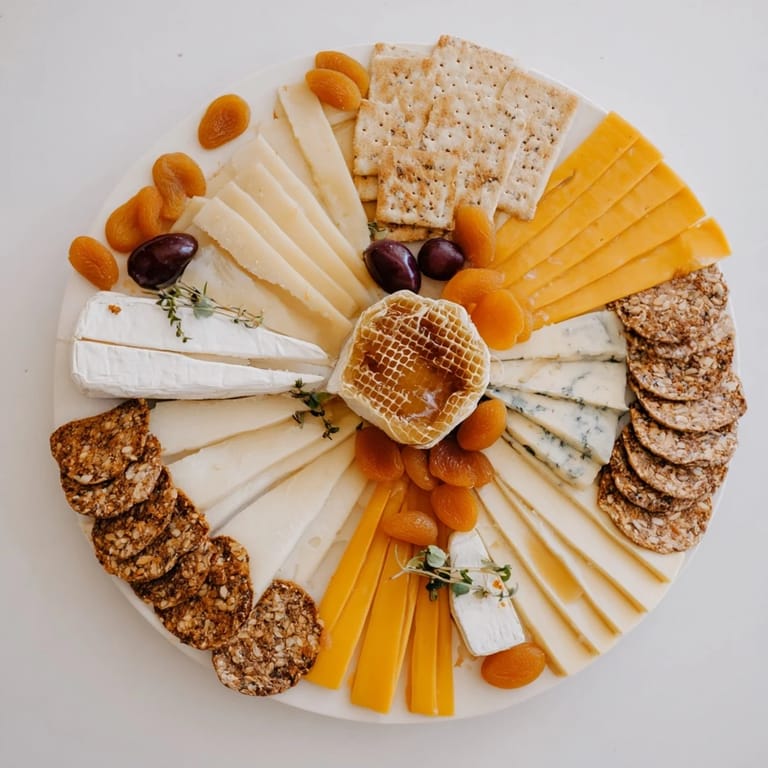
- Set the honeycomb dead center of your board, leaving about an inch of breathing room around it. This is your north star; everything radiates outward from here.
- Arrange cheese in concentric circles:
- Start with one cheese type closest to the honeycomb, then layer outward with different varieties. Alternate colors so no two identical cheeses touch—think of it like a color wheel in cheese form.
- Build cracker rings:
- Between your cheese circles, tuck hexagon crackers into the spaces, creating rays or additional rings. Let some lean at angles; rigid perfection looks sterile.
- Fill the gaps with purpose:
- Scatter almonds, apricots, and grapes into remaining spaces, using them to create rhythm and draw the eye in loops around the board. Don't fill every gap; negative space is your friend.
- Honey the highlights:
- Drizzle honey in thin lines across the board, hitting the honeycomb directly and letting some pools form near the cheeses. It catches light and makes everything look intentional.
- Final garnish and serve:
- If using edible flowers or microgreens, scatter them last, just before guests arrive. Serve with small spreaders and let the hexagon picking begin.
 Save to Pinterest
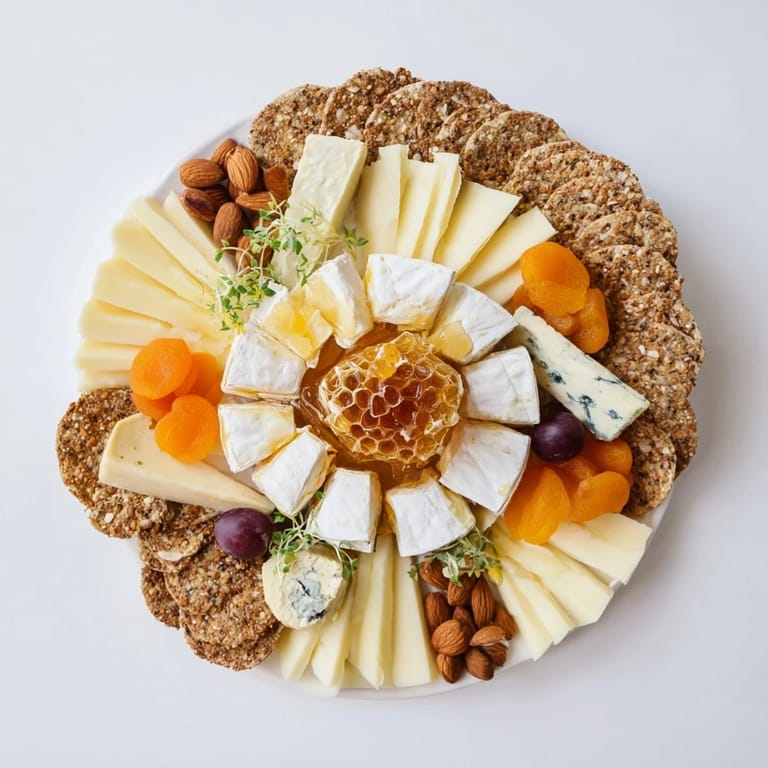
 I'll never forget when my usually quiet uncle picked up a hexagon of blue cheese and goat cheese together, took a bite, closed his eyes, and said nothing for a full five seconds. Then he smiled and went back for another. That's when I knew this board wasn't about showing off—it was about creating a moment where people slow down and actually taste.
Choosing Your Cheese Cast
The beauty of this board is that it's a conversation between flavors as much as shapes. I learned through trial and error that you want at least three textural types: one firm and crumbly (like aged cheddar), one creamy and yielding (Brie), and one with personality (blue or goat). The honeycomb doesn't compete with flavor—it supports it, bridging sweet and savory. Season matters too; in summer I lean toward lighter, fresher cheeses, while winter calls for more assertive aged ones. Don't get locked into my exact lineup. What matters is balance.
The Hexagon Obsession Is Real
The first time I made this, I spent twenty minutes looking for the "perfect" hexagon cutter online and nearly abandoned the whole idea when I couldn't find one. Then I realized I had a small hexagon cookie cutter in a drawer from a gingerbread phase three years ago. It was slightly smaller than ideal, but it worked, and that imperfection became part of the charm. The pattern isn't about mathematical precision; it's about creating enough visual coherence that people feel like they've stepped into something special. I've since learned that any regular polygon works—squares, triangles, even circles—but hexagons feel intentional, like you're mimicking nature.
Board Building as Meditation
There's something meditative about arranging this board. Unlike cooking, which requires heat and timing and constant attention, this is pure geometry and color theory. I put on music, pour a glass of something cold, and spend the half hour moving hexagons around like puzzle pieces. By the time guests arrive, I'm calm, I know the board intimately, and I can describe each cheese's story without thinking. It's the opposite of chaos; it's controlled, artistic, and somehow makes you feel like a better host before anyone even takes a bite.
- Use a large board—marble or wood at least 18 inches across—so the pattern has room to breathe.
- Keep your hexagon cutter nearby while arranging in case you need to make emergency cuts if something doesn't fit.
- If the board looks too crowded, you've done too much; step back and remove one thing.
 Save to Pinterest
 This board taught me that sometimes the most memorable meals aren't about complexity—they're about intention and presence. Serve it with confidence and let people pick their own path through it.
Recipe Questions
- → What cheeses work best for hexagon cutting?
Firm cheeses like Manchego, aged cheddar, and Gruyère hold shape well, while softer types like Brie and goat cheese should be chilled briefly before cutting for cleaner edges.
- → How do I prevent crackers from breaking when cutting hexagons?
Use a sharp, metal hexagon cutter and press gently but firmly. Select whole pieces after cutting to ensure a neat appearance.
- → Can I substitute the honeycomb centerpiece?
An edible honeycomb piece provides visual appeal and sweetness, but fresh honeycomb alternatives or a small bowl of runny honey can be used if unavailable.
- → What garnishes complement the cheese board?
Marcona almonds, dried apricots, fresh grapes, and edible flowers or microgreens add color, texture, and balance to the overall presentation.
- → How should I serve this board for best results?
Arrange the board just before serving to maintain optimal cheese texture and freshness; provide cheese knives or spreaders alongside for easy enjoyment.
- → Are there any allergen considerations?
This board contains milk, wheat, tree nuts, and honey, so verify labels and inform guests accordingly, especially if catering to vegetarians or allergy-sensitive individuals.