 Save to Pinterest
 The first time I tried weaving vegetables into an actual structure instead of just tossing them on a plate, I felt like I'd discovered something secret. My neighbor had served this at a spring dinner party, and I was mesmerized watching guests carefully lift each square of the lattice, their forks finding blueberries nestled perfectly between crisp asparagus. I went home and spent an embarrassingly long time figuring out how to make the chives behave, but the moment it all came together, I understood why she'd made it look so effortless.
I made this for a small brunch last May when my sister was visiting, and she spent the whole meal photographing it from different angles instead of eating. When she finally took a bite, she laughed and said, "This is the prettiest thing you've ever made me, and it actually tastes good." That's when I realized it wasn't just pretty—it was the kind of dish that makes people slow down and actually notice what they're eating.
Ingredients
- Asparagus stalks: Medium ones are forgiving—thin stalks snap when you weave them, thick ones stubbornly refuse to bend. Blanch them just until they're pliable but still have snap.
- Fresh chives: The long stems are your weaving thread; pick the thinnest ones you can find because they're more cooperative and won't overpower the delicate structure.
- Mixed berries: Choose small, firm fruits that won't weep juice all over your lattice. Blueberries, raspberries, strawberries, and golden berries create a jewel-box effect, but blackberries and red currants work beautifully too.
- Extra virgin olive oil: A good oil matters here because it's one of the few flavors you can taste; cheap oil tastes harsh against the delicate vegetables and fruit.
- Flaky sea salt and black pepper: Add these at the very last second before serving, or they'll draw out moisture and make everything droopy.
Tired of Takeout? 🥡
Get 10 meals you can make faster than delivery arrives. Seriously.
One email. No spam. Unsubscribe anytime.
Instructions
- Blanch the asparagus until it surrenders:
- Boil salted water, add your asparagus, and count to sixty—you want it bright green and just barely tender enough to bend without snapping. The ice bath stops the cooking instantly and locks in that color, and patting them dry prevents a soggy lattice.
- Soften the chives with a quick bath:
- Five seconds in hot water is all they need to become supple enough to tie without breaking. Cool them immediately and pat dry so they don't slip around when you're trying to weave.
- Build your grid with intention:
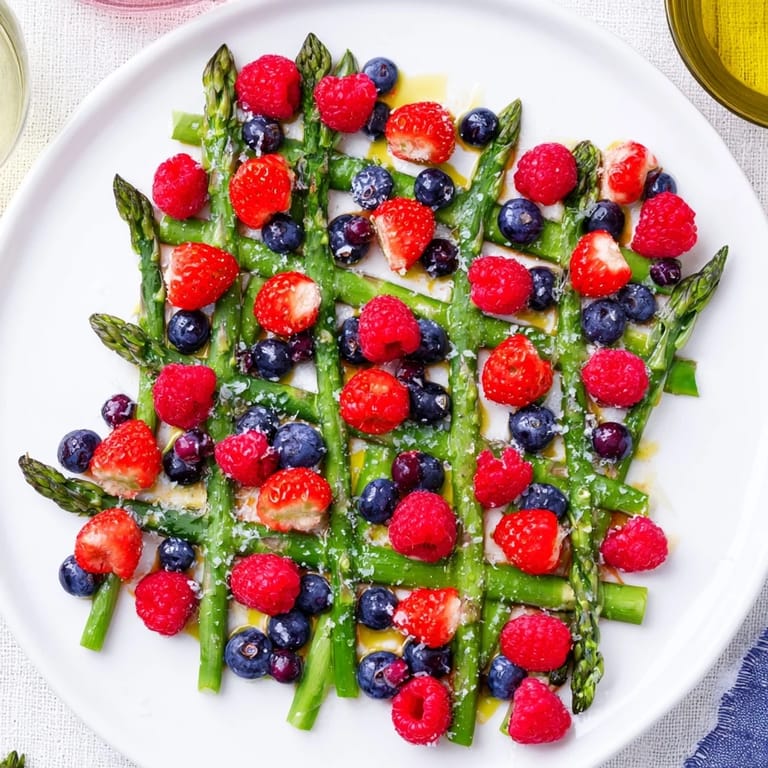
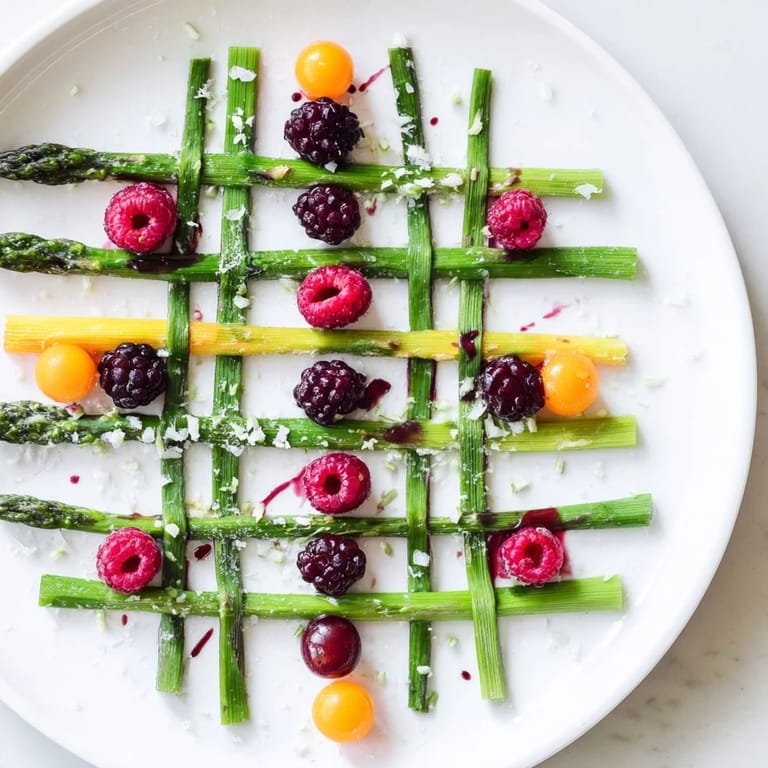
- Lay eight asparagus stalks parallel on your platter, spacing them so there's a small gap between each one. Then take the other eight stalks and weave them perpendicular, going over and under like you're making a basket.
- Tie the intersections gently:
- Wrap a chive stem around each crossing point where the asparagus meets, securing the structure. The knots don't need to be tight—just snug enough to hold the grid steady.
- Fill the squares with care:
- Drop your mix of berries into each open square of the lattice, distributing colors so no square is all one shade. This is where it becomes a design, not just a grid.
- Finish with restraint:
- Drizzle a thin stream of olive oil across the whole thing, sprinkle flaky salt so you can actually see each crystal, and add a few twists of black pepper. Serve immediately while everything is cold and the salt hasn't had time to dissolve.
 Save to Pinterest
 The thing I love most about this dish is that it forces you to slow down and actually construct something. There's no rushing through the weaving, no hiding behind sauces or garnishes, and somehow that ritual—the quiet, repetitive work of building the lattice—turns a simple appetizer into something that feels ceremonial.
Timing and Preparation
You can blanch the asparagus and soften the chives up to two hours ahead, keeping them in separate containers in the fridge so they don't get tangled. The actual weaving and assembly should happen no more than thirty minutes before you serve, since the salt will start drawing out moisture if it sits too long. I always set up my platter first, lay out all my fruits in little bowls, and then invite whoever's around to watch me build—it's such a satisfying thing to see come together that people always end up engaged in the process.
Why This Works as a Starter
It's light enough that people aren't stuffed before the main course, yet feels substantial and special because of how it's presented. The combination of cool asparagus, sweet berries, and barely-there chive flavor is refreshing without being heavy, which is exactly what you want when you're building anticipation for what comes next.
A Few Things Worth Remembering
This recipe is infinitely adaptable, and half the fun is making it your own once you understand the technique. The core idea—weaving greens, securing with thin stems, filling with color—stays the same, but the specific fruits and herbs you use can shift with seasons and what you have on hand.
- If you can't find perfect asparagus, baby green beans work beautifully and have a similar texture when blanched.
- The moment you finish plating, take a photo because it only looks this pristine for the first few minutes.
- Serve this on a chilled platter if you can—the cold enhances the crispness and the whole thing stays fresher longer.
 Save to Pinterest
 This is the kind of dish that reminds you why you bother cooking in the first place—not for the calories or even really for the taste alone, but for the small joy of making something beautiful and sharing it. Serve it chilled, serve it proudly, and watch people slow down to really look at it before they eat.
Recipe Questions
- → How do I blanch asparagus properly?
Bring salted water to a boil and cook asparagus for 1-2 minutes until bright green and tender. Immediately transfer to ice water to halt cooking and preserve color.
- → What is the best way to soften chives for weaving?
Dip long chive stems briefly in hot water for about 5 seconds, then cool them quickly in an ice bath to maintain flexibility.
- → Can I substitute the fruits used in the lattice?
Yes, small firm fruits like blackberries, red currants, or pomegranate seeds work well as alternatives and provide similar bursts of sweetness.
- → How do I secure the asparagus lattice together?
Use the softened chive stems to gently tie the intersection points of the asparagus grid, providing structure without overpowering the presentation.
- → What seasoning enhances the flavors of this dish?
A drizzle of extra virgin olive oil combined with flaky sea salt and freshly ground black pepper complements the fresh vegetables and fruit perfectly.
- → Can this appetizer be prepared ahead of time?
Yes, blanch asparagus and soften chives in advance. Assemble the lattice shortly before serving to maintain freshness and crispness.