 Save to Pinterest
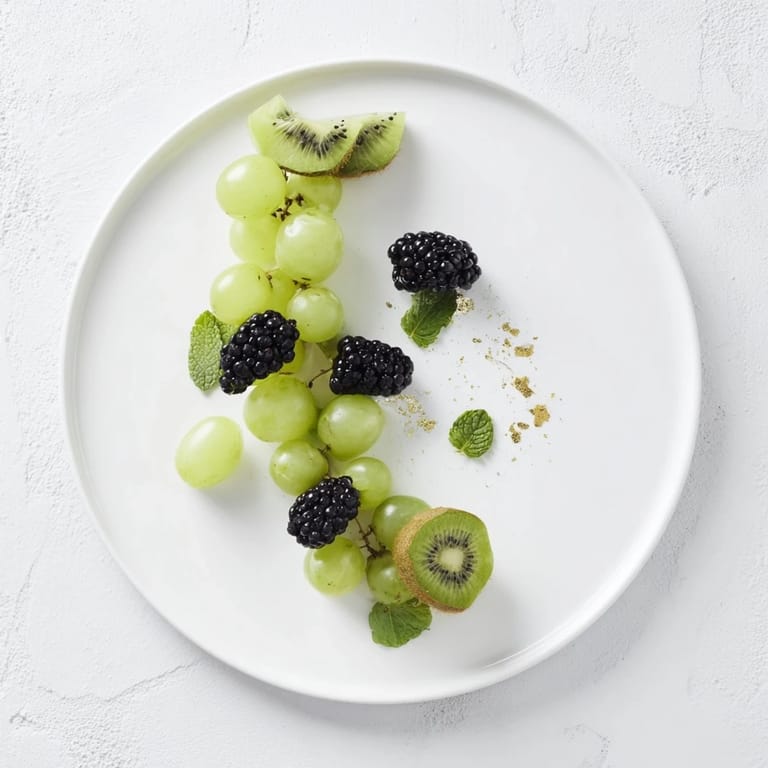
 The first time I arranged fruit on a dark platter, I wasn't thinking about the Northern Lights at all—I was just trying to make something that didn't look like a boring fruit salad sitting in my friend's kitchen. But as I laid down those green grapes in wavy lines, then filled in the gaps with blackberries and purple grapes, something magical happened. The colors seemed to dance against the dark surface, and suddenly I understood why people spend thousands of dollars to chase those shimmering lights across frozen skies. This platter became my way of bringing that same sense of wonder to the dinner table.
I made this for my sister's birthday brunch, and I'll never forget the moment she walked into the kitchen and just stopped. She didn't say anything at first—just stood there staring at the platter like she'd actually seen the aurora borealis reflected on our kitchen counter. By the time everyone arrived, that platter had become the conversation starter, the reason people lingered over coffee, and somehow, the most memorable part of the meal.
Ingredients
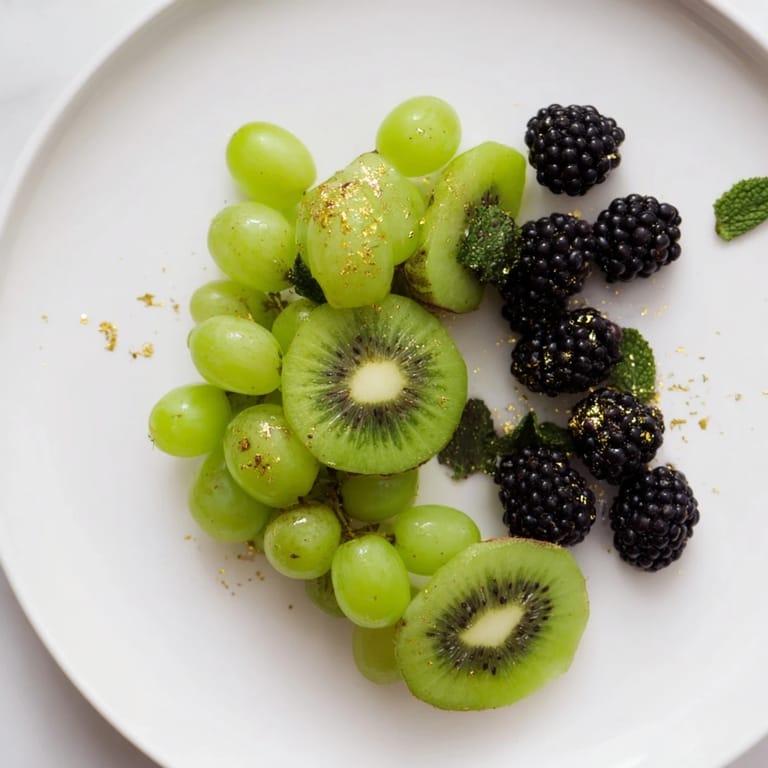
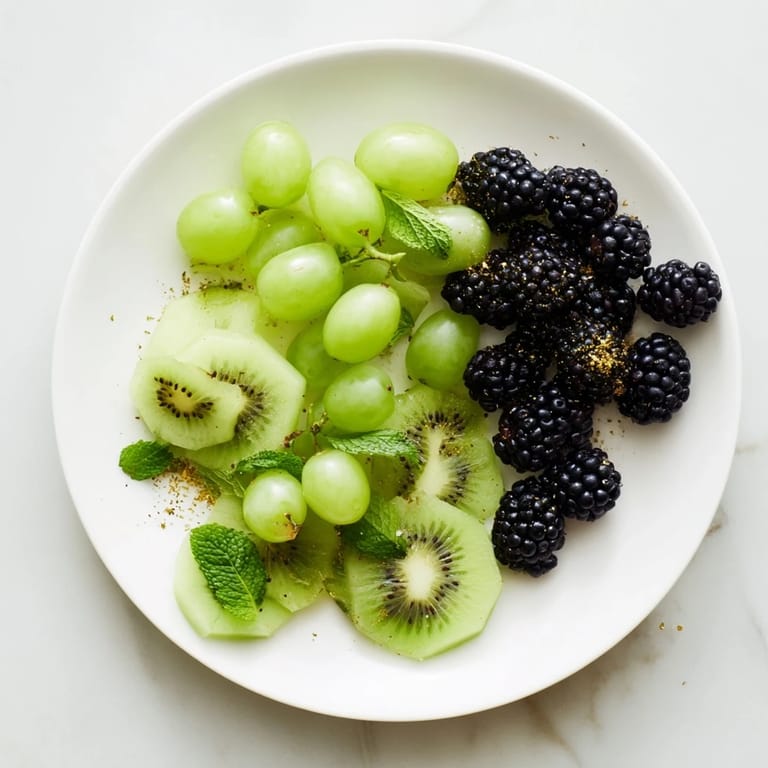
- Seedless green grapes, halved: These are your foundation—mild, refreshing, and they hold their shape perfectly when you're arranging them in flowing lines.
- Kiwis, peeled and sliced: Their bright green color and slight tartness break up the sweetness of the grapes, and the seeds add visual texture.
- Green apple, thinly sliced: Optional, but a game-changer for crunch and a subtle tartness that balances the softer fruits.
- Blackberries: These are the deepest color you'll work with—they create visual drama and actually stay intact better than you'd expect.
- Red or black grapes, halved: They bridge the gap between green and purple, making the color transition feel more natural and flowing.
- Blueberries: Optional, but they fill in the smaller gaps beautifully and deepen the purple effect.
- Fresh mint leaves: Beyond decoration, they add a subtle brightness when someone bites into the arrangement and also hide any imperfect cuts.
- Edible glitter or gold leaf: This is optional but worth the small effort—it catches the light and actually does mimic that aurora shimmer.
Tired of Takeout? 🥡
Get 10 meals you can make faster than delivery arrives. Seriously.
One email. No spam. Unsubscribe anytime.
Instructions
- Prepare your fruits with intention:
- Wash everything thoroughly and pat completely dry—wet fruit slides around when you're trying to create precise lines, and trust me, that's frustrating. Halve your grapes and slice your kiwis while your cutting board is clean and you can see what you're doing.
- Start with your foundation:
- Place your dark platter in front of you and arrange the green grapes in a gently undulating line, like you're drawing a wave with your hands. Don't overthink the spacing—nature isn't perfectly measured, and neither should this be.
- Build your second ribbon:
- Lay down the kiwi slices next to your grape line, creating a second wavy stripe that flows in roughly the same direction. The slight overlap between the two colors is where the magic happens.
- Add depth with the green apple:
- If you're using it, scatter the apple slices throughout the green section—they create visual breaks and add a textural contrast that people notice when they eat.
- Introduce the purple realm:
- Now arrange your blackberries in a curved line adjacent to the greens, followed by the purple and red grapes in their own flowing ribbon. Let them overlap slightly with the green section to create that aurora effect where colors seem to blend into each other.
- Fill the empty spaces:
- Tuck blueberries into gaps, scatter mint leaves where the arrangement feels sparse, and step back frequently to see the overall effect. Sometimes the best arrangements come from simply filling what feels empty rather than following a strict plan.
- Add the final shimmer:
- If you're using edible glitter or gold leaf, sprinkle or place it sparingly across the arrangement—just enough to catch light when people lean in, not so much that it overwhelms the natural fruit colors.
- Serve with confidence:
- Bring it to the table immediately while the colors are at their most vibrant, or cover it and chill until you're ready. Either way, present it with the knowledge that you've created something genuinely beautiful.
 Save to Pinterest
 What surprised me most about making this platter wasn't the visual impact—it was how it changed the energy of eating. People actually paused. They looked at what they were about to eat, which sounds simple, but in a world where food is often rushed past, that moment of genuine appreciation felt like a gift. It turned a simple arrangement of fruit into something almost ceremonial.
Why This Arrangement Actually Works
The aurora borealis works as a concept because it's all about color flow and layering—and fruit naturally follows those same visual rules. When you arrange by color families rather than by individual fruits, your eye can follow the path you've created, almost like watching light move across a dark sky. The curved, wavy lines mimic actual auroral patterns, which is why people react the way they do when they see this platter.
Timing and Storage Wisdom
Unlike most dishes, this one is at its absolute best the moment it's arranged—the colors are brightest, the fruit is crispest, and the whole effect feels fresh and alive. You can prep individual components ahead of time (washing, cutting, even halving grapes), but the actual assembly should happen within a few hours of serving. If you must make it further in advance, cover it tightly with plastic wrap and let it stay cool in the refrigerator, though you'll notice some colors start to dull as the hours pass.
Variations and Personal Touches
Once you understand the basic principle of color layering, this platter becomes a canvas for whatever fruits are in season or available to you. Sliced strawberries create a pink ribbon between green and purple sections, dragon fruit adds an almost shocking pink and creates a striking visual contrast, and starfruit slices scattered throughout add geometric interest. The framework is flexible—what matters is that you're working with color families and creating that flowing, wave-like arrangement that makes people stop and really see the food in front of them.
- Try adding sliced starfruit or dragon fruit for extra visual layers and a more dramatic color palette.
- Swap berries based on what's in season or what you find at the market—the principle of color arrangement stays the same.
- A light drizzle of honey or a small bowl of yogurt on the side transforms this from a visual centerpiece into a more substantial dessert or brunch element.
 Save to Pinterest
 This platter taught me that presentation isn't superficial—it's a way of showing people that they matter enough for you to slow down and create something thoughtful. Every time I make it, I remember why.
Recipe Questions
- → What fruits are best for the color contrast?
Green grapes, kiwis, and apples create a fresh green base, while blackberries, red grapes, and blueberries provide rich purples for a dramatic contrast.
- → How can I make the platter look more vibrant?
Arranging the fruits in flowing ribbons and adding edible glitter or gold leaf enhances the visual appeal and mimics the shimmer of the Northern Lights.
- → Can I prepare this platter ahead of time?
It's best served fresh for the brightest colors and texture, but you can cover and refrigerate it briefly before serving to keep fruits fresh.
- → Are there suitable garnishes to add flavor or decoration?
Fresh mint leaves add brightness and aroma, while edible glitter or gold leaf provides sparkle and elegance for presentation.
- → What serving tools are recommended?
A large serving platter or board and a sharp knife for slicing fruits are essential to create the flowing lines and ribbons of the display.