 Save to Pinterest
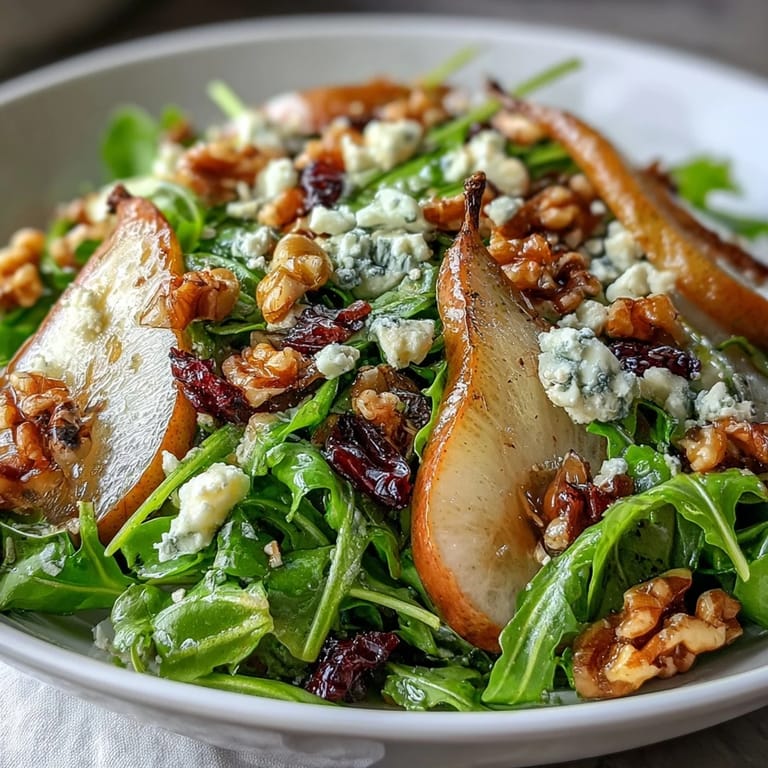
 My neighbor knocked on the kitchen door one summer afternoon with a bag of pears from her tree, asking if I knew what to do with them. I'd been staring at wilted salad greens all week, so I grabbed her pears, some arugula I'd picked up on a whim, and whatever cheese was lurking in the fridge. That first bowl—tossed together in ten minutes—tasted like the opposite of effort, which meant it had to become a regular thing.
I made this for my sister's surprise birthday lunch, plating it on mismatched white bowls because we'd broken the good ones the week before. She took one bite and asked for the recipe before she'd even sat down, which felt like the highest compliment a salad could receive.
Ingredients
- Fresh arugula (120 g or 4 cups): Buy it as close to using as possible—the peppery bite fades if it sits too long, and bruised leaves will wilt faster than firm ones.
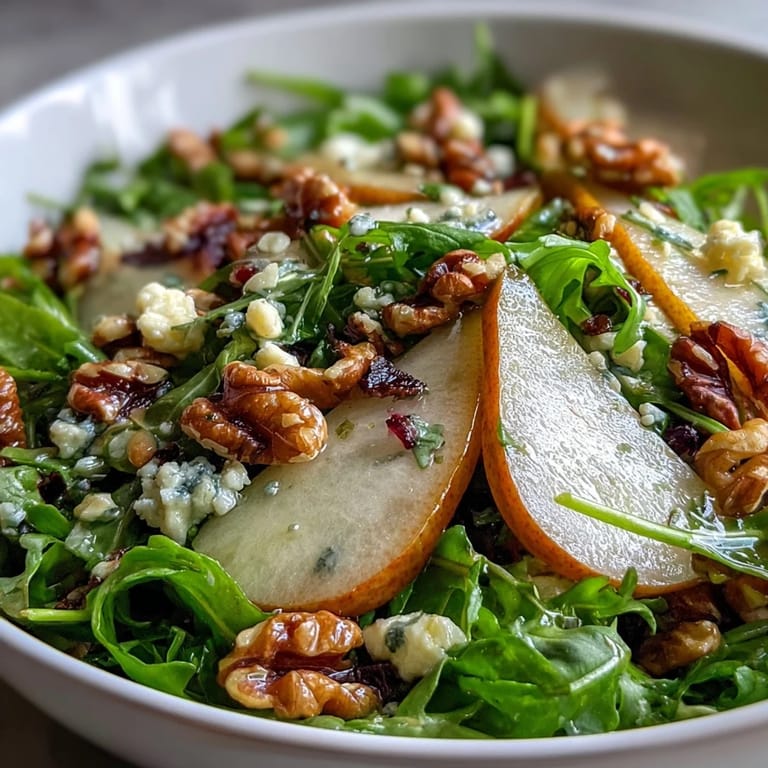
- Ripe pears (2 whole fruits, cored and thinly sliced): Choose pears that yield slightly to thumb pressure; they should be fragrant and soft but not mushy, as hard pears taste like eating wood.
- Crumbled blue cheese or goat cheese (60 g or 2 oz): The tanginess cuts through sweetness like a wake-up call, so don't skip this or you'll lose the whole balance.
- Toasted walnuts or pecans (50 g or ½ cup, roughly chopped): Toast them yourself if you can—the difference between a stale nut and a warm, fragrant one will actually surprise you.
- Extra-virgin olive oil (3 tbsp): This is not the place to use the cheap stuff; a good oil carries the whole dressing on its back.
- Balsamic vinegar (1 tbsp): The aged varieties taste richer and less sharp, which matters more in a simple dressing with nowhere to hide.
- Honey (1 tsp): Just enough to round out the vinegar's edges without making this taste like dessert.
- Dijon mustard (½ tsp): An emulsifier in disguise that keeps everything tasting cohesive instead of like separate components.
- Salt and freshly ground black pepper, to taste: Grind the pepper fresh; pre-ground tastes like dust in comparison.
Tired of Takeout? 🥡
Get 10 meals you can make faster than delivery arrives. Seriously.
One email. No spam. Unsubscribe anytime.
Instructions
- Make the dressing first:
- Whisk together the olive oil, balsamic vinegar, honey, Dijon mustard, salt, and pepper in a small bowl until it emulsifies and tastes balanced—tart but not aggressive, sweet but not sugary. Taste it straight from the whisk and adjust before you commit.
- Build your bowl:
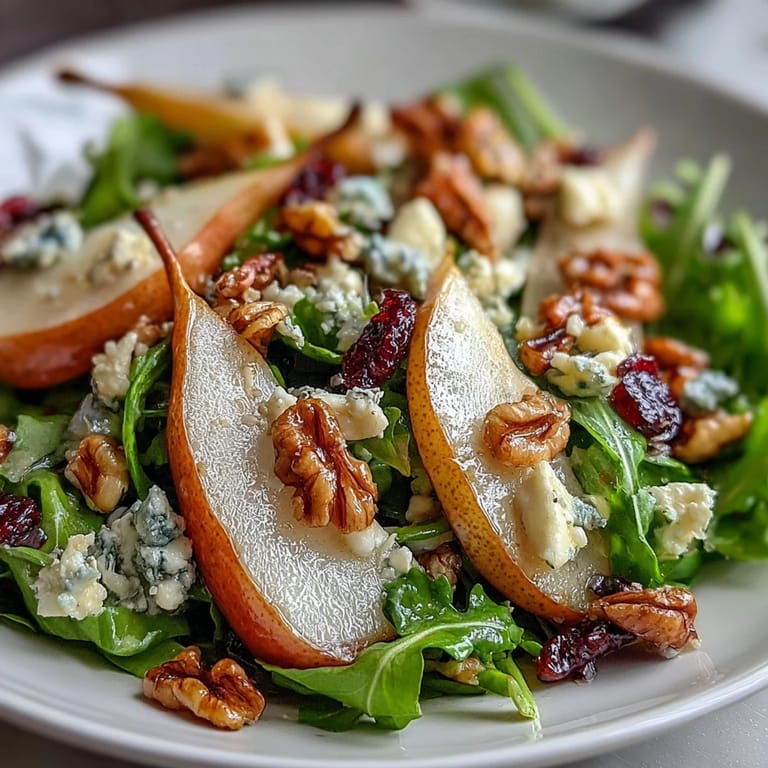
- Place the arugula in a large salad bowl, then scatter the pear slices, cheese crumbles, and nuts across the top like you're plating something you care about. Don't toss yet.
- Dress it right before serving:
- Drizzle the dressing over everything and gently toss just as you're about to eat, so the greens don't wilt and the pears stay intact.
 Save to Pinterest
 Last winter I served this salad to my partner after a particularly long week, and they looked at the bowl like it might contain answers to questions we hadn't asked yet. Sometimes the simplest thing you make is the one people remember.
Choosing Pears That Actually Taste Like Something
The difference between a forgettable pear and one that sings comes down to ripeness and variety. Bosc pears are slightly spicier, while Bartletts are juicier—both work beautifully here, but you need to know what you're grabbing. Press gently near the stem; it should give just a little. If you buy them hard, let them sit on the counter for a day or two and check daily, because the window between perfect and overripe is surprisingly narrow.
The Dressing Does All the Work
In a salad this simple, the dressing is the conversation starter. The honey keeps it from tasting like you're eating salad vinegar straight, the mustard acts as an invisible tie between all the elements, and the oil should taste like something, not nothing. The ratio matters—three parts oil to one part vinegar is traditional for a reason, though you can adjust slightly depending on how punchy your vinegar is. I've learned this the hard way by making dressings that were either aggressively sour or suspiciously buttery.
Storing and Spinning Variations
This salad is best eaten immediately, but if you must make it ahead, keep the greens, fruit, cheese, and nuts separate, then dress and toss right before serving. The beauty of this recipe is that it's endlessly flexible—swap the cheese for ricotta, add pomegranate seeds for tartness and color, or throw in some sliced radishes if you want extra crunch. Try serving it alongside grilled chicken for substance, or pair it with crusty bread and you've got lunch.
- Pomegranate arils add jewel-like color and a tart burst that complements the pears perfectly.
- A squeeze of fresh lemon juice in the dressing brightens everything if your balsamic is particularly dark or sweet.
- If you can't find good pears, ripe figs or sliced apple work in a pinch, though the flavor profile shifts slightly.
 Save to Pinterest
 This salad has earned its place in my regular rotation not because it's fancy or complicated, but because it proves that good food doesn't have to be either. Make it when you need something that feels nourishing and tastes like you actually care.
Recipe Questions
- → Can I make this bowl ahead of time?
Prepare the dressing and wash the arugula in advance. Store them separately in the refrigerator. Slice the pears and toss everything together just before serving to maintain freshness and prevent wilting.
- → What cheese works best in this bowl?
Blue cheese offers bold, tangy flavor that contrasts beautifully with sweet pears. Goat cheese provides a milder, creamy alternative. Feta works well too, adding a salty element to the mix.
- → How do I prevent pears from browning?
Toss sliced pears in a little lemon juice immediately after cutting. This natural acidity prevents oxidation and keeps them looking fresh. Assemble the bowl shortly after preparation for best results.
- → Can I substitute the nuts?
Toasted pecans offer similar crunch and slight sweetness. For nut-free versions, try pumpkin seeds or sunflower seeds. Toast them lightly to enhance their flavor and maintain that satisfying texture.
- → What other fruits pair well with arugula?
Fresh figs, sliced apples, or segmented citrus fruits like orange and grapefruit work wonderfully. Pomegranate arils add burst-in-your-mouth sweetness and vibrant color to the mix.